
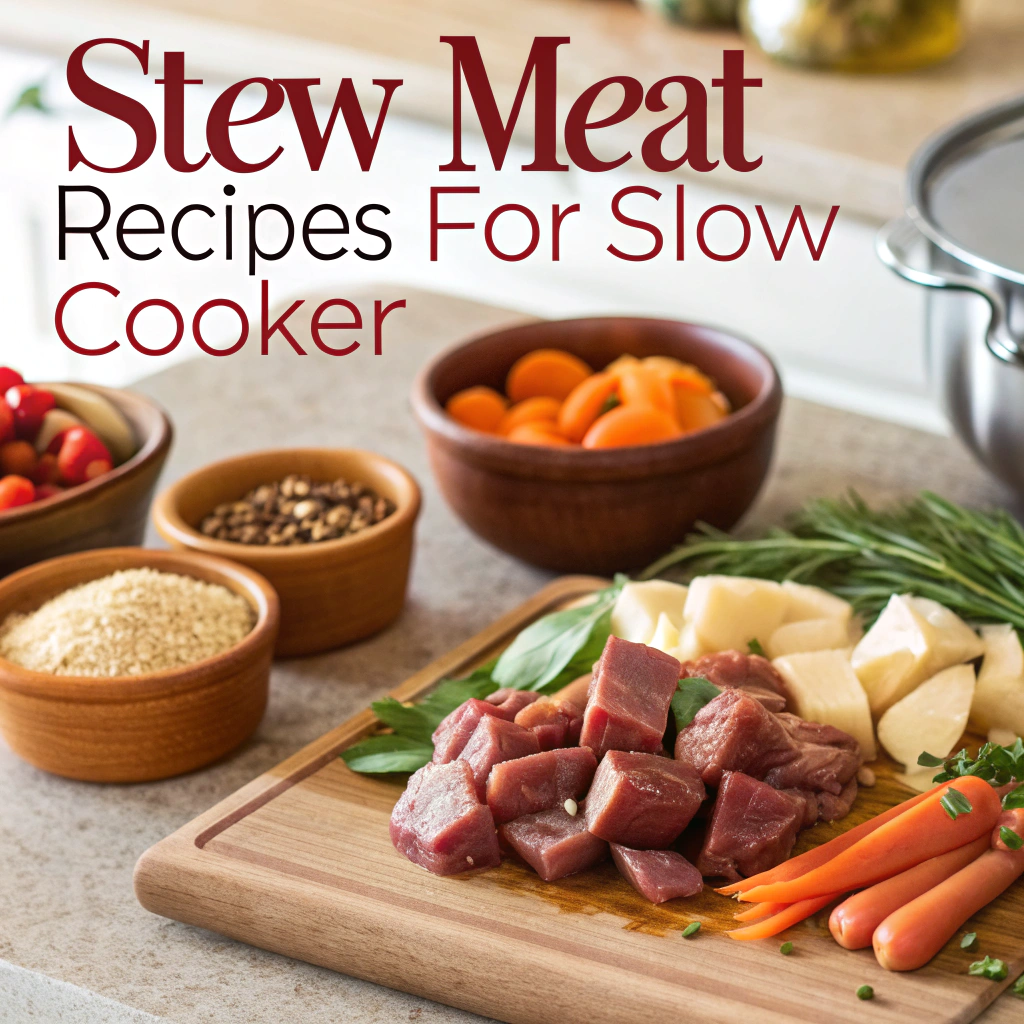
Introduction
Have you ever wondered why some slow cooker stews are richly layered and deeply savory, while others taste flat or end up mushy? The difference isn’t luck—it’s technique. In this guide, I’ll share my test-kitchen method for stew meat recipes for slow cooker success that deliver fork-tender beef, a glossy gravy, and vegetables with real character. Whether you’re batch-cooking for the week or planning a cozy Sunday dinner, this slow-cooker strategy centers flavor first, simplifies steps second, and removes the guesswork so your meal turns out perfectly every time.
Ingredients List
This recipe yields 6 hearty servings. I build it around beef chuck—its marbling melts into velvety tenderness during a long braise. Sensory cues like the sweetness of caramelized onions and the woodsy lift of thyme keep every bite interesting.
- Stew meat (beef chuck), 2 to 2.5 pounds, cut into 1.5-inch cubes
- Kosher salt and freshly ground black pepper
- Neutral high-heat oil, 2 tablespoons (avocado or canola)
- Onion, 1 large, diced (about 1.5 cups)
- Carrots, 4 medium, cut into 1-inch chunks
- Celery, 3 ribs, sliced into 1-inch pieces
- Garlic, 4 cloves, minced
- Tomato paste, 2 tablespoons (deepens color and umami)
- Worcestershire sauce, 1 tablespoon
- Dry red wine, 1/2 cup (optional, for deglazing; sub beef broth if avoiding alcohol)
- Low-sodium beef broth, 3 cups
- Baby gold potatoes, 1.5 pounds, halved (or russet, peeled and cut into large chunks)
- Bay leaves, 2
- Fresh thyme, 4 sprigs (or 1 teaspoon dried)
- Fresh rosemary, 1 sprig (or 1/2 teaspoon dried)
- Smoked paprika, 1 teaspoon (optional, adds warmth)
- Frozen peas, 1 cup (stir in at the end for color and pop)
- Cornstarch, 2 tablespoons, whisked with 2 tablespoons cold water (slurry for thickening, if needed)
- Fresh parsley, chopped, for garnish
Smart substitutions and flavor boosters:
- Meat options: Use boneless beef short ribs or round roast if chuck is unavailable. For leaner results, try sirloin tips but reduce cook time slightly.
- Veggie swaps: Turnips or parsnips for potatoes; mushrooms for extra umami; sweet potatoes for a touch of caramelized sweetness.
- Broth alternatives: Mushroom or vegetable broth for a lighter profile; bone broth for a protein boost.
- Seasoning twists: A strip of orange peel and a cinnamon stick for Moroccan-inspired notes; soy sauce or fish sauce for deeper umami; a splash of balsamic at the end for brightness.
Timing
– Prep time: 20 minutes (searing, chopping, deglazing)
– Hands-on time: 25 minutes
– Slow cooker time: 7 to 8 hours on Low, or 3.5 to 4.5 hours on High
– Total time: Approximately 7.5 to 8.5 hours on Low (or 4 to 5 hours on High)
Data context:
- Many slow cooker stews take 8 to 10 hours on Low. With well-sized beef cubes and a quick pre-sear to jump-start Maillard browning, this method often shaves about 10% to 20% off typical cook times without sacrificing tenderness.
- If you’re using leaner cuts like sirloin tips, begin checking tenderness 45 minutes earlier than chuck.
Step 1: Pat dry and season assertively
– Blot the beef cubes dry with paper towels. Season with 2 teaspoons kosher salt and 1 teaspoon black pepper. Dry surfaces sear better, creating those flavorful brown edges that taste like pure comfort.
Pro tip: If your slow cooker has a sear/saute function, you can do this in the same vessel. Otherwise, use a heavy skillet.
Step 2: Sear in batches for deep flavor
– Heat 1 tablespoon oil in a large skillet over medium-high until shimmering. Add half the beef, spacing pieces out. Sear 2 to 3 minutes per side until chestnut-brown. Remove to a plate and repeat with remaining oil and beef.
Pro tip: Overcrowding cools the pan and steams the meat. Browning in batches concentrates flavor and leads to a more robust gravy.
Step 3: Build the aromatic foundation
– To the same pan (add a touch more oil if needed), add diced onion, carrots, and celery. Saute 5 to 6 minutes, scraping up browned bits. Stir in garlic, tomato paste, and smoked paprika; cook 1 minute until the paste turns brick-red and fragrant.
Step 4: Deglaze and layer liquids
– Pour in red wine (or broth) to deglaze, scraping the pan until smooth. Transfer the vegetable mixture and all pan juices to the slow cooker. Add seared beef and any accumulated juices, broth, Worcestershire, potatoes, bay leaves, thyme, and rosemary. Stir gently to combine.
Step 5: Set and forget—smartly
– Cover and cook on Low for 7 to 8 hours (or High for 3.5 to 4.5 hours). The beef is done when it’s fork-tender and easily breaks apart. Avoid lifting the lid during the first 3 hours—each peek can add 20 to 30 minutes to cook time.
Step 6: Finish with texture and brightness
– If the stew needs thickening, stir in the cornstarch slurry and cook on High for 10 to 15 minutes until the gravy lightly coats the back of a spoon. Fold in peas and simmer 5 minutes. Taste and adjust with salt, pepper, and a splash of Worcestershire or a squeeze of lemon for balance.
Pro tip: A small knob of unsalted butter whisked in at the end gives the sauce restaurant-style sheen.
Step 7: Rest and serve
– Let the stew rest off heat, covered, for 5 to 10 minutes. Garnish with parsley. This short rest helps the sauce settle into a velvety consistency.
Nutritional Information
Approximate per serving (1/6 of recipe):
– Calories: 430
– Protein: 35 g
– Carbohydrates: 28 g
– Dietary fiber: 4 g
– Total fat: 18 g
– Saturated fat: 6 g
– Sodium: 760 mg
– Sugars: 5 g
Notes:
– Values are estimates based on standard USDA data for similar ingredients and typical slow-cooker yield. Swapping in bone broth, extra veggies, or leaner cuts will alter totals.
– Reducing added salt and using low-sodium broth can decrease sodium by 20% to 30% without sacrificing depth if you keep the Worcestershire and tomato paste.
Healthier Alternatives for the Recipe
– Leaner cuts, adjusted time: Use sirloin tips or round roast and check for tenderness 30 to 45 minutes earlier than chuck. Lower fat content, similar flavor if you keep the aromatics robust.
– More vegetables, same comfort: Add mushrooms for umami and fiber, bulk up with parsnips, or fold in shredded cabbage during the last hour for a brothier but hearty finish.
– Lower sodium: Use low-sodium broth, skip added salt until the end, and season with acid (lemon, red wine vinegar) for perceived saltiness without the sodium bump.
– Gluten-free and grain-free: This recipe is naturally gluten-free when thickened with cornstarch. For grain-free, use arrowroot slurry instead of cornstarch and avoid soy-based seasonings if needed.
– Low-carb: Replace potatoes with turnips, rutabaga, or cauliflower florets added in the last 60 to 90 minutes so they hold their bite.
– Dairy-free richness: Whisk in a teaspoon of miso paste or a splash of coconut aminos at the end for a silky, savory finish without butter.
Serving Suggestions
– Classic comfort: Ladle over buttery mashed potatoes or egg noodles. The glossy gravy hugs each noodle, giving you that nostalgic Sunday supper feel.
– Rustic and hearty: Serve with a crusty loaf, garlic bread, or warm dinner rolls for dunking—soaking up the sauce is half the joy.
– Polenta base: Spoon the stew over creamy Parmesan polenta; the corn’s sweetness plays beautifully with the stew’s savory notes.
– Bright finishes: Top with gremolata (lemon zest, garlic, and parsley) or drizzle with herby chimichurri to cut richness and add color.
– Fresh crunch: Serve with a simple arugula salad dressed in lemon and olive oil—peppery greens provide a lively contrast.
– For meal prep: Portion into containers with brown rice or quinoa on the side (store grains separately so they don’t absorb too much sauce).
Common Mistakes to Avoid
– Skipping the sear: Browning creates complex Maillard flavors that slow cookers alone can’t replicate. Even a quick 5-minute sear per batch pays dividends in depth.
– Overcrowding the pan: When searing, give beef room. Crowding steams meat, leaving it gray and less flavorful.
– Too much liquid: Unlike ovens, slow cookers don’t evaporate much. Stick to the recommended broth quantity; you can always add more at the end if you prefer a thinner consistency.
– Adding delicate veggies too early: Peas, zucchini, or spinach should go in during the last 5 to 15 minutes to keep them vibrant.
– Lifting the lid frequently: Each peek releases heat and can extend the cook time significantly.
– Undersalting early, oversalting late: Lightly season at the start, then adjust to taste at the end, after reduction/thickening. You’ll avoid a salty finish.
– Using the wrong cut: Lean stew meat can end up dry; marbled chuck or short ribs are more forgiving in long cooks.
Storing Tips for the Recipe
– Cool safely: Divide hot stew into shallow containers and cool uncovered in the refrigerator until steam dissipates, then cover. Aim to chill within 2 hours for food safety.
– Refrigerate: Store for 3 to 4 days. The flavor often improves overnight as the sauce settles and aromatics meld.
– Freeze: Portion into freezer-safe containers or bags, leaving headspace. Freeze for up to 3 months. For best texture, add peas after thawing to avoid dull color.
– Thaw and reheat: Thaw overnight in the fridge, then reheat gently on the stovetop or in the microwave until the internal temperature reaches 165°F. If thickened sauce tightens too much after chilling, whisk in a splash of warm broth.
– Make-ahead meal kits: Combine raw seared beef, aromatics, and seasonings in a freezer bag (omit potatoes and add them fresh day-of). Freeze flat. Thaw in the fridge overnight, add potatoes, then cook as directed. This keeps potatoes from getting mealy.
Conclusion
When you master a few fundamentals—season assertively, sear for depth, deglaze for complexity, and finish with brightness—stew meat recipes for slow cooker meals become remarkably consistent and deeply flavorful. This one-pot dinner is as weeknight-friendly as it is company-worthy, adaptable to your pantry, and ideal for batch cooking. Ready to bring the aroma of slow-simmered comfort to your kitchen? Try this version, tailor the add-ins to your tastes, and share how you made it your own. If you love a quicker stovetop path with similar flavor dynamics, explore this step-by-step guide to a hearty variation via my kitchen workflow: Quick Step-by-Step Beef Stew Soup.
FAQs
– Can I skip the sear?
Yes, but you’ll lose complexity. If time is tight, at least bloom tomato paste with aromatics for 1 minute and add a splash of Worcestershire to boost umami. You’ll get closer to the seared flavor profile without the extra pan step.
-
My beef is still tough. What happened?
Two likely culprits: not enough time or too little connective tissue/marbling for a long braise. Chuck needs the full duration on Low for collagen to break down. If you used a lean cut, reduce cook time next round or add more broth and continue cooking until fork-tender. -
Can I use frozen stew meat?
For best texture and safety, thaw first. Searing frozen beef doesn’t brown properly and can lead to inconsistent doneness. Thaw in the fridge overnight or use your microwave’s defrost setting, pat dry, then proceed. -
How do I thicken stew without cornstarch?
Roux: Melt 2 tablespoons butter and whisk in 2 tablespoons flour; cook 1 minute. Whisk into the hot stew and simmer until thickened. Gluten-free: use arrowroot slurry (1:1 with water) and add at the end to avoid gumminess. -
What wine works best?
A dry red like Cabernet Sauvignon, Merlot, or Pinot Noir enhances savory notes without sweetness. Avoid heavily oaked wines—they can taste bitter after long cooking. Broth is a fine substitute if you’re alcohol-free. -
Can I cook on High instead of Low?
Yes—3.5 to 4.5 hours on High usually works. However, Low yields more even collagen breakdown and a silkier mouthfeel. If using High, keep potato size larger and check tenderness earlier. -
How do I prevent mushy vegetables?
Cut carrots and potatoes into larger chunks (1 to 1.5 inches), and avoid overcooking. Add delicate veggies (peas, zucchini, spinach) near the end. Choose waxy potatoes (Yukon Gold) for better structure than russets. -
Can I make this spicy?
Sure. Add 1 teaspoon crushed red pepper flakes with the aromatics or a tablespoon of Calabrian chili paste. For smoky heat, use chipotle in adobo (1 to 2 teaspoons). -
Any budget-friendly tips?
Buying a whole chuck roast and cubing it yourself is often cheaper than pre-cut stew meat. Stretch servings with extra carrots, mushrooms, or beans added during the last hour. -
Where can I compare another slow cooker beef stew style?
For reference and alternative techniques, see this classic approach from The Recipe Critic and note differences in thickening and vegetable timing.
Why These Stew Meat Recipes for Slow Cooker Methods Work
– Sear, then slow cook: Browning creates hundreds of flavor compounds that the low-and-slow environment amplifies, so the stew tastes layered rather than one-note.
– Controlled liquid volume: Because slow cookers don’t evaporate much, limiting broth at the start ensures a sauce with body—then you can finish with a slurry if needed.
– Aromatics and pastes: Tomato paste, Worcestershire, and sauteed onions build savoriness and gentle sweetness, reducing the need for excessive salt.
– Finishing acids and herbs: A final hit of lemon, vinegar, or fresh parsley sharpens flavors and balances richness without extra sodium.
Personal Tips from the Test Kitchen
– Balance the bite size: 1.5-inch beef cubes strike the right balance—small enough to tenderize in a standard cook window yet large enough to stay juicy.
– Use the “salt window”: Lightly season the meat before searing, then hold back on additional salt until post-reduction. Stews often taste saltier a day later, so plan ahead if you’re meal-prepping.
– Keep a “flavor bomb” jar: Combine 1 tablespoon each of tomato paste, miso, and Worcestershire in a jar; keep in the fridge. A teaspoon swirled in at the end magnifies umami instantly.
Ingredient Spotlight and Variations
– Beef chuck: The gold standard for slow-cooked tenderness thanks to its connective tissue; it melts into juicy bites.
– Tomato paste: Just 2 tablespoons increase savoriness and color—blooming it caramelizes natural sugars for complexity.
– Worcestershire: Adds tangy depth from anchovy and tamarind. If you’re vegetarian, use a splash of soy sauce and a squeeze of lemon.
– Herbs and spices: Thyme and rosemary bring woodsy balance; smoked paprika or bay leaves add warmth and structure.
Try these flavor profiles:
- Provençal: Add olives and a strip of orange peel; finish with fresh basil.
- Guinness-style: Swap part of the broth for stout; finish with a bit of Dijon for brightness.
- Mushroom umami: Double the mushrooms, add a teaspoon soy sauce, and use mushroom broth.
Scaling and Meal Planning
– Doubling: Use a 6- to 8-quart slow cooker for a double batch. Don’t exceed two-thirds capacity to avoid uneven cooking.
– Halving: Halve all ingredients and use a smaller slow cooker (3 to 4.5 quarts). Start checking tenderness 30 minutes earlier.
– Batch-cooking: Portion into single-serve containers for easy lunches. Add fresh herbs as you reheat to recreate that “just cooked” aroma.
Troubleshooting Texture and Flavor
– Too thin: Whisk in slurry and cook on High until glossy. Alternatively, remove a few potato chunks, mash, and stir back in as a natural thickener.
– Too thick: Stir in warm broth 1/4 cup at a time until it hits your preferred consistency.
– Flat flavor: Adjust with acid (lemon or vinegar), fresh herbs, or a pinch more salt after reduction—taste, then season.
– Oily surface: If the stew renders more fat than you’d like, skim with a spoon or lay a paper towel on top for one second, then remove.
With this roadmap, your stew meat recipes for slow cooker nights become the kind of cozy, reliable meals that make the kitchen feel like home—layered, aromatic, and effortlessly satisfying.