
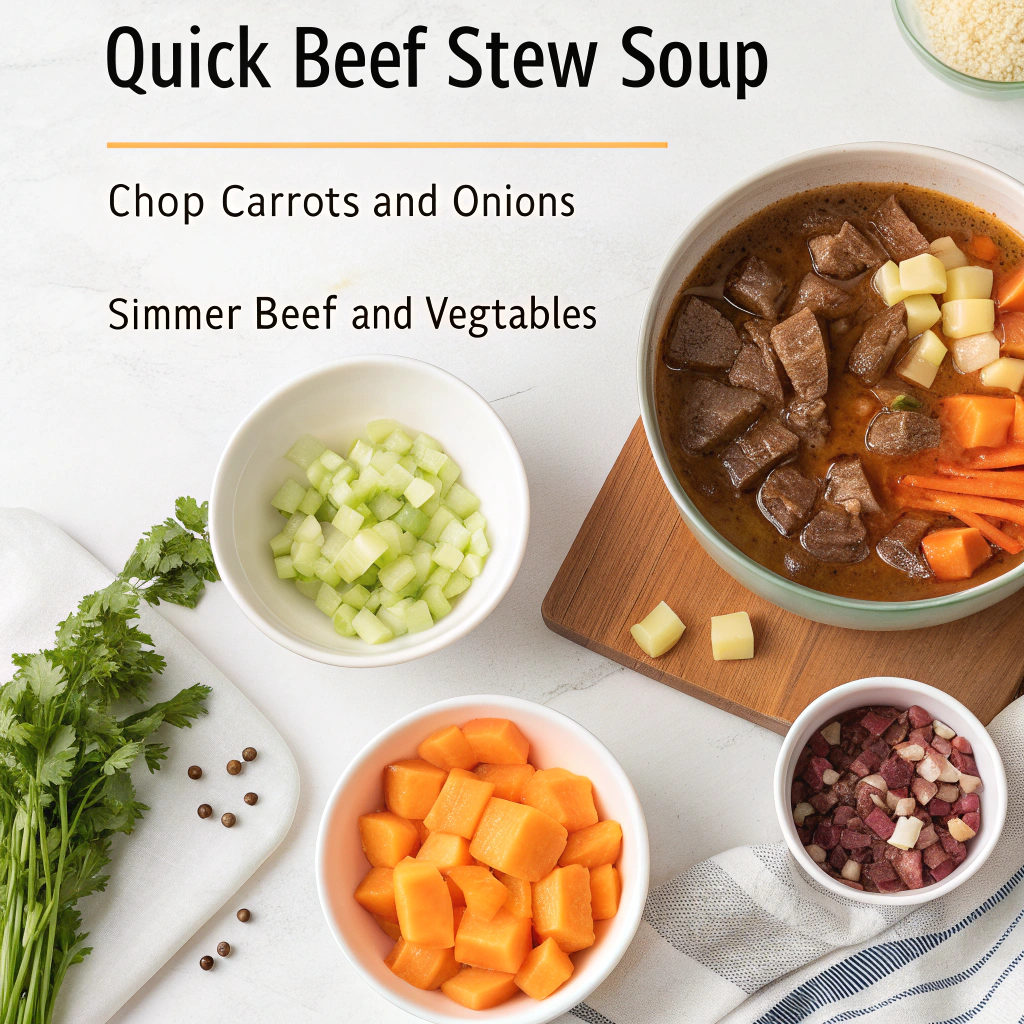
Introduction
What if the richest, most comforting beef stew soup didn’t require half a day and a culinary school diploma? That’s the challenge I set out to solve with this Quick Step-by-Step Beef Stew Soup: a streamlined, flavor-maximizing method that makes a slow-simmered classic weeknight-friendly without sacrificing depth. In under two hours (hands mostly off), you’ll coax tender beef, sweet carrots, buttery potatoes, and a velvety broth into a bowl that tastes like it simmered all Sunday. Along the way, I’ll share pro tips from years of testing in my home kitchen—how to build umami quickly, manage simmering for tenderness, and finish with brightness so every spoonful pops.
Ingredients List
Serves 6
- 2 pounds well-marbled beef chuck, cut into 1.5-inch cubes (trim large pockets of hard fat)
- 2 teaspoons kosher salt, divided (start with less if using a salty broth; you’ll adjust later)
- 1 teaspoon freshly ground black pepper
- 2 tablespoons neutral oil (avocado, canola, or light olive oil)
- 1 large yellow onion, diced
- 3 medium carrots, peeled and cut into 1/2-inch rounds
- 3 ribs celery, sliced
- 4 cloves garlic, minced
- 2 tablespoons tomato paste (for concentrated umami and color)
- 2 tablespoons all-purpose flour (for gentle thickening)
- 1/2 cup dry red wine (optional but recommended; see substitution)
- 4 cups low-sodium beef broth (plus more as needed)
- 1 bay leaf
- 1 teaspoon dried thyme or 1 tablespoon fresh thyme leaves
- 1 teaspoon Worcestershire sauce (adds savory depth quickly)
- 1 pound Yukon Gold potatoes, cut into 1-inch chunks
- 1 cup frozen peas, thawed (stir at the end)
- 2 tablespoons chopped fresh parsley (or chives) to finish
- Optional finishers: 1 teaspoon red wine vinegar or a squeeze of lemon, 1/2 teaspoon sugar if needed to balance acidity
Substitution and flavor boosters:
- Beef: Boneless short ribs or beef shank work beautifully; top round works in a pinch but needs gentler simmering. For leaner, try sirloin (reduce simmer time by 10–15 minutes).
- Wine: Swap with 1/2 cup extra broth plus 1 teaspoon balsamic vinegar for acidity and color.
- Flour: Use cornstarch (2 teaspoons mixed with 2 tablespoons cold water) for a gluten-free slurry.
- Potatoes: Sweet potatoes for a hint of caramel sweetness; or sub 1/2 cup pearl barley for a nutty, fiber-rich stew-soup hybrid.
- Herbs: Rosemary or herbes de Provence if you love aromatic, woodsy notes.
- Umami quick lifts: A teaspoon of soy sauce or miso stirred in at the end deepens savory flavor without tasting “Asian.”
Timing
– Prep: 20 minutes (pre-cube beef and chop veggies to save time)
– Active cooking: 20–25 minutes (searing, deglazing, layering flavors)
– Simmer: 45–50 minutes
– Total: About 90 minutes, which is roughly 20% faster than many traditional beef stews (often 110–120 minutes) thanks to efficient searing and a carefully managed simmer.
Time-savvy alternatives:
- Pressure cooker/Instant Pot: 35 minutes at high pressure + 10 minutes natural release; add potatoes and carrots after pressure cooking and simmer on Sauté 10 minutes.
- Slow cooker: 6–7 hours on Low (sear the beef and aromatics first for best flavor).
Step 1: Prep the building blocks for Quick Step-by-Step Beef Stew Soup
Pat the beef cubes very dry with paper towels—surface dryness equals better browning. Season with 1 teaspoon salt and black pepper. Dice onion, carrots, and celery; thaw peas; chop parsley. Set out tomato paste, flour, and broth so you can move quickly.
Tip: Cold, wet beef will steam instead of sear. Dry and room-temp (15 minutes on the counter) is ideal.
Step 2: Sear the beef to develop deep fond
Heat a heavy Dutch oven over medium-high until hot. Add oil, then half the beef in a single layer—don’t crowd. Sear 2–3 minutes per side until deep brown. Remove to a plate; repeat with remaining beef.
Tip: If the pan smokes aggressively, reduce heat slightly; the goal is deep browning, not burning. Browned bits (fond) are flavor gold.
Step 3: Soften aromatics and build sweetness
Lower heat to medium. Add onion, carrots, and celery with a pinch of salt. Cook 5–7 minutes, stirring, until onions are translucent and carrots begin to soften. Add garlic; cook 30 seconds until fragrant.
Tip: Sweating vegetables here builds natural sweetness and rounds out the beefiness.
Step 4: Tomato paste “toast” for umami
Add tomato paste; cook 2 minutes, stirring, until brick red and slightly caramelized. Sprinkle flour evenly; cook 1 minute to remove raw taste.
Tip: Toasting tomato paste concentrates and sweetens it; flour starts forming a gentle roux that will gloss the broth.
Step 5: Deglaze like a pro
Splash in red wine (or the broth-vinegar substitute). Scrape up every browned bit. Reduce by half, 2–3 minutes, until the alcohol edge cooks off and the liquid smells rich.
Tip: Deglazing captures everything you seared into the pot. If skipping wine, add 1 teaspoon balsamic plus broth; you’ll still get acidity and color.
Step 6: Build the broth and return the beef
Stir in beef broth, bay leaf, thyme, and Worcestershire. Return seared beef and any accumulated juices. Bring just to a boil, then reduce to a gentle simmer.
Tip: A gentle simmer (barely bubbling) is the difference between fork-tender beef and tough, stringy cubes. Keep it low and steady.
Step 7: Simmer to tenderize
Cover partially and simmer 30 minutes. This starts the collagen breakdown in chuck, transforming it from chewy to silky. Skim any gray foam or excess fat from the surface.
Tip: If you have time, extend simmer to 60–70 minutes for even silkier results, but 45–50 minutes total simmer time will already be lovely.
Step 8: Add potatoes and carrots at the right moment
Add potatoes and, if you like softer carrots, the second half of your carrot rounds (split them earlier). Simmer 15–20 minutes more until potatoes are just tender and beef yields easily to a fork.
Tip: Staggered veg cooking means nothing is mushy. Potatoes go in late to avoid falling apart.
Step 9: Finish with peas and fresh herbs
Stir in peas; cook 2 minutes. Remove bay leaf. Taste and adjust: add remaining 1 teaspoon salt (or to taste), a squeeze of lemon or 1 teaspoon red wine vinegar for brightness, and a pinch of sugar if it tastes too sharp.
Tip: Tiny acidity at the end wakes up slow-cooked flavors so the stew soup tastes vivid, not flat.
Step 10: Rest and serve
Let the pot rest off heat for 5 minutes; flavors meld and the liquid slightly thickens. Ladle into warm bowls and finish with parsley.
Tip: Like most stews, this is even better the next day. The broth further thickens, and flavors harmonize.
Nutritional Information
Approximate per serving (1/6 of recipe):
– Calories: 480–540
– Protein: 28–34 g
– Carbohydrates: 28–35 g
– Fat: 18–26 g
– Fiber: 4–6 g
– Sodium: 650–900 mg (varies with broth and added salt)
– Key micronutrients: Iron (~20–25% DV), Zinc (~30–35% DV), Vitamin A from carrots (~80–120% DV), Potassium from potatoes (~20–25% DV), Vitamin B12 from beef (~70–90% DV)
Notes:
- Using low-sodium broth and seasoning at the end helps control sodium.
- Chuck provides heme iron and B12; peas and potatoes add potassium and fiber.
- If you add barley, fiber increases another 3–4 g per serving.
Healthier Alternatives for the Recipe
– Leaner proteins: Use sirloin, trimmed chuck, or bison to reduce fat. Reduce simmer time slightly (sirloin can be tender in 30–35 minutes of gentle simmer).
– Boost veggies: Add mushrooms for meaty depth with fewer calories; toss in parsnips or turnips for lower-carb bulk.
– Whole grains: Stir in 1/2 cup pearl barley with the broth; cook until tender (45–50 minutes). Adds chew and fiber.
– Low-carb option: Swap potatoes for cauliflower florets; add them in the last 8–10 minutes.
– Gluten-free: Replace flour with a cornstarch slurry (2 teaspoons cornstarch + 2 tablespoons water) stirred in during the last 3–5 minutes.
– Lower sodium: Choose no-salt-added broth; season in layers and taste at the end. A splash of vinegar or lemon can reduce the need for extra salt.
– Dairy-free creaminess (without cream): Blend 1/2 cup of the cooked potatoes with a ladle of broth and stir back in for body.
Serving Suggestions
– Classic comfort: Serve with warm crusty bread, buttered sourdough, or a flaky biscuit to swipe through the glossy broth.
– Over grains: Ladle over brown rice, quinoa, or polenta for stick-to-your-ribs satisfaction.
– Fresh finishers: A simple parsley-garlic-lemon zest gremolata sprinkled over each bowl adds brightness and texture.
– Heat lovers: Offer chili crisp, Aleppo pepper, or a drizzle of smoked chili oil.
– Make it a meal: Pair with a crisp green salad with Dijon vinaigrette—acidity balances the stew’s richness.
– Family-style tip: Keep peas on the side for picky eaters; stir into individual bowls as desired.
– Weeknight synergy: If you’re craving a lighter second option this week, try my Healthy Beef and Broccoli with Brown Rice—fast, balanced, and meal-prep friendly.
Common Mistakes to Avoid
– Crowding the pan: Overcrowding prevents browning. Sear in batches for proper Maillard reaction and deep flavor.
– Boiling hard: A vigorous boil toughens beef. Keep it at a low simmer; the surface should gently wink.
– Skipping the deglaze: Those browned bits hold concentrated flavor. Scrape them up with wine or broth.
– Adding potatoes too early: They’ll break down and cloud the broth. Add near the end to keep tender but intact.
– Overseasoning up front: Broth reduces; salt concentrates. Season lightly at first and adjust at the end.
– Neglecting acidity: A tiny splash of vinegar or lemon at the end brightens and balances richness.
– Wrong cut: Ultra-lean cuts can turn dry. Choose chuck, shank, or short ribs for luscious results in this format.
– Rushing aromatics: Under-sautéed onions taste sharp. Give them time to soften and sweeten.
Storing Tips for the Recipe
– Cool quickly: Spread in a shallow pan to cool within 2 hours to keep it safe and maintain texture.
– Refrigerate: 4 days in airtight containers. The flavor improves on day two.
– Freeze: Up to 3 months. Leave potatoes slightly undercooked if you plan to freeze; they’ll hold shape better. Alternatively, freeze without potatoes and add fresh ones when reheating.
– Reheat: Stovetop over low heat until steaming (avoid boiling). If thick, add a splash of broth or water. Adjust seasoning and brightness again before serving.
– Meal prep: Portion into single-serve containers; add a handful of fresh greens (like baby spinach) when reheating for extra nutrients.
Conclusion
You don’t need a Sunday to build deep, soulful flavor. With smart searing, a balanced deglaze, and a gentle simmer, this Quick Step-by-Step Beef Stew Soup turns pantry staples into a weeknight bowl of comfort—tender beef, sweet carrots, buttery potatoes, and a broth that glistens. If you try it, leave a comment with your tweaks—did you add barley, swap in mushrooms, or finish with gremolata? Share your bowl, tag a friend who needs a cozy dinner idea, and explore more weeknight-friendly beef recipes on the site.
For another take on beef soup technique and visuals, you might enjoy this reference from Cooking Classy: Beef Stew Soup.
FAQs
– What’s the best cut of beef for stew soup?
Chuck is the gold standard: it has enough connective tissue to melt into tenderness with a relatively short simmer. Short ribs or shank are excellent too. Sirloin can work with a reduced simmer time but has less collagen, so the broth won’t be quite as silky.
-
How do I make the broth thicker without making it gloopy?
Two options: lightly dust beef with flour before searing (micro-thickening as juices release) and/or add a cornstarch slurry (2 teaspoons cornstarch + 2 tablespoons water) in the last 3–5 minutes. Avoid heavy roux; you want a glossy, spoon-coating broth—not gravy. -
Can I make this in the Instant Pot?
Yes. Sear on Sauté, deglaze thoroughly, then pressure cook beef with aromatics (onion, celery, half the carrots) 35 minutes, natural release 10. Add potatoes and remaining carrots; Simmer/Sauté 10 minutes until tender. Stir in peas and finishers at the end. -
What if I don’t cook with wine?
Use 1/2 cup extra broth plus 1 teaspoon balsamic vinegar. You’ll get acidity and depth without wine. Alternatively, 1 teaspoon soy sauce or Worcestershire can also boost umami. -
How can I make it gluten-free?
Skip flour and thicken with a cornstarch slurry at the end. Also confirm your Worcestershire and broth are gluten-free. -
My stew tastes flat. How do I fix it?
Layered seasoning and a bright finish. Add a pinch of salt, then taste. If it still seems dull, add a squeeze of lemon or 1 teaspoon red wine vinegar. A small pinch of sugar can balance excessive acidity. -
Can I cut the total time even more?
Use smaller beef cubes (1-inch) and sirloin; reduce simmer time by about 10–15 minutes. Or make a quick variant with ground beef: brown 1.25 pounds ground beef, drain, and simmer just 20 minutes after adding potatoes and carrots. -
How do I scale this recipe for a crowd?
Double ingredients, sear in multiple batches, and use a large Dutch oven or two pots to maintain proper searing and gentle simmer. Expect an extra 10 minutes to come up to temperature when doubled. -
What vegetables can I swap in or add?
Mushrooms, parsnips, turnips, kale (stir in for the last 5 minutes), or green beans (last 5–7 minutes). If adding barley, add it with the broth and simmer until tender. -
How long does it keep and what’s the best way to reheat?
Refrigerate up to 4 days; freeze up to 3 months. Reheat gently on the stovetop or in the microwave at 70% power, stirring occasionally. Add a splash of broth if needed and brighten with lemon or vinegar before serving.
Quick Reference: Why this method works
– Sear heat and dryness: Dry beef and hot oil build a robust fond fast.
– Tomato paste toast: Concentrates umami and sweetness in 2 minutes.
– Smart deglaze: Wine or broth-vinegar pulls every flavor bit into the pot.
– Gentle simmer: Keeps fibers relaxed so collagen can melt into tenderness.
– Late vegetables: Potatoes and peas keep vibrant color and structure.
– Bright finish: Acid and herbs make the stew taste “alive,” not heavy.
Make it yours
– Trade potatoes for sweet potatoes and add a pinch of cinnamon for a warming, autumnal bowl.
– Add smoked paprika and a roasted red pepper for a Spanish-leaning twist.
– Stir in 1 tablespoon white miso at the end for subtle savory depth.
– Finish with horseradish crème on the side if you like a spicy contrast.
With these techniques and variations, you’ll have a reliable, flexible Quick Step-by-Step Beef Stew Soup that fits your kitchen, your schedule, and your taste—comforting, deeply flavored, and weeknight-feasible. Enjoy every spoonful.