
Introduction
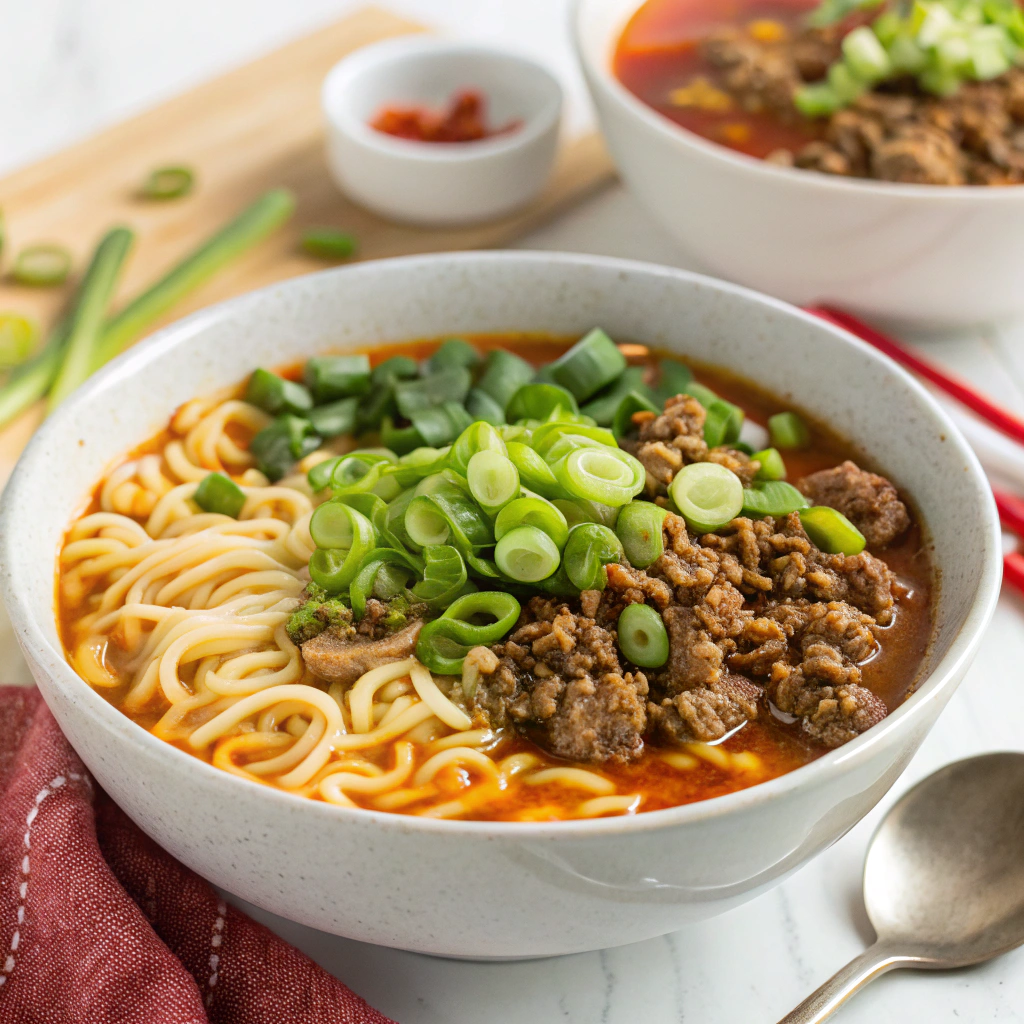
What if your coziest ramen night didn’t require a long-simmered pork broth, specialty ingredients, or a pricey takeout bill? What if you could get big, restaurant-level flavor from pantry staples and a single skillet? That’s exactly why this Spicy Ground Beef Ramen Bowl belongs in your weeknight rotation. It layers chili-garlic heat, gingery umami, and silky noodles into a budget-friendly bowl that’s ready in under 30 minutes—without compromising depth. As the cook behind Feast of Savory, I test homey, practical recipes that make busy nights feel special, and this one checks every box: fast, filling, and wildly flavorful.
Ingredients List
Make it your own, but here’s the base that delivers a balanced, spicy-umami broth and tender noodles with just the right chew.
- Ground beef: 1 pound (80/20 for richness; use 90/10 for leaner). The beef renders flavor into the chili-garlic sauce, giving the broth body.
- Sesame oil: 1 tablespoon. Toasty aroma that anchors the bowl.
- Neutral oil: 1 tablespoon (canola or avocado). Prevents aromatics from scorching.
- Garlic: 4 cloves, minced. Sweet heat and savory backbone.
- Fresh ginger: 1 tablespoon, grated. Adds brightness and warmth.
- Scallions: 4, thinly sliced (whites for cooking; greens for garnish). Clean, oniony lift.
- Chili paste: 1–2 tablespoons (gochujang, sambal oelek, or chili-garlic sauce). Choose your fire.
- Soy sauce: 3 tablespoons. Salty, umami-rich, and foundational.
- Mirin or rice vinegar: 1 tablespoon. A touch of acidity keeps the bowl from feeling heavy.
- Brown sugar or honey: 2 teaspoons. Balances spice and salt.
- Beef or chicken broth: 4 cups (low-sodium preferred). The lake for your noodles to swim in.
- Miso paste (white or red): 1–2 tablespoons. Deepens savoriness with gentle funk.
- Ramen noodles: 3–4 portions (about 12 ounces fresh or 10 ounces dry). Curly instant-style or fresh restaurant-style both work.
- Optional broth boosters: 1 tablespoon fish sauce (umami boost), 1 teaspoon toasted sesame seeds (nutty finish).
- Veggie add-ins: 2 cups total, choose any—thinly sliced mushrooms, baby spinach, shredded cabbage, julienned carrots, corn, or bok choy. Color, crunch, and nutrients.
- Heat finishers: Chili crisp, extra chili paste, or crushed red pepper to taste.
- Creamy touch (optional): 1–2 tablespoons tahini or a splash of coconut milk if you like a silky broth.
- Toppings (choose your adventure): Soft-jammy eggs, nori strips, quick-pickled cucumbers, lime wedges, cilantro, toasted sesame seeds, extra scallion greens.
Substitution ideas:
- Meat: Swap ground beef for ground turkey, chicken, or pork; tofu crumbles also work.
- Gluten-free: Use tamari or coconut aminos for soy sauce and pick gluten-free ramen or rice noodles.
- Low-sodium: Opt for low-sodium broth and soy; balance with acid and aromatics rather than salt.
Timing
– Prep time: 10 minutes (chopping aromatics, gathering toppings)
– Cook time: 15 minutes
– Total time: 25 minutes
Context: A from-scratch ramen can easily take 45–90 minutes when you build complex broths; this version streamlines the process with a flavorful beef-chili base and miso. At 25 minutes, it’s roughly 45–70% faster than typical homemade ramen, and still hits all the cozy notes.
Step-by-Step Instructions
Step 1: Sizzle the aromatics and brown the beef
– Heat a large skillet or Dutch oven over medium-high. Add neutral oil and sesame oil.
– Stir in garlic, ginger, and scallion whites; sauté 30–45 seconds until fragrant. Don’t brown—just awaken the oils.
– Crumble in the ground beef; season lightly with salt and pepper. Cook 5–6 minutes, stirring and breaking up clumps, until browned with crisp edges. If using 80/20, tilt and spoon off excess fat to keep the broth clean, leaving about a tablespoon for flavor.
Tip: A wide pan increases surface area, encouraging deep browning—this Maillard magic is the backbone of your broth.
Step 2: Build your spicy umami base (tare)
– Push the beef to one side. In the open space, add chili paste, soy sauce, mirin or rice vinegar, and brown sugar or honey. Let the chili paste sizzle for 30 seconds—blooming it releases fragrance and heat.
– Toss everything together so the beef is lacquered in glossy, spicy sauce.
Dial it in: Start with 1 tablespoon chili paste for moderate heat. Taste and add more to your comfort level.
Step 3: Turn it into a quick, rich broth
– Pour in the broth; bring to a lively simmer.
– Whisk miso with a ladle of hot broth in a small bowl to dissolve, then stir back in. Add fish sauce if using. Taste—adjust salt, heat, or sweetness.
– Slide in your veggies of choice. Mushrooms and cabbage need 3–4 minutes; spinach and bok choy only 1–2 minutes.
Optional creaminess: Swirl in tahini or a splash of coconut milk for a lush, slightly nutty broth.
Step 4: Cook the noodles separately
– Boil ramen in a separate pot according to package directions, 30–60 seconds shy of al dente. Drain.
– Toss with a drizzle of sesame oil to prevent sticking.
Why separate? Noodles release starch and drink up broth. Cooking apart keeps your soup clear and your noodles springy.
Step 5: Assemble like a pro
– Divide noodles among bowls. Ladle the spicy beef broth over top.
– Finish with scallion greens and your chosen toppings: soft-jammy eggs, chili crisp, sesame seeds, nori, lime, and herbs.
Balance check: If it’s too salty, add a squeeze of lime or splash of hot water. Too spicy? A little honey or tahini rounds the edges.
Step 6: Make it weeknight-proof
– Double the beef-chili base and freeze half. Next time, just thaw, add broth and miso, and you’re 10 minutes from the table.
– Keep a “ramen box” in your pantry: noodles, chili paste, miso, and sesame oil. You’ll be ramen-ready any night.
Nutritional Information for Spicy Ground Beef Ramen Bowl
Estimated per serving (4 servings), including beef, broth, noodles, and basic toppings like scallions and sesame. Actual values vary by brands and add-ins.
- Calories: 680–720
- Protein: 35–40g
- Carbohydrates: 64–70g
- Total fat: 28–32g
- Saturated fat: 9–11g
- Fiber: 4–6g
- Sugars: 5–8g
- Sodium: 1,600–2,000mg (use low-sodium broth/soy and miso to reduce; add acid for balance)
- Iron: 20–25% DV
- Potassium: 15–20% DV
- Vitamin A: 15–25% DV (higher with spinach/bok choy)
- Vitamin C: 10–20% DV (higher with greens/lime)
Data insights: The largest sodium drivers are soy sauce, miso, and broth; use low-sodium versions to cut up to 35–45%. Protein is primarily from beef and eggs; vegetables raise micronutrients without big calorie changes.
Healthier Alternatives for the Recipe
– Leaner protein: Use 90/10 ground beef or swap for ground turkey/chicken. You’ll save 80–120 calories per serving while keeping the savory profile; add 1 teaspoon extra sesame oil for flavor if very lean.
– Low-sodium strategy: Choose low-sodium broth and tamari; start with half the soy sauce and add to taste. Finish with rice vinegar or lime to brighten without salt.
– Whole-grain or gluten-free noodles: Use whole-wheat ramen, brown-rice ramen, or even soba. For low-carb, spiralized zucchini or shirataki noodles work—add right at the end to avoid mush.
– More veggies, same comfort: Double the mushrooms, add shredded cabbage, or toss in bok choy to increase fiber and volume, naturally reducing calorie density.
– Dairy-free creaminess: Tahini or cashew cream adds body without dairy; coconut milk gives a gentle sweetness that tames heat.
– Lower saturated fat: Drain rendered beef fat thoroughly or briefly rinse browned beef under hot water, then return to the pan to season. Flavor stays; grease goes.
Dietary flexibility:
- Gluten-free: Tamari + GF ramen; check miso brand.
- Soy-free: Use coconut aminos; skip miso and add extra mushrooms plus a splash of Worcestershire (anchovy-based) or a pinch of nutritional yeast for umami.
- Nut-free: Avoid tahini; use coconut milk if you want creaminess.
Serving Suggestions
– Texture play: Add a quick cucumber pickle (thin slices + rice vinegar + pinch sugar + salt, 10 minutes). The cool crunch cuts through the rich broth.
– Protein boost: Top with a jammy 7-minute egg or a soft tofu slab. Both love chili oil.
– Greens that shine: Stir in a handful of spinach at the end for a silky wilt; bok choy brings fresh snap.
– Spice bar at the table: Set out chili crisp, toasted sesame, and lime wedges so each person customizes heat and brightness.
– Cozy sides: Steamed edamame, sesame blistered green beans, or a citrusy slaw keep the meal balanced.
– If you’re into other budget-friendly, beefy comfort bowls, don’t miss our Savory Ground Beef Orzo—it’s another weeknight hero with big flavor per dollar.
Common Mistakes to Avoid
– Skipping the chili paste bloom: Raw chili paste can taste flat and sharp. Let it sizzle in oil before adding liquid to unlock aroma and depth.
– Overcooking noodles in the broth: They drink up liquid and go mushy. Cook separately, undercook slightly, then ladle broth over.
– Greasy broth: If using 80/20 beef, spoon off excess fat after browning; leave just enough for flavor.
– Adding miso to boiling broth: Rolling boils can mute miso’s delicate notes. Stir miso in off-heat or at a gentle simmer.
– Under-seasoning the base: The beef “tare” should taste slightly saltier and more intense—it’s designed to season the entire pot once diluted with broth.
– Crowd-the-pan browning: If the beef steams, you lose that savory sear. Use a wide pan or brown in two batches.
– One-note heat: Spice without balance tastes aggressive. Add a touch of sugar/honey and a hit of acid (rice vinegar/lime) for rounded heat.
Storing Tips for the Recipe
– Best practice: Store noodles and broth separately. Noodles: 3–4 days in an airtight container with a drizzle of sesame oil to prevent clumping. Broth with beef and veggies: up to 4 days refrigerated.
– Freezer-friendly: Freeze the beef-chili base and broth (without noodles or delicate greens) up to 2 months. Thaw overnight and reheat gently; add fresh greens and cooked noodles when serving.
– Reheating: Warm broth on the stove until simmering; briefly dunk refrigerated noodles in hot water for 10–15 seconds to revive springiness before adding to bowls.
– Make-ahead eggs: Soft-boiled eggs keep 3 days, unpeeled. Warm in hot water 1–2 minutes before serving.
Conclusion
This Spicy Ground Beef Ramen Bowl proves you don’t need an all-day broth or a long ingredient list to eat like a ramen shop regular. You bloom heat, brown beef deeply, build a fast umami base, and finish with the textures you love—springy noodles, fresh scallions, and a punchy, slurpable broth. It’s cozy, flavorful, and remarkably budget-friendly.
If you make it, drop a comment with your heat level, veggie combo, and any clever swaps you discovered. Snap a photo and share your bowl—your ideas help other home cooks dial in their perfect ramen night. And if you’re craving more weeknight comfort, explore our other cozy, beef-forward dinners on Feast of Savory.
For a different take on cozy ramen nights, you can also explore a restaurant-style miso approach here: spicy miso ramen.
FAQs
– What noodles work best for this bowl?
Use fresh restaurant-style ramen if you can; otherwise, standard instant ramen works well—just discard the seasoning packets. For a chewier bite, pull noodles 30–60 seconds early and finish in hot broth.
-
How can I adjust the spice level without losing flavor?
Start with 1 tablespoon chili paste and add by the teaspoon. If you overshoot, stir in honey or tahini, and add a squeeze of lime to round the edges. -
Can I make this gluten-free?
Yes: use tamari or coconut aminos instead of soy sauce, a gluten-free miso, and GF ramen or rice noodles. Always check labels—miso and chili pastes sometimes contain wheat. -
What’s a good substitute for miso?
Try 1 teaspoon mushroom powder or a small splash of Worcestershire for depth, plus extra sautéed mushrooms. It won’t be identical, but it builds umami in a similar spirit. -
Can I use ground pork or turkey instead of beef?
Absolutely. Pork brings rich savoriness; turkey or chicken are lighter. If using very lean meat, add 1 teaspoon extra sesame oil so the chili paste blooms properly. -
Why cook noodles separately?
Separating keeps the broth clear and prevents noodles from soaking it up. It also lets everyone choose their preferred noodle amount without altering broth balance. -
How do I fix a broth that’s too salty?
Add unsalted broth or hot water to dilute, then brighten with rice vinegar or lime. A pinch of sugar can mellow saltiness without dulling flavor. -
Can I meal-prep this?
Yes. Make the beef-chili base and broth; store noodles separately. Reheat broth to a simmer and refresh noodles in hot water right before serving. Freeze broth/base for longer storage. -
What vegetables go best in this bowl?
Mushrooms, bok choy, spinach, shredded cabbage, corn, and carrots are great. Add sturdy veg earlier, delicate greens at the end. -
Is there a dairy-free way to make it creamy?
Stir in tahini or a splash of coconut milk. Both add body; tahini reads nutty-toasty, coconut milk adds subtle sweetness. -
Any tips for a deeper flavor without more salt?
Bloom chili paste in oil, brown meat well, add a touch of fish sauce, and finish with acid. These steps amplify savoriness and dimension without relying on sodium. -
Can I scale the recipe for a crowd?
Yes. Double everything, but brown beef in batches to keep that sear. Hold cooked noodles separate in a lightly oiled bowl and add to individual servings as you ladle hot broth. -
What if I only have instant ramen packets?
Use the noodles, skip the packet. The homemade beef-chili base and miso will be far better—and you control the salt and spice. -
How do I get jammy eggs just right?
Simmer large eggs 7 minutes, then plunge into ice water for 3–5 minutes. Peel gently and add to bowls just before serving.
Now you’ve got the blueprint: a spicy, slurpable, weeknight-friendly ramen that won’t break the bank—and will absolutely satisfy. Enjoy your Spicy Ground Beef Ramen Bowl tonight.