
Introduction
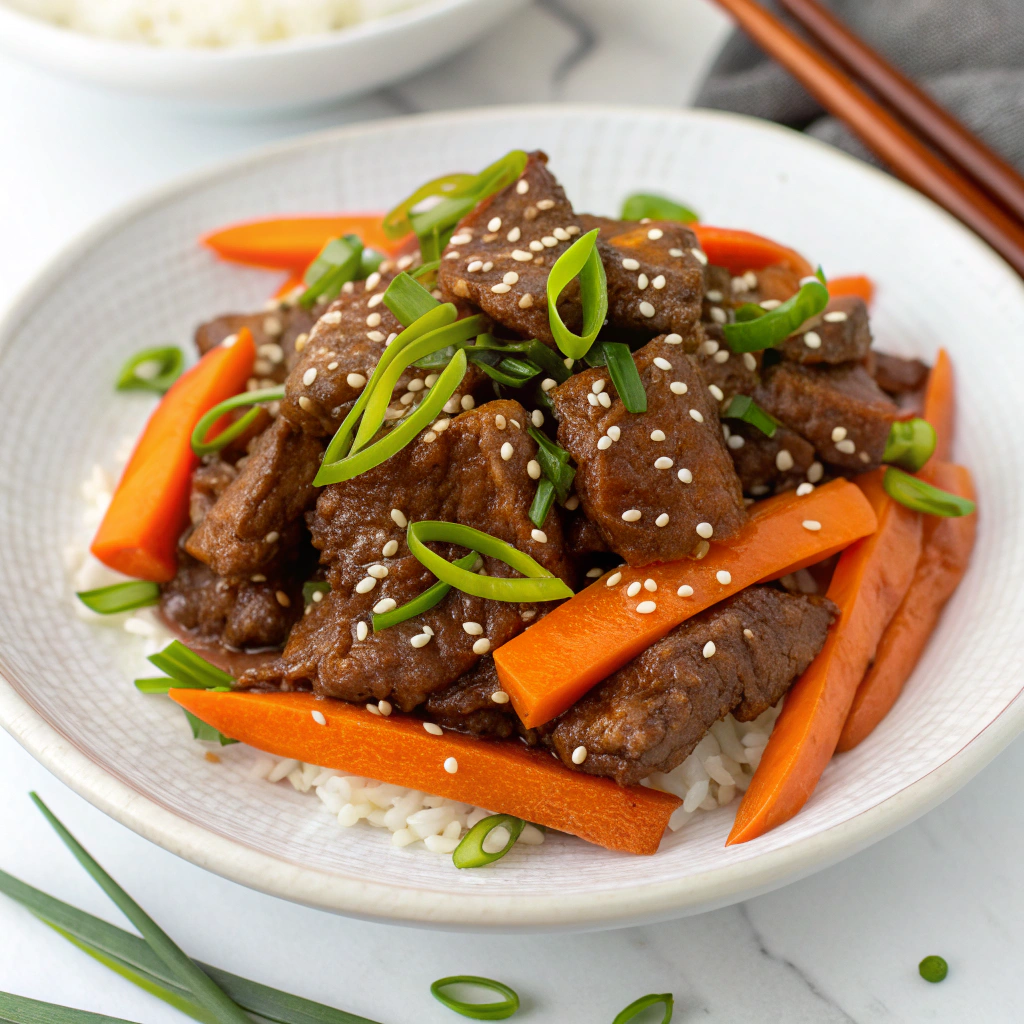
What if your favorite takeout could taste fresher, cost less, and practically cook itself while you work? That’s the promise of Slow Cooker Mongolian Beef with Carrots—a cozy, saucy, takeout-inspired dinner that turns a handful of pantry staples into something richly satisfying. In my home kitchen, I’m always testing ways to get bold flavor with minimal effort, and this set-it-and-forget-it version hits every note: tender beef, velvety soy-ginger sauce, and sweet carrot ribbons that soak up every drop. If you’ve ever thought slow cookers can’t deliver restaurant-level results, this recipe might surprise you—in the best way possible.
Ingredients List
Yield: 6 servings
- 2 pounds flank steak, thinly sliced against the grain
- 3 cups carrots, cut into matchsticks or 1/4-inch coins
- 1/2 cup low-sodium soy sauce (or tamari for gluten-free)
- 1/2 cup light brown sugar, packed
- 1/2 cup beef broth (low-sodium recommended)
- 2 tablespoons rice vinegar (or apple cider vinegar)
- 1 tablespoon toasted sesame oil
- 4 cloves garlic, minced
- 1 tablespoon fresh ginger, minced or grated
- 1/2 teaspoon crushed red pepper flakes (adjust to taste)
- 3 tablespoons cornstarch (for thickening)
- 3 tablespoons cold water (for slurry)
- 4 green onions, thinly sliced (white/green parts separated)
- 1 tablespoon sesame seeds, for garnish (optional)
- Neutral oil spray or 1 teaspoon neutral oil (optional, for light searing if desired)
- Kosher salt and black pepper, to taste
Substitutions and upgrades:
- Beef cuts: Flank steak is classic, but sirloin, flat iron, or thinly sliced chuck roast also work. For ultra-lean, try eye of round and reduce cook time slightly to prevent drying.
- Carrots: Baby carrots or pre-shredded carrots are great for convenience. Add bell peppers or snap peas in the last 30 minutes for extra color and crunch.
- Sweetener: Swap brown sugar for coconut sugar, date syrup, or use a 50/50 mix of sugar and pineapple juice for a fruit-forward glaze.
- Gluten-free: Use tamari or certified gluten-free soy sauce; thicken with arrowroot instead of cornstarch.
- Lower sodium: Choose low-sodium soy and broth. Add a squeeze of lime at the end to brighten without extra salt.
Flavor note: The carrot’s natural sweetness balances the savory soy and ginger, adding color and a subtle, earthy aroma that complements the beef beautifully.
Timing
– Prep time: 15 minutes (slicing beef thinly is the main lift)
– Cook time: 3.5–4 hours on HIGH, or 6–7 hours on LOW
– Finish time (thickening + rest): 20–30 minutes
– Total time: 4–7.5 hours, with less than 20 minutes of active work
Data insight: Compared to a stovetop stir-fry that demands constant attention, this slow cooker version reduces hands-on time by about 70% while yielding consistently tender beef—ideal for busy weeknights.
Step-by-Step Instructions
1) Slice smart for tenderness
– Partially freeze the beef for 15–20 minutes to make ultra-thin slicing easier. Slice against the grain at a 45-degree angle for tender, bite-ready pieces. Pat dry and season lightly with pepper (hold salt until you taste the sauce later).
Pro tip: Thin slices cook faster and absorb sauce better—key to silky, takeout-style beef.
2) Mix the Mongolian-style sauce base
– In a bowl, whisk soy sauce, brown sugar, beef broth, rice vinegar, sesame oil, garlic, ginger, and red pepper flakes. Taste—if it’s too salty, add a splash more broth; too sweet, add 1–2 teaspoons rice vinegar.
3) Load the slow cooker with beef and carrots
– Add carrots and the sliced white parts of the green onions to the slow cooker. Layer in the beef, then pour the sauce over everything. Aim to keep total volume below two-thirds of the crock’s capacity for even cooking.
Personal tip: If you love caramelized edges, quickly sear a third of the beef in a hot skillet for 30 seconds per side, then transfer to the slow cooker. Not required, but it adds depth.
4) Cook low and slow (or fast and cozy)
– Cook on LOW for 6–7 hours or HIGH for 3.5–4 hours, until the beef is tender and the carrots are soft. Stir once midway if you can, especially if your slow cooker has hot spots.
Device nuance: Newer slow cookers often run hotter—check at the early end of the window. Thin cuts like sirloin can be done even sooner.
5) Thicken to glossy perfection
– Whisk cornstarch and cold water into a smooth slurry. Switch the slow cooker to HIGH (if not already) and stir in the slurry. Cook 20–30 minutes more, uncovered if you want a thicker sauce. Add more slurry in 1-teaspoon increments if needed.
Flavor balance: If the sauce tastes intense, stir in 1–2 tablespoons water or unsalted broth. For sweetness, add 1–2 teaspoons brown sugar or honey.
6) Finish with freshness for Slow Cooker Mongolian Beef with Carrots
– Stir in the green parts of the onions and sesame seeds. Taste and season—usually little to no additional salt is needed. A squeeze of lime brightens everything.
Vegetable boost: Add blanched broccoli or a handful of snow peas in the last 10 minutes for pop and crunch.
7) Serve hot and savor
– Spoon over jasmine rice, brown rice, or noodles. Ladle extra sauce on top so the carrots glisten and the beef stays juicy. Garnish with more scallions and sesame seeds.
Nutritional Information
Estimates per serving (1 of 6), prepared as written:
– Calories: ~420
– Protein: ~33 g
– Carbohydrates: ~42 g
– Total Fat: ~14 g
– Saturated Fat: ~5 g
– Fiber: ~2–3 g
– Total Sugars: ~18 g
– Sodium: ~900–1,050 mg
How we estimate: Values are calculated using common nutrition databases for flank steak, low-sodium soy, brown sugar, carrots, and cornstarch. Actual numbers vary by brand, cut, and portion size. To reduce sodium, choose low-sodium products and finish with citrus instead of salt.
Healthier Alternatives for the Recipe
– Lower sugar: Use 1/3 cup brown sugar and add 2–3 tablespoons pineapple juice for natural sweetness and gentle tenderizing. Or try a 1:1 blend of brown sugar and monk fruit sweetener.
– Lower sodium: Use low-sodium soy plus low-sodium broth. Add umami with mushrooms or a few drops of fish sauce rather than more salt.
– Leaner protein: Swap flank steak for sirloin or eye of round. Keep slices thin and cook toward the shorter end of the time range.
– More veggies: Double the carrots, and add broccoli florets, bell pepper strips, or bok choy in the last 30 minutes to keep texture crisp-tender.
– Gluten-free: Choose tamari and thicken with arrowroot. Add the arrowroot slurry at the very end and avoid boiling to prevent a stringy texture.
– Low-carb/keto: Replace brown sugar with an erythritol/monk fruit blend; thicken with xanthan gum (¼ teaspoon at a time). Serve over cauliflower rice or zucchini noodles.
Serving Suggestions
– Classic bowl: Jasmine rice with a sprinkle of sesame seeds and scallions.
– Whole-grain glow-up: Brown rice or quinoa for a nutty base that soaks up sauce.
– Noodle night: Rice noodles or quick-cooked udon for a slurpable, takeout-style vibe.
– Fresh and light: Butter lettuce cups with cucumber ribbons and cilantro.
– Cozy twist: Spoon over a baked sweet potato; the sweetness plays beautifully with the soy-ginger sauce.
– Veg-forward sides: Steamed broccoli with a drizzle of sesame oil; crunchy Asian slaw for contrast.
– Beverage pairing: Bright pilsner, lightly oaked chardonnay, or sparkling water with lime and ginger.
Cook’s note: For kid-friendly bowls, go easy on the red pepper flakes and serve extra sauce on the side. For heat-seekers, add chili crisp at the table.
Common Mistakes to Avoid
– Slicing with the grain: Results in chewy meat. Always cut against the grain, thinly.
– Overcrowding a small slow cooker: Leads to uneven cooking. Keep fill level under two-thirds full.
– Adding cornstarch at the start: It can break down over long cooks and muddy the sauce. Always thicken at the end.
– Overcooking carrots: Add them at the beginning if you like them very soft, or halfway through for more bite. For crisp-tender veggies, add in the last 30 minutes.
– Skipping balance checks: If the sauce is too salty, dilute with broth and add a splash of vinegar or lime. Too sweet? Add vinegar or more ginger.
– Ignoring your device: Slow cookers vary. Start checking doneness 30 minutes early the first time you make any recipe.
– Not resting the sauce: After thickening, let it bubble for 5 minutes so the starch fully activates and the gloss develops.
Storing Tips for the Recipe
– Refrigeration: Cool quickly and store in airtight containers for up to 4 days. Keep rice or noodles separate to prevent sogginess.
– Freezing: Portion into freezer-safe bags or containers (2–3 cups each) and freeze up to 3 months. Thaw overnight in the fridge for best texture.
– Reheating: Warm gently on the stovetop over medium-low, adding a splash of water or broth to loosen. If sauce thins too much, add a small slurry (1 teaspoon cornstarch + 1 tablespoon cold water), simmer 2–3 minutes.
– Make-ahead meal kit: Combine sliced beef and marinade in a freezer bag; store prepped carrots separately. Freeze flat. Thaw and cook as directed, adding carrots at the start.
– Leftover reinventions: Tuck into lettuce wraps with pickled onions; pile onto a toasted roll with shredded cabbage; or toss with rice noodles and extra scallions.
Conclusion
Slow Cooker Mongolian Beef with Carrots is the definition of weeknight win: tender beef, a glossy, craveable sauce, and sweet-savory carrots in every bite—all with minimal effort. With simple pantry ingredients and smart timing, you get a takeout-classic dinner that’s affordable and wildly dependable. If cozy comfort is your thing, you might also love my creamy, oven-baked favorite, Ground Beef & Spinach Stuffed Shells—it’s another crowd-pleaser that doubles beautifully for meal prep.
Ready to try it? Make a batch this week, then share how you served it (rice, noodles, or lettuce cups?). Leave a comment with your slow-cooker size and any veggie add-ins you tried so others can benefit from your tweaks.
FAQs
Q1: What cut of beef works best?
– Flank steak is classic for Mongolian beef because it slices thinly and stays tender. Sirloin, flat iron, or thinly sliced chuck roast also work. For leanest results, eye of round—just monitor cook time and slice very thinly.
Q2: Can I make this on the stovetop or in the Instant Pot?
- Stovetop: Sear beef in batches, sauté carrots 2–3 minutes, add sauce, simmer 8–10 minutes, then thicken with slurry. Total time ~30 minutes.
- Instant Pot: Pressure cook beef, carrots, and sauce on High for 8 minutes; quick release; switch to Sauté, add slurry, and cook 2–3 minutes to thicken.
Q3: Can I skip the carrots or swap them?
- Absolutely. Carrots add sweetness and color, but bell peppers, broccoli, snap peas, or even mushrooms work. Add tender veggies near the end so they don’t overcook.
Q4: How do I make it spicier?
- Increase red pepper flakes, add sliced fresh chiles, or finish with chili crisp or sambal oelek. Go slow—heat intensifies as the sauce reduces.
Q5: Can I double the recipe?
- Yes, if your slow cooker is 6.5 quarts or larger. Don’t fill beyond two-thirds full. Add 30–45 minutes to the cook time and stir once or twice.
Q6: My sauce is too salty. How do I fix it?
- Dilute with unsalted broth or water, then add 1–2 teaspoons rice vinegar or a squeeze of lime for balance. A small knob of butter can mellow sharp edges too.
Q7: Can I thicken without cornstarch?
- Use arrowroot (gluten-free) in the same amount, but add it at the very end and avoid boiling. For low-carb, use 1/8–1/4 teaspoon xanthan gum, whisked in gradually.
Q8: Is it safe to cook from frozen?
- For best texture and food safety, thaw beef fully before slow cooking. If you must start from frozen, use the Instant Pot method instead for rapid, even heating.
Q9: What should I serve it with to keep it lighter?
- Cauliflower rice, steamed green beans, or a crunchy slaw. Reduce sugar to 1/3 cup and use low-sodium soy for a lighter profile.
Q10: Where can I see another version for inspiration?
- If you enjoy exploring variations, check out this well-loved take on the dish: Slow Cooker Mongolian Beef. It’s a great reference point if you want to compare techniques and ingredient ratios.
Personal note from my kitchen: I test weeknight recipes in a small, real-world kitchen, prioritizing reliable techniques and bold flavor. This dish is a frequent flyer in my rotation because it’s flexible, scalable, and deeply satisfying. Make it once, and you’ll have your new favorite “takeout at home” dinner ready to go.