
Introduction
What if the most flavorful pot roast you’ve ever eaten wasn’t browned in a Dutch oven for hours, but slow-simmered while you went about your day—and still sliced like butter? That’s the promise of Moist & Tender Slow Cooker Roast Beef: a simple, juicy, fall-apart recipe that respects your time and delivers steakhouse-level results. As a cook who tests comfort-food classics relentlessly for home kitchens, I’ve refined this method to ensure your beef is succulent every time. This approach balances science (collagen melts best with time and low heat) with practical, weeknight-friendly steps for real life.
Instead of guessing, you’ll know exactly which cut to buy, how to season for deep beefiness, and when to finish with a silky gravy or a lighter jus. Whether you love the nostalgic comfort of a Sunday roast or need a set-it-and-forget-it dinner that feeds a crowd, this slow cooker roast checks every box—tender, juicy, and reliably delicious.
Ingredients List
Choose a well-marbled cut—marbling is your insurance policy for moisture and flavor.
- Beef chuck roast (3–4 pounds): The gold standard for slow cooking. Shoulder or blade roast are great alternatives.
- Kosher salt (2–2½ teaspoons): Aim for about 1.2% salt by meat weight for optimal seasoning. Sea salt works too; use a touch less if using table salt.
- Freshly ground black pepper (1½ teaspoons): Coarse grind adds pleasant bite.
- Garlic powder (1 teaspoon) + onion powder (1 teaspoon): Layers of savory flavor without chopping.
- Smoked paprika (½ teaspoon): Adds warmth and subtle smokiness. Sweet paprika works if you prefer milder notes.
- Dried thyme (1 teaspoon) + dried rosemary (1 teaspoon), crushed: Earthy aromatics that pair naturally with beef.
- Worcestershire sauce (1½ tablespoons): Umami boost and mild tang.
- Low-sodium beef broth (1½ cups): The flavor foundation. Substitute with broth concentrate and water if needed.
- Soy sauce (1 tablespoon): Adds depth and color; use tamari for gluten-free.
- Balsamic vinegar (1 tablespoon): Gentle acidity that balances richness.
- Yellow onion (1 large), thickly sliced: Sweetness and body to the jus.
- Carrots (4), cut into large chunks: Classic pairing that holds shape in the slow cooker.
- Baby potatoes (1½ pounds), halved: Use Yukon golds for creamy texture; red potatoes resist breaking down.
- Olive oil (1 tablespoon) or neutral oil: For searing.
- Optional finish for gravy:
- Cornstarch (2 tablespoons) + cold water (2 tablespoons), for slurry
- Or 2 tablespoons unsalted butter for a glossy finish
Ingredient swaps and additions:
- If you love mushrooms, add 8 ounces of cremini in the last 2 hours.
- For a garlic-forward roast, add 6 whole cloves, peeled.
- Red wine lovers: swap ½ cup broth for a dry red wine to intensify the braise.
Timing
- Prep: 15 minutes (10 for seasoning and searing, 5 for veggies)
- Cook: 8–9 hours on Low, or 4½–5 hours on High
- Total: About 8½–9½ hours on Low, which is roughly 15–25% more hands-off time than many oven roasts—but with less active work and more consistent tenderness
Data-backed tip: Chuck roast connective tissue begins to gelatinize around 170–190°F with time. Keeping heat low and steady for several hours creates that “spoon-tender” texture without drying out lean muscle fibers.
Step-by-Step Instructions
Step 1: Season with intent
Pat the chuck roast dry. Mix salt, pepper, garlic powder, onion powder, smoked paprika, thyme, and rosemary. Season all sides generously. Let it rest for 10 minutes while you prep veggies. This brief rest helps the salt begin to penetrate and enhances browning.
Personal tip: Measure salt at roughly 1.2% of meat weight for balanced seasoning that tastes seasoned, not salty.
Step 2: Sear for flavor fireworks
Heat oil in a heavy skillet over medium-high until shimmering. Sear the roast 3–4 minutes per side until a deep brown crust forms. Don’t rush this: Maillard browning creates hundreds of flavor compounds you can’t get any other way.
Shortcut option: If you skip searing, increase Worcestershire to 2 tablespoons and add ½ teaspoon extra paprika for more savory depth.
Step 3: Build your braising base
To the slow cooker, add onions, carrots, and potatoes. Place the seared roast on top. In a bowl or measuring cup, whisk beef broth, soy sauce, balsamic vinegar, and Worcestershire. Pour around (not over) the roast to keep your crust intact.
Flavor note: Pouring around the roast helps preserve the browned crust, which slowly seasons the jus as it simmers.
Step 4: Set-and-forget the temperature sweet spot
Cover and cook:
- Low for 8–9 hours (best for shreddable, moist results)
- High for 4½–5 hours (good, but slightly less tender than Low)
Avoid lifting the lid in the first 4 hours—every peek can drop the temperature and extend cooking by 20–30 minutes.
Step 5: Test doneness like a pro
Open the lid near the 8-hour mark (Low) and test with two forks: the roast should separate with gentle pressure. Internal temperature will be higher than steak doneness (around 195–205°F), which is ideal for connective tissue breakdown. If it resists, cook 30–60 minutes longer.
Preference paths:
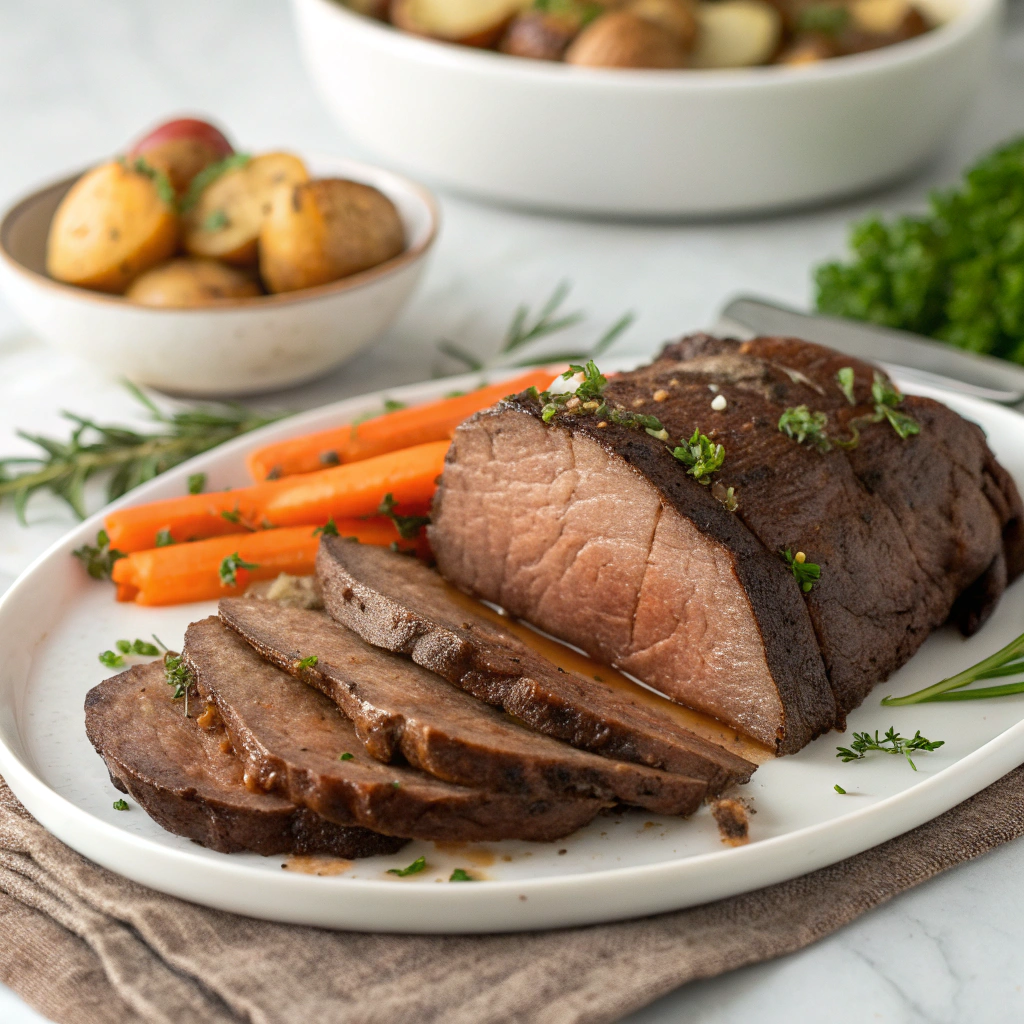
- For slices: Stop when the roast just holds together and slice across the grain.
- For fall-apart beef: Cook until easily shreddable and toss gently in the jus.
Step 6: Finish with jus or glossy gravy
Lift roast and vegetables to a platter; tent loosely with foil. Skim excess fat from the cooking liquid.
- For a light, savory jus: Taste and adjust salt and pepper. Stir in 1 tablespoon butter for a silkier finish (optional).
- For a thicker gravy: Whisk cornstarch slurry into the simmering liquid (transfer to a saucepan if your cooker doesn’t simmer). Cook 2–3 minutes until glossy and slightly thickened. Finish with 1 tablespoon butter for sheen.
Chef’s note: A modest 6–8 ounce portion with jus stays lighter; gravy adds comfort and helps cling to mashed sides.
Nutritional Information
Approximate per serving (6 servings; 6 ounces cooked beef plus vegetables and 1/4 cup jus):
- Calories: 410
- Protein: 33 g
- Fat: 22 g
- Saturated Fat: 8 g
- Carbohydrates: 14 g
- Fiber: 3 g
- Sugars: 4 g
- Sodium: 820 mg
Estimates based on typical USDA values for braised chuck roast, potatoes, and carrots with low-sodium broth and seasonings. Gravy made with cornstarch adds roughly 10–20 calories per serving; butter will add additional fat and calories.
Healthier Alternatives for the Recipe
- Leaner cut strategy: Use top round or bottom round (3–3½ pounds). These are leaner than chuck. Add 1 tablespoon olive oil to the broth to prevent dryness and cook strictly on Low. Slice rather than shred for best texture.
- Sodium-smart swaps: Use unsalted broth; reduce soy sauce to 2 teaspoons; finish with lemon juice or extra balsamic to boost perceived saltiness without actual sodium.
- More veggies, fewer starches: Replace half the potatoes with parsnips or turnips. Add celery and mushrooms for volume and umami with fewer calories.
- Gluten-free and soy-free: Choose tamari or coconut aminos (gluten-free) or skip soy entirely and increase Worcestershire by 1 teaspoon (ensure gluten-free brand).
- Wine-forward variation: Replace ½ cup broth with dry red wine for polyphenol-rich depth; simmer the sauce a few minutes longer to burn off alcohol and concentrate flavor.
- Dairy-free richness: Skip the butter finish and swirl in 1 teaspoon extra-virgin olive oil for body and sheen.
Serving Suggestions
- Classic plate: Slices or shreds of roast with carrots, potatoes, and a ladle of jus. Add a sprinkle of fresh parsley and a crack of black pepper for brightness.
- Elevated comfort: Serve over creamy mashed potatoes or polenta; top with gravy and chives.
- Lighter bowl: Heap onto cauliflower mash or roasted root vegetables, with jus and a squeeze of lemon.
- Sandwich bliss: Pile shredded beef onto toasted rolls with provolone and a cup of jus for dipping.
- Leftover remix: Toss with egg noodles and peas for a weeknight “beef and noodles,” or add to a vegetable soup base for a hearty stew.
If you love rich, saucy beef dinners, you might also enjoy these savory, gravy-forward bites: Oven-Baked Beef Tips with Thick Gravy.
Common Mistakes to Avoid
- Choosing the wrong cut: Lean roasts (like eye of round) can dry out. Opt for chuck or shoulder with visible marbling if you want guaranteed tenderness.
- Under-seasoning: Large roasts need more salt than you think. Season by weight (about 1.2% salt) for consistent results.
- Skipping the sear without compensating: No sear means less depth. If you skip it, increase umami boosters (Worcestershire, soy, or mushrooms).
- Overcrowding with small cuts: Keep vegetables in larger chunks so they don’t dissolve. Baby potatoes halved; carrots cut into 2-inch pieces.
- Lifting the lid: Repeated peeks extend cook time. Trust the process for the first 4 hours.
- Stopping at “fork-tender-ish”: If the roast slightly resists shredding, it’s not done. Add 30–60 minutes; tenderness improves dramatically in that final window.
- Aggressive thickening: Too much cornstarch yields a gluey texture. Start small; you can always add more slurry.
Storing Tips for the Recipe
- Cool smart: Allow leftovers to cool to room temperature for no more than 1 hour. Store beef submerged in its jus to keep it moist.
- Refrigerate: Up to 4 days in airtight containers. Store vegetables separately, if possible, to keep textures distinct.
- Freeze: Shredded beef in jus freezes beautifully for up to 3 months. Portion into freezer bags (2-cup portions), press flat for quick thawing.
- Reheat gently: Simmer in a covered pan with extra broth or water (2–4 tablespoons) over low heat. Microwaving? Reheat at 50–60% power, stirring once to avoid dry spots.
- Make-ahead strategy: Season and sear the roast the night before; refrigerate. In the morning, load the cooker, pour in the liquids, and start Low.
Conclusion
This Moist & Tender Slow Cooker Roast Beef is the kind of recipe that turns an ordinary day into a Sunday supper—without tying you to the stove. With the right cut, deliberate seasoning, and low-and-slow patience, you’ll get a roast that’s juicy, rich, and irresistibly fall-apart. Try it this week, then share your tweaks—wine or no wine, gravy or jus? Your experience helps other home cooks succeed too. Hungry for more comfort-food classics? Explore related beef dinners and slow-cooker favorites on the site.
FAQs
Q: Which cut makes the most tender slow cooker roast?
A: Chuck roast is your best bet for moisture and shreddable texture thanks to its marbling and connective tissue. Shoulder roast and blade roast are solid alternatives.
Q: Can I cook it on High instead of Low?
A: Yes—4½ to 5 hours on High works. However, Low (8–9 hours) yields the most tender, shreddable results because the collagen has more time to convert into gelatin.
Q: Do I have to sear the meat first?
A: Searing builds deep flavor and a beautiful crust, but you can still make a delicious roast without searing. If skipping, boost umami with an extra teaspoon of Worcestershire and a handful of mushrooms in the last 2 hours.
Q: How do I get thick gravy without flour?
A: Use a cornstarch slurry (1:1 cornstarch to cold water). Start with 2 tablespoons slurry per cup of cooking liquid, simmer 2–3 minutes, and adjust as needed.
Q: Can I add red wine?
A: Absolutely. Swap ½ cup of the beef broth for dry red wine. It adds complexity and a restaurant-style finish. Simmer the sauce a couple of minutes after cooking to mellow the alcohol.
Q: My roast is stringy or dry—what went wrong?
A: It likely needed more time on Low, or you used a very lean cut. Cook until the roast shreds with gentle pressure and always store leftovers in their jus to retain moisture.
Q: What if my slow cooker runs hot?
A: Some models run 10–20°F hotter. If your cooker tends to boil on Low, add ¼ cup more broth and check for doneness 45 minutes earlier. You can also use an in-pot thermometer to monitor.
Q: Can I adapt this for meal prep?
A: Yes. Portion shredded beef with jus into containers; add a starchy side (potatoes or rice) to half and roasted vegetables to the rest. Refrigerate 3–4 days or freeze up to 3 months.
Q: How does this compare to similar recipes?
A: This method emphasizes precise seasoning-by-weight, searing for Maillard flavor, and a balanced jus-to-gravy finish. Techniques are aligned with best practices you’ll see in trusted sources like this slow cooker roast beef, but tailored for predictably tender results and flexible finishes at home.
Q: Can I make it without potatoes and carrots?
A: Definitely. Replace with mushrooms, parsnips, or keep it simple with just onions and serve alongside mashed potatoes, polenta, or a crisp salad.