
Introduction
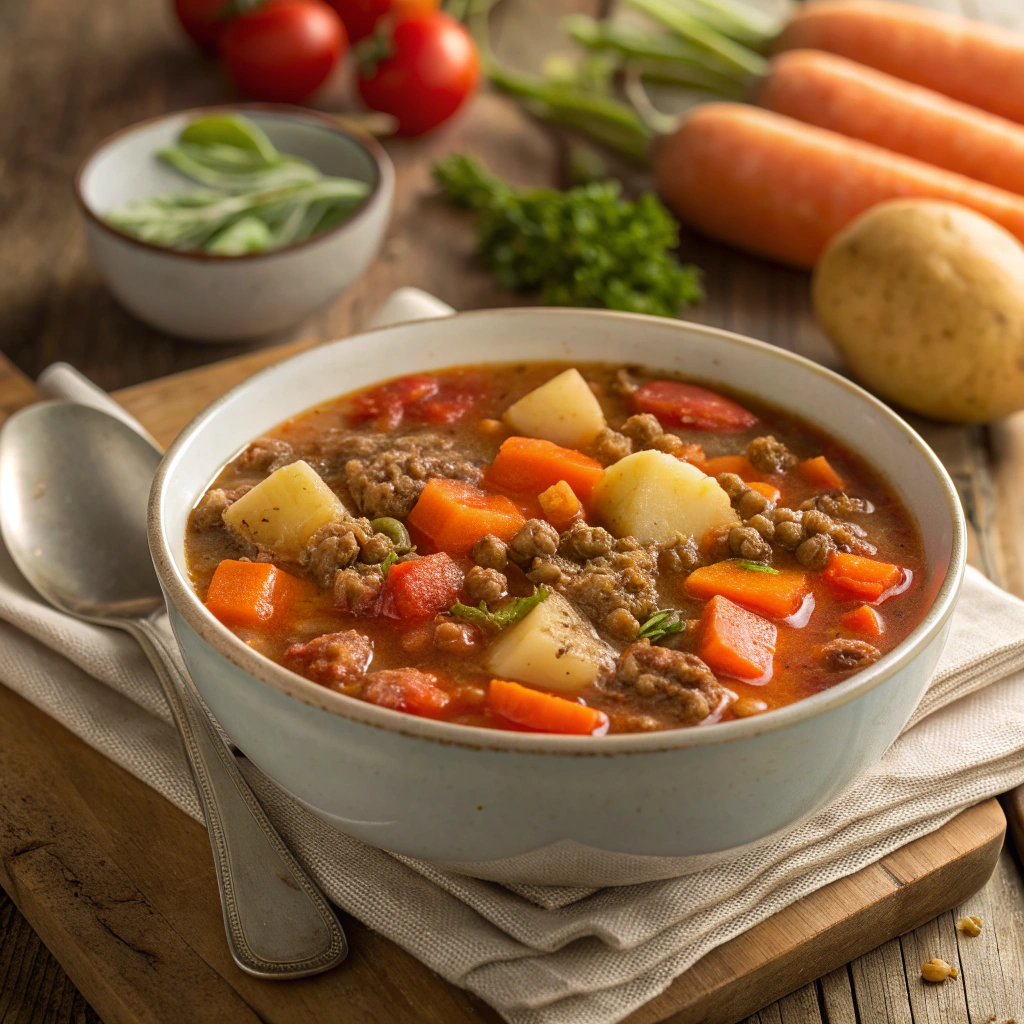
Can a weeknight soup be as hearty as a Sunday stew—without babysitting a pot for hours? This Homemade Ground Beef Vegetable Soup proves it can. Built on simple pantry staples, it’s the kind of cozy, filling meal that satisfies on busy nights and scales beautifully for meal prep. In my kitchen, I use one pot, high heat to build flavor fast, and a strategic add-in schedule so the vegetables stay vibrant rather than mushy. If you love a classic hamburger-and-veggies flavor profile but want something fresher and more customizable, this recipe is your blueprint for a reliable, wholesome bowl of comfort.
What makes this soup different? We layer umami with tomato paste and Worcestershire, sear the beef until it’s deeply browned, and add delicate vegetables near the end so they keep a bit of snap. You’ll get a balanced broth—savory, lightly sweet from carrots and corn, with enough acidity to taste bright, not heavy. It’s family-friendly, budget-conscious, and freezer-ready. And yes, it comes together faster than most, with techniques you can reuse for countless soups and stews.
Ingredients List
– 1 pound ground beef (85% lean recommended for flavor; see swaps below)
– 1 tablespoon olive oil (optional, for leaner beef)
– 1 medium yellow onion, diced
– 2 medium carrots, diced
– 2 celery stalks, diced
– 3 garlic cloves, minced
– 1 red bell pepper, diced (optional for sweetness and color)
– 2 medium Yukon Gold potatoes, diced (skin on for texture)
– 1 cup green beans, chopped (fresh or frozen)
– 3/4 cup corn kernels (fresh, frozen, or canned and drained)
– 3/4 cup peas (frozen)
– 1 can (14.5 ounces) diced tomatoes with juices
– 2 tablespoons tomato paste
– 6 cups low-sodium beef broth (or mix with 1 cup water if your broth is very rich)
– 1 tablespoon Worcestershire sauce
– 1 teaspoon smoked paprika
– 1 teaspoon Italian seasoning (or a mix of oregano, basil, and thyme)
– 1 bay leaf
– 1 to 1 1/4 teaspoons kosher salt, to taste
– 1/2 teaspoon freshly ground black pepper
– Pinch of sugar or drizzle of honey (optional, to balance acidity)
– Red pepper flakes, to taste (optional heat)
– Fresh parsley or chives, chopped (for garnish)
– Lemon wedge or splash of red wine vinegar (optional finish for brightness)
Smart swaps:
- Protein: Swap ground beef for ground turkey, chicken, or plant-based crumbles. For a richer, bolder soup, use a half-and-half mix of beef and Italian sausage.
- Veggies: No green beans? Use zucchini. No potatoes? Try sweet potatoes for a touch of caramel sweetness. Frozen mixed vegetables work in a pinch—add them near the end.
- Broth: Chicken or vegetable broth is fine; add 1 teaspoon soy sauce or extra Worcestershire to keep the “beefy” depth.
- Grains/beans: Stir in 1/2 cup quick-cooking barley or a drained can of cannellini beans for extra body and fiber.
- Herbs: Swap Italian seasoning for herbes de Provence if you want a more floral note.
Timing
– Prep time: 15 minutes (dice onion, carrot, celery, potatoes; mince garlic)
– Active cook time: 30 minutes
– Simmer time: 10 minutes
– Total time: About 55 minutes from start to ladle
Data context: Many beef-and-vegetable soups clock in at 65–75 minutes total; this version averages about 55 minutes—roughly 15–25% faster—by browning the beef first, caramelizing tomato paste quickly, and staggering vegetable additions to minimize overcooking.
Step-by-Step Instructions
1) Dice and prep like a pro
Cut onion, carrots, and celery into even, small dice so they cook at the same rate. Dice Yukon Golds into 1/2-inch cubes (no need to peel). If using green beans, trim and cut into 1-inch pieces. Tip: Keep potatoes submerged in cold water while you prep to prevent browning; drain just before adding.
2) Brown the ground beef deeply
Heat a large soup pot or Dutch oven over medium-high. Add the ground beef (and olive oil if your beef is very lean). Break into large chunks and let them sear undisturbed for 2–3 minutes to develop a browned crust, then continue breaking into bite-size crumbles. Brown until no longer pink and edges are caramelized—about 6–8 minutes. This creates flavorful fond (those browned bits) on the pan.
3) Adjust the fat and build your base
If there’s more than a tablespoon of fat in the pot, spoon off the excess, leaving about 1 tablespoon for flavor. Add onion, carrots, and celery with a pinch of salt. Cook 5–6 minutes until softened and slightly golden at the edges. Stir in garlic and bell pepper; cook 1 minute until fragrant. Tip: A small pinch of salt at each stage helps the vegetables sweat and seasons in layers.
4) Caramelize tomato paste for umami
Push vegetables to the sides and add tomato paste to the center. Cook 1–2 minutes, stirring, until it darkens slightly—this quick caramelization adds depth. Sprinkle in smoked paprika and Italian seasoning; let the spices bloom for 30 seconds to amplify aroma.
5) Deglaze and add hearty vegetables
Pour in 1 cup of broth to deglaze, scraping the bottom to release the fond. Add remaining broth, diced tomatoes with juices, Worcestershire, bay leaf, potatoes, carrots (if you prefer them extra tender, you can add half now and half later), salt, and pepper. Bring to a boil, then reduce to a brisk simmer.
6) Simmer to tender, not mushy
Simmer 12–15 minutes, uncovered, until potatoes are just fork-tender. Taste the broth—it should already be savory with a hint of sweetness from the vegetables. If it tastes muted, add 1/2 teaspoon salt. Tip: A rolling simmer (small, steady bubbles) helps flavors marry without clouding the broth.
7) Add delicate vegetables at the end
Stir in green beans, corn, and peas. Simmer 5–7 minutes until the beans are crisp-tender and peas are bright green. If you prefer a thicker soup, lightly mash a few potato pieces against the side of the pot to release starch, or simmer an extra 3–5 minutes to reduce.
8) Balance and finish
Taste and adjust. If the broth feels too acidic, add a pinch of sugar or honey. If it needs brightness, squeeze in a little lemon or splash 1 teaspoon red wine vinegar. For deeper savoriness, add another 1/2 teaspoon Worcestershire or a dash of soy sauce. Remove bay leaf. Ladle into bowls and garnish with parsley, black pepper, and optional red pepper flakes.
Nutritional Information
Estimated per serving (1 of 6; about 1.5 cups each), made with 85% lean ground beef and low-sodium broth:
– Calories: ~290
– Protein: ~22 g
– Carbohydrates: ~28 g
– Total Fat: ~11 g (Saturated: ~4 g)
– Fiber: ~5 g
– Sodium: ~620 mg (varies by broth brand)
– Potassium: ~950 mg
– Vitamin A: ~80% DV
– Vitamin C: ~35% DV
– Iron: ~20% DV
Notes:
- Using 93% lean beef reduces fat by ~4–5 g per serving and calories by ~40–50.
- Swapping half the potatoes for cauliflower cuts carbs by ~6–8 g per serving.
- Adding 1/2 cup cooked barley increases fiber by ~2–3 g per serving.
Healthier Alternatives for the Recipe
– Leaner protein: Use 93% lean ground beef or ground turkey to reduce saturated fat while keeping a meaty bite. Season generously to compensate for leaner meat’s milder flavor.
– Boost fiber and plant power: Stir in 1 can of cannellini beans or lentils during the last 10 minutes. You’ll get a creamier mouthfeel without cream.
– Lower sodium: Choose low-sodium broth and add salt at the end. Brighten with lemon or vinegar so you don’t miss the salt.
– More greens: Fold in 2 cups chopped kale or spinach during the last 3 minutes of cooking for a mineral-rich finish.
– Carb-conscious: Replace half the potatoes with cauliflower florets or rutabaga; both hold texture and reduce overall carbs.
– Whole grains: Add 1/2 cup quick-cooking barley or brown rice during simmering (you may need 1 extra cup of broth).
– Dairy-free and gluten-free: The base recipe is naturally dairy-free. Keep it gluten-free by verifying your broth and Worcestershire are GF-certified.
– Mediterranean twist: Finish with extra-virgin olive oil, fresh oregano, and a sprinkle of feta (if dairy is fine). The olive oil elevates mouthfeel and heart-healthy fats.
Serving Suggestions
– Garnishes: Fresh parsley or chives, a grind of black pepper, and a squeeze of lemon for lift. Parmesan shavings add umami if you’re not dairy-free.
– Bread pairings: Crusty sourdough, cornbread, or warm garlic toast for dunking. For lighter fare, serve with a side of mixed greens dressed with a simple vinaigrette.
– Make it a meal: Add a scoop of cooked barley or brown rice to each bowl, then ladle soup over. It turns into a satisfyingly complete, high-fiber dinner.
– For kids: Serve with buttered noodles on the side and let them “build their bowl” by adding corn, peas, or cheese on top.
– Next-day remix: Reduce leftover soup on the stove until thick, then spoon over baked potatoes or use as a savory filling for hand pies or empanadas.
Common Mistakes to Avoid
– Not browning the beef enough: Pale beef = flat flavor. Let it sear and develop those browned bits before adding vegetables.
– Overcrowding the pot: If your pot is small, brown beef in two batches to avoid steaming.
– Adding all vegetables at once: Delicate veggies (peas, corn, green beans) go in last so they keep color and snap.
– Overseasoning early: Broth reduces as it simmers. Salt lightly at first, then taste and adjust at the end.
– Skipping the acidity: A touch of lemon or vinegar at the end wakes up the whole pot. If it tastes “meh,” it likely needs acid, not more salt.
– Boiling hard the entire time: A vigorous boil clouds the broth and breaks down vegetables too quickly. Keep it at a brisk simmer.
– Freezing with the wrong potatoes: Russets can go mealy when frozen. Yukon Golds or adding potatoes after reheating yield better texture.
Storing Tips for the Recipe
– Cool quickly: Let soup stand 10–15 minutes, then transfer to shallow containers. Fast cooling preserves freshness and food safety.
– Refrigerate: Store up to 4 days in airtight containers. The flavors deepen by Day 2.
– Freeze: Portion into freezer-safe containers or zip-top bags; lay bags flat for quicker freezing. Freeze up to 3 months.
– Reheat: Thaw overnight in the fridge or reheat gently from frozen over medium-low, adding a splash of broth or water as needed. Aim for a gentle simmer to preserve vegetable texture.
– Meal prep smarter: If you plan to freeze, consider undercooking the potatoes by a few minutes or cooking them fresh when reheating for best texture.
– Flavor refresh: After reheating, brighten with a squeeze of lemon and a pinch of salt to revive flavors.
Conclusion
This Homemade Ground Beef Vegetable Soup is everything you want in a cozy bowl: deeply savory, loaded with colorful veggies, and ready in under an hour. The layered browning, staggered veg additions, and final acid pop deliver a restaurant-worthy result with weeknight effort. If you make it, leave a comment with your tweaks, share it with a friend who needs a new meal-prep staple, and bookmark it for chilly nights. Craving more beef dinners with comfort vibes? Try my beef tips and egg noodles skillet next.
FAQs
Q1: Can I make this soup in a slow cooker?
A: Yes. Brown the beef and aromatics in a skillet first (key for flavor). Transfer to a slow cooker with remaining ingredients except peas and corn. Cook on Low 6–7 hours or High 3–4 hours. Add peas and corn for the final 20–30 minutes.
Q2: How do I adapt this for the Instant Pot?
A: Use Sauté to brown beef and aromatics; add broth, tomatoes, potatoes, carrots, seasonings. Pressure cook on High for 5 minutes, Natural Release 10 minutes, then quick-release. Add peas, corn, green beans, and simmer on Sauté for 3–5 minutes.
Q3: Can I use frozen vegetables?
A: Absolutely. Add frozen mixed vegetables in the last 5–7 minutes so they heat through but don’t lose color or texture.
Q4: What can I substitute for Worcestershire sauce?
A: Combine 1 teaspoon soy sauce (or tamari for gluten-free) with 1/4 teaspoon balsamic vinegar or fish sauce. This mimics the salty-umami-sour profile.
Q5: My soup is too thin—how do I thicken it?
A: Lightly mash some potatoes in the pot, simmer uncovered to reduce, or stir in a slurry of 1 teaspoon cornstarch mixed with 2 teaspoons cold water and simmer 2–3 minutes.
Q6: Can I make this low-carb?
A: Swap potatoes for cauliflower and increase low-carb vegetables like zucchini and green beans. Use 93% lean ground beef and low-sodium broth to keep it light but satisfying.
Q7: What herbs work best?
A: Italian seasoning is reliable. Fresh thyme, parsley, and a bay leaf add depth. For a brighter finish, stir in fresh basil or a spoonful of pesto off-heat.
Q8: Is there a classic version I can compare this to?
A: If you’re curious how this stacks up to a more traditional style, browse this classic take on hamburger vegetable soup at Taste of Home for comparison and inspiration.
Q9: Can I add pasta?
A: Yes, but cook it separately to avoid soggy noodles. Add cooked pasta to bowls, then ladle soup over. If cooking pasta in the soup, add more broth and cook just until al dente.
Q10: How can I make the flavor richer without adding cream?
A: Brown the beef thoroughly, caramelize tomato paste, and finish with a splash of soy sauce or fish sauce. These add depth without dairy or extra fat.
With these tips and techniques, your Homemade Ground Beef Vegetable Soup will taste like it simmered all afternoon—without the wait. Enjoy the comfort, the color, and the “just one more spoonful” factor tonight.