
Introduction
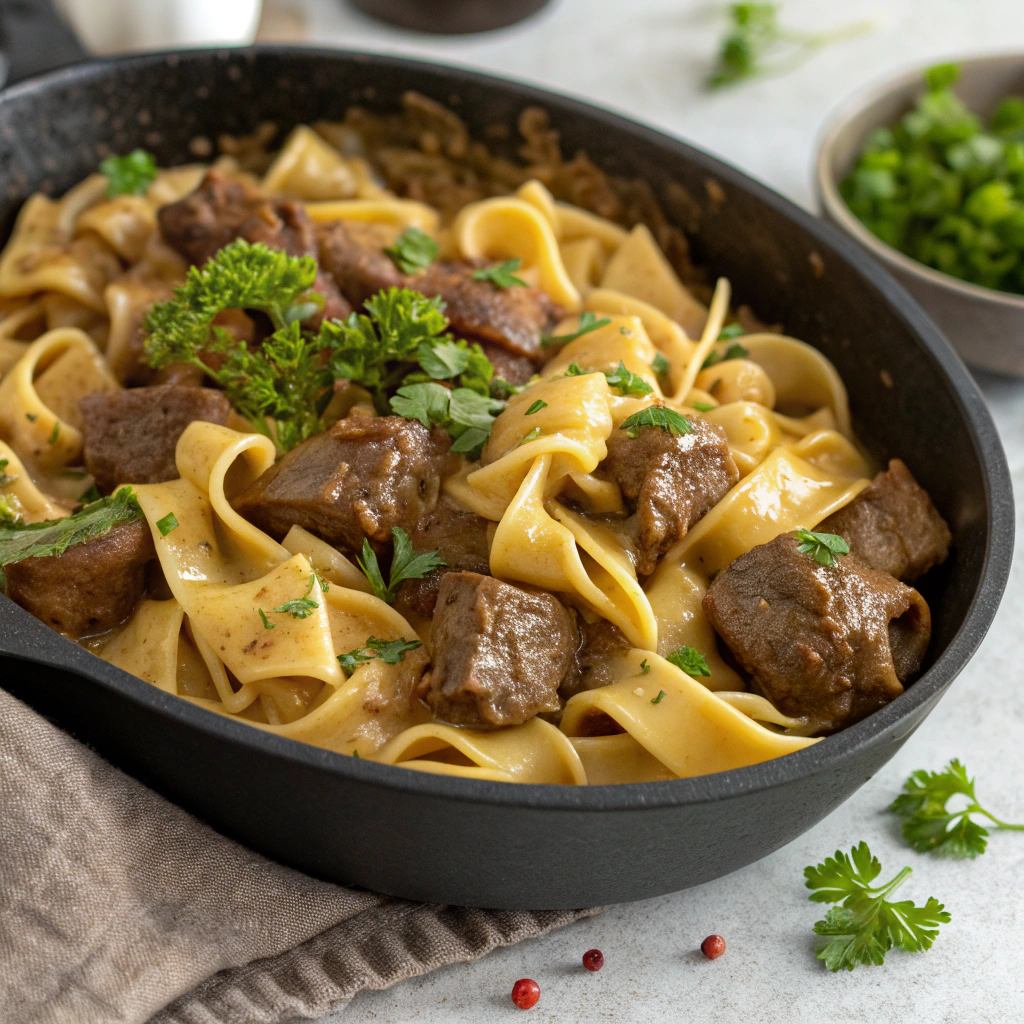
What if the best comfort dinner isn’t baked in the oven or simmered all day, but comes together in one skillet with rich gravy and tender noodles—no straining, no extra pots? This Beef Tips and Egg Noodles Skillet delivers exactly that: a one-pan weeknight miracle that eats like Sunday supper. It’s cozy, caramelized, and silky, with seared beef tips, a savory mushroom-onion base, and twirlable egg noodles that cook right in the sauce. If you crave a skillet dinner that tastes like beef stroganoff met a country-style gravy—while staying weeknight-simple—this is your new favorite. Let’s make it irresistible, efficient, and totally doable for your kitchen tonight.
Ingredients List
This list balances classic comfort with pantry-friendly swaps, so you can get dinner going without a grocery run. Sensory cues guide you—think golden sear on beef, softened onions, and a glossy gravy that hugs the noodles.
- Beef tips: 1 pound, cut into 1-inch pieces (sirloin tips or tenderloin tips are best; chuck or stew meat works with a slightly longer simmer)
- Wide egg noodles: 8 ounces, dry
- Olive oil: 2 tablespoons
- Butter: 1 tablespoon (adds richness and browning)
- Onion: 1 large, thinly sliced
- Cremini or button mushrooms: 8 ounces, sliced (deep umami and texture)
- Garlic: 3 cloves, minced
- All-purpose flour: 1 tablespoon (for silky gravy)
- Low-sodium beef broth: 2 1/2 cups total (start with 2 cups; hold back 1/2 cup as needed)
- Worcestershire sauce: 2 tablespoons (layered savory depth)
- Dijon mustard: 1 teaspoon (gentle acidity to balance richness)
- Sour cream: 1/2 cup (stirred in at the end for a creamy finish)
- Dried thyme: 1 teaspoon (or 2 teaspoons fresh, finely chopped)
- Smoked paprika: 1 teaspoon (warmth and color)
- Bay leaf: 1
- Kosher salt and freshly ground black pepper: to taste
- Fresh parsley: 2 tablespoons, chopped (bright finish)
- Optional heat: pinch of red pepper flakes
Smart substitutions:
- Lighter dairy: Greek yogurt in place of sour cream (stir in off heat to prevent curdling).
- Gluten-free: use gluten-free egg noodles and swap flour for 2 teaspoons cornstarch mixed with 2 tablespoons cold water (add at the end).
- Mushroom-free: omit and add 1 extra onion or 1 cup diced bell peppers.
- No Worcestershire: use 1 tablespoon soy sauce plus 1 teaspoon balsamic vinegar.
Flavor boosters (optional but recommended):
- 1 teaspoon beef bouillon paste for extra savory punch
- 1 teaspoon tomato paste for subtle sweetness and body
- A splash of dry sherry during deglazing for restaurant-level depth
Timing
– Prep time: 10 minutes (slice onion and mushrooms, cut beef, measure seasonings)
– Cook time: 25 minutes
– Total time: about 35 minutes
Compared with many skillet, stroganoff-style dinners that run 45–50 minutes, this version lands in 35—roughly 20–30% faster—without sacrificing those deep, simmered flavors. The key efficiencies: high-heat sear, a concentrated pan sauce, and cooking the noodles directly in the skillet.
Step-by-Step Instructions
Step 1: Season and dry the beef for a better sear
– Pat the beef tips dry with paper towels. Moisture is the enemy of browning.
– Season generously with 1 teaspoon kosher salt, 1/2 teaspoon black pepper, and half the smoked paprika.
– Tip: If time permits, season the beef 15–20 minutes in advance. The salt penetrates slightly, seasoning the interior and improving browning.
Step 2: Sear the beef in batches for caramelized flavor
– Heat a large, heavy skillet (12-inch cast iron or stainless) over medium-high until hot.
– Add 1 tablespoon olive oil and the butter. When the butter foams, add half the beef in a single layer. Don’t crowd; space promotes browning.
– Sear 1–2 minutes per side until deeply browned but not cooked through. Transfer to a plate and repeat with remaining beef, adding a touch more oil if needed.
– Tip: Brown bits on the pan (fond) = flavor. Keep them—you’ll deglaze in the next step.
Step 3: Soften onions and mushrooms to build the base
– Reduce heat to medium. Add remaining 1 tablespoon olive oil.
– Add the onion and mushrooms with a pinch of salt. Cook 5–6 minutes, stirring occasionally, until onions are translucent and mushrooms release their juices and turn golden at the edges.
– Stir in garlic and thyme; cook 30 seconds until fragrant.
– Tip: If the pan looks dry, splash in 1–2 tablespoons broth to prevent scorching while you soften the vegetables.
Step 4: Make the pan sauce with gentle thickening
– Sprinkle flour over the vegetables; stir for 30–45 seconds to form a thin roux.
– Add Worcestershire and Dijon; stir to coat.
– Gradually pour in 2 cups beef broth while stirring, scraping up all browned bits.
– Add bay leaf and the remaining smoked paprika. Bring to a simmer.
– Optional: Add a teaspoon of tomato paste or a splash of dry sherry for added complexity.
Step 5: Cook the egg noodles right in the skillet
– Once the sauce is gently bubbling, stir in the dry egg noodles.
– Reduce heat to medium-low, cover, and cook 6–8 minutes, stirring once or twice to prevent sticking.
– If the sauce tightens too quickly before noodles are tender, add reserved 1/2 cup broth (or hot water), 2–3 tablespoons at a time, until noodles are al dente.
– Tip: Cooking noodles in sauce releases a little starch, naturally thickening the gravy so it clings luxuriously.
Step 6: Return beef tips and finish gently
– Remove the bay leaf. Return the seared beef (and juices) to the skillet, nestling into the noodles and sauce.
– Simmer 1–2 minutes, just until the beef is cooked to tender and warm throughout. Avoid overcooking to keep the beef juicy.
– Taste and adjust salt and pepper.
Step 7: Stir in creaminess off heat
– Turn off the heat. Stir in sour cream until the sauce is glossy and creamy.
– If using Greek yogurt, temper first by whisking a spoonful of hot sauce into the yogurt, then stir the mixture into the pan to prevent curdling.
– Finish with chopped parsley and, if desired, a pinch of red pepper flakes.
Step 8: Rest and serve
– Let the skillet rest 2 minutes; sauces thicken slightly as steam settles.
– Twirl into bowls, spooning extra gravy over the top. Garnish with more parsley and fresh-cracked pepper.
Nutritional Information
Estimated per serving (4 servings):
– Calories: ~620
– Protein: ~32 g
– Carbohydrates: ~47 g
– Total fat: ~28 g
– Saturated fat: ~10 g
– Fiber: ~3 g
– Sodium: ~900–1,000 mg (varies by broth and Worcestershire)
– Sugars: ~5 g
Notes:
- Using low-sodium broth and adjusting salt to taste keeps the profile balanced.
- Swapping sour cream for 2% Greek yogurt trims saturated fat while maintaining creaminess.
Healthier Alternatives for the Recipe
– Leaner beef: Choose sirloin tips and trim visible fat. You’ll keep the meaty flavor while reducing fat per serving.
– Greek yogurt finish: Replace sour cream with 2% Greek yogurt. Temper it first; it adds tang and protein with less fat.
– More veg volume: Double mushrooms to 16 ounces and add 1 cup sliced carrots or green beans during the noodle step to bulk up fiber and nutrients.
– Whole-grain or high-protein noodles: Swap in whole-wheat egg noodles or a high-protein pasta; adjust liquid and timing as needed.
– Lower sodium: Use no-salt-added broth, reduce Worcestershire slightly, and lean on herbs, black pepper, and a squeeze of lemon to brighten.
– Gluten-free path: Use GF egg noodles and a cornstarch slurry at the end (1–2 teaspoons cornstarch mixed with 2 tablespoons cold water) instead of flour.
– Dairy-free option: Finish with 1/3 cup cashew cream or a splash of unsweetened oat creamer; use plant-based butter for searing.
Serving Suggestions
– Bright greens: Serve with lemony arugula or a crisp chopped salad. The acidity cuts through the rich gravy.
– Seasonal veg sides: Roasted broccoli, sautéed green beans with almonds, or garlicky asparagus all pair beautifully.
– Add crunch: Top bowls with crispy fried onions or toasted breadcrumbs for texture.
– Fresh herbs: Parsley is classic; chives or dill give a stroganoff-style note.
– Beverage pairing: A light to medium red like Pinot Noir or a malty amber ale complements the savory sauce; for a non-alcoholic option, try iced tea with a lemon wedge.
– Cozy duet: If you’re in the mood for more comfort pasta, my readers also love these cheesy baked shells with a hearty filling—try the Ground Beef and Spinach Stuffed Shells next for an oven-baked alternative.
Common Mistakes to Avoid
– Crowding the pan when searing: Overcrowding steams the beef, preventing browning. Sear in batches for a mahogany crust and deeper flavor.
– Skipping the fond: Those browned bits on the skillet are flavor gold. Always deglaze with broth or a splash of sherry to capture them.
– Overcooking the beef: Beef tips cook fast; bring them back to the pan only at the end so they stay tender.
– Curdling the finish: Add sour cream or yogurt off heat and stir gently. High heat causes dairy to split.
– Mushy noodles: Keep an eye on liquid levels and cook noodles to al dente. Add broth gradually rather than all at once.
– Underseasoning: Noodles absorb salt. Taste after the noodles cook and adjust before serving.
– One-note gravy: A touch of Dijon and Worcestershire adds balance. Without them, the sauce can taste flat.
Storing Tips for the Recipe
– Refrigeration: Cool completely and store in an airtight container for 3–4 days. The sauce thickens in the fridge; add a splash of broth or water when reheating.
– Reheating: Warm gently over medium-low heat on the stovetop, adding liquid a few tablespoons at a time to loosen. Avoid vigorous boiling to keep dairy smooth.
– Freezer guidance: The sauce and beef freeze better than the noodles. If planning to freeze, cook the sauce and beef only, cool, and freeze up to 2 months. Reheat, then add fresh noodles and simmer until tender.
– Make-ahead prep: Slice onions and mushrooms and season the beef up to 24 hours in advance. For even deeper flavor, dry-brine the beef with salt and pepper 12–24 hours ahead (refrigerated, uncovered on a rack); pat lightly before searing.
Conclusion
In one pan and about 35 minutes, you’ll have a Beef Tips and Egg Noodles Skillet that eats like a special-occasion dinner yet fits squarely into a weeknight. The seared beef, silky mushroom-onion gravy, and twirlable noodles hit every comfort note without extra pots or fuss. If you cook this, I’d love to hear how you personalized it—did you add extra mushrooms, swap in Greek yogurt, or try whole-wheat noodles? Rate the recipe, leave a comment with your tweaks, and share a photo. Craving more comfort classics? After this skillet, try a cozy baked pasta like the stuffed shells linked above or explore other skillet favorites that keep cleanup minimal. For another tasty take on beef-and-noodle comfort, you might also enjoy this trusted approach from another kitchen: Beef Tips and Noodles.
FAQs
– Can I use stew meat instead of sirloin tips?
Yes, but plan on a longer tenderizing simmer. After searing, simmer stew meat in the sauce (without noodles) for 20–25 minutes until tender, then add noodles and proceed. Keep liquid topped up as needed.
-
Do I have to cook the noodles in the sauce?
No. You can boil noodles separately in salted water and drain, then toss into the sauce with beef. This gives you more control over noodle texture but adds a pot. If you cook separately, reduce the broth in the sauce by 1/2–3/4 cup. -
My sauce is too thin—how do I thicken it?
Simmer uncovered for a few minutes to reduce, or stir in a quick slurry: 1 teaspoon cornstarch mixed with 2 teaspoons cold water. Add gradually and simmer 30–60 seconds until glossy. -
How do I prevent the dairy from curdling?
Turn off the heat before adding sour cream or tempered yogurt. If the pan is very hot, remove it from the burner for a minute first. Always stir dairy in gently at the end. -
What skillet works best?
A 12-inch cast iron or heavy stainless skillet holds heat well for a better sear and steady simmer. Nonstick can work in a pinch, but you’ll get less fond development. -
Can I double the recipe?
Yes—use a large Dutch oven or deep sauté pan to keep surface area for searing. When doubling, add noodles gradually and increase liquid in 1/2-cup increments as needed so everything cooks evenly. -
What if I don’t like mushrooms?
Skip them and add more onions or stir in 1 cup frozen peas at the end. You’ll lose some umami but still get a rich, satisfying sauce. -
Can I make this without alcohol?
Absolutely. This recipe doesn’t require wine or sherry; the combination of Worcestershire, Dijon, and browned fond delivers depth without alcohol. -
Is there a slow-cooker or Instant Pot option?
For Instant Pot: Sauté to brown beef and vegetables, then add broth and seasonings (skip noodles). Pressure cook 10 minutes, quick release, switch to sauté, add noodles, and simmer until tender. Stir in dairy off heat.
For slow cooker: Sear beef and sauté onions/mushrooms on the stovetop first; transfer to slow cooker with seasonings and 1 1/2 cups broth, cook on Low 5–6 hours until tender, then finish noodles on the stovetop with the sauce. -
How do I keep noodles from soaking up all the sauce as leftovers?
Reserve 1/3 cup broth to stir in during reheating, or add a splash of water and adjust seasoning. A quick pat of butter or spoon of yogurt can revive creaminess.
Personal note from the Feast of Savory kitchen: My approach favors bold browning, balanced acids, and a silky finish—techniques that make weeknight meals taste restaurant-level without complicating your night. Use this skillet method as a template: sear, sauté aromatics, deglaze, simmer with starch, then finish creamy off heat. Once you master it here, you’ll riff on it with chicken, pork, or veggie swaps all season long.