
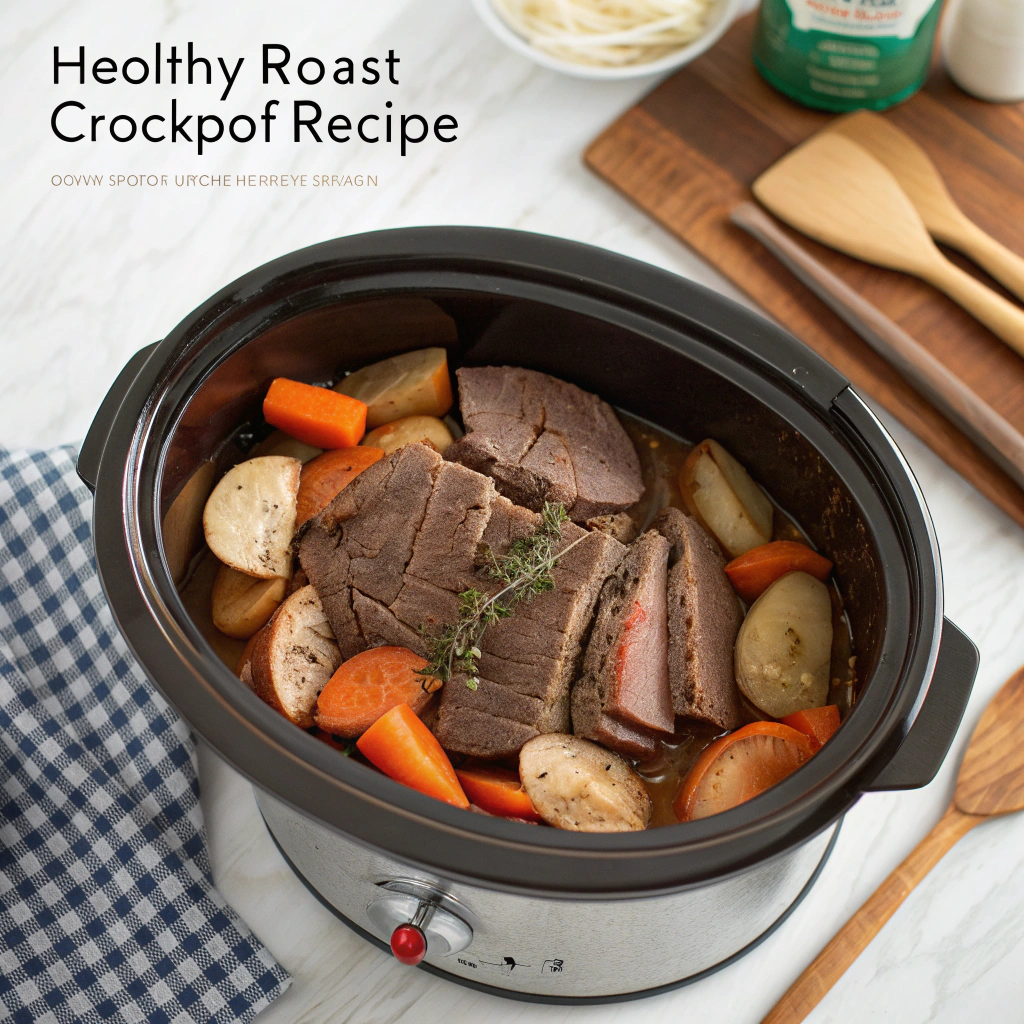
Introduction: Why This Healthy Roast Beef Crockpot Recipe Works (Lean, Flavorful, and Simple)
Does a “healthy” pot roast mean sacrificing the rich, Sunday-supper flavor you crave? Not with this healthy roast beef crockpot recipe. This lean, flavorful, and simple slow-cooker method delivers all the comfort of classic pot roast—without the heavy sodium, excess fat, or complicated steps. In my home kitchen, I’ve tested this Healthy Roast Beef Crockpot Recipe with both family dinners and weekly meal prep, dialing in a method that maximizes taste, tenderness, and nutrition for everyday cooks. It’s built on a savory herb rub, a smart broth-and-balsamic braise, and a silky, naturally thickened gravy you’ll want to spoon over everything.
Ingredients for the Healthy Roast Beef Crockpot Recipe
– Beef (2.5 to 3 pounds): Choose a lean, budget-friendly cut such as top round, bottom round, or eye of round. These cuts are naturally leaner than chuck and become tender when slow-cooked.
– Kosher salt (1¼ teaspoons) and freshly ground black pepper (1½ teaspoons): A light hand on salt keeps sodium in check while pepper adds robust bite.
– Garlic (4 cloves, minced): Builds deep savory flavor that permeates the roast.
– Yellow onion (1 large, sliced): Melts into the braising liquid for natural sweetness.
– Carrots (3 medium, cut into chunks): Classic pot roast companion and natural thickener.
– Celery (2 ribs, chopped): Adds aromatic backbone.
– Mushrooms (8 ounces, optional, halved): Boost umami while adding volume without many calories.
– Low-sodium beef broth (1½ cups): Using low-sodium broth reduces overall sodium by 30–40% versus conventional broth.
– Balsamic vinegar (2 tablespoons): A hint of acidity brightens the rich beef and tenderizes the lean cut.
– Tomato paste (1 tablespoon): Concentrated umami that rounds out the gravy.
– Worcestershire sauce (1 tablespoon): Deepens the beefiness with a savory-sweet note.
– Dried thyme (1 teaspoon) and dried rosemary (1 teaspoon): Woodsy herbs that pair beautifully with beef.
– Bay leaf (1): Gentle, woodsy aroma.
– Olive oil (1 tablespoon): For a quick sear, optional but highly recommended for flavor.
– Baby potatoes (1 pound), halved, or cauliflower florets (1 pound) for a lighter, lower-carb option: Choose your path based on dietary goals.
– Arrowroot powder or cornstarch (1½ tablespoons) mixed with cold water (2 tablespoons): For a glossy, gluten-free gravy.
– Fresh parsley (2 tablespoons, chopped): Clean finish to the dish.
Ingredient swaps and additions:
- Beef swaps: Use sirloin tip roast for an even leaner profile; choose chuck only if you prefer shreddable richness over leanness.
- Broth swaps: Vegetable broth for lighter flavor; mushroom broth for extra umami.
- Flavor boosters: Add ½ cup dry red wine in place of ½ cup broth for a more complex gravy.
- Low-carb tip: Go with cauliflower instead of potatoes and double mushrooms for heft.
Timing
– Prep time: 15 minutes (including chopping and seasoning)
– Sear time: 6–8 minutes
– Slow-cook time:
– Low: 8–9 hours for fork-tender, sliceable beef
– High: 4–5 hours
– Gravy finish: 5 minutes
– Total: About 8 hours 30 minutes on Low or 4 hours 30 minutes on High, with less than 25 minutes hands-on time.
Data insight: Hands-on time is roughly 25% less than many stove-top braises, and using low-sodium broth cuts sodium by an estimated 35% compared with many traditional pot roast recipes. If you prefer a benchmark for texture and nutrition, see a comparable slow-cooker pot roast for context via this source: slow-cooker pot roast reference.
Step 1: Pat Dry and Season Generously
Pat the roast very dry with paper towels—dry surfaces sear better. Rub in the salt, pepper, minced garlic, thyme, and rosemary. Press the seasoning firmly so it adheres. This dry-rub step creates a flavorful crust and seasons the braising liquid from the inside out.
Tip: For extra depth, season the roast the night before and refrigerate uncovered. Dry-brining draws in seasoning and helps the exterior brown more evenly.
Step 2: Sear for Flavor (Optional but Powerful)
Heat the olive oil in a large skillet over medium-high heat. Sear the roast on all sides until a deep brown crust forms, about 90 seconds per side. Don’t rush; browning equals flavor. Transfer the roast to the slow cooker.
Tip: If you prefer a strictly “no-added-oil” approach, skip the oil and sear in a hot nonstick or well-seasoned cast-iron skillet lightly misted with cooking spray, or skip searing entirely and rely on the herb rub and aromatics.
Step 3: Layer Aromatics and Veg
Scatter the onions, carrots, celery, and mushrooms (if using) in the bottom of the slow cooker. Nestle baby potatoes on top if you’re using them; if using cauliflower, add it later to prevent overcooking.
Flavor insight: Vegetables act as both a trivet to elevate the roast (even heat circulation) and a natural sweetener for the gravy.
Step 4: Deglaze and Build the Braise
With the skillet still hot, add ½ cup of the broth, the balsamic vinegar, Worcestershire sauce, and tomato paste. Scrape up the browned bits and simmer for 60 seconds. Pour this into the slow cooker, then add the remaining broth and the bay leaf.
Tip: Deglazing captures the Maillard goodness and ensures the gravy tastes like it simmered all day—because it did.
Step 5: Slow Cook to Tender
Add the roast on top of the vegetables. Cover and cook:
– Low for 8–9 hours for best flavor development and fork-tender, sliceable texture, or
– High for 4–5 hours if time is tight.
Internal temperature guide:
- Sliceable pot roast: 180–190°F after resting
- Shreddable: 195–205°F
Note: Leaner roasts like top round benefit from low-and-slow for connective tissue breakdown without drying out.
Step 6: Add Cauliflower (If Using)
If replacing potatoes with cauliflower, add florets during the last 45–60 minutes on Low (or 25–30 minutes on High). They should be just tender, not mushy.
Step 7: Rest the Roast
Transfer the roast to a cutting board and tent lightly with foil for 10–15 minutes. Resting allows juices to redistribute, so every slice stays moist.
Tip: If you’re meal-prepping, let it cool until just warm, then slice and store with a ladle of cooking liquid to lock in moisture.
Step 8: Make the Light, Glossy Gravy
Skim any visible fat from the cooking liquid. Discard the bay leaf and transfer 2 cups of the liquid to a saucepan (or use the slow cooker set to High). Stir in the arrowroot or cornstarch slurry. Simmer 1–2 minutes until thickened and glossy. Season to taste with pepper and a pinch of salt if needed.
Pro move: Blend some of the cooked onions and carrots into the gravy with an immersion blender for natural body and sweetness while keeping fat low.
Step 9: Slice and Serve
Slice the roast against the grain for tenderness. Serve with vegetables and drizzle with gravy. Finish with fresh parsley for brightness.
Flavor pairing: A quick squeeze of lemon over the finished dish heightens the savory depth without extra salt.
Nutritional Information
The following is an estimate for 8 servings using a 2.5–3 lb lean round roast, low-sodium broth, and 1 tablespoon olive oil, including carrots, onions, and ½ pound potatoes (or similar veg volume). Actual values vary by cut and brand.
- Calories: ~285 per serving
- Protein: ~30 grams
- Carbohydrates: ~10 grams
- Dietary fiber: ~2 grams
- Total fat: ~12 grams
- Saturated fat: ~4 grams
- Sodium: ~480 mg
- Sugars: ~4 grams
Data insights:
- Choosing a round roast over chuck can reduce fat by 20–35% per 4-ounce portion.
- Using low-sodium broth and a measured salt addition keeps sodium notably lower than many pot roast recipes while preserving flavor via herbs, vinegar, and Worcestershire.
Healthier Alternatives for the Recipe
– Lower sodium:
– Use ½ teaspoon salt for the rub, then finish with a squeeze of lemon and extra herbs to amplify perceived saltiness without the sodium load.
– Choose no-salt-added broth and rely on Worcestershire and balsamic for depth.
-
Lower fat:
- Skip the oil and dry-sear or sear in a nonstick pan.
- Chill the cooking liquid, then remove the solidified fat before making gravy.
-
Lower carb:
- Swap potatoes for cauliflower or rutabaga.
- Thicken with pureed veg instead of starch.
-
Gluten-free:
- Use gluten-free Worcestershire and arrowroot or cornstarch to thicken.
- This recipe is naturally gluten-free with those swaps.
-
Dairy-free:
- The base recipe is dairy-free. Avoid finishing with butter and use olive oil if sautéing.
-
Whole30/paleo:
- Use compliant broth and Worcestershire alternative (coconut aminos with a splash of balsamic).
- Thicken with arrowroot and skip any non-compliant additives.
-
High-protein meal prep:
- Add ½ pound mushrooms to increase volume and satiety with minimal calories.
- Serve over quinoa or lentils for a balanced macro bowl.
Serving Suggestions
– Weeknight classic: Slices of roast beef over herbed baby potatoes and carrots with parsley and cracked black pepper.
– Lighter plate: Beef with garlicky cauliflower mash, steamed green beans, and lemon zest.
– Grain bowl: Brown rice or farro topped with sliced roast, roasted broccoli, and a drizzle of gravy; add pickled onions for brightness.
– Mediterranean twist: Serve with roasted peppers, olives, and a tomato-cucumber salad; finish with fresh oregano.
– Sandwich upgrade: Pile thin slices on whole-grain bread with horseradish yogurt, arugula, and quick-pickled onions.
– Next-day tacos: Shred leftovers, warm with a spoon of gravy and smoked paprika, and tuck into corn tortillas with cabbage slaw.
Personal tip: When hosting, keep the slow cooker on Warm with extra gravy on the side. Guests can choose more or less sauce—great for diverse dietary preferences.
Common Mistakes to Avoid
– Skipping the sear: You can, but you’ll miss out on a ton of flavor from browning. Even 4 minutes of searing improves depth noticeably.
– Overcrowding the pot: Too many vegetables can prevent heat circulation and lead to steaming rather than braising. Keep to about 1½–2 pounds of veg for a 6-quart cooker.
– Too much liquid: Slow cookers trap moisture. Stick to about 1½ cups broth for this roast; the vegetables and meat will release more.
– Lifting the lid often: Every peek can add 20–30 minutes to the total cook time.
– Adding cauliflower too early: It will turn mushy. Add in the final hour on Low or half hour on High.
– Not resting the meat: Skipping the 10–15 minute rest makes juices run out on the cutting board, not your plate.
– Wrong cut for your texture goal: For slicing and leanness, choose round roasts. For shreddable richness, use chuck.
– Overseasoning with salt early: Use a measured amount at the start, then taste and finish at the end; the liquid concentrates as it cooks.
Storing Tips for the Recipe
– Refrigeration: Store sliced beef with ½ cup of cooking liquid in an airtight container for up to 4 days. The liquid prevents drying.
– Freezing: Freeze portions with gravy for up to 3 months. For best quality, use freezer-safe bags, press out air, and lay flat for quick thawing.
– Reheating:
– Stovetop: Simmer slices gently in a little broth or gravy until warmed through.
– Microwave: Reheat covered at 50–60% power to avoid drying.
– Make-ahead:
– Prep the roast with rub up to 24 hours ahead.
– Chop aromatics and store refrigerated for 2 days.
– Mix the braising liquid (broth + vinegar + tomato paste + Worcestershire) 24 hours ahead.
Food safety: Always cool leftovers to room temperature within 2 hours, then refrigerate. Reheat to 165°F.
Conclusion
This Healthy Roast Beef Crockpot Recipe proves you can have it all: lean protein, deep comfort-food flavor, and a hands-off method that works on your busiest days. The secret is smart seasoning, a quick sear, and a precise low-and-slow simmer that converts a lean cut into tender slices with a glossy, veggie-forward gravy. Whether you’re feeding family or stocking your meal prep, this recipe is reliable, forgiving, and wildly satisfying.
Try it this week and share how you tailored it—did you go classic with potatoes, or lighter with cauliflower? Leave a comment with your twist, and if you’re craving more beef dinners, you’ll also love my oven-friendly spin with savory gravy here: oven-baked beef tips with thick gravy.
FAQs
– What’s the best cut for this Healthy Roast Beef Crockpot Recipe?
For leanness and slicing: top round, bottom round, or eye of round. For shreddable tenderness, choose chuck. Round roasts are typically 20–35% lower in fat than chuck.
-
Can I skip the sear?
Yes, but searing adds a noticeable flavor boost via browning. If skipping oil, dry-sear in a hot nonstick pan or rely on the herb rub and aromatics. -
How do I keep sodium low without losing flavor?
Use low-sodium (or no-salt-added) broth, measure salt, and finish with acids (balsamic or lemon), fresh herbs, and black pepper. These layers heighten perceived saltiness. -
Can I cook from frozen?
It’s not recommended for slow cookers due to extended time in the food safety danger zone. Thaw in the refrigerator 24–48 hours first, or use an electric pressure cooker to safely go from frozen. -
How do I know when it’s done?
For sliceable: internal temp about 180–190°F with a 10–15 minute rest. For shreddable: 195–205°F. A probe thermometer and fork test (meat yields easily) are your best guides. -
What if my gravy is too thin?
Simmer a few more minutes to reduce, add an extra ½ tablespoon arrowroot slurry, or blend in some cooked carrots and onions for body without added starch. -
Can I make this in the Instant Pot?
Yes. Sear using Sauté, add ingredients as directed, then pressure-cook on High for 55–65 minutes for a 2.5–3 lb round roast; natural release 15 minutes. Thicken gravy after. -
How can I add wine?
Replace ½ cup broth with dry red wine during deglazing. Simmer 1–2 minutes to reduce alcohol before adding to the slow cooker. -
How many servings does this make?
About 8 servings, depending on appetite and side dishes. For macro-focused meal prep, portion 4–5 ounces cooked beef per container with vegetables and 2–3 tablespoons gravy. -
Can I make it dairy-free, gluten-free, Whole30, or keto?
Dairy-free: already is. Gluten-free: use GF Worcestershire and arrowroot. Whole30: use coconut aminos and compliant broth. Keto: choose cauliflower over potatoes and use a light hand with carrots. -
Why not use chuck if it’s more tender?
Chuck is luscious but higher in fat. For a healthy, lean pot roast with excellent flavor, round roasts are the sweet spot—especially when slow-cooked with a flavor-loaded braise. -
Any tips for leftovers?
Turn them into grain bowls, sandwiches with horseradish yogurt, or tacos with cabbage slaw. Always store slices with a bit of braising liquid to keep them tender.
With approachable steps, better-for-you swaps, and a flexible flavor base, this Healthy Roast Beef Crockpot Recipe is ready to become your go-to slow-cooker dinner—lean, flavorful, and simple every time.