
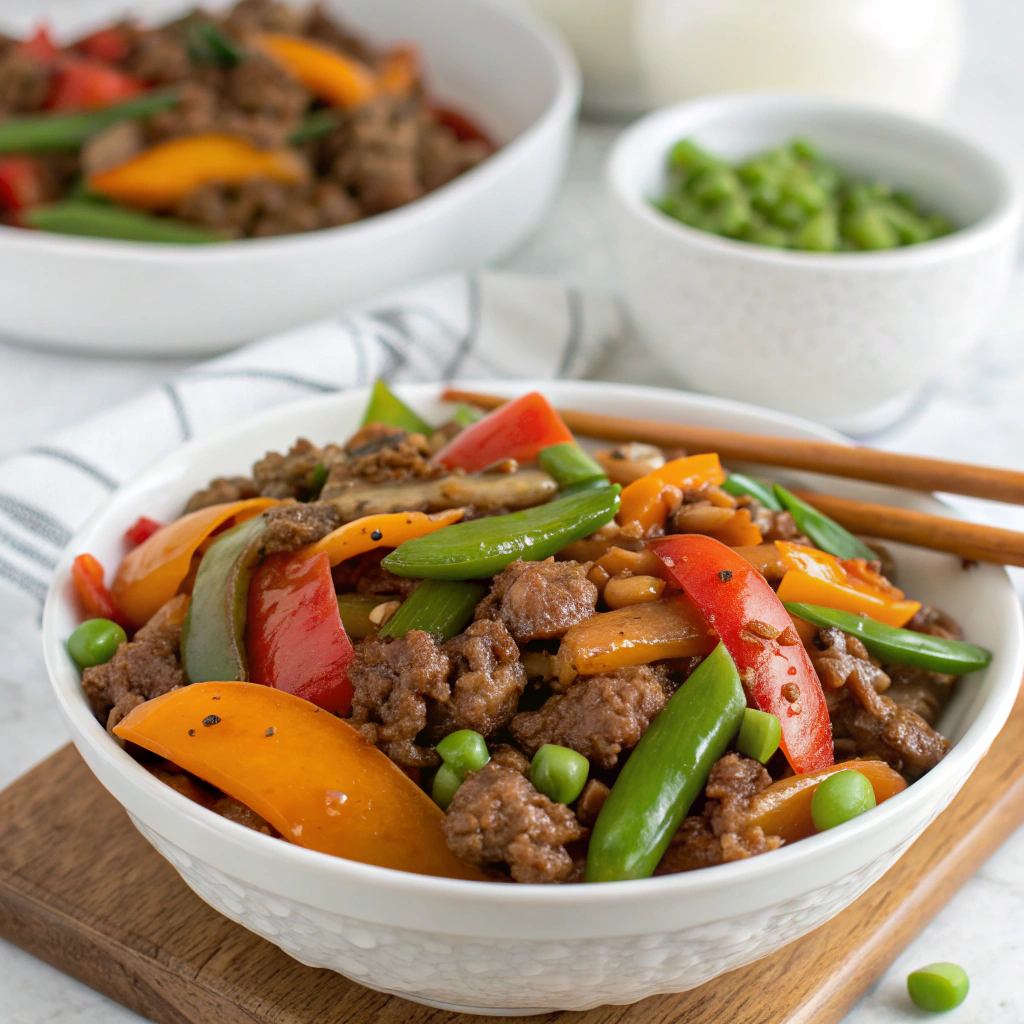
Introduction
What if the sauciest teriyaki you’ve had didn’t require pricey steak strips, a marinade, or a sink full of dishes? This Teriyaki Ground Beef Stir-Fry with Veggies delivers glossy, sweet-savory flavor in one pan, in under 30 minutes, and with zero fussy steps. As the recipe developer behind Feast of Savory, I lean on practical weeknight techniques that keep dinner fast without compromising flavor. In this one-pan skillet, ground beef becomes the star: it soaks up teriyaki sauce beautifully, clings to tender-crisp veggies, and turns into a budget-friendly, crowd-pleasing meal you’ll repeat weekly.
Ingredients List
– Ground beef: 1 pound (90% lean recommended).
Substitutions: Ground turkey or chicken for a lighter profile; plant-based ground for a vegetarian twist.
-
Aromatics: 1 small yellow onion (thinly sliced), 3 cloves garlic (minced), 1 tablespoon fresh ginger (grated).
Tip: Fresh ginger gives brightness; if using powdered, start with 1/2 teaspoon. -
Veggie mix (about 5 cups total; use a colorful mix for texture and nutrients):
• 2 cups broccoli florets
• 1 red bell pepper, sliced
• 1 medium carrot, matchsticked
• 1 cup snap peas or green beans
• 2 green onions, sliced (for garnish)
Substitutions: Zucchini, mushrooms, or baby corn; frozen stir-fry blends work great in a pinch. -
Neutral high-heat oil: 1 to 1 1/2 tablespoons (avocado, canola, or peanut oil).
Optional: 1 teaspoon toasted sesame oil for finishing, for nutty depth. -
Teriyaki sauce (homemade quick mix):
• 1/3 cup low-sodium soy sauce or tamari (gluten-free option)
• 2 to 2 1/2 tablespoons brown sugar or maple syrup (adjust for sweetness)
• 1 tablespoon mirin or 2 teaspoons rice vinegar for acidity
• 1 teaspoon garlic chili paste or 1/2 teaspoon red pepper flakes (optional heat)
• 2 teaspoons cornstarch + 2 tablespoons water (slurry)
• 1/2 cup water or low-sodium beef broth (for sauciness)
Substitutions: Coconut aminos (slightly sweeter, lower sodium); arrowroot instead of cornstarch. -
Optional flavor boosters:
• 1–2 teaspoons oyster sauce for umami richness
• 1 teaspoon fish sauce for depth (use sparingly)
• 1/4 teaspoon baking soda mixed with the beef for juicier, more tender crumbles -
Garnishes: Toasted sesame seeds, extra green onions, lime wedges, or a drizzle of chili crisp.
-
To serve: Steamed jasmine rice, brown rice, quinoa, noodles, or lettuce cups for low-carb wraps.
Sensory note: Expect savory-sweet aromas from soy and brown sugar, a whisper of ginger heat, and a lacquered glaze that clings to every bite of beef and vegetables.
Timing
– Prep time: 15 minutes (slice veggies; whisk sauce)
– Cook time: 12 minutes
– Total time: 27 minutes
Data insight: Most weeknight stir-fries take around 30–35 minutes stove-to-table. This one clocks in at roughly 27 minutes—about 20% faster—because ground beef browns quickly and doesn’t require marinating.
Step 1: Build your mise en place
– Slice all vegetables and mince aromatics before heat hits the pan. Stir-fries move fast; everything should be within arm’s reach.
– Whisk soy/tamari, brown sugar, mirin/rice vinegar, chili paste (if using), and water/broth in a bowl. In a separate small bowl, mix cornstarch with 2 tablespoons water to make a smooth slurry.
Tip: Set your sauce and slurry near the stove so you can add them without pausing the cook.
Step 2: Preheat the pan properly
– Heat a large skillet or wok over medium-high until a drop of water skitters across the surface. Add 1 tablespoon oil.
Why it matters: Hot pan + hot oil equals better browning and prevents sticking, especially with lean ground beef.
Step 3: Brown the ground beef for flavor first
– Add beef in an even layer. Let it sear undisturbed for 1–2 minutes to develop color, then break into medium crumbles.
– If using baking soda, toss the beef with 1/4 teaspoon just before it hits the pan; it helps retain moisture and encourages browning.
– Season with a pinch of black pepper. Cook until no longer pink, about 4–5 minutes.
– If there’s excess fat, spoon off to leave about 1–2 teaspoons in the pan.
Pro move: Browning is your bonus ingredient. Those little caramelized bits will season the veggies and sauce.
Step 4: Sauté aromatics
– Push beef to the edges; add onion with a touch more oil if needed. Sauté 1 minute, then add garlic and ginger for 30–45 seconds until fragrant.
– Stir aromatics through the beef to coat it with flavor.
Step 5: Stir-fry the vegetables in stages
– Add the hardiest vegetables first (broccoli and carrots). Stir-fry 2–3 minutes.
– Add peppers and snap peas; cook another 2–3 minutes until tender-crisp and bright.
Texture target: You want crisp edges, bright color, and some bite—vegetables continue to soften once sauced.
Step 6: Sauce, then gloss
– Pour in your premixed teriyaki base. Bring to a simmer, scraping up browned bits.
– Stir the cornstarch slurry and drizzle it in while tossing. The sauce will go from thin to glossy in 30–60 seconds.
– If you want extra shine and aroma, finish with 1 teaspoon toasted sesame oil off heat.
Taste test: Adjust sweetness with 1–2 teaspoons more brown sugar, or balance with a splash of vinegar if it’s too sweet. Add a spoon of water if you prefer a lighter, looser sauce.
Step 7: Garnish and serve
– Sprinkle sliced green onions and sesame seeds. Add chili crisp or red pepper flakes if you like heat.
– Spoon over rice, noodles, or into lettuce cups. Serve with lime for a citrus pop.
Step 8: Personalize your plate
– For kids: Keep the heat low and add pineapple chunks for a sweet counterpoint.
– For spice lovers: Swirl in gochujang or sriracha to taste.
– For extra protein: Top with a jammy 7-minute egg or a crisp fried egg.
Nutritional Information
Approximate per serving (4 servings, without rice):
– Calories: 360–390
– Protein: 25–27 g
– Carbohydrates: 24–28 g
– Total fat: 14–17 g
– Saturated fat: 5–6 g
– Fiber: 4–6 g
– Sugars: 10–14 g
– Sodium: 800–1,050 mg (varies by soy/tamari brand)
Notes and insights:
- Using 90% lean ground beef keeps fat reasonable while delivering rich flavor.
- Switching to low-sodium tamari can reduce sodium by 30–40% compared to conventional soy sauce.
- Veggie volume adds fiber and micronutrients (vitamin C from peppers and broccoli; beta-carotene from carrots).
Nutritional data are estimates based on standard databases and common grocery brands.
Healthier Alternatives for the Recipe
– Leaner protein: Use 93–96% lean ground beef, ground turkey, or ground chicken. For vegetarian, try extra-firm tofu crumbles or tempeh; sauté until crispy before saucing.
– Lower sodium: Choose low-sodium tamari or coconut aminos and taste as you go. Boost umami with mushrooms, a touch of miso, or a few dashes of Worcestershire instead of more salt.
– Lower sugar: Swap brown sugar for date syrup or a monk fruit/erythritol blend. Increase ginger and a splash of orange juice to heighten perceived sweetness without adding much sugar.
– More fiber: Double the vegetable volume or add edamame for plant-based protein and fiber.
– Gluten-free: Use tamari and ensure oyster sauce/fish sauce are certified gluten-free, or skip them.
– Low-carb/Keto: Serve in lettuce wraps or over cauliflower rice; reduce or skip the cornstarch and thicken with 1/2 teaspoon xanthan gum whisked into the sauce.
– Heart-healthy fats: Reduce added oil by 1/2 tablespoon and finish with a small drizzle of sesame oil for flavor impact with less fat.
Serving Suggestions
– Bowl builder: Spoon your Teriyaki Ground Beef Stir-Fry with Veggies over jasmine rice for a classic combo or over brown rice/quinoa for whole grains.
– Noodle night: Toss with soba, udon, or rice noodles; thin the sauce with a splash of broth to coat noodles evenly.
– Lettuce wraps: Butter lettuce or romaine cups make fresh, low-carb wraps; add pickled cucumbers for crunch.
– Bento style: Pack rice, stir-fry, orange slices, and edamame for a balanced lunchbox.
– Toppings bar: Set out scallions, sesame seeds, crushed peanuts, chili oil, and lime wedges so everyone can customize.
– Side ideas: Quick miso soup, cucumber-sesame salad, or roasted asparagus with lemon.
Taste tip: A squeeze of lime or a small splash of rice vinegar at the table brightens the sauce and balances sweetness, especially if you served it over rice.
Common Mistakes to Avoid
– Overcrowding the pan: Too much at once steams rather than sears. If your skillet is smaller than 12 inches, stir-fry vegetables in two batches.
– Skipping the hot pan: Starting with a warm—not hot—pan leads to stickiness and pale beef. Preheat until the pan is properly hot.
– Soggy vegetables: Add sturdy vegetables first and tender ones last. Pull the pan off heat once veggies reach tender-crisp.
– Sauce that won’t thicken: Cornstarch needs a simmer to activate; keep the sauce bubbling gently for 30–60 seconds. Stir the slurry again right before adding so the starch isn’t settled at the bottom.
– Sauce that’s too salty: Use low-sodium soy/tamari and taste before adding extra salt. Balance with a splash of vinegar and a touch of water or unsalted broth.
– Greasy finish: Drain excess fat after browning meat, leaving just enough to carry flavor.
– Bland results: Don’t skip aromatics. Fresh ginger and garlic are the backbone of an at-home teriyaki that tastes restaurant-quality.
Storing Tips for the Recipe
– Refrigeration: Store in an airtight container for 3–4 days. Keep rice/noodles separate so they don’t soak up all the sauce.
– Freezer-friendly: Cool completely; freeze in meal-prep portions for up to 2–3 months. Thaw overnight in the fridge before reheating.
– Reheating: Skillet over medium heat with a splash of water revives the sauce and prevents sticking. Microwave in 60–90 second bursts, stirring between intervals.
– Make-ahead prep:
• Slice vegetables and whisk sauce up to 48 hours in advance.
• Brown beef the day before; store separately and sauce fresh during dinner.
– Keep it crisp: If you love firmer veggies, undercook them slightly on day one; they’ll finish cooking during reheating.
Conclusion
This Teriyaki Ground Beef Stir-Fry with Veggies proves that weeknight cooking can be fast, budget-friendly, and wildly satisfying—no marinade, no stress, just a glossy, savory-sweet sauce clinging to tender beef and vibrant vegetables. If you’re craving another cozy skillet classic, my creamy weeknight favorite is right here: Ground Beef Stroganoff. Ready to make dinner happen in one pan? Cook this recipe, then drop a comment with your favorite veggie combo or spice level—and share a photo of your saucy skillet win. Your tweaks help other home cooks find their perfect stir-fry balance.
For a different take on teriyaki stir-fry techniques (using sliced beef), you might also enjoy this reference from a mainstream recipe site: Beef Teriyaki Stir-Fry.
FAQs
– Can I use frozen vegetables?
Yes. Use a high-heat skillet, add frozen veggies straight from the freezer, and stir-fry until the ice evaporates and edges char slightly. Expect 2–3 extra minutes of cook time.
-
What’s the best ground meat for this?
Ninety-percent lean ground beef hits the sweet spot of flavor and juiciness. For lighter, try 93–96% lean beef, turkey, or chicken. For vegetarian, use plant-based ground or crumbled extra-firm tofu. -
How do I make it gluten-free?
Use tamari instead of soy sauce and check labels on oyster/fish sauce. Cornstarch is naturally gluten-free; verify your brand if highly sensitive. -
Can I make it without cornstarch?
Yes. Use arrowroot or potato starch. If skipping starch entirely, simmer the sauce longer to reduce, or whisk in 1/2 teaspoon xanthan gum for a low-carb thickener. -
How do I prevent the sauce from getting too salty?
Start with low-sodium tamari, taste after simmering, then balance with acidity (rice vinegar or lime) and a splash of water/broth if needed. Adding mushrooms boosts umami without extra salt. -
Is it meal-prep friendly?
Absolutely. Divide into containers with rice or veggies. The sauce helps keep the beef moist through reheating. Add fresh greens (like sliced cucumbers or scallions) on serving day for crunch. -
Can I add pineapple?
Yes—stir in 1 cup pineapple chunks during the last minute of cooking. It adds natural sweetness and a juicy contrast. -
Do I need a wok?
No. A 12-inch stainless or cast-iron skillet works beautifully. The key is preheating and not overcrowding. -
How can I make it spicier?
Increase chili paste, add sliced fresh chiles, or finish with chili crisp or sriracha. Balance extra heat with a touch more sugar or a splash of orange juice. -
Can I double the recipe?
Yes. Brown the beef in two batches for better sear, then combine and proceed. Stir-fry veggies in batches to avoid steaming; sauce everything together at the end. -
What should I serve it with if I’m low-carb?
Lettuce wraps or cauliflower rice. You can also mix in spiralized zucchini at the end for a noodle-like texture without the carbs. -
Why use ground beef instead of steak?
Ground beef absorbs sauce thoroughly, cooks faster, and is cost-effective. It creates a cohesive, saucy bite with veggies, ideal for family-style weeknight dinners.
Recipe Card (Quick Reference)
– Title: Teriyaki Ground Beef Stir-Fry with Veggies – Easy & Saucy One-Pan Meal
– Yield: 4 servings
– Ingredients: 1 lb ground beef; onion, garlic, ginger; 5 cups mixed veggies; 1–1 1/2 tbsp oil; 1/3 cup low-sodium soy/tamari; 2–2 1/2 tbsp brown sugar; 1 tbsp mirin or 2 tsp rice vinegar; 1/2 cup water/broth; 2 tsp cornstarch + 2 tbsp water; optional chili paste, sesame oil, oyster/fish sauce; garnishes.
– Directions: Brown beef; sauté aromatics; stir-fry veggies; add teriyaki base; simmer; add slurry; toss until glossy; garnish and serve.
– Time: 15 min prep, 12 min cook, 27 min total
– Storage: 3–4 days refrigerated; 2–3 months frozen
Pro tip to finish strong: Right before serving, toss in a handful of thinly sliced green onions and a small spoon of sesame seeds—tiny upgrades that make the dish feel restaurant-level without extra time.