
Introduction
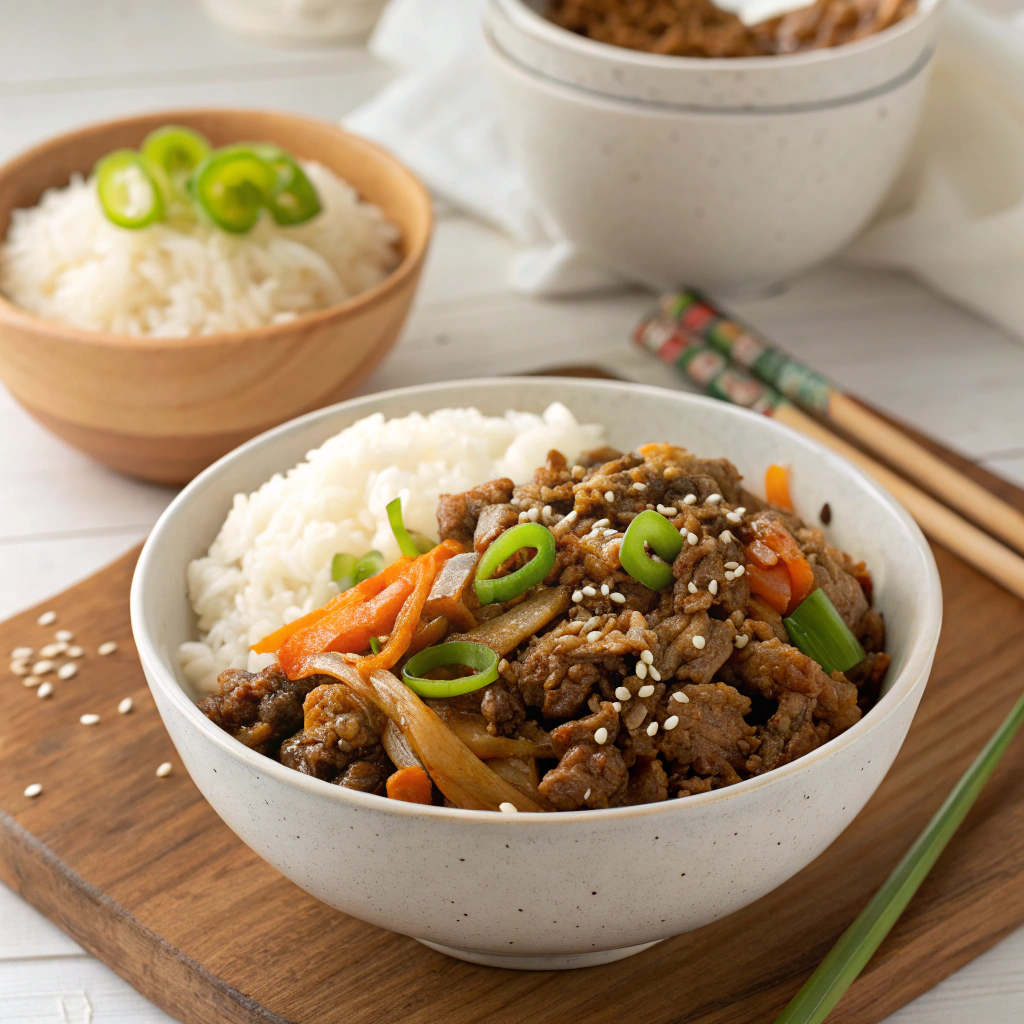
What if a Korean Ground Beef Bowl with Rice could taste like a slow-simmered bulgogi feast, yet be on your table in under 25 minutes? Many weeknight recipes promise “quick,” but few deliver the bold, sweet-salty heat and glossy glaze you crave after a long day. This streamlined, Korean-inspired beef-and-rice bowl proves you can have both: speed and serious flavor. As a test-kitchen-obsessed cook who loves weeknight wins, I’ve optimized each step so the beef caramelizes, the sauce clings, and the rice turns into a fluffy base that drinks up every savory drop.
Ingredients List
Build this bowl with pantry-friendly staples and a few smart upgrades. The sensory payoff—garlicky, gingery, umami-rich sauce wrapped around juicy beef—comes from balance and heat management, not complexity.
For the beef and sauce
- 1 pound ground beef (85–93% lean): 90% lean hits the sweet spot for tenderness and flavor. For leaner or budget swaps, see alternatives below.
- 1 tablespoon neutral oil (avocado, canola, or light olive oil): Helps achieve fast, even browning.
- 4 cloves garlic, finely minced: The heart of the aroma; fresh is best for that warm, peppery punch.
- 1 tablespoon fresh ginger, finely minced or grated: Adds clean heat and a bright finish.
- 1/3 cup low-sodium soy sauce or tamari (gluten-free): Umami backbone; low-sodium gives you control.
- 2–3 tablespoons brown sugar, packed: Classic bulgogi sweetness. Use 2 tbsp for less sweet, 3 tbsp for traditional balance.
- 1–2 tablespoons gochujang (Korean fermented chili paste): Deep, savory heat with a hint of sweetness. Start with 1 tbsp for mild.
- 2 teaspoons toasted sesame oil: Adds nutty aroma that says “Korean takeout—at home.”
- 1 tablespoon rice vinegar or mirin: Nudges the sauce from flat to lively; choose mirin for extra sweetness.
- 1/4 teaspoon black pepper: Enhances warmth without overpowering the glaze.
- Optional: 1–2 teaspoons gochugaru (Korean red pepper flakes): For a drier, smoky-tingly heat on top or in the pan.
For the rice and toppings
- 3–4 cups hot cooked rice (jasmine, medium-grain, or short-grain): Fluffy, lightly sticky rice catches the glossy sauce. Brown rice works, too.
- 4–5 green onions, thinly sliced: A fresh, crunchy counterpoint.
- 1 medium carrot, julienned or shredded: Adds color and crisp sweetness.
- 1 small cucumber, thinly sliced: Cooling crunch to balance heat.
- 1 tablespoon sesame seeds, toasted: Add at the end for nuttiness.
- Kimchi, to taste: Fermented tang that amplifies the sauce.
- Optional: Fried eggs, nori crumbles, quick pickled radish, or a squeeze of lime for brightness.
Smart substitutions
- Protein: Ground turkey or chicken (93% lean), plant-based crumbles, or finely chopped mushrooms for a blended “meatier” texture with less meat.
- Sugar: Honey, maple syrup, or 1–2 tablespoons of monk fruit/erythritol blend for lower sugar.
- Soy: Coconut aminos for soy-free, adding a pinch of salt to taste.
- Heat: If you don’t have gochujang, use 1–2 teaspoons sriracha plus 1 teaspoon miso if available for depth.
Timing
- Prep time: 10 minutes (mincing aromatics, slicing veg)
- Cook time: 12 minutes
- Total time: 22 minutes
Why this is faster than most: Many similar beef-and-rice bowls clock in around 28–30 minutes. This version compacts steps (rice cooking or reheating overlaps with beef browning), saving roughly 20–25% time while preserving caramelization and sauce reduction. It’s a true one-pan main plus a pot or microwave for rice.
Step-by-Step Instructions
Step 1: Cook or reheat your rice
If you don’t have leftover rice, start it first so it’s hot when the beef is ready.
- Stovetop: Rinse 1.5 cups rice until water runs mostly clear. Combine with 2.25 cups water and a pinch of salt, bring to a simmer, cover, and cook 15 minutes; rest 10 minutes off heat.
- Microwave leftover rice: Sprinkle with a little water, cover, and heat in 60–90-second bursts, fluffing in between. Tip: A damp paper towel helps restore steamy tenderness.
Step 2: Prep the aromatics and sauce base
- Mince garlic and ginger finely. The smaller the chop, the faster the bloom and the smoother the sauce.
- In a small bowl, whisk soy sauce, brown sugar, gochujang, sesame oil, rice vinegar, and black pepper until glossy and cohesive. Taste and adjust sweetness or heat now.
Step 3: Sear the beef for maximum flavor
- Heat a large skillet over medium-high and add the neutral oil.
- Crumble in the ground beef in an even layer. Do not stir for 2 minutes—this “hands-off” start encourages caramelization.
- Break up into small pieces and continue cooking 3–4 minutes, letting any initial liquid cook off. If the beef releases lots of fat, spoon off excess, leaving about 1–2 teaspoons for flavor.
Pro tip: Overcrowding reduces browning. If doubling the recipe, sear in two batches to maintain high heat.
Step 4: Bloom aromatics without burning
- Push beef to the edges, exposing the center of the pan.
- Add garlic and ginger to the open center. Sauté 30–45 seconds until fragrant. This direct contact with the pan wakes up their oils; then quickly fold them into the beef.
Step 5: Glaze with the sauce
- Pour in the sauce and toss to coat. Reduce heat to medium.
- Let simmer 2–3 minutes, stirring occasionally, until the sauce thickens and clings to the beef. You’re aiming for a shiny, lacquered look—if it’s watery, keep simmering; if too thick, splash in 1–2 tablespoons water.
Flavor dial: Add a pinch of gochugaru or extra gochujang for heat here, or a squeeze of lime for citrus brightness at the end.
Step 6: Assemble the bowls
- Add hot rice to bowls.
- Spoon generous scoops of the glossy beef on top.
- Sprinkle with green onions and sesame seeds; add cucumber and carrot. Optional: Top with a fried egg for a bibimbap-style flourish and extra richness.
Step 7: Balance with tang and crunch
- Serve with kimchi on the side or on top. Its acidity cuts through the sweet-savory glaze, keeping bites lively.
- Finish with a drizzle of sesame oil or a swipe of gochujang thinned with water for a pop of color and heat.
Nutritional Information
The following is an estimate per serving (recipe makes 4 bowls), based on 90% lean ground beef, 1 cup cooked jasmine rice per bowl, and the sauce as written:
- Calories: 520–560
- Protein: 26–30 g
- Carbohydrates: 58–64 g
- Dietary fiber: 1–2 g
- Total fat: 18–22 g
- Saturated fat: 5–7 g
- Sodium: 850–1050 mg (use low-sodium soy and adjust to taste)
- Added sugar: 6–12 g (depending on sweetener choice)
Data note: A pound of 90% lean beef contributes about 800 calories and 92 g protein total; divided by 4 = roughly 200 kcal/23 g protein per serving from beef alone. The remainder comes from rice and sauce. Always check your specific products, as soy sauce sodium varies widely.
Healthier Alternatives for the Recipe
- Lower sodium: Use low-sodium soy or tamari and add 1–2 tablespoons water to the sauce. Season with a pinch of kosher salt at the end rather than front-loading with soy. A squeeze of citrus can also enhance perceived saltiness without adding sodium.
- Lower carbs: Swap rice for cauliflower rice or half rice/half cauliflower rice. Stir-fry the cauliflower rice with a teaspoon of sesame oil and a pinch of salt to dry out moisture and add toasty flavor.
- Higher fiber/whole grains: Use brown rice, barley, or quinoa. Short-grain brown rice keeps some stickiness that works great with saucy beef.
- Leaner protein: Ground turkey or chicken (93% lean) or a 50/50 blend of beef and finely chopped mushrooms for a juicier, lighter bite.
- Lower added sugar: Cut brown sugar to 1 tablespoon; supplement sweetness with grated pear or apple (classic in bulgogi marinades) or use a zero-calorie sweetener like monk fruit.
- Gluten-free: Choose tamari or certified gluten-free soy sauce; verify that your gochujang is gluten-free or swap with a blend of miso and a pinch of chili flakes.
- Dairy-free and nut-free: As written, it’s dairy-free and nut-free. Double-check labels on gochujang and soy sauce for cross-contact if needed.
Serving Suggestions
Make your Korean Ground Beef Bowl with Rice feel restaurant-worthy with simple finishes and sides:
- Top with a sunny-side-up egg: The runny yolk enriches the glaze. Sprinkle extra sesame seeds and scallions.
- Add quick pickles: Toss sliced cucumber with 1 tablespoon rice vinegar, a pinch of sugar, and a pinch of salt; rest 5–10 minutes. The crunch balances sweetness.
- Banchan vibes: Pair with kimchi, spinach namul (sesame-dressed greens), or seasoned bean sprouts for a mini-Korean spread.
- Heat boosters: A drizzle of gochujang thinned with water or a sprinkle of gochugaru.
- Texture pops: Crumble roasted seaweed (nori) on top, or add toasted peanuts or pumpkin seeds if you love an extra crunch.
- Fresh herbs: Cilantro or perilla (if available) add a surprising, aromatic lift.
- Make it a bowl bar: Set out rice, beef, sliced veg, kimchi, and sauces so everyone builds their perfect ratio—great for families or casual entertaining.
Common Mistakes to Avoid
- Overcrowding the pan: Crowding steams the beef and prevents browning. Use a large skillet and spread beef in an even layer.
- Stirring too soon: Let the meat sear for 2 minutes before moving it. Browning equals depth.
- Burning garlic/ginger: Bloom aromatics briefly in a hot spot, then fold into the beef. Bitter garlic can dominate the sauce.
- Sauce too salty: Use low-sodium soy and adjust at the end. If it’s still salty, add a teaspoon of brown sugar, a splash of water, and a squeeze of lime to rebalance.
- Thin, watery sauce: Simmer longer so water evaporates and sugars reduce. The sauce should coat a spoon lightly.
- Overcooked, dry beef: Medium-high heat, short cooking, and timely saucing keep it juicy.
- Bland rice: Lightly salt your cooking water or add a pat of butter or splash of sesame oil to hot rice for flavor.
- Skipping garnishes: Scallions, sesame, and fresh veg transform the bowl from good to “wow.”
Storing Tips for the Recipe
- Refrigeration: Store beef and rice separately in airtight containers up to 3–4 days. Keep fresh garnishes (cucumber, scallions) separate to maintain crunch.
- Freezing: The sauced beef freezes well up to 2 months. Cool completely, pack flat in freezer bags, and label. Thaw overnight in the fridge.
- Reheating: Rewarm beef in a skillet over medium heat with a splash of water to loosen the glaze. Rice reheats best covered in the microwave with a damp paper towel in 60-second bursts, fluffing between rounds.
- Meal prep: Portion rice and beef into containers; add a lime wedge and a packet of sesame seeds. Pack raw veg separately and add just before eating.
Conclusion
Weeknights don’t need to be flavorless. This Korean Ground Beef Bowl with Rice delivers fast, high-impact flavor with a glossy, garlicky-ginger glaze that clings to every grain. It’s budget-friendly, scalable, and endlessly customizable—ideal for family dinners or meal prep. If you love this style, you’ll also enjoy my streamlined take on bulgogi bowls here: easy ground beef bulgogi. Ready to cook? Make it tonight, then leave a comment with your twist—extra spice, a fried egg, or your best vegetable add-in. Your feedback helps others nail it, too.
FAQs
How spicy is this bowl?
Mild to medium as written. Gochujang offers a warm, savory heat rather than a sharp burn. For less heat, reduce to 1 teaspoon. For more, add gochugaru or extra gochujang to taste.
Can I make it gluten-free?
Yes. Use tamari instead of soy sauce and ensure your gochujang is labeled gluten-free. If not available, mix 2 teaspoons miso with 1 teaspoon chili flakes or a touch of sriracha to mimic depth and heat.
What rice is best?
Jasmine or short-grain white rice provide the ideal stickiness to soak up the glaze. Brown rice adds a nutty chew and extra fiber. Cauliflower rice is great for low-carb needs.
Can I substitute the beef?
Absolutely. Ground turkey or chicken works well. For a plant-forward option, try half beef and half finely chopped mushrooms—or use plant-based crumbles. Adjust oil if protein is very lean.
Is sugar necessary?
Traditional bulgogi profiles are sweet-savory. You can cut sugar to 1 tablespoon or swap with honey or a monk fruit blend. Grated pear or apple is a classic way to add natural sweetness.
How can I scale the recipe?
Double all ingredients, but brown the meat in two batches to prevent steaming. Combine before adding the sauce. Increase simmer time 1–2 minutes to reduce the larger sauce volume.
Can this be made ahead?
Yes. Cook the beef and prep rice 3–4 days in advance; reheat with a splash of water. Slice cucumbers and carrots fresh for crunch. This bowl holds up well for weekday lunches.
What if I don’t have gochujang?
Blend 1–2 teaspoons sriracha with 1 teaspoon miso (if you have it) and a pinch of brown sugar. It won’t be identical but captures the sweet, umami heat. Or use chili garlic sauce with a touch of honey.
Why is my sauce too salty?
Use low-sodium soy. If still salty, add a teaspoon of brown sugar, a splash of water, or some acidity (rice vinegar or lime). Serve with extra rice or cucumber to balance.
Any recommended references for similar bowls?
For another angle on the genre, this popular take is a helpful reference: Korean beef bowl. Explore and then come back to customize this version to your taste.
Personal notes from testing
As a recipe developer who lives for weeknight wins, I tested this multiple times to get the sear, the sauce cling, and the speed right. Three insights stood out:
- Browning before saucing is non-negotiable for that craveable, takeout-style depth.
- Low-sodium soy gives you latitude to fine-tune saltiness after reduction.
- A fresh element—quick pickles or a simple carrot-cucumber duo—elevates the bowl from hearty to balanced.
Final pro tip: Keep a jar of gochujang in your fridge. It lasts for months and turns basic sauces, marinades, and even scrambled eggs into something special. With it on hand, your next Korean Ground Beef Bowl with Rice is always one skillet away.