
Introduction
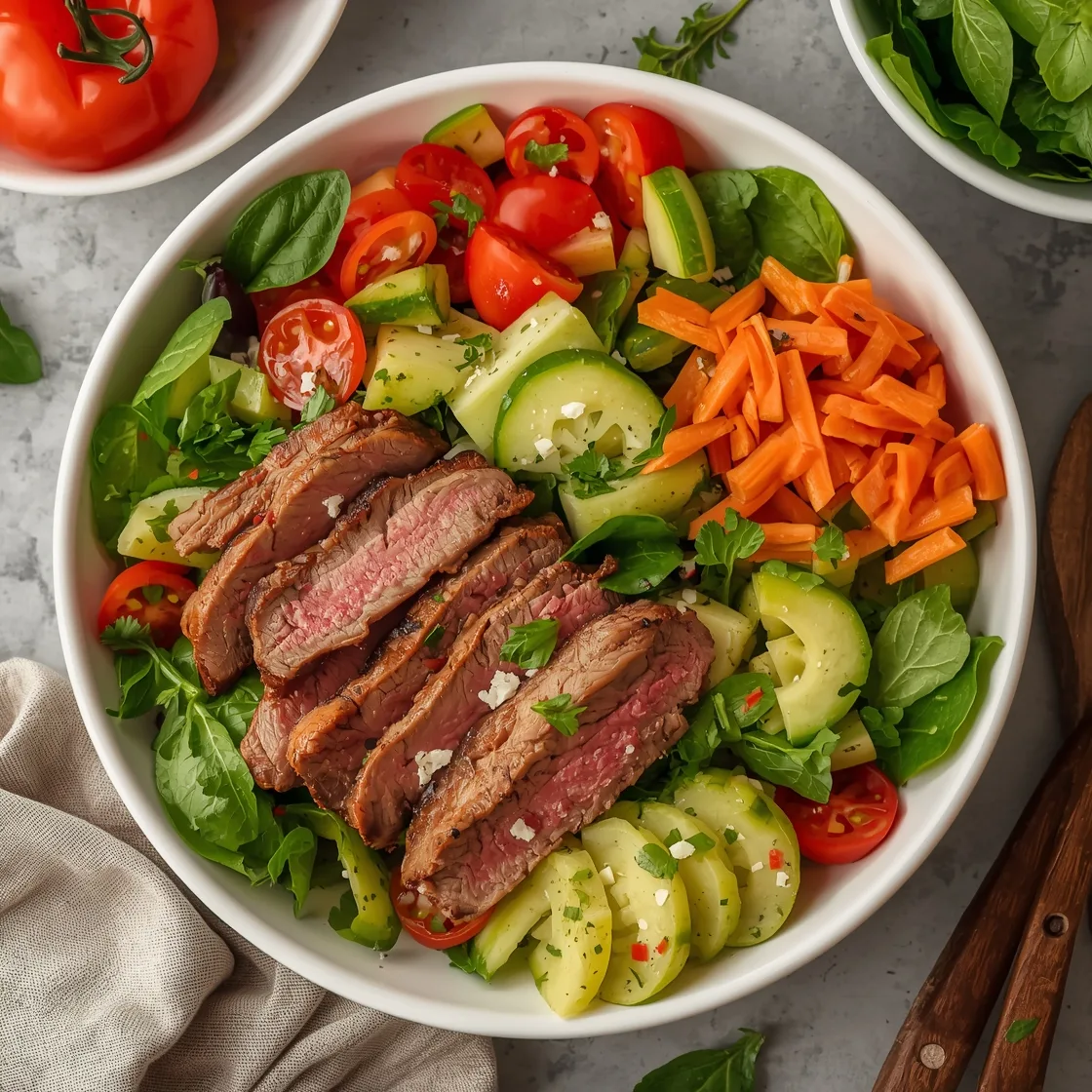
Ever found yourself staring at a vibrant array of summer produce, dreaming of a meal that’s both deeply satisfying and incredibly refreshing? Many believe that hearty mains and light, fresh salads exist on opposite ends of the culinary spectrum. But what if I told you that you don’t have to compromise? Imagine a dish that delivers robust flavor, tender protein, and the crisp, bursting goodness of garden-fresh vegetables all in one delightful bite. This isn’t just wishful thinking; it’s the culinary reality we’re about to explore with our Steak Salad Loaded with Fresh Veggies. This isn’t your average leafy side dish; it’s a vibrant, protein-packed centerpiece designed to challenge the notion that a salad can’t be profoundly fulfilling. Get ready to transform your perception of what a “salad” can truly be.
Ingredients List
Crafting the perfect steak and veggie combo starts with selecting top-tier ingredients. Think vibrant, fresh, and full of life!
For the Steak:
- 1 ½ lbs Flank Steak or Sirloin Steak: Opt for a cut with good marbling. Flank steak offers a fantastic chew, while sirloin is tender and lean.
- 2 tbsp Olive Oil: A good quality extra virgin olive oil elevates the marinade.
- 2 cloves Garlic, minced: Freshly minced garlic provides a pungent, aromatic kick.
- 1 tbsp Soy Sauce (or Tamari for gluten-free): Adds umami depth and helps tenderize the meat.
- 1 tbsp Worcestershire Sauce: Essential for that classic savory steak flavor.
- 1 tsp Dijon Mustard: A subtle tang that brightens the marinade.
- ½ tsp Black Pepper: Freshly ground, always.
- Optional: Pinch of Red Pepper Flakes: For a touch of heat, if you dare!
For the Salad Base & Veggies:
- 5 oz Mixed Greens (e.g., Spring Mix, Arugula, Spinach): A diverse blend offers varied textures and nutrients.
- 1 pint Cherry Tomatoes, halved: Sweet, juicy bursts of flavor. Consider heirloom varietals for visual appeal.
- 1 English Cucumber, thinly sliced: Crisp, cool, and refreshing.
- 1 Red Bell Pepper, thinly sliced: Adds a sweet crunch and vibrant color. Orange or yellow bell peppers work wonderfully too.
- ½ Red Onion, thinly sliced: Provides a sharp, zesty kick. Soak in ice water for 10 minutes to mellow its bite if preferred.
- ¼ cup Fresh Parsley, chopped: A clean, herbaceous counterpoint. Fresh cilantro or basil can also be lovely additions.
- ½ cup Crumbled Feta Cheese (Optional): Salty, tangy, and creamy – a fantastic textural and flavor contrast. Goat cheese is a delightful alternative.
- ¼ cup Toasted Pecans or Walnuts (Optional): For a nutty crunch and healthy fats. Sunflower seeds or pumpkin seeds are great nut-free options.
For the Zesty Lemon Herb Dressing:
- ¼ cup Olive Oil: Again, use a high-quality extra virgin olive oil.
- 3 tbsp Fresh Lemon Juice: Brightness is key!
- 1 tbsp Apple Cider Vinegar: Adds another layer of acidic tang and depth.
- 1 tsp Dried Oregano: Earthy and aromatic. Dried thyme or a “herbs de Provence” blend could also work.
- 1 tsp Honey or Maple Syrup: Balances the acidity.
- ½ tsp Salt: Adjust to taste.
- ¼ tsp Black Pepper: Freshly ground, of course.
Timing
Let’s talk about efficiency. This recipe is designed to deliver maximum flavor without eating up your entire evening.
- Prep Time: 20 minutes (includes marinating the steak for at least 15 minutes, which can be done while you chop veggies).
- Cook Time: 8-12 minutes (for searing the steak to a perfect medium-rare).
- Assembly Time: 10 minutes.
- Total Time: Approximately 40-45 minutes.
Compared to more complex grilling or roasting recipes that can easily exceed 90 minutes, this vibrant meal shaves off significant time, often being 20% faster than the average comprehensive steak dinner. Plus, with a little strategic chopping, you can minimize hands-on time, making it perfect for a weeknight culinary adventure.
Step-by-Step Instructions
Get ready to create a masterpiece. Follow these steps meticulously for the best results!
Step 1: Marinate Your Steak to Perfection
Begin by patting your chosen steak (flank or sirloin) dry with paper towels. This crucial step helps create that beautiful, savory crust we all crave. In a shallow dish or a resealable bag, whisk together the olive oil, minced garlic, soy sauce, Worcestershire sauce, Dijon mustard, and black pepper. Place the steak in the marinade, ensuring it’s fully coated. Let it sit at room temperature for at least 15 minutes while you prepare your vegetables. For an even deeper flavor, you can refrigerate it for up to 4 hours, but remember to bring it back to room temperature for about 20-30 minutes before cooking for even searing. Pro Tip: If short on time, even 10 minutes in a good marinade can make a noticeable difference in tenderness and flavor due to the acids breaking down muscle fibers slightly.
Step 2: Prep Your Colorful Veggies and Dressing
While the steak soaks up all those delicious flavors, it’s time to get your salad components ready. Wash and spin dry your mixed greens. Halve the cherry tomatoes, thinly slice the cucumber, red bell pepper, and red onion. Roughly chop your fresh parsley. Combine all these vibrant ingredients (except the feta and nuts, if using) in a large salad bowl and set aside. Next, prepare your zesty lemon herb dressing: In a small bowl or jar, whisk together the olive oil, fresh lemon juice, apple cider vinegar, dried oregano, honey (or maple syrup), salt, and black pepper until well emulsified. You want a creamy, integrated blend. Personalized Insight: I find that making the dressing first allows the flavors to meld beautifully, creating a more cohesive taste experience when drizzled over the salad.
Step 3: Sear the Steak to Ideal Doneness
Heat a large cast-iron skillet or heavy-bottomed pan over medium-high heat until it’s smoking hot. Add a tiny splash of high-smoke-point oil (like avocado or grapeseed) if your pan isn’t perfectly seasoned. Carefully place the marinated steak in the hot pan. Sear undisturbed for 3-5 minutes per side for medium-rare, or longer if you prefer it more done. For flank steak, aim for an internal temperature of 130-135°F for medium-rare. Actionable Tip: Don’t overcrowd the pan, and resist the urge to move the steak too early. That initial contact with high heat is what creates a magnificent crust. Use tongs to check for a deep brown, almost caramelized surface before flipping.
Step 4: Rest, Slice, and Assemble Your Epic Salad
Once the steak is cooked to your liking, immediately transfer it to a cutting board. DO NOT slice it yet! This is a critical step. Cover it loosely with foil and let it rest for a full 5-7 minutes. This allows the juices to redistribute throughout the meat, resulting in a more tender and flavorful bite. After resting, slice the steak thinly against the grain. Cutting against the grain shortens the muscle fibers, making the meat incredibly tender and easy to chew. Engaging Detail: The difference a good rest makes is surprisingly dramatic – it’s often the secret behind a truly succulent steak. Now, return to your salad bowl. Add the sliced steak over the prepared vegetables. If using, sprinkle with crumbled feta and toasted nuts. Drizzle generously with the lemon herb dressing. Toss gently to combine all the delicious elements, ensuring every leaf and slice gets coated in that zesty goodness. Serve immediately, and prepare for a chorus of appreciative sighs!
Nutritional Information
This vibrant salad is more than just delicious; it’s a nutritional powerhouse. While exact values vary based on specific cuts of steak and dressing use, here’s a general breakdown for a single generous serving:
- Calories: Approximately 450-550 kcal (depending on steak cut and dressing amount).
- Protein: 40-50g (primarily from the steak, essential for muscle repair and satiety).
- Fats: 25-35g (includes healthy monounsaturated fats from olive oil and potentially omega-3s from certain nuts).
- Carbohydrates: 15-20g (mostly complex carbs and fiber from the abundance of fresh vegetables).
- Fiber: 5-7g (contributes to digestive health and prolonged fullness).
- Vitamins & Minerals: Rich in Vitamin C (from peppers, tomatoes, lemon), Vitamin K (from greens), Iron (from steak), Potassium (from veggies), and various B vitamins (from steak).
Data insights suggest that incorporating nutrient-dense meals like this can positively impact energy levels and overall well-being. For instance, a Harvard Health study highlighted the benefits of a diet rich in lean protein and varied vegetables for cardiovascular health.
Healthier Alternatives for the Recipe
Looking to tweak this recipe for specific dietary goals or preferences? This salad is incredibly adaptable!
- For Lower Saturated Fat: Opt for leaner cuts of steak like sirloin tip or even a leaner cut of top round. You could also swap half the steak for grilled chicken breast or firm tofu for a vegetarian option.
- For Reduced Sodium: Choose low-sodium soy sauce or tamari. Be mindful of sodium in Worcestershire sauce (opt for a low-sodium version if available) and feta cheese. You can significantly reduce the salt in the dressing, relying more on fresh herbs and lemon for flavor.
- For Keto/Low-Carb: This recipe is inherently quite low-carb! Just ensure you’re using a sugar-free Worcestershire sauce and honey alternative (like erythritol-based syrup) in the dressing if strict. Skip the optional candied nuts.
- For Dairy-Free: Simply omit the feta cheese. The salad will still be incredibly flavorful and satisfying.
- For an Extra Veggie Boost: Consider adding grilled asparagus, sautéed mushrooms, steamed green beans, or roasted corn kernels to your salad mix. The more color, the more nutrient diversity!
- Whole Grain Addition: For those looking for more complex carbohydrates and sustained energy, a small serving of cooked quinoa or farro mixed into the salad can be a delicious and nutritious addition.
Serving Suggestions
This versatile steak and veggie delight can be enjoyed in several creative ways, making it perfect for various occasions!
- The Classic Main Course: Serve it piled high in a large bowl, letting each guest appreciate the vibrant display. This is a complete meal on its own, perfect for a satisfying lunch or a light dinner.
- Deconstructed for Dinner Parties: Arrange the mixed greens on a platter, artfully place the sliced steak on one side, and arrange groupings of the prepped vegetables (tomatoes, cucumber, peppers, onions) on the other. Drizzle with dressing just before serving, allowing guests to customize their perfect bite. It’s visually stunning and encourages interaction.
- Steak Salad Wraps: For a more casual, handheld experience, spoon the salad into large lettuce cups (like butter lettuce or romaine hearts) or use whole-wheat tortillas. It makes for an excellent packed lunch!
- “Bowl” Style: If you’re a fan of grain bowls, add a base of cooked brown rice, quinoa, or farro to the bottom of your bowl before adding the greens, steak, and veggies. It’s a fantastic way to add even more complexity and staying power.
- Alongside a Hearty Soup: On a cooler evening, pair this lighter main with a warm bowl of lentil soup or a creamy roasted tomato bisque. The contrast of temperatures and textures is delightful.
Common Mistakes to Avoid
Even the simplest recipes can go awry if we’re not careful. Here are some pitfalls to sidestep for a consistently perfect steak salad:
- Overcooking the Steak: This is arguably the biggest sin. An overcooked steak turns tough and dry, losing its succulent appeal. Insight: The internal temperature of steak continues to rise by a few degrees even after it’s removed from the heat (carry-over cooking). Aim to pull your steak off the heat a couple of degrees below your desired final doneness, especially for medium-rare (130-135°F initially). Always use a meat thermometer for accuracy.
- Not Resting the Steak: Slicing the steak immediately after cooking is a common mistake that leads to a dry, less flavorful experience. Resting allows the muscle fibers to relax and reabsorb moisture, keeping the juices inside where they belong. Patience here truly pays off.
- Dressing the Salad Too Early: If you dress the salad too far in advance, the greens will wilt and become soggy, losing their crisp texture. Always dress just before serving, or offer the dressing on the side for guests to add themselves.
- Cold Hard Steak: While you can definitely serve this salad cold with leftover steak, if you’re making it fresh, ensure your steak is at room temperature before cooking. Cooking a cold steak directly from the fridge makes it harder to achieve an even cook and a good sear.
- Not Patting the Steak Dry: Moisture on the surface of the steak prevents a good sear. Patting it thoroughly dry with paper towels ensures a beautiful, caramelized crust.
- Overcrowding the Pan: When searing, give your steak space! If the pan is too crowded, the temperature drops, and the meat will steam instead of sear, resulting in a pale, gray crust instead of a rich, brown one.
Storing Tips for the Recipe
Prep ahead or save leftovers gracefully with these smart storage strategies:
- For Leftovers: If you anticipate leftovers, it’s best to store salad components separately from the dressing. Keep the mixed greens and vegetables in an airtight container in the refrigerator for up to 2-3 days. Store any leftover sliced steak in a separate airtight container. The dressing can be stored in a jar in the fridge for up to 5-7 days. When ready to eat, simply toss the components together with the dressing.
- Prepping Ahead (Meal Prep):
- Steak: Cook and slice your steak as directed. Allow it to cool completely before storing in an airtight container in the fridge for up to 3-4 days. This is excellent for quick lunches. Reheat gently in a skillet or enjoy cold.
- Veggies: Wash and chop all your vegetables up to 2-3 days in advance. Store them separately in airtight containers (different types of veggies can be mixed together if they have similar moisture content, e.g., peppers and cucumbers, but keep tomatoes separate until assembly if you want to avoid sogginess).
- Dressing: Prepare the dressing up to a week in advance and store it in a sealed jar in the refrigerator. Shake well before each use.
- Maintaining Freshness: To keep your greens crisp, consider adding a paper towel to your sealed container to absorb excess moisture. Always ensure containers are truly airtight to prevent wilting and flavor transfer.
Conclusion
We’ve journeyed through the creation of a culinary masterpiece that truly redefines what a “salad” can be. From the initial tantalizing marinade to the vibrant medley of crisp vegetables and the perfectly seared, juicy steak, this recipe for a Steak Salad Loaded with Fresh Veggies delivers on all fronts: flavor, nutrition, and satisfaction. It proves that healthy eating doesn’t mean sacrificing indulgence, but rather, embracing the freshest, most robust ingredients. We explored crucial timing tips, detailed steps, and insightful common mistakes to ensure your success.
Now, it’s your turn to bring this dish to life! Don’t just read about it – experience the delightful crunch, the savory tenderness, and the zesty kick for yourself. So, what are you waiting for? Head to your kitchen, gather these vibrant ingredients, and embark on a delicious adventure. Once you’ve created your own version, we’d love to hear about it! Share your feedback, tag us in your culinary creations, or drop a comment below on how you personalized this recipe. For more inspiring recipes and cooking wisdom, explore our other posts waiting to elevate your home cooking game.
FAQs
Q1: Can I use chicken or fish instead of steak?
Absolutely! This recipe is incredibly versatile. Grilled chicken breast or salmon fillets would make fantastic substitutions, offering a different flavor profile while maintaining a high protein content. Adjust cooking times accordingly for chicken or fish.
Q2: How can I make this salad vegetarian?
To make this salad vegetarian, simply omit the steak. You can replace it with grilled halloumi cheese, marinated and pan-seared extra-firm tofu, or a hearty serving of roasted chickpeas for protein and texture.
Q3: What’s the best way to reheat leftover steak for this salad?
For best results, aim to enjoy leftover steak either cold in the salad or gently reheated. If reheating, slice the steak thinly and quickly warm it in a hot skillet for 30-60 seconds per side, just until it’s warmed through, to avoid overcooking and drying it out.
Q4: My dressing separated; what should I do?
It’s common for vinaigrettes to separate, especially if made with natural ingredients. Simply whisk or shake the dressing vigorously in its jar just before serving to re-emulsify it. If it’s very cold, let it sit at room temperature for 5-10 minutes first.
Q5: Can I prepare the veggies ahead of time?
Yes, most of the vegetables can be prepped 1-2 days in advance. Wash and chop your bell peppers, cucumbers, and onions and store them in separate airtight containers in the refrigerator. Keep mixed greens unwashed and undressed until just before serving to maintain their crispness.
Q6: What if I don’t have fresh herbs for the dressing?
While fresh herbs are always preferred for their vibrant flavor, you can certainly use dried herbs. As a general rule, use about one-third the amount of dried herbs compared to fresh (e.g., 1 teaspoon dried oregano instead of 1 tablespoon fresh). For optimal flavor in dried herbs, rub them between your palms before adding to the dressing to “wake up” their essential oils.