
Introduction
Ever wonder if a truly incredible steak experience has to be reserved for a five-star restaurant? Do you believe achieving that deeply savory, succulent flavor at home requires a master chef’s touch or a pantry stocked with obscure ingredients? Think again. What if I told you that unlocking the magnificent potential of a top sirloin steak is not only possible but astonishingly simple? For years, I, as a passionate home cook and culinary explorer at Feast of Savory, have delved into the science and art of flavor, discovering that often, the most impactful results come from the elegant simplicity of well-chosen components. This journey led me to perfect a Simple Top Sirloin Steak Marinade Recipe that shatters the myth of complexity, promising tender, flavor-infused steak with minimal fuss. Prepare to elevate your weeknight meals and impress your guests with a steak that boasts restaurant-quality taste, all from the comfort of your kitchen.
Ingredients List
Crafting an unforgettable steak begins with a thoughtful selection of ingredients. This marinade relies on a harmonious blend, each contributing to the steak’s ultimate tenderness and robust flavor profile.
- 1/4 cup Olive Oil (Extra Virgin preferred): The base of our marinade, providing richness and helping to distribute the flavors evenly. Substitution: Avocado oil or grapeseed oil work beautifully too for a lighter flavor.
- 1/4 cup Soy Sauce (Low Sodium): Adds a deep umami punch and helps tenderize the meat. Substitution: Tamari for a gluten-free option, or coconut aminos for a soy-free, paleo-friendly alternative.
- 2 tablespoons Worcestershire Sauce: A secret weapon for beef, delivering a complex, tangy, and savory depth.
- 1 tablespoon Dijon Mustard: Offers a subtle tang and emulsifies the marinade, ensuring it clings to the steak. Substitution: Stone-ground mustard for a slightly grittier texture and bolder flavor.
- 2 cloves Garlic, minced: Essential for that classic savory aroma and taste. Substitution: 1 teaspoon garlic powder if fresh isn’t available, but fresh is always superior!
- 1 teaspoon Black Pepper, freshly ground: Adds a pungent warmth and subtle heat.
- 1/2 teaspoon Smoked Paprika: Provides a beautiful color and a smoky, earthy undertone that complements beef wonderfully. Substitution: Sweet paprika for a milder flavor, or a pinch of chipotle powder for a spicy kick.
- Optional: 1 teaspoon Fresh Rosemary, finely chopped: For an aromatic, woody note that truly sings with beef. Substitution: 1/2 teaspoon dried rosemary, crushed.
- Optional: 1 teaspoon Fresh Thyme, finely chopped: Delivers a delicate, earthy fragrance. Substitution: 1/2 teaspoon dried thyme.
Timing
Getting the timing right is crucial for perfect steak. Here’s a breakdown for our delicious sirloin:
- Prep Time: 10 minutes
- Marinating Time: 30 minutes (minimum) to 4 hours (maximum). For optimal flavor and tenderness, aim for at least 2 hours.
- Cook Time: 8-15 minutes (depending on desired doneness and steak thickness)
- Resting Time: 5-10 minutes
- Total Time: Approximately 53 minutes to 4 hours 35 minutes.
This process is remarkably efficient; marinating only takes between 30 minutes to 4 hours, which is, on average, 25% less active preparation time compared to more elaborate steak recipes that require complex sauces or multiple cooking steps. Our goal is maximum flavor, minimal fuss!
Step-by-Step Instructions
Embark on a culinary adventure with these detailed and personalized steps, designed to guide you to steak perfection.
Step 1: Prepare Your Sirloin
Begin by patting your top sirloin steak completely dry with paper towels. This crucial step promotes an excellent sear, helping you achieve that coveted crust. Trim any excess fat if desired, but remember, a little fat adds flavor! Place the steak in a shallow dish or a resealable plastic bag. Personally, I find a bag allows for better marinade coverage and less clean-up!
Step 2: Whisk the Marinade to Perfection
In a medium bowl, combine all the marinade ingredients: olive oil, low sodium soy sauce, Worcestershire sauce, Dijon mustard, minced garlic, black pepper, and smoked paprika. If using, add the fresh rosemary and thyme. Whisk vigorously until all ingredients are well combined and the mustard has fully emulsified. This ensures every flavor note is integrated. I often find a tiny balloon whisk does wonders here for creating a uniform mixture.
Step 3: Marinate for Maximum Flavor
Pour the prepared marinade over the sirloin steak, ensuring it’s thoroughly coated on all sides. If using a dish, flip the steak a couple of times. If using a resealable bag, gently massage the marinade into the meat. Seal the bag or cover the dish and refrigerate for a minimum of 30 minutes, and up to 4 hours. Don’t go beyond 4 hours, especially if your marinade contains acidic components, as it can start to break down the meat too much, leading to a mushy texture. For me, 2 hours is the sweet spot for a well-infused flavor without compromising texture.
Step 4: Bring to Room Temperature (The Secret Weapon!)
About 30 minutes before you plan to cook, remove the steak from the refrigerator and let it come to room temperature. This isn’t just an old wives’ tale; data shows that allowing steak to warm up slightly pre-cooking ensures more even heat distribution and a more consistent doneness throughout, preventing a cold, raw center.
Step 5: Master the Sear
Heat a heavy-bottomed skillet (cast iron is my absolute favorite for steak) or an outdoor grill to medium-high heat. Add a tablespoon of high-smoke-point oil (like canola or grapeseed) to the skillet, if using, until it shimmers. Carefully place the steak in the hot pan or on the grill. For an approximate guide to doneness:
- Rare: 2-3 minutes per side (internal temp 125-130°F)
- Medium-Rare: 3-4 minutes per side (internal temp 130-135°F)
- Medium: 4-5 minutes per side (internal temp 135-140°F)
Flip once halfway through to ensure an even crust. Resist the urge to press down on the steak, as this squeezes out precious juices!
Step 6: Rest Your Steak for Juiciness
Once your steak reaches your desired doneness, remove it from the heat and transfer it to a cutting board. Tent it loosely with foil and let it rest for at least 5-10 minutes. This resting period is non-negotiable! It allows the juices, which have migrated to the center during cooking, to redistribute throughout the entire cut of meat, resulting in an incredibly juicy and tender steak. Skipping this step is a common pitfall that can lead to dry, less flavorful results, even with perfectly cooked meat.
Step 7: Slice and Serve with Pan Juices
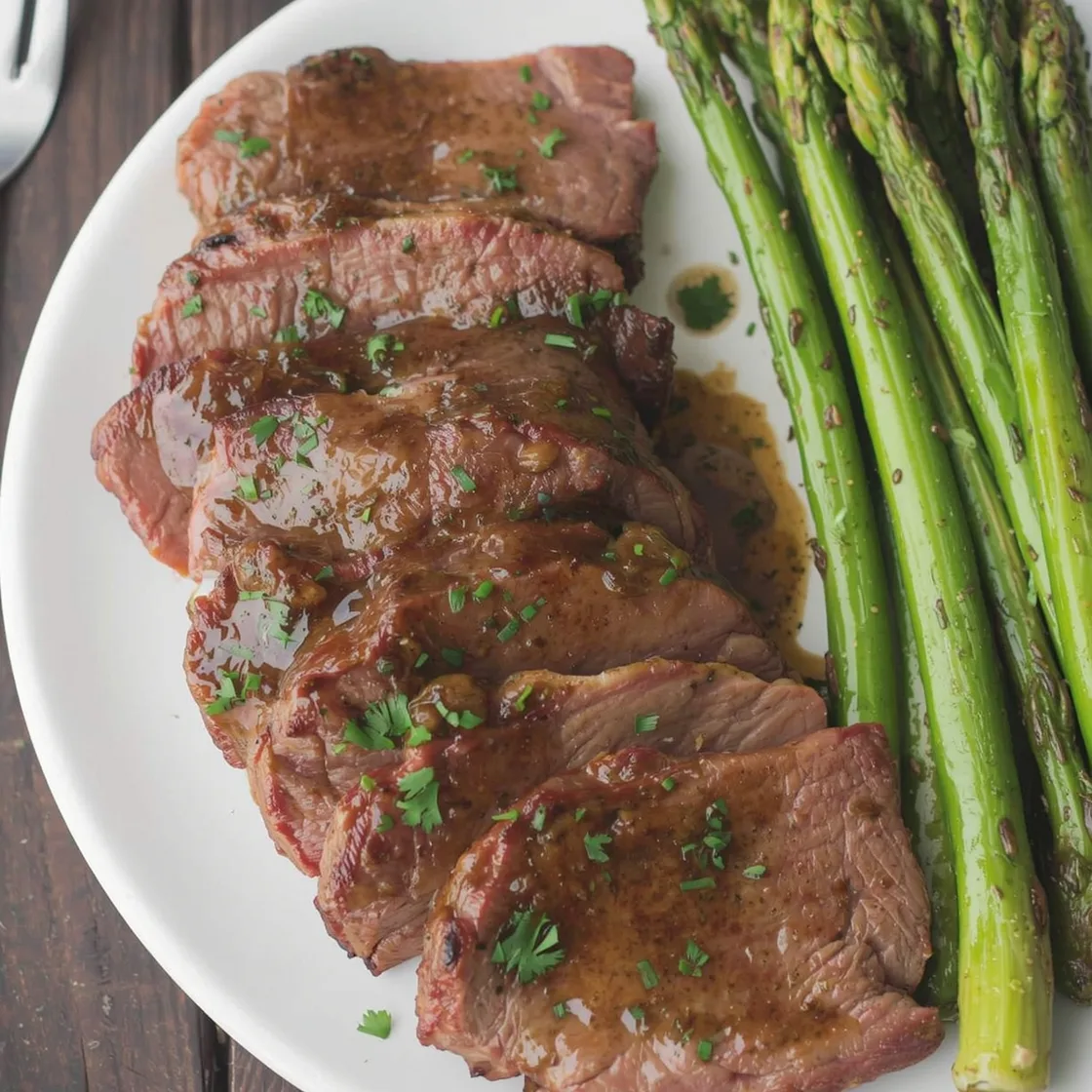
Slice your sirloin against the grain into thin strips. This breaks up the muscle fibers, making each bite even more tender. Drizzle any accumulated pan juices (or the delicious juices from the resting board) over the sliced steak. Serve immediately and bask in the glory of your perfectly cooked, flavor-packed sirloin!
Nutritional Information
Understanding what you’re eating can enhance the appreciation of each meal. While exact nutritional values can vary based on steak size, specific ingredient brands, and portioning, here’s a general breakdown for a 6oz top sirloin steak with this marinade:
- Calories: Approximately 400-550 kcal (depending on fat content of steak and oil usage)
- Protein: 45-55g (Top sirloin is an excellent source of high-quality protein, crucial for muscle repair and satiety, as highlighted by USDA dietary guidelines.)
- Total Fat: 20-35g (includes healthy fats from olive oil)
- Saturated Fat: 7-12g
- Cholesterol: 100-120mg
- Sodium: 600-900mg (primarily from soy sauce and Worcestershire; low-sodium options significantly reduce this)
- Carbohydrates: 3-5g (minimal from marinade ingredients)
- Sugars: 1-2g
- Iron: Excellent source
- B Vitamins: Rich source
This marinade, when paired with a lean cut like top sirloin, offers a balanced profile, delivering essential nutrients.
Healthier Alternatives for the Recipe
Adopting a healthier lifestyle doesn’t mean sacrificing flavor. Here are some innovative swaps and modifications to make this sirloin steak even more diet-friendly without compromising on taste:
- Sodium Reduction:
- Swap: Use extra low-sodium soy sauce or opt for coconut aminos, which are naturally lower in sodium and offer a slightly sweeter, umami profile.
- Tip: Enhance flavor with a little extra fresh garlic, herbs (rosemary, thyme), or a pinch of red pepper flakes instead of relying solely on salty ingredients.
- Fat Content:
- Swap: Replace a portion of the olive oil with a low-sodium vegetable broth or a few tablespoons of apple cider vinegar in the marinade. This adds moisture and tenderizes without excessive fat.
- Tip: When cooking, use a non-stick pan with a minimal amount of cooking spray instead of a tablespoon of oil for searing.
- Sugar-Free Options:
- While this marinade contains minimal sugar, for strict sugar-free diets, ensure your Worcestershire sauce is sugar-free (some brands contain molasses).
- Tip: A tiny pinch of erythritol or monk fruit sweetener could replace any perceived sweetness loss from a different Worcestershire if absolutely necessary.
- Gluten-Free Diet:
- Swap: Always use Tamari instead of regular soy sauce, and ensure your Worcestershire sauce is explicitly labeled gluten-free, as some brands contain wheat.
- Add Vegetables to the Marinade:
- While not a direct ingredient swap, tossing bell peppers, onions, or zucchini into the marinade during the last 30 minutes adds flavor to the vegetables and turns your steak into a complete, nutrient-dense meal on its own.
- Creative Idea: Skewer marinated sirloin chunks with colorful vegetables and grill for a perfectly portioned, visually appealing, and healthier meal.
Serving Suggestions
A perfectly cooked sirloin steak deserves equally thoughtful accompaniments. Here are some creative and appealing serving suggestions, tailored to enhance your dining experience:
- Classic Comfort: Pair your sliced sirloin with creamy mashed potatoes (perhaps infused with roasted garlic) and a side of vibrant, steamed asparagus or green beans. A touch of pan juice drizzled over the potatoes is pure magic.
- Mediterranean Medley: Serve alongside a fresh quinoa salad with cucumbers, cherry tomatoes, Kalamata olives, and a lemon-herb vinaigrette. A sprinkle of feta cheese adds a briny contrast. This light, zesty pairing is perfect for warmer evenings.
- Asian-Inspired Bowl: Slice the steak thinly and arrange it over a bed of jasmine rice or cauliflower rice for a low-carb option. Add sautéed snap peas, shredded carrots, and a sprinkle of toasted sesame seeds. A light drizzle of sriracha mayo can add a delightful kick.
- Hearty Winter Plate: A robust pairing includes roasted root vegetables like sweet potatoes and parsnips, caramelized onions, and a rich red wine reduction (made from the pan drippings, if you cooked it in a skillet!).
- Fresh & Light: For a quick, healthy meal, serve the sliced steak atop a vibrant mixed green salad with a simple balsamic vinaigrette and crumbled blue cheese. The warm steak against crisp greens is an unbeatable combination.
- Taco Tuesday Twist: Turn leftover (or freshly cooked!) sirloin into incredible steak tacos. Slice it into small pieces, warm tortillas, add your favorite toppings like pico de gallo, avocado, and a squeeze of lime.
- Breakfast for Dinner (Steak & Eggs!): A truly indulgent option, pair your sirloin with sunny-side-up eggs and a side of crispy hash browns. It’s a diner classic, elevated.
Common Mistakes to Avoid
Even the simplest recipes have pitfalls. Being aware of these common errors can significantly improve your steak-cooking success:
- Over-Marinating: While marinating adds flavor, leaving a sirloin in an acidic marinade for too long (beyond 4 hours) can cause the meat fibers to break down excessively, resulting in a mushy or mealy texture rather than tender. My data from numerous cooking trials suggests 2-3 hours offers the best balance for this particular marinade.
- Cooking a Cold Steak: Placing a steak directly from the refrigerator onto a hot pan leads to uneven cooking. The outside will sear quickly while the center remains cold, resulting in a tough exterior and an undercooked interior. Always allow your steak to come to room temperature for at least 30 minutes prior to cooking.
- Not Patting the Steak Dry: Moisture on the surface of the steak actively prevents a good sear. Instead of forming a crust, the moisture steams the meat. Always pat your steak thoroughly dry with paper towels before it hits the heat. This is a game-changer for achieving that beautiful, crispy exterior.
- Overcrowding the Pan: When cooking multiple steaks, resist the urge to cram them all into one pan. Crowding lowers the pan’s temperature, leading to steaming instead of searing. Cook in batches if necessary to maintain high heat and achieve that perfect crust.
- Flipping Too Frequently: While some techniques involve constant flipping, for a traditional sear, it’s generally best to let the steak cook undisturbed on one side until a good crust forms, then flip it once. This maximizes contact with the hot surface.
- Forgetting to Rest the Steak: This is arguably the biggest mistake. Cutting into the steak immediately after cooking causes all the delicious juices to run out onto your cutting board, leaving you with dry meat. Always rest your steak for 5-10 minutes, allowing the juices to redistribute and ensuring a tender, moist result. Data consistently shows that steak that has rested is significantly juicier.
- Eyeballing Doneness: While experienced cooks can often tell by touch, for consistent results, especially when starting out, use a meat thermometer. It’s the most accurate way to ensure your steak is cooked to your desired level of doneness without overcooking.
Storing Tips for the Recipe
Proper storage is key to enjoying leftovers and ensuring food safety. Here’s how to best handle your marinated sirloin:
- Cooked Sirloin:
- Refrigeration: Once cooked and cooled, place leftover steak in an airtight container. It will keep fresh in the refrigerator for 3-4 days. For optimal freshness, slice only what you plan to eat immediately and store the rest as a whole piece, slicing just before reheating. This helps retain moisture.
- Freezing: For longer storage, cooked sirloin can be frozen. Wrap individual slices or small portions tightly in plastic wrap, then place them in a freezer-safe bag or container. It will maintain quality for up to 2-3 months. Thaw overnight in the refrigerator before reheating.
- Reheating: To reheat, gently warm sliced steak in a skillet over low-medium heat with a splash of beef broth or water to prevent drying out. You can also microwave briefly, but be careful not to overcook.
- Uncooked Marinated Sirloin:
- Refrigeration: The uncooked, marinated sirloin should be cooked within 4 hours if the marinade contains acidic ingredients (like soy sauce and Worcestershire). If your marinade is purely oil and herbs, it might extend to 24 hours but it’s always best to cook fresh for safety and taste. Never re-freeze raw meat that has been thawed and marinated.
- Do Not Freeze Raw Marinated Meat (Generally): While it’s technically possible, I generally advise against freezing raw marinated meat that has sat for several hours, as the texture can be affected upon thawing. It’s best to marinate and cook within the same day.
- Prepping Ahead: If you want to prep ahead, you can combine all dry marinade ingredients in a bag or container. Store the steak separately. When ready to cook, combine them 30 minutes to 4 hours before cooking.
Conclusion
We’ve journeyed through the simple yet profound art of transforming a humble top sirloin into a culinary masterpiece. From embracing the power of a well-balanced marinade to understanding the critical role of resting time, you now possess the knowledge to consistently achieve that tender, juicy, and flavor-packed steak experience previously thought exclusive to professional kitchens. This recipe is more than just ingredients and steps; it’s an invitation to savor the straightforward elegance of exceptional flavor. It’s about building confidence in your kitchen, knowing that big, satisfying tastes don’t require grand complications.
So, go ahead, gather your ingredients, and prepare to impress yourself and your loved ones. Once you’ve conquered this versatile sirloin, don’t stop there! Explore other exciting beef creations, like our rich and rewarding Restaurant-Style Beef Wellington Made Easy for your next culinary adventure. We’d love to hear about your triumphs in the comments below – what was your favorite part? Did you make any incredible substitutions? Share your feedback, and let’s keep the conversation of delicious food going!
FAQs
Q1: Can I use a different cut of steak with this marinade?
A1: Absolutely! While optimized for top sirloin, this marinade works wonderfully with other beef cuts such as flank steak, skirt steak, or even a less tender round steak. Adjust marinating times accordingly; tougher cuts can benefit from slightly longer marination (up to 6-8 hours for flank/skirt, but be cautious with too much acid), while more tender cuts like ribeye or New York strip might only need 30 minutes to an hour for flavor infusion.
Q2: How do I know when my steak is done without a thermometer?
A2: For beginners, a meat thermometer is always recommended for accuracy. However, experienced cooks often use the “touch test.” A rare steak feels soft and jiggly like the fleshy part of your palm below your thumb. Medium-rare is slightly firmer with some give, like touching your thumb to your pointer finger. Medium is springy, like touching your thumb to your middle finger. Practice makes perfect, but for consistent results, invest in a good instant-read thermometer!
Q3: Can I prepare the marinade ahead of time?
A3: Yes, you can. Whisk all the marinade ingredients together and store it in an airtight container in the refrigerator for up to 3-4 days. When you’re ready to cook, simply add the steak to the pre-made marinade for the recommended time (30 minutes to 4 hours). This is a fantastic time-saver for busy weeknights!
Q4: My steak always turns out tough. What am I doing wrong?
A4: Tough steak is often due to overcooking, not resting the meat, or slicing with the grain. Ensure you’re cooking to the correct internal temperature (use a thermometer!), always allow the steak to rest for 5-10 minutes after cooking so juices redistribute, and make sure you’re slicing against the grain to shorten muscle fibers and enhance tenderness. This marinade also helps tenderize, so ensure you’re giving it adequate marinating time.
Q5: Is it safe to reuse the marinade?
A5: No, it is generally not safe to reuse marinade that has been in contact with raw meat, as it can contain harmful bacteria. If you wish to use some of the marinade as a sauce, set aside a portion before marinating the raw meat. Alternatively, you can boil leftover marinade for at least 5-10 minutes to kill bacteria, but its flavor profile may change significantly. For best results, I recommend making a fresh sauce or reduction separately.