
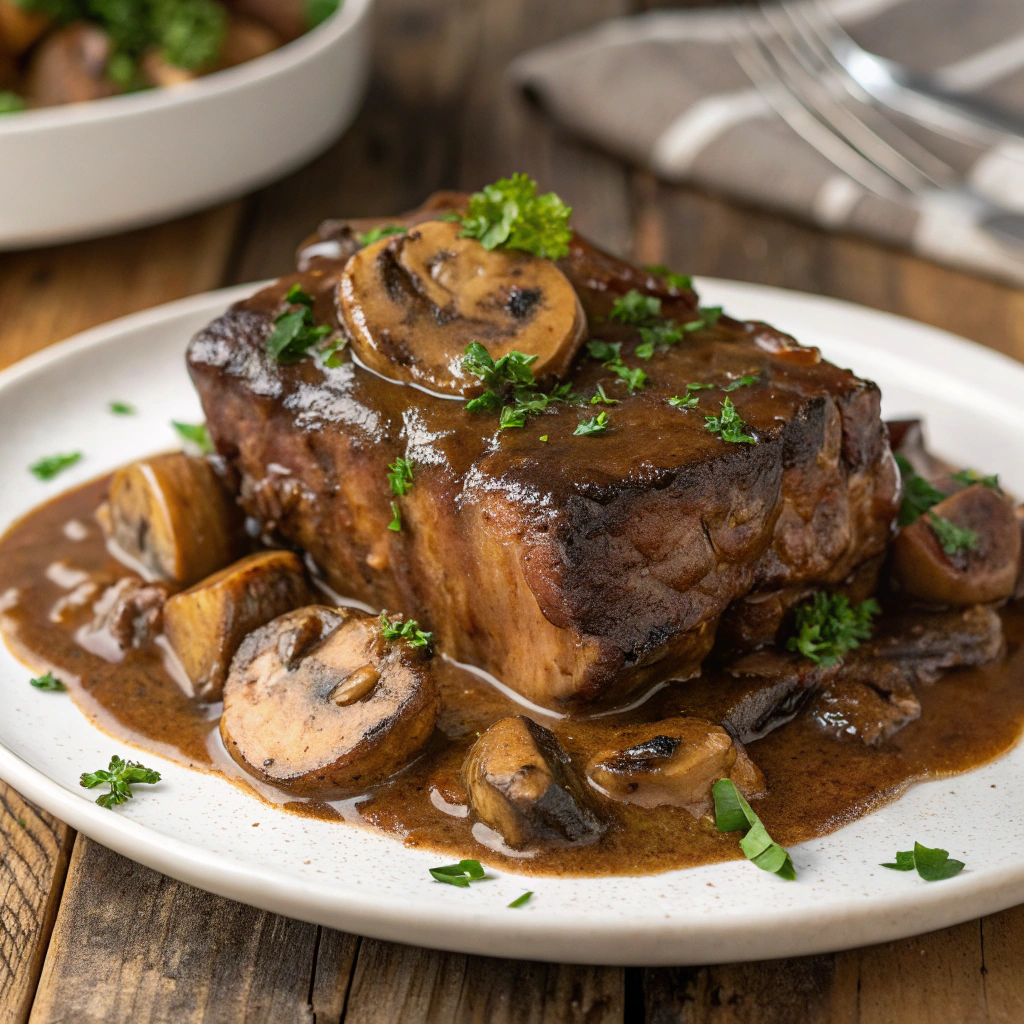
Introduction
What if the most soul-warming dinner in your repertoire didn’t require a culinary school arsenal—just patience, a hot pan, and a pot? Short Ribs with Mushroom Gravy prove that low-and-slow doesn’t mean complicated. In this recipe, we coax deep flavor from humble ingredients and build a velvet-rich gravy without fussy steps. Whether you’ve braised a hundred times or you’re trying it for the first time, this method delivers restaurant-level results with reliable, weeknight-friendly moves.
At Feast of Savory, I test comfort classics the way a home cook actually cooks—one sturdy Dutch oven, practical pantry swaps, and timing that respects your schedule. These braised short ribs bloom into fork-tender bites in a savory mushroom gravy layered with aromatics, red wine, and beef stock. Expect big, woodsy umami, glossy sauce, and meat that yields to the touch.
Ingredients List
Serves: 6
- 4 pounds bone-in beef short ribs (about 8 pieces; look for meat well-marbled with even thickness)
- 2 teaspoons kosher salt, plus more to taste
- 1 teaspoon freshly ground black pepper
- 2 tablespoons all-purpose flour (optional for light dredging; substitute rice flour for gluten-free)
- 2 tablespoons high-heat oil (avocado, grapeseed, or neutral)
- 1 large yellow onion, diced
- 2 large carrots, peeled and diced
- 2 celery ribs, diced
- 6 cloves garlic, smashed
- 2 tablespoons tomato paste
- 1½ cups dry red wine (Cabernet, Merlot, or Pinot Noir; for non-alcoholic, use extra broth plus 1 tablespoon balsamic)
- 3 cups low-sodium beef broth (or a rich homemade stock)
- 2 sprigs fresh rosemary
- 3 sprigs fresh thyme (or 1 teaspoon dried thyme)
- 2 bay leaves
- 16 ounces cremini or baby bella mushrooms, sliced ¼ inch thick (mix in shiitakes for earthier depth)
- 2 tablespoons unsalted butter (or olive oil for dairy-free)
- 1 tablespoon Worcestershire sauce (gluten-free if needed)
- 1 teaspoon soy sauce or tamari (optional, for extra umami)
- 1 teaspoon Dijon mustard (optional, for brightness)
- 1 tablespoon cornstarch mixed with 1 tablespoon cold water (only if you prefer a thicker gravy)
- Fresh parsley, chopped, for garnish
Ingredient notes and smart swaps:
- Short ribs: Bone-in deliver deeper flavor and better moisture. Boneless work, too; reduce braise time slightly since they cook faster and offer less insulation from the bone.
- Mushrooms: Cremini provide meaty chew; shiitake add woodsy, smoky notes; portobello slices bring steak-like heft.
- Tomato paste: Deepens color and umami. If using double-concentrated paste, drop to 1½ tablespoons.
- Red wine: Pick something dry you’d happily sip. For alcohol-free braising, a 50/50 mix of beef stock and pomegranate or black cherry juice approximates wine’s fruit-acid balance.
- Flour vs. no flour: A light dredge helps early browning and later body in the gravy; skip if you’re gluten-free and thicken with the cornstarch slurry at the end instead.
- Aromatics: Swap leeks for onion for milder sweetness. Add a piece of star anise for subtle, savory warmth.
Timing
- Prep time: 20 minutes (seasoning, chopping, and preheating)
- Searing and stovetop build: 20 minutes
- Oven braise: 2 hours
- Mushroom sauté and gravy finish: 15–20 minutes
- Total time: About 2 hours 45 minutes
Context: Many classic short rib recipes land in the 3 to 3½ hour range. This streamlined method trims roughly 20–25% off the clock without sacrificing tenderness, thanks to a moderate oven temperature and efficient sauce-building steps.
Step-by-Step Instructions
Step 1: Preheat and season
- Preheat your oven to 325°F (163°C). Pat the short ribs very dry—surface moisture fights browning.
- Season all sides generously with kosher salt and black pepper. If using flour, lightly dust and shake off excess. This whisper-thin coating helps color and later integrates into the gravy.
Step 2: Sear for the Maillard magic
- Heat a heavy Dutch oven over medium-high until hot, then add the oil.
- Sear the short ribs in batches, 3–4 minutes per side, until deeply browned. Don’t crowd the pot; leave breathing room or they’ll steam instead of sear.
- Transfer browned ribs to a plate. A dark, toasty fond (the browned bits) on the bottom of the pot is your flavor bank.
Pro tip: If smoke builds before you get proper browning, slightly lower the heat and allow the pot to recover between batches. Browning should be assertive, not acrid.
Step 3: Build the aromatic base
- Add the onion, carrot, and celery to the pot with a pinch of salt. Cook 5–6 minutes, stirring, until softened and lightly golden.
- Stir in tomato paste and cook 1–2 minutes to caramelize; it should turn brick red and smell sweet-savory.
- Add the smashed garlic and warm 30 seconds, just until fragrant.
Step 4: Deglaze with wine
- Pour in the red wine and scrape up the fond with a wooden spoon. Reduce by about half, 3–4 minutes; the mixture should thicken slightly and smell jammy.
- This reduction concentrates flavor and ensures the wine’s edges mellow in the final sauce.
No-wine tip: Use extra beef stock plus a splash of balsamic or pomegranate juice for acidity.
Step 5: Braise setup
- Add the beef broth, rosemary, thyme, bay leaves, Worcestershire, soy/tamari (if using), and Dijon (if using). Bring to a steady simmer.
- Return the short ribs to the pot, nestling them into the liquid. The meat doesn’t have to be fully submerged—two-thirds up is ideal for roasting-braising balance.
- Cover with a tight-fitting lid and transfer to the oven.
Step 6: The gentle oven braise
- Braise at 325°F for 2 hours. You’re aiming for meat that’s tender and yielding but not shredded to threads.
- Check once around the 75–90 minute mark: if the liquid is boiling vigorously, drop the oven to 300°F. A lazy simmer protects the meat’s moisture.
Data insight: Collagen begins converting to gelatin between about 160–180°F internal. Maintaining a gentle braise helps this transformation without squeezing out juices.
Step 7: Rest and separate fat
- Remove the pot from the oven. Transfer the ribs to a platter and tent with foil.
- Skim fat from the braising liquid. For ultra-clean gravy, pour the liquid into a fat separator or chill it 10–15 minutes to let fat rise for easy removal.
Flavor tip: Don’t remove every trace of fat—a little is essential for body and gloss.
Step 8: Sear the mushrooms
- In a large skillet, melt the butter over medium-high heat. Add the sliced mushrooms in a single layer and let them brown undisturbed for 3–4 minutes before stirring.
- Season with a pinch of salt. Cook 6–8 minutes total until they release moisture and turn mahogany with crisp edges.
Why separate pan? Giving mushrooms their own hot stage prevents sogginess and locks in a meaty chew that stands up to the gravy.
Step 9: Make the mushroom gravy
- Pour the skimmed braising liquid back into the Dutch oven and bring to a simmer on the stovetop.
- Add the browned mushrooms. Simmer 5 minutes to mingle flavors and reduce slightly. Taste and adjust salt and pepper.
- For a thicker, nappe-style gravy, whisk in the cornstarch slurry and simmer 1–2 minutes until glossy. For a naturally reduced sauce, skip the slurry and let it bubble down to your preferred consistency.
Step 10: Combine and serve
- Nestle the ribs back into the gravy to rewarm for 3–5 minutes.
- Remove herb stems and bay leaves. Sprinkle with chopped parsley.
- Serve over creamy polenta, buttery mashed potatoes, or buttered egg noodles, spooning extra mushroom gravy over the top.
Nutritional Information
Per serving (1 of 6), calculated with bone-in short ribs, minimal flour dredge, and cornstarch finish. Values are estimates and can vary with specific brands and trimming:
- Calories: ~680
- Protein: ~38 g
- Total fat: ~49 g
- Saturated fat: ~20 g
- Carbohydrates: ~14 g
- Fiber: ~2 g
- Sugars: ~4 g
- Sodium: ~780 mg
- Cholesterol: ~155 mg
Data note: Short ribs are a higher-fat cut by design; most of the dish’s calories come from fat. Skimming and chilling to remove excess fat can lower total calories and saturated fat per serving.
Healthier Alternatives for the Recipe
- Leaner cut swap: Use 3 pounds of well-marbled beef chuck roast, cut into 3-inch pieces. You’ll retain rich flavor with less saturated fat. Braise about 2 hours, checking for tenderness.
- Defatting made easy: Make the dish a day ahead, chill the pot overnight, and lift off the firm fat cap before reheating. This simple step can remove a significant portion of fat without touching flavor.
- Boost mushrooms, reduce meat: Use 24 ounces of mushrooms and 3 pounds short ribs. The extra umami makes the dish feel just as hearty with fewer calories per serving.
- Olive oil instead of butter: Swap butter with olive oil for the mushroom sauté to lower saturated fat.
- No-wine variation: Use low-sodium beef broth with 1–2 tablespoons balsamic vinegar or sherry vinegar to mimic the wine’s acidity and complexity.
- Gluten-free and dairy-free: Skip the flour dredge; thicken with cornstarch. Use oil instead of butter.
- Low-sodium approach: Choose low-sodium stock, skip soy/tamari, and season gradually at the end.
Serving Suggestions
- Classic bases: Creamy Parmesan polenta, Yukon gold mashed potatoes, or buttered egg noodles. The starch catches every drop of gravy.
- Bright counterpoints: Lemon-zested green beans, roasted carrots with a drizzle of honey and mustard, or a simple arugula salad with shaved Parm and olive oil.
- Bread on the side: A rustic sourdough or warm crusty baguette to mop up sauce.
- Wine pairing: Pour the same varietal you cooked with—Cabernet or Merlot has the weight to match the beef and mushrooms. Pinot Noir offers an earthier, lighter counterpoint.
- Leftover magic: Shred leftover meat and toss with the gravy to make a pappardelle ragu; layer into toasted ciabatta with provolone for short rib melts; or spoon over creamy grits with a sunny-side egg.
If you love cozy, big-batch meals, you might also enjoy our hearty stovetop beef barley soup—another stick-to-your-ribs favorite.
Common Mistakes to Avoid
- Overcrowding during sear: Crowded pans steam. Brown in batches for deep color and flavor.
- Rushing the deglaze: If you don’t reduce the wine, the sauce can taste sharp. Cook it down by half before adding broth.
- Boiling the braise: A hard boil toughens meat. Aim for a gentle, lazy simmer in the oven.
- Skipping the mushroom sear: Adding raw mushrooms to the pot dilutes the sauce and yields rubbery texture. Brown them separately.
- Not seasoning in layers: Salt the meat, season the aromatics, taste the reduced sauce, and adjust at the end for a balanced finish.
- Lifting the lid often: Heat loss extends cook time. Check midway, then trust the process.
- Neglecting fat removal: A greasy finish can overshadow flavor. Skim or chill to remove excess fat.
- Serving immediately: A short rest lets juices redistribute; the meat becomes silkier after a 10-minute breather in warm gravy.
Storing Tips for the Recipe
- Refrigerator: Store ribs and gravy together in an airtight container up to 4 days. Flavor deepens by day two.
- Freezer: Cool completely, portion into freezer-safe containers, and freeze up to 3 months. Thaw overnight in the fridge.
- Reheat: Warm gently on the stovetop over low heat until steaming, adding a splash of broth or water if the gravy thickened in the fridge.
- Meal prep: Cook a day ahead for easier fat removal and richer flavor. Reheat, then finish with fresh parsley to brighten.
- Bones and broth: Save the bones for stock. Simmer with aromatics 3–4 hours for a collagen-rich base.
Conclusion
Short Ribs with Mushroom Gravy are the definition of rustic, decadent comfort—it’s the kind of slow-braised dinner that invites everyone to linger at the table. With a straightforward sear, a patient oven, and a quick mushroom finish, you get fall-apart meat and a glossy, savory gravy that tastes like it took all day.
If you make this, leave a comment with your twist, rate the recipe so others can find it, and share your plate. Craving more cozy cooking? Explore our other braises and cold-weather favorites, and let your kitchen do the slow work while you enjoy the company.
FAQs
Do I have to use bone-in short ribs?
No, but bone-in deliver deeper flavor and succulence. Boneless work well—start checking for tenderness around 1 hour 45 minutes to 2 hours since they can finish a bit sooner.
Can I make Short Ribs with Mushroom Gravy without wine?
Yes. Use all beef broth and add 1–2 tablespoons balsamic or sherry vinegar for brightness. A splash of pomegranate or black cherry juice also mimics wine’s fruitiness.
What’s the best pot for braising?
A heavy, enameled cast-iron Dutch oven with a tight lid holds heat and moisture like a pro. If using a stainless pot, monitor heat closely; it runs hotter and can reduce liquid faster.
How can I adapt this for a slow cooker?
- Sear ribs and aromatics on the stovetop first for best flavor.
- Transfer to the slow cooker with wine (reduced) and broth.
- Cook on Low 7–8 hours or High 4–5 hours, then finish the mushrooms on the stovetop and fold into the sauce.
Can I use an Instant Pot?
Yes. Sear on Sauté, deglaze with wine, add broth and aromatics, then cook on High Pressure for 45 minutes with a natural release (15–20 minutes). Remove ribs, reduce liquid on Sauté, sauté mushrooms in a separate pan, and combine.
How do I avoid a greasy gravy?
Skim fat before reducing. For best results, chill the braising liquid 10–15 minutes to separate fat, or make the dish a day ahead and remove the solid fat cap cold.
Which mushrooms are best?
Cremini for balance, shiitake for punchy earthiness, and a few sliced portobellos for beefy texture. Avoid very thin slices; they’ll wither in the sauce.
How do I know they’re done?
The meat should yield easily to a fork and show little to no resistance pulling from the bone. If it’s close but not there, give it another 15–20 minutes—tenderness blooms in the final stretch.
How do I thicken gravy without cornstarch or flour?
Reduce the sauce. Simmer uncovered until glossy and coats the back of a spoon. A knob of cold butter whisked in off heat adds body and sheen (skip for dairy-free).
Can I double the recipe?
Yes, but use a wider Dutch oven or two pots so searing isn’t crowded. Doubling liquid without increasing surface area slows reduction; plan a longer simmer at the end to reach a silky consistency.
Further reading and inspiration
For another take on rich, wine-kissed beef with mushrooms, see this excellent reference for technique and flavor pairing in braised short rib mushroom sauce. It’s a great companion to the method above and a helpful comparison as you explore your favorite style.