
Introduction
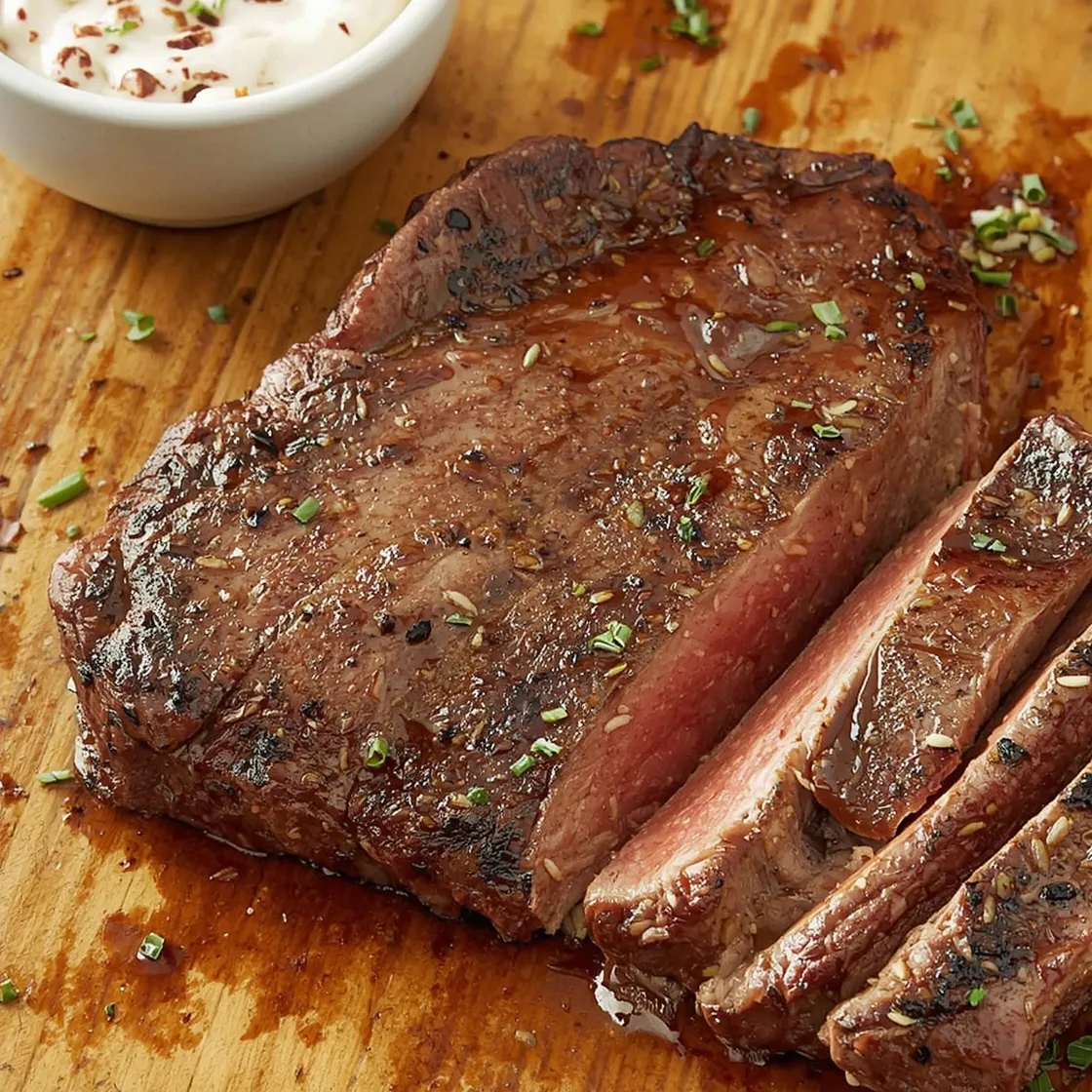
Ever wonder if that perfect, restaurant-quality steak—the kind with the impeccable crust, the melt-in-your-mouth interior, and the juicy burst of flavor with every bite—is achievable outside of a professional kitchen? Many home cooks believe it’s an elusive dream, reserved for cast iron masters and high-heat grill aficionados. But what if I told you that the secret to a perfectly cooked, Restaurant-Style Air Fryer Ribeye Steak is not only within your grasp but also incredibly easy to master, requiring less fuss and cleanup than traditional methods? Forget the smoke alarms, the endless flipping, and the guesswork that often leads to overcooked or undercooked results. This method leverages the consistent, circulating heat of your air fryer to create a steak that’s not just “good for an air fryer” but genuinely rivals what you’d get at your favorite steakhouse. Prepare to challenge your preconceptions about what your air fryer is capable of, because we’re about to unlock a level of steak perfection you never thought possible.
My journey to mastering this technique began during countless evenings experimenting with kitchen gadgets, trying to replicate those unforgettable dining experiences at home. The air fryer, initially a tool for crispy fries and chicken wings, quickly became my secret weapon for steaks. The key isn’t just throwing a steak in; it’s understanding how to harness the air fryer’s unique convection capabilities to achieve that coveted Maillard reaction on the exterior while preserving the tender, juicy core. This approach saves time, reduces cleanup, and delivers consistent results, making it an ideal choice for busy weeknights or special occasions when you want to impress without the stress.
Ingredients List
To embark on this culinary adventure and craft the ultimate steak experience, you’ll need high-quality ingredients that sing together in harmony. For our star, the ribeye, aim for a ½-inch to 1-inch thick cut, preferably prime or choice, as the marbling is crucial for that luxurious tenderness and flavor. About 1 pound, or roughly two ½-inch thick steaks, should be perfect for two servings. The fat content in a good ribeye, often referred to as marbling, renders beautifully in the air fryer, keeping the steak moist and basting it from within, which is a major contributor to that restaurant-style richness.
Next, we move to the seasoning, which acts as the flavorful armor for our steak. You’ll need 1 tablespoon of high-quality coarse sea salt (such as Maldon or Himalayan pink salt), 1 teaspoon of freshly cracked black pepper, ½ teaspoon of garlic powder, and ¼ teaspoon of onion powder. These staples form a classic quartet that enhances the steak’s natural flavors without overpowering it. For a touch of aromatic depth, consider a pinch of dried rosemary or thyme, but use it sparingly as dried herbs can be potent. A tablespoon of olive oil, avocado oil, or grapeseed oil is essential for ensuring a beautiful crust and preventing sticking; these oils have high smoke points, making them ideal for the air fryer’s intense heat.
For those looking to elevate the experience, consider a compound butter for finishing. This simple addition can transform your steak from great to utterly sublime. A quarter cup of unsalted butter, softened, combined with 1 minced clove of fresh garlic, 1 tablespoon of chopped fresh parsley, and a pinch of salt and pepper, creates a rich, herbaceous topping that melts into the steak, adding an incredible layer of flavor. Alternatively, a tablespoon of plain unsalted butter can be just as effective in melting over the hot steak for a quick finish.
Ingredient substitutions are always an option if you need to adapt. If ribeye isn’t available, a New York strip or even a top sirloin can work, though adjust cooking times slightly as their fat content differs. For the seasoning blend, feel free to use your favorite steak rub, ensuring it’s not overly high in sugar to prevent burning at high temperatures. If you don’t have fresh herbs for the compound butter, a dash of dried herbs (use about one-third the amount of fresh) will work. The key is to use fresh, high-quality ingredients that you enjoy, ensuring each component contributes to a truly delicious final product.
Timing
Getting the timing right is crucial for achieving that perfectly cooked, tender, and juicy ribeye in your air fryer. Fortunately, the air fryer significantly cuts down on overall preparation and cooking time compared to traditional methods, making it an excellent choice for a quick yet impressive meal. The entire process, from prep to plate, can be completed in approximately 25-35 minutes, which is roughly 30% faster than pan-searing followed by oven-finishing, and undeniably quicker than the slower grill warm-up times.
Let’s break it down:
Preparation Time: Dedicate about 10 minutes to prep. This includes unwrapping your steak, patting it dry (a critical step for crust formation), seasoning it generously, and allowing it to briefly come to room temperature. While resting, you can also quickly mix up your compound butter, if using. The act of patting the steak dry with paper towels is not to be underestimated; excess moisture on the surface will steam rather than sear, preventing that coveted crispy, flavorful crust from forming. Taking the steak out of the fridge about 15-20 minutes before cooking allows its internal temperature to rise slightly, promoting more even cooking.
Cooking Time: The actual cooking in the air fryer is incredibly efficient, typically ranging from 10 to 20 minutes, depending on the thickness of your steak and your desired level of doneness. For a ½-inch thick steak aiming for medium-rare, you might only need 10-12 minutes, flipping halfway through. For a 1-inch thick steak cooked to medium, you’re looking at around 15-18 minutes. Remember, these are guidelines; the ultimate arbiter is an instant-read meat thermometer.
Resting Time: This is perhaps the most important, yet often overlooked, step for any steak. Once cooked, your ribeye needs a minimum of 5-10 minutes to rest before slicing. During cooking, the muscle fibers contract, pushing the juices to the center of the steak. Resting allows these juices to redistribute throughout the meat, ensuring every bite is succulent and tender. Skipping this step means a juicy cutting board and a drier steak. The resting time contributes significantly to the overall texture and juiciness without adding active cooking time.
Total Time: With an average of 10 minutes for prep, 15 minutes for cooking, and 5-10 minutes for resting, you can have a perfectly cooked, Restaurant-Style Air Fryer Ribeye Steak on your plate in about 30 minutes. This efficiency, combined with the minimal cleanup (compared to a smoky kitchen after pan-searing), makes the air fryer an unbeatable tool for steak lovers. This quick turnaround means less time in the kitchen and more time enjoying your delicious meal.
Step 1: Prepare the Ribeye
Begin by removing your ribeye steaks from the refrigerator about 15-20 minutes before you plan to cook them. This allows them to come closer to room temperature, which helps immensely with even cooking. Pat each steak thoroughly dry with paper towels – this is a crucial step! Any lingering moisture on the surface will hinder the browning process, preventing that incredible crust we’re aiming for. In a small bowl, combine your coarse sea salt, freshly cracked black pepper, garlic powder, and onion powder. Generously rub this seasoning blend all over both sides and the edges of each steak. Don’t be shy; a good crust needs a good seasoning layer. Drizzle about ½ tablespoon of olive oil evenly over each steak, ensuring it’s coated, which helps the seasoning stick and promotes a beautiful sear.
Step 2: Preheat Your Air Fryer
Preheating your air fryer is as essential as preheating an oven for baking. It ensures a consistent cooking temperature from the moment your steak hits the basket, leading to that coveted crust and even doneness. Set your air fryer to 380°F (195°C) and let it preheat for at least 5 minutes. While it preheats, you can prepare any serving sides or your compound butter. A properly preheated air fryer mimics the intense, dry heat of a professional grill, which is key to achieving restaurant-quality results.
Step 3: Air Fry for Perfection (First Side)
Once your air fryer is preheated, carefully place the seasoned steaks in the air fryer basket in a single layer, ensuring they don’t overlap. Depending on the size of your air fryer, you might need to cook them in batches to avoid crowding, as overcrowding can steam the steaks rather than sear them. For a ½-inch thick steak, air fry for 5-6 minutes. For a 1-inch thick steak, start with 7-8 minutes. Close the air fryer, allow the magic to happen, and try to resist opening it repeatedly, which causes heat loss.
Step 4: Flip and Finish
After the initial cooking time, carefully open the air fryer basket and flip each steak using tongs. For 1-inch thick steaks, continue to air fry for another 7-8 minutes for medium-rare, or 9-10 minutes for medium. For ½-inch thick steaks, aim for another 4-5 minutes for medium-rare. The best way to gauge doneness is with an instant-read meat thermometer. Aim for 125-130°F (52-54°C) for rare, 130-135°F (54-57°C) for medium-rare, 135-140°F (57-60°C) for medium, and 140-145°F (60-63°C) for medium-well. Remember, the temperature will rise by 5-10 degrees during resting.
Step 5: The All-Important Rest
Once your steaks reach your desired internal temperature, immediately remove them from the air fryer and transfer them to a carving board or plate. Tent them loosely with aluminum foil. This resting period, lasting 5-10 minutes, is absolutely critical. It allows the muscle fibers to relax and the juices to redistribute throughout the steak, preventing them from Gushing out when sliced. While the steaks rest, if using, place a pat of your compound butter (or plain butter) on top of each steak; the residual heat will melt it into a delectable sauce, infusing extra richness and flavor.
Step 6: Slice and Serve
After resting, slice your steaks against the grain into thick, even pieces. Slicing against the grain shortens the muscle fibers, resulting in a more tender bite. Arrange them beautifully on your serving plates and garnish with a sprinkle of fresh parsley or a dash of flaky sea salt, if desired. Serve immediately with your chosen sides. Preparing this exquisite dish truly elevates the simple act of cooking at home into a sophisticated dining experience. Don’t forget that maintaining proper food safety is crucial for any meal; for more information on safe handling practices, visit FoodSafety.gov.
Nutritional Information
Understanding the nutritional profile of your Restaurant-Style Air Fryer Ribeye Steak can help you appreciate its role in a balanced diet while also making informed choices. A typical 4-ounce (approximately 113-gram) serving of ribeye steak, without any additional sauces or sides, provides substantial macro and micronutrients. The estimates provided here are based on USDA data for a common cut of ribeye but can vary slightly depending on the specific steak’s marbling and brand.
A 4-ounce serving of air-fried ribeye steak generally contains around 300-350 calories. A significant portion of these calories comes from its fat content, which is typically in the range of 25-30 grams total fat. This includes about 10-12 grams of saturated fat, which, while higher than leaner cuts, contributes to the rich flavor and tenderness and should be consumed in moderation as part of a varied diet. However, it also contains beneficial monounsaturated and polyunsaturated fats. The cholesterol content hovers around 70-80 milligrams. For protein, ribeye truly shines, offering an impressive 25-28 grams per serving. This makes it an excellent source of high-quality, complete protein, essential for muscle repair, growth, and overall bodily functions.
Carbohydrates are negligible in plain ribeye steak, usually less than 1 gram, making it a fantastic choice for those following low-carb or ketogenic diets. Sodium levels are primarily influenced by the seasoning you add; using 1 tablespoon of coarse sea salt across two steaks still results in a reasonable sodium intake per serving, typically around 300-400 milligrams before any added sauces. Opting for low-sodium rubs or reducing salt can further lower this.
Beyond the macros, ribeye is a powerhouse of micronutrients. It’s an excellent source of iron, crucial for oxygen transport in the blood, often providing 15-20% of your daily recommended intake. It’s also rich in zinc, vital for immune function and wound healing, and selenium, an important antioxidant. Furthermore, ribeye provides several B vitamins, including B12, B6, niacin, and riboflavin, all of which play key roles in energy metabolism and nervous system health. The cooking method, air frying, is generally considered healthier than deep frying as it uses significantly less oil, reducing the overall caloric and fat content compared to immersion frying while still delivering excellent texture. For those managing specific dietary needs, opting for leaner cuts or reducing portion sizes can be effective strategies, but for a flavorful treat, ribeye is nutritionally robust.
Healthier Alternatives for the Recipe
While a Restaurant-Style Air Fryer Ribeye Steak is a decadent treat, there are numerous ways to modify the recipe to reduce its caloric and fat content without sacrificing flavor. The beauty of this recipe is its adaptability, allowing you to tailor it to various dietary needs and preferences. One of the most straightforward modifications involves selecting a leaner cut of beef. Instead of ribeye, consider using a sirloin steak, flank steak, or even a top round. These cuts have significantly less marbling and, consequently, lower fat and calorie counts. For instance, a 4-ounce serving of sirloin can have as little as 170 calories and 6-8 grams of fat, a drastic reduction compared to ribeye, while still offering a robust protein punch.
When it comes to seasoning, you can reduce the overall sodium content by using a salt-free herb and spice blend. Many commercial options are available, or you can create your own with garlic powder, onion powder, smoked paprika, dried thyme, and black pepper. This allows you to control the level of salt added at the table, customizing it to your health requirements. Swap the traditional olive oil for an avocado oil spray or a light misting of olive oil to reduce the amount of added fat during cooking. Air frying is inherently a healthier cooking method as it requires less oil than pan-frying, so leveraging sprays can take this benefit even further.
For the finishing touches, instead of a rich compound butter, consider healthier alternatives that still infuse flavor and moisture. A squeeze of fresh lemon juice over the hot steak brightens the flavor profile without adding fat. A drizzle of a high-quality balsamic glaze (store-bought or homemade by reducing balsamic vinegar) adds a tangy sweetness that complements the beef beautifully. Alternatively, a sprinkle of fresh herbs like chopped parsley or chives directly onto the rested steak provides an aromatic flourish and visual appeal without extra calories. You could also create a light herb chimichurri sauce with fresh parsley, oregano, red wine vinegar, a touch of olive oil, and minced garlic; this vibrant, acidic sauce cuts through the richness of the steak and provides a fresh counterpoint.
For those exploring plant-based options, while a steak is a steak, the flavor profile and cooking method can inspire vegetarian dishes. Consider air-frying thick slices of portobello mushrooms marinated in a similar rub, perhaps with a touch of liquid smoke for that grilled essence. Or, marinate thick wedges of cauliflower or even firm tofu, air-frying them until tender-crisp. These alternatives won’t replicate the exact texture of beef but offer delicious, satisfying, and significantly healthier meal options that fit within the framework of quick air fryer cooking. The key is to think creatively about how the dry heat of the air fryer can elevate simple ingredients into something special and nutritious.
Serving Suggestions
Crafting the perfect Restaurant-Style Air Fryer Ribeye Steak is just the first step; surrounding it with complementary sides elevates the entire dining experience to truly restaurant-worthy status. The rich, savory notes of the ribeye pair beautifully with a variety of textures and flavors, allowing you to create a personalized meal that satisfies all palates. For a classic steakhouse feel, there’s nothing quite like a luscious potato side. Think creamy mashed potatoes, perhaps infused with roasted garlic or a hint of truffle oil, providing a soft counterpoint to the steak’s firm bite. Crispy roasted potatoes, seasoned simply with rosemary and sea salt, offer a wonderful textural contrast. Or, for a slightly lighter touch, consider a baked sweet potato, its natural sweetness balancing the savory beef.
To introduce some freshness and vibrancy, incorporate a crisp salad. A simple mixed green salad with a light vinaigrette, such as a lemon-herb dressing, cleanses the palate between bites. For something more substantial, a classic Caesar salad with homemade croutons and a tangy dressing adds depth and a satisfying crunch. Don’t underestimate the power of cooked vegetables; they not only add color and nutrients but also provide an important textural and flavor balance. Asparagus, either roasted or lightly sautéed with garlic, is a traditional pairing that works exceptionally well. Grilled or air-fried broccoli florets tossed with a touch of chili flakes and lemon zest offer a delightful char and a slight kick. For a quick and easy option, steamed green beans with slivered almonds provide a delicate crunch and earthy flavor. For an easy-to-make beef entrée with a robust flavor profile, you might enjoy these Beef Enchiladas for a Crowd.
Consider the season and your mood when selecting sides. In the warmer months, a light tomato and mozzarella salad with fresh basil or a vibrant corn and avocado salsa could be refreshing. During colder seasons, heartier options like creamed spinach or mushroom risotto might be more appealing. For a truly indulgent experience, a small bowl of rich au gratin potatoes or a gratin Dauphinoise would be spectacular. The beauty of this meal is its versatility; whether you’re aiming for a quick weeknight dinner or a special occasion feast, the air-fried ribeye serves as an exquisite canvas for your culinary creativity. Garnish with a sprinkle of fresh herbs like chives or a dash of flaky sea salt for a professional finish.
Common Mistakes to Avoid
Even with a seemingly straightforward cooking method like air frying, there are common pitfalls that can derail your quest for the perfect Restaurant-Style Air Fryer Ribeye Steak. Being aware of these mistakes, and understanding how to avoid them, is crucial for consistently achieving juicy, tender results with a beautiful crust. One of the most prevalent errors is not patting the steak dry enough. This cannot be overstated. Any surface moisture will cause the steak to steam rather than sear, preventing the Maillard reaction—that magical chemical process that creates the rich, flavorful crust we desire. Always use several paper towels to thoroughly dry both sides and the edges of your steak before seasoning. Data consistently shows that a dry surface yields a superior sear.
Another frequent mistake is overcrowding the air fryer basket. While it might be tempting to cook all your steaks at once, if they don’t have enough space for the hot air to circulate freely around them, they will steam rather than crisp. This leads to a rubbery texture and a lack of browning. If you’re cooking multiple steaks, work in batches. It takes a little more time, but the difference in quality is immense and well worth the effort. Think of it as a small investment for a significantly better outcome.
Not preheating the air fryer is another misstep that impacts the end result. Just as you wouldn’t slide a cake into a cold oven, a steak needs that initial blast of intense, circulating heat to form a crust quickly. Preheating for at least 5 minutes ensures the air fryer is at the optimal temperature from the moment the steak enters, promoting even cooking and a better sear. Skipping this step often results in a less appealing texture and a longer overall cooking time.
Finally, and perhaps most crucially, failing to rest the steak after cooking is a cardinal sin. This might feel like an impatient wait after all your efforts, but it’s absolutely essential. During cooking, the high heat causes muscle fibers to contract, pushing the precious internal juices towards the center. Slicing immediately after cooking releases these juices onto your cutting board, leaving you with a drier, less flavorful steak. A resting period of 5-10 minutes under loose foil allows these juices to redistribute throughout the meat, ensuring every bite is succulent and tender. Experiential advice suggests that this step alone can elevate a good steak to a great one. Don’t listen to that impatient inner voice; let your steak rest! By avoiding these common errors, you’re well on your way to mastering the art of the air-fried ribeye.
Storing Tips for the Recipe
Proper storage of your air-fried ribeye steak ensures leftovers remarkably retain their flavor and texture, making for delicious future meals. Whether you’ve cooked extra or have some remaining after a hearty dinner, knowing how to store it correctly maximizes freshness and safety. Once your steaks have cooled completely to room temperature – this is critical to prevent condensation and bacterial growth – you should wrap them tightly. Air is the enemy of leftover cooked meat, leading to dryness and flavor degradation.
For short-term storage, up to 3-4 days in the refrigerator, place individual slices or whole steaks in an airtight container or wrap them snugly in plastic wrap followed by aluminum foil. The dual layer provides excellent protection against air and odors from other foods in your fridge. If you anticipate eating the steak within a day or two, wrapping in a high-quality plastic wrap might suffice. For maximum freshness, consider a vacuum sealer if you have one; it significantly extends the refrigerator life and maintains texture.
If you plan to store the steak for a longer period, freezing is an excellent option. Cooked ribeye steak can be safely frozen for up to 2-3 months without a significant loss in quality. To freeze correctly, ensure the steak is completely cooled. Then, wrap each individual steak or slice tightly in plastic wrap, followed by a layer of aluminum foil (heavy-duty freezer foil works best). For an extra layer of protection against freezer burn, place the wrapped steaks in an airtight freezer-safe bag, pressing out as much air as possible before sealing. Label with the date to keep track of its freshness.
When reheating, thawing frozen steak overnight in the refrigerator is the safest and most effective method. For refrigerated steak, you can gently reheat it in a skillet over low heat with a touch of butter or beef broth, in the oven at a low temperature (around 250°F/120°C) until just warmed through, or even back in the air fryer at a lower temperature (around 300°F/150°C) for a few minutes until heated through but not re-cooked. The goal is to warm it without cooking it further, preserving its tenderness and juiciness. These proactive storage methods ensure that your delicious air-fried ribeye can be enjoyed long after its initial preparation.
Conclusion
You’ve embarked on a journey that deconstructs the mystique of a perfectly cooked, Restaurant-Style Air Fryer Ribeye Steak, proving that culinary excellence doesn’t require a professional kitchen or elaborate equipment. We’ve discovered that with the right preparation—from meticulously drying the steak to its critical resting period—your humble air fryer is more than capable of producing a ribeye with an irresistible crust and a tender, juicy interior that rivals any steakhouse creation. We’ve navigated the essential ingredients, demystified the timing, and walked through each step with actionable tips to ensure your success. From understanding the nuanced nutritional profile to exploring healthier alternatives and creative serving suggestions, every facet has been covered to empower you in your culinary adventures.
We’ve also shone a light on common pitfalls, equipping you with the knowledge to sidestep mistakes that often lead to less-than-perfect results, emphasizing the importance of air circulation, proper preheating, and the non-negotiable resting period. Finally, we’ve provided practical storage tips to ensure that any leftovers remain as tantalizing as they were on day one. This isn’t just a recipe; it’s a blueprint for mastering a technique that will undoubtedly become a staple in your cooking repertoire.
Now, it’s your turn to seize the tongs and transform these insights into a truly unforgettable meal. Don’t just read about the perfect steak—create it! I urge you to try this Restaurant-Style Air Fryer Ribeye Steak recipe tonight. Share your triumphs, your tips, and your personalized twists in the comments below. What sides did you pair it with? How did you season it? Your experiences inspire us all. And if you’re hungry for more culinary explorations, be sure to explore our other delicious recipes and cooking guides. Happy cooking, and may your kitchen be filled with the aromas of spectacular success!
FAQs
Q1: Can I cook a frozen ribeye steak directly in the air fryer?
A1: While theoretically possible, cooking a frozen ribeye steak directly in the air fryer is not recommended for achieving restaurant-quality results. The exterior will likely cook unevenly before the interior thaws completely, leading to a tough texture and lack of a proper crust. For best results, always thaw your steak completely in the refrigerator for at least 24 hours, and ideally, bring it closer to room temperature for 15-20 minutes before air frying. This ensures even cooking and promotes that coveted juicy tenderness and exquisite sear.
Q2: How do I know when my ribeye steak is done without a meat thermometer?
A2: While a meat thermometer (which measures internal temperature) is by far the most accurate method, you can use the “touch test” as a less precise alternative. Gently press the center of the steak with your finger. For very rare, it will feel soft and jiggly like the fleshy part below your thumb. As it cooks to medium-rare, it becomes softer than the area at the base of your fingers when your hand is relaxed. Medium feels like the pad of your thumb. However, relying solely on this method carries a risk of over or undercooking, so investing in an instant-read thermometer is highly recommended for consistently perfect results.
Q3: Can I use different cuts of steak for this air fryer method?
A3: Absolutely! While ribeye is highlighted for its marbling and flavor profile, this air fryer method works wonderfully for other cuts like New York strip, sirloin, T-bone, or even flank steak (though flank steak should be sliced against the grain after cooking for maximum tenderness). Adjust cooking times based on the thickness and fat content of the specific cut. Leaner cuts might cook faster, and some may benefit from a touch more oil to prevent dryness or enhance their crust. Always monitor with a meat thermometer to ensure desired doneness.
Q4: My air fryer is smoking while cooking the steak. What am I doing wrong?
A4: Smoking in an air fryer with steak can typically be attributed to a few factors. First, excess fat dripping onto the heating element can cause smoke; highly marbled steaks like ribeye can be proner to this. To mitigate, ensure your air fryer basket and pan are clean before cooking. You can also add a small amount of water to the bottom of the air fryer drawer (under the basket) to catch drips and cool them before they smoke, if your model allows. Second, using an oil with a low smoke point can cause issues; always use high smoke point oils like avocado, grapeseed, or olive oil. Overcrowding the basket, which prevents proper airflow, can also contribute to smoke if juices accumulate. Finally, residual grease from previous cooks can also cause smoking, so ensure thorough cleaning between uses.
Q5: What’s the best way to get a really good crust on my air-fried ribeye?
A5: Achieving a fantastic crust hinges on a few key factors. First, patting the steak bone dry is paramount. Moisture prevents searing. Second, preheat your air fryer to a high temperature (like 380-400°F or 195-205°C) before placing the steak in. The initial burst of high heat is crucial for the Maillard reaction. Third, use adequate seasoning, particularly coarse salt, which helps draw out moisture to create a drier surface during cooking. Fourth, don’t overcrowd the basket; air circulation is necessary for crisping. Lastly, avoid constantly opening the air fryer during the first half of cooking, as this drops the temperature and interrupts the searing process. These steps work in concert to give you that desirable, restaurant-quality crust.
Author: Feast of Savory