
Introduction
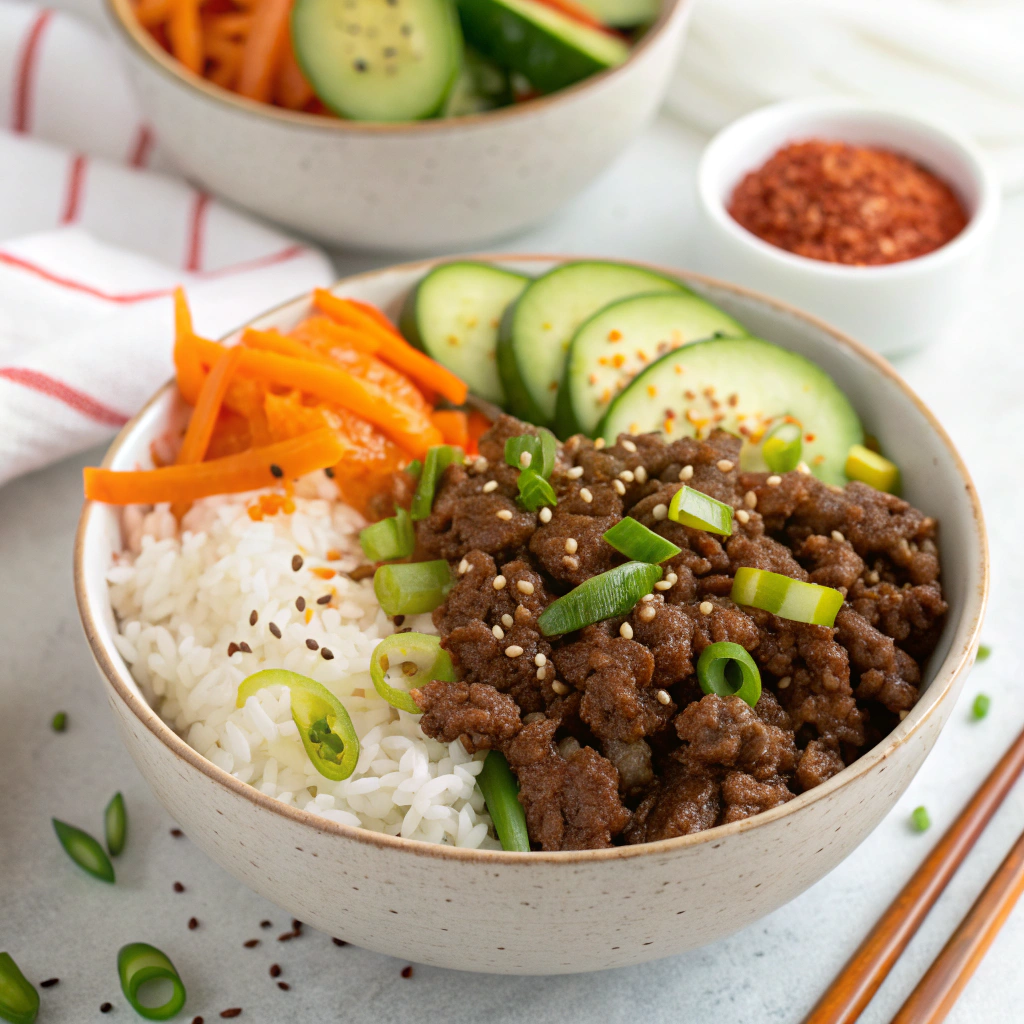
What if the bold, bulgogi-like flavor you crave could hit the table in 20 minutes, with pantry staples and zero marinating? That’s the promise of this Quick & Easy Korean Ground Beef Bowl, a weeknight dinner I’ve refined to be fast, flexible, and seriously satisfying. Think caramelized ground beef in a garlicky, gingery soy glaze, spooned over steamy rice, finished with scallions and sesame. It’s comfort food with a kick—simple enough for Tuesday night, delicious enough for company. And yes, it’s truly done in 20 minutes.
Ingredients List
Serves 4 generously
- 1 pound (450 g) ground beef, 85–90% lean for best flavor and texture
- 1 tablespoon neutral oil (avocado, canola, or light olive oil)
- 4 cloves garlic, finely minced (about 1½ tablespoons)
- 1 tablespoon fresh ginger, grated or very finely minced
- 1/4 cup low-sodium soy sauce (or tamari for gluten-free)
- 2–3 tablespoons brown sugar, to taste
- 1–2 tablespoons gochujang (Korean chili paste) for a deep, savory heat; or 1/2–1 teaspoon red pepper flakes for milder heat
- 2 teaspoons toasted sesame oil
- 4 cups hot cooked rice (white jasmine, short-grain, or brown)
- 4 scallions, thinly sliced
- 1–2 tablespoons toasted sesame seeds
Optional but highly recommended add-ins and garnishes:
- Quick-pickled cucumbers or fresh cucumber ribbons for crunch
- Julienned carrots or a handful of kimchi for acidity
- Steamed broccoli or snap peas for extra veg
- A fried or jammy egg on top for richness
- Lime wedges for brightness
Smart substitutions:
- Protein swaps: ground turkey (93% lean), chicken, or plant-based crumbles.
- Lower sugar: replace half the brown sugar with a no-calorie sweetener like allulose or monk fruit; or use 1 tablespoon honey for a rounded sweetness.
- Lower sodium: use light soy or coconut aminos and add a splash of water if needed.
- Low carb: serve over cauliflower rice or shredded cabbage sautéed in sesame oil.
- Gluten-free: use tamari instead of soy sauce, and ensure your gochujang is labeled gluten-free.
Flavor boosters if you have them:
- 1 teaspoon rice vinegar for light acidity.
- 1 teaspoon fish sauce for extra umami.
- 1/2 teaspoon white pepper for a subtle, warming spice.
Timing
– Prep time: 5–7 minutes (mincing garlic and ginger, slicing scallions, cooking rice if not already made)
– Cook time: 12–13 minutes
– Total time: about 20 minutes flat
Context: Most stir-fry style beef bowls clock in at 25–30 minutes once chopping and sauce reductions are considered. This version averages 20–25% faster because:
- No marinating—flavor builds directly in the pan.
- The glaze uses pantry staples that thicken quickly.
- Ground beef cooks and caramelizes faster than sliced steak.
Tip: Make rice the night before or start it in a rice cooker before you brown the beef to keep dinner on schedule.
Step 1: Heat the pan and bloom aromatics
– Set a large skillet or sauté pan over medium-high heat. Add the neutral oil.
– When the oil shimmers, add garlic and ginger. Stir for 20–30 seconds until fragrant but not browned. This quick bloom infuses the oil and reduces raw bite.
Personalized tip: If your stove runs hot, reduce to medium. Burnt garlic tastes bitter and will overpower the glaze.
Step 2: Brown the beef deeply
– Add the ground beef. Break it up with a spatula into larger crumbles at first; don’t over-stir.
– Let it sear undisturbed for 2 minutes, then continue to cook, breaking into small, bite-sized pieces, 5–6 minutes total until browned and no pink remains.
Pro move: Push beef to one side and tilt the pan slightly. If there’s more than 1 tablespoon of rendered fat, spoon off the excess so your glaze isn’t greasy.
Step 3: Build the umami-sweet glaze
– Reduce heat to medium. Stir in soy sauce, brown sugar, and gochujang (or red pepper flakes). Let it bubble for 1–2 minutes.
– The sauce should thicken and coat the beef with a glossy sheen. If it looks dry, add 1–2 tablespoons water; if too thin, let it simmer an extra minute.
Taste test: You’re aiming for balanced salty-sweet heat. Add a pinch more sugar for roundness or a dash more soy for depth.
Step 4: Finish with sesame richness
– Turn off the heat and drizzle in the toasted sesame oil. Stir to combine.
– Fold in half the sliced scallions. Reserve the rest for garnish.
Why now: Sesame oil’s aromatic compounds are delicate—adding it off-heat preserves that nutty perfume.
Step 5: Build the bowl
– Spoon hot cooked rice into bowls.
– Top with the glossy Korean-style ground beef.
– Garnish with remaining scallions and sesame seeds. Add optional cucumbers, carrots, kimchi, or a fried egg.
Flavor hack: A squeeze of lime or a tiny splash of rice vinegar right before serving brightens the entire bowl.
Step 6: Adjust for your audience
– For kids or heat-sensitive eaters, use red pepper flakes instead of gochujang and keep it to 1/2 teaspoon.
– For spice lovers, add extra gochujang or a sprinkle of gochugaru at the table.
Step 7: Serve immediately
– This dish shines hottest off the stove. If holding for more than 10 minutes, keep the beef on low heat and splash in 1–2 tablespoons water to keep the glaze silky.
Nutritional Information
Approximate per serving (1/4 of beef + 1 cup cooked white rice):
– Calories: ~540
– Protein: ~25 g
– Carbohydrates: ~56 g
– Total Fat: ~21 g
– Saturated Fat: ~7–8 g
– Fiber: ~1–2 g (varies with add-ins)
– Sugars: ~10–12 g
– Sodium: ~850–1000 mg (use low-sodium soy or tamari to reduce)
– Cholesterol: ~80 mg
Notes:
- Using 93% lean beef reduces fat by ~25–30%, saving ~50–70 calories per serving.
- Swapping in cauliflower rice cuts carbs by ~40–45 g per serving.
- Reducing brown sugar to 1 tablespoon saves ~25 calories and ~6 g sugar per serving.
Healthier Alternatives for the Recipe
– Leaner protein: Choose 93% lean beef or ground turkey. Add 1 teaspoon neutral oil if the pan looks dry so the beef still caramelizes.
– Lower sodium: Use low-sodium soy or tamari; consider 50/50 soy and water. Finish with a squeeze of citrus for perceived saltiness without more sodium.
– Lower sugar: Reduce brown sugar to 1 tablespoon and add 1 teaspoon rice vinegar for balance. For sugar-free, try allulose or monk fruit—it dissolves well in sauces.
– Low carb: Serve over cauliflower rice or shredded sautéed cabbage. Add a handful of shredded zucchini or riced broccoli to the beef during the last 2 minutes.
– Gluten-free: Tamari instead of soy; check your gochujang label.
– Dairy-free: Naturally dairy-free; skip the fried egg if desired.
– Extra veg: Stir in finely diced carrots or bell peppers with the beef; fold in baby spinach at the end until just wilted.
– High-protein: Top each bowl with a jammy egg or add 1/2 cup edamame per serving.
Serving Suggestions
– Classic rice bowl: Jasmine rice, beef, scallions, sesame, and a drizzle of extra sesame oil.
– Lettuce wraps: Butter lettuce or romaine leaves with beef, carrots, cucumbers, and a swipe of gochujang mayo.
– Noodle night: Toss the beef and glaze with hot cooked udon or rice noodles; add steamed broccoli.
– Brunch twist: Top with a fried egg, kimchi, and avocado slices.
– Bento-style meal prep: Divide rice, beef, and crisp veggies into containers; pack lime wedges for a fresh pop at lunch.
– Party platter: Serve with cucumber salad, quick-pickled radishes, and sesame-scallion rice for DIY bowls.
If you love speedy skillet dinners that actually taste like they simmered all day, bookmark my quick and easy homemade hamburger helper next.
Common Mistakes to Avoid
– Overcrowding the pan: Crowding steams the meat. If your pan is small, brown in two batches for better caramelization.
– Burning the garlic: Aromatics need just 20–30 seconds. If they darken, start over—burnt garlic will dominate the dish.
– Skipping fat management: If the beef is very fatty, spoon off excess so the glaze clings, not pools.
– Imbalanced sauce: Taste and adjust. Too salty? Add a pinch of sugar or splash of water. Too sweet? Add a dash of soy or rice vinegar.
– Thin or watery glaze: Simmer 1–2 minutes to reduce; add a small pat of butter (optional) to emulsify and increase body.
– Cold rice clumps: Fluff rice with a fork and warm it so it’s steamy; cold rice makes the bowl feel flat.
– Overcooking: Once the glaze coats the beef, take it off-heat to avoid dryness.
Storing Tips for the Recipe
– Refrigeration: Cool beef within 1 hour. Store in airtight containers for up to 4 days. Keep rice separate to prevent sogginess.
– Freezing: Portion the cooked beef (without rice) into freezer bags or containers; freeze up to 3 months. Thaw overnight in the fridge.
– Reheating: Reheat beef in a skillet over medium with a splash of water to re-glaze; or microwave in 30-second bursts, stirring between. Warm rice separately.
– Make-ahead: Mince garlic and ginger, and pre-mix the sauce (soy, sugar, gochujang) up to 3 days ahead. Cook the rice in advance and reheat with a few drops of water.
Conclusion
This Quick & Easy Korean Ground Beef Bowl is the fast-track to big flavor: sticky-sweet, savory, gently spicy, and ready in 20 minutes. It’s endlessly adaptable—swap the protein, dial the heat, sneak in veggies, or change the base—and it meal preps like a dream. If you cook it, leave a comment with your favorite add-ins and any tweaks that made it yours. Craving more 20-minute skillet wins? Check out the related recipes on the site and save this one for a guaranteed weeknight victory.
FAQs
– Can I make this without gochujang? Yes. Use 1/2–1 teaspoon red pepper flakes or a teaspoon of chili-garlic sauce. For zero heat, skip the spice and add 1/2 teaspoon smoked paprika for a hint of depth.
– What rice is best? Jasmine for fragrance and fluff, short-grain for stickier bowls, or brown rice for nuttiness and fiber. Cauliflower rice if you’re low-carb.
– How do I keep it from being too salty? Use low-sodium soy or tamari, and taste as you go. A splash of water or rice vinegar balances salt.
– Can I double the recipe? Absolutely. Brown the beef in two batches for good sear, then combine for the glaze. Double all sauce ingredients; add water 1 tablespoon at a time if it thickens too fast.
– Is it kid-friendly? Start with 1/2 teaspoon red pepper flakes instead of gochujang. Many kids enjoy the sweet-savory flavor profile.
– How do I scale the heat? Gochujang gives deeper flavor at the same spice level compared to flakes. For mild: 1 teaspoon gochujang. Medium: 1 tablespoon. Hot: 2 tablespoons, plus a sprinkle of gochugaru at the table.
– Can I use frozen ground beef? Thaw fully for best browning. If cooking from semi-frozen, expect extra moisture—cook a minute longer to evaporate and brown properly.
– What vegetables pair best? Broccoli, snap peas, bok choy, carrots, mushrooms, and cucumbers. Fold delicate greens in off-heat to keep them vibrant.
– Is there a dairy-free or gluten-free version? It’s naturally dairy-free. For gluten-free, use tamari and ensure your gochujang brand is gluten-free.
– Where can I see another version of this idea? For comparison and another take, check out this Easy Korean Ground Beef Bowl.
Data-driven tip to personalize: If you’re routinely tight on time, pre-mince aromatics on Sunday and refrigerate in a sealed container. That alone trims prep by ~3 minutes per night—nearly an hour saved across the month.
Enjoy your bowl—fast, flavorful, and built for real life.