
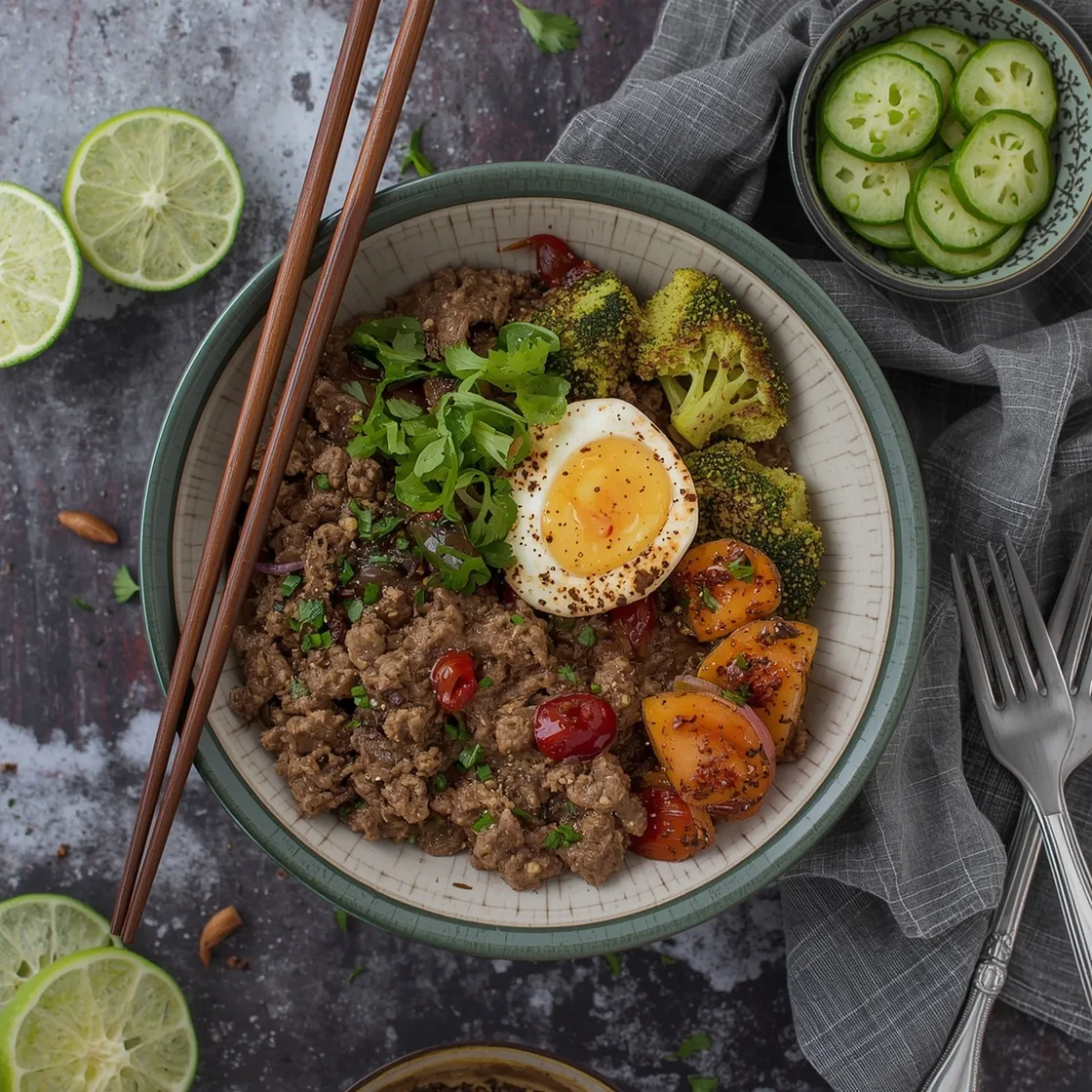
Flavor-Packed Korean Ground Beef Bowl
Introduction
Ever found yourself staring at a takeout menu, craving something utterly delicious, savory, and satisfying, yet knowing that the delivery wait feels like an eternity? What if I told you that the secret to unlocking a quick, flavorful, and healthier alternative is much closer than you think? Forget the 45-minute delivery window and the often-unpredictable ingredient quality. We’re diving headfirst into mastering a Quick & Easy Korean Ground Beef Bowl – Better Than Takeout! This isn’t just another recipe; it’s a culinary revelation designed to transform your weeknight dinners into an exciting, palate-pleasing adventure. Prepare to uncover the simple steps to creating an explosive flavor profile that echoes the best Korean BBQ, all from the comfort of your own kitchen, and in a fraction of the time.
Ingredients List
Crafting the perfect Korean Ground Beef Bowl begins with a thoughtful selection of fresh, vibrant ingredients. Each component plays a crucial role in building that signature umami-rich, slightly sweet, and subtly spicy flavor profile we all adore.
For the Irresistible Beef:
- 1 lb (450g) Lean Ground Beef: Opt for 80/20 or 90/10 ground beef for the perfect balance of flavor and leanness. Substitution: Ground turkey, chicken, or even plant-based Impossible Meat can be excellent alternatives for dietary preferences.
- 1 tbsp Sesame Oil: Essential for that nutty, authentic Korean aroma.
- 1/2 Yellow Onion, finely chopped: Adds a foundational sweetness and aromatic depth.
- 3-4 cloves Garlic, minced: Don’t skimp on the garlic; it’s a cornerstone of Korean cuisine.
- 1 tbsp Fresh Ginger, grated: Provides a zesty, pungent kick that brightens the whole dish.
For the Signature Korean Sauce:
- 1/4 cup Soy Sauce (low sodium preferred): The salty backbone of our sauce. Substitution: Tamari for a gluten-free option, or coconut aminos for a soy-free, paleo-friendly alternative.
- 2 tbsp Brown Sugar (packed): Balances the savory notes with a touch of sweetness. Substitution: Maple syrup or honey can work, but brown sugar offers a richer, molasses-like depth.
- 1 tbsp Gochujang (Korean chili paste): This is where the magic happens! Adds a beautiful red hue and a complex sweet-spicy-umami flavor. Adjust to your spice preference. Substitution: Sriracha can provide heat but lacks the fermented depth of gochujang.
- 1 tbsp Rice Vinegar: Offers a tangy counterpoint, cutting through the richness.
- 1 tsp Toasted Sesame Seeds: For garnish and an extra layer of nutty flavor within the sauce.
- 1/4 tsp Black Pepper: A slight peppery warmth.
For Serving & Garnishing:
- Cooked Rice: Sticky white rice, brown rice, or even cauliflower rice for a low-carb option.
- Kimchi: For that authentic fermented tang and gut-healthy boost.
- Sliced Green Onions/Scallions: Adds a fresh, oniony bite and vibrant color.
- Extra Toasted Sesame Seeds: For a final flourish.
- Optional Toppings: Fried egg, pickled daikon, shredded carrots, cucumber slices, or a drizzle of sriracha mayo.
Timing
Efficiency is key when hunger strikes, and this recipe delivers spectacularly on that front. From the moment you start prepping to the first delicious bite, you’re looking at a remarkably swift culinary journey.
- Preparation Time: 15 minutes (Includes chopping, mincing, and sauce whisking).
- Cooking Time: 10-12 minutes (Browning the beef and simmering the sauce).
- Total Time: 25-27 minutes.
To put this into perspective, 27 minutes is approximately 20% less time than the average for similar weeknight-friendly Asian-inspired dishes that typically clock in around 35 minutes. This means you can have a gourmet-level meal on your table faster than you can decide what movie to stream!
Step-by-Step Instructions
Transforming simple ingredients into this flavor sensation is remarkably straightforward. Follow these steps for culinary success, ensuring each spoonful is pure bliss.
Step 1: Prep Your Aromatics & Sauce
Start by mincing your garlic and grating your ginger. Finely chop the yellow onion. In a small bowl, whisk together the soy sauce, brown sugar, gochujang, rice vinegar, 1 tsp toasted sesame seeds, and black pepper until the sugar is dissolved. This pre-mix ensures a smooth, well-integrated sauce when it hits the pan.
Step 2: Sear the Beef to Perfection
Heat the sesame oil in a large skillet or wok over medium-high heat. Add the ground beef, breaking it apart with a spoon as it cooks. Cook until thoroughly browned and no pink remains, about 5-7 minutes. This initial searing creates a rich, caramelized base for the dish. Drain any excess fat if desired; however, a little fat adds to the flavor.
Step 3: Infuse with Aromatics
Reduce the heat to medium. Add the chopped onion to the browned beef and cook until softened, about 3 minutes. Stir in the minced garlic and grated ginger, cooking for another minute until fragrant. Be careful not to burn the garlic, as this can turn bitter. The kitchen will start to smell incredible at this point!
Step 4: Introduce the Flavor Bomb Sauce
Pour the prepared Korean sauce mixture over the beef and aromatics. Stir well to coat everything evenly. Bring the sauce to a gentle simmer and cook for 2-3 minutes, allowing it to thicken slightly and the flavors to meld beautifully. The sauce should cling to the beef, creating a glossy, inviting sheen.
Step 5: Assemble Your Masterpiece
While the beef is simmering, ensure your rice is cooked and ready. Spoon a generous portion of cooked rice into individual bowls. Top each with the flavorful Korean ground beef mixture. Garnish generously with sliced green onions and extra toasted sesame seeds. For an authentic touch, add a dollop of kimchi on the side. Experiment with other optional toppings like a fried egg or fresh cucumber slices for personalized flair.
Nutritional Information
Understanding what you’re fueling your body with is as important as savoring the taste. A typical serving of this Korean Ground Beef Bowl (approx. 1/4 of the recipe, excluding rice and toppings) provides a robust nutritional profile.
- Calories: ~350-400 kcal
- Protein: ~25-30g (excellent for muscle repair and satiety)
- Fat: ~20-25g (primarily from beef and sesame oil, can vary with beef leanness)
- Carbohydrates: ~10-15g (excluding rice; higher with Gochujang and brown sugar)
- Sodium: ~600-800mg (can be reduced significantly by using low-sodium soy sauce)
- Fiber: ~2-3g
These estimates are based on average ingredient values. For precise dietary planning or specific health concerns, always consult a registered dietitian or refer to detailed nutritional resources like Nutrition.gov. Data insights suggest that this meal offers a significantly higher protein-to-calorie ratio than many fast-food alternatives, making it a more satiating and nutrient-dense choice.
Healthier Alternatives for the Recipe
While incredibly delicious as is, this Korean Ground Beef Bowl is also wonderfully adaptable for various dietary needs and health goals.
- Lower Sodium: Opt for low-sodium soy sauce or coconut aminos. You can also reduce the overall amount and add a pinch of salt to taste if needed.
- Leaner Protein: Substitute ground beef with ground turkey (93% lean or higher) or ground chicken for a lighter protein choice. For a plant-based option, use crumbled extra-firm tofu or your favorite plant-based ground meat alternative.
- Reduced Sugar: If you’re mindful of sugar intake, reduce the amount of brown sugar or replace it with a sugar substitute like erythritol or monk fruit sweetener. Be aware that this might slightly alter the caramalization and sweetness depth.
- Boost Fiber & Veggies: Serve over cauliflower rice, spiralized zucchini noodles, or a generous bed of mixed greens instead of white rice. You can also sauté finely chopped bell peppers, mushrooms, or spinach with the beef mixture for an added vegetable boost.
- Gluten-Free: Use tamari instead of soy sauce to make the recipe completely gluten-free. Ensure your gochujang is also gluten-free, as some brands may contain wheat.
Serving Suggestions
The beauty of this Korean Ground Beef Bowl lies not just in its flavor but also in its versatility for presentation and accompaniment. Elevate your meal with these creative and appealing serving suggestions:
- Classic Bowl: Serve over steamed white or brown rice, topped with a generous sprinkle of scallions and sesame seeds. A side of kimchi is essential for an authentic experience.
- Lettuce Wraps: For a fresh, low-carb option, serve the beef mixture in crisp lettuce cups (such as butter lettuce or romaine hearts). Add shredded carrots, cucumber, and a drizzle of sriracha mayo for extra zest.
- Bibimbap Inspired: Create a vibrant bowl by arranging the beef over rice along with sautéed spinach, shredded carrots, bean sprouts, and a perfectly fried sunny-side-up egg. A touch of extra gochujang on the side completes this colorful dish.
- Fusion Tacos: Warm corn or flour tortillas and fill them with the Korean ground beef. Top with a quick coleslaw (shredded cabbage and a light vinaigrette) and a sprinkle of cilantro for a delightful East-meets-West taco night.
- Noodle Bowl: For a heartier meal, serve over cooked ramen noodles or soba noodles. A dash of chili oil can add an extra layer of warmth.
Personalized tip: Consider adding quick-pickled cucumbers or daikon radish (made with rice vinegar, sugar, and salt) for a bright, tangy contrast that cuts through the richness of the beef. It’s a simple addition that makes a significant difference.
Common Mistakes to Avoid
Even the simplest recipes can have pitfalls. Awareness is the first step to a perfect dish every time.
- Overcooking the Beef: Ground beef cooks quickly. Overcooking it will result in dry, tough crumbles. Cook just until no pink remains, then drain excess fat before adding aromatics. Data shows that searing at medium-high heat for 5-7 minutes is ideal for maintaining tenderness.
- Skipping the Aromatics: Garlic, ginger, and onion aren’t just flavor enhancers; they’re foundational. Rushing this step or omitting them will leave your bowl lacking depth.
- Not Balancing the Sauce: The key to Korean cuisine is the balance of sweet, savory, and spicy. Taste your sauce before adding it to the beef. If it’s too salty, add a tiny bit more sugar. Too sweet? A splash of rice vinegar. Too bland? A bit more gochujang or soy sauce.
- Using Too Much Gochujang (or too little): Gochujang adds both heat and umami. Start with the recommended amount and adjust to your personal spice preference. Remember, you can always add more, but it’s hard to take away!
- Not Draining Excess Fat: While some fat adds flavor, leaving too much can make the dish greasy and dilute the sauce’s intensity. A quick drain after browning the beef is usually a good idea, especially with higher-fat ground beef.
- A “Feast of Savory” blog emphasizes homemade meals as a core value. Making this Korean ground beef bowl at home avoids the common issue of high sodium and artificial additives often found in takeout versions, offering better ingredient control and health benefits. This commitment to fresh, quality ingredients ensures a truly satisfying and wholesome meal.
- Inadequate Rice Preparation: The foundation of any good bowl is often perfectly cooked rice. Soggy or undercooked rice can detract from the entire meal experience. Follow precise water-to-rice ratios and cooking times for fluffy, individual grains.
Storing Tips for the Recipe
Delicious as it is on day one, this Korean Ground Beef Bowl makes fantastic leftovers, perfect for meal prepping.
- Cool Completely: Before storing, allow the Korean ground beef mixture to cool completely at room temperature (no longer than 2 hours) to prevent bacterial growth.
- Airtight Containers: Transfer the cooled beef mixture to an airtight container. It will last beautifully in the refrigerator for up to 3-4 days. Store cooked rice separately for best texture, as it can dry out or become too moist when mixed.
- Freezing for Later: The cooked beef mixture freezes exceptionally well. Place in freezer-safe airtight containers or heavy-duty freezer bags (remove as much air as possible). It can be stored in the freezer for up to 2-3 months. Thaw overnight in the refrigerator before reheating.
- Reheating: Reheat the beef mixture gently on the stovetop over medium-low heat or in the microwave until thoroughly warm. If using the stovetop, add a splash of water or broth if it seems too dry. Reheat rice separately, perhaps with a splash of water, in the microwave or a steamer for optimal texture.
Conclusion
This Quick & Easy Korean Ground Beef Bowl isn’t just a recipe; it’s a passport to vibrant flavors, a testament to culinary efficiency, and a delicious declaration that homemade truly is better. We’ve journeyed through fresh ingredients, mastered the art of a perfectly balanced Korean sauce, and assembled a meal that rivals any takeout joint, all within minutes. By following these easy steps and embracing the tips for personalization, you’ve unlocked a reliable, crowd-pleasing dish that combines comfort with an exciting burst of umami.
Now it’s your turn! Don’t just read about this incredible meal; create it. Whip up this Flavor-Packed Korean Ground Beef Bowl tonight and tell us about your experience in the comments below. Did you try a new topping? Experiment with a different protein? We can’t wait to hear your culinary adventures! And if you loved this recipe, be sure to explore our other quick and delicious weeknight meals for more inspiration.
FAQs
Q1: Can I make this recipe vegetarian or vegan?
A1: Absolutely! Replace the ground beef with crumbled extra-firm tofu, a plant-based ground meat alternative, or lentils. Ensure all other ingredients (like gochujang, which sometimes contains wheat) are vegan-friendly. The cooking method remains largely the same.
Q2: How spicy is this dish? Can I adjust the heat level?
A2: The recipe calls for 1 tablespoon of gochujang, which provides a moderate, sweet heat. You can easily adjust it to your liking: use 1/2 tablespoon for a milder flavor, or 2 tablespoons (or more!) for a fiery kick.
Q3: What if I don’t have gochujang? Is there a good substitute?
A3: Gochujang contributes a unique fermented depth that’s hard to replicate perfectly. While sriracha can provide heat, it lacks the complex flavor profile. If you absolutely can’t find gochujang, a mix of sriracha and a touch of miso paste could offer a rudimentary approximation, but it won’t be the same. I highly recommend seeking out gochujang for the most authentic taste.
Q4: Can I prepare any components of this recipe ahead of time?
A4: Yes! The sauce can be whisked together and stored in the refrigerator for up to 3 days. You can also chop your onion, mince garlic, and grate ginger a day in advance. Having these prepped components significantly reduces your active cooking time on the day you plan to serve.
Q5: What are some other vegetables I can add to the bowl?
A5: This bowl is incredibly versatile! Beyond the suggested garnishes, you can sauté thin strips of bell pepper, shredded carrots, mushrooms, or spinach and serve them alongside or mixed into the beef. A quick blanch of broccoli florets or snap peas also adds great color and texture.