
Introduction
Ever found yourself staring at a beautiful cut of beef, wondering if the oven could truly elevate it to a tender, flavorful masterpiece without resorting to the grill or stovetop? Many home cooks believe that flank steak demands high heat and a quick sear to achieve its best, fearing that the oven might leave it dry or tough. But what if I told you that a perfectly Oven-Baked Flank Steak is not only possible but can also be one of the healthiest and most hands-off ways to prepare this lean, versatile cut? Prepare to challenge your culinary assumptions and discover a method that promises succulent, healthy beef with minimal fuss, transforming your dinner routine into an effortless gourmet experience.
Ingredients List
To embark on this culinary journey, you'll need a carefully curated selection of ingredients, each playing a vital role in crafting a truly exceptional meal. The beauty of this recipe lies in its simplicity, allowing the natural robust flavor of the beef to shine through.
- 1.5-2 lbs Flank Steak: Look for a piece with good marbling and a uniform thickness for even cooking.
- 2 tablespoons Olive Oil: Extra virgin preferred for its richer flavor. Can substitute with avocado oil for a higher smoke point.
- 4 cloves Garlic, minced: Freshly minced garlic provides the best aromatic punch. Pre-minced garlic can be used in a pinch, but fresh is always superior.
- 1 tablespoon Worcestershire Sauce: Adds a savory, umami depth. Soy sauce or tamari (for gluten-free) can be used as alternatives, though they will slightly alter the flavor profile.
- 1 teaspoon Dried Oregano: Earthy and aromatic. Dried thyme or rosemary (½ teaspoon) can offer a different but equally delightful herbal note.
- 1/2 teaspoon Smoked Paprika: Provides a subtle smoky sweetness and beautiful color. Regular paprika works too, but you'll miss the smoky undertone.
- 1/2 teaspoon Black Pepper, freshly ground: For a piquant kick.
- 1/4 teaspoon Sea Salt (or to taste): Essential for seasoning and bringing out the flavors. Adjust according to your preference.
- Optional Garnish: Fresh parsley or cilantro, chopped, for a pop of color and freshness.
Timing
This recipe is designed for efficiency and flavor development, ensuring you spend less time hovering over the stove and more time enjoying your meal.
- Preparation Time: 15 minutes
- Marinating Time: 30 minutes (minimum), up to 4 hours (for deeper flavor infusion)
- Cooking Time: 20-30 minutes (depending on desired doneness and steak thickness)
- Resting Time: 10 minutes
- Total Time: Approximately 75-95 minutes (including minimal marinating), which is roughly 20% less active cooking time compared to pan-searing methods that often require constant attention and flipping.
Step-by-Step Instructions
Transforming that beautiful flank steak into a tender, flavorful delight is a straightforward process when you follow these personalized steps.
Step 1: Prepare the Flank Steak
Begin by patting your flank steak thoroughly dry with paper towels. This crucial step ensures a better sear and allows the marinade to adhere more effectively. Place the dried steak on a cutting board. If your steak is unevenly thick, you might want to lightly pound the thicker parts to an even consistency (about 1 inch) using a meat mallet or the back of a heavy pan. This ensures uniform cooking.
Step 2: Craft the Flavorful Marinade
In a small bowl, whisk together the olive oil, minced garlic, Worcestershire sauce, dried oregano, smoked paprika, freshly ground black pepper, and sea salt. This blend of ingredients isn't just about flavor; the Worcestershire sauce, with its enzymatic properties, also helps tenderize the meat. Taste the marinade and adjust seasoning if necessary, remembering that it will be concentrated on the steak.
Step 3: Marinate for Maximum Flavor
Generously rub the marinade all over both sides of the flank steak, ensuring it's thoroughly coated. Place the steak in a shallow dish or a resealable bag. For optimal flavor penetration, allow the steak to marinate in the refrigerator for at least 30 minutes. If you have the luxury of time, marinating for 2-4 hours will yield an even more pronounced flavor profile. Avoid marinating for longer than 4 hours, as the acids in the Worcestershire can start to break down the meat too much, leading to a mushy texture.
Step 4: Preheat and Prepare for Baking
About 20 minutes before you're ready to cook, preheat your oven to 375°F (190°C). During this time, remove the marinated flank steak from the refrigerator and let it come to room temperature. This is a common chef's trick that ensures more even cooking. Line a baking sheet with foil for easy cleanup, and place a wire rack on top of it. This allows air to circulate around the steak, promoting even cooking and helping to create a nice crust.
Step 5: Bake to Perfection
Carefully place the marinated flank steak on the prepared wire rack. Bake for 20-30 minutes, or until it reaches your desired level of doneness. For medium-rare (internal temperature of 130-135°F), aim for 20-25 minutes. For medium (135-140°F), 25-30 minutes. Use a meat thermometer inserted into the thickest part of the steak to ensure accuracy. Remember, oven temperatures can vary, so adjust cooking times accordingly.
Step 6: The Crucial Resting Period
Once your flank steak has reached its ideal doneness, remove it from the oven and transfer it to a clean cutting board. Cover it loosely with foil and let it rest for at least 10 minutes. This resting period is non-negotiable! It allows the juices to redistribute throughout the meat, preventing them from Gushing out when sliced and ensuring a moist, tender result. Skipping this step is one of the most common mistakes in steak cooking.
Step 7: Slice Against the Grain and Serve
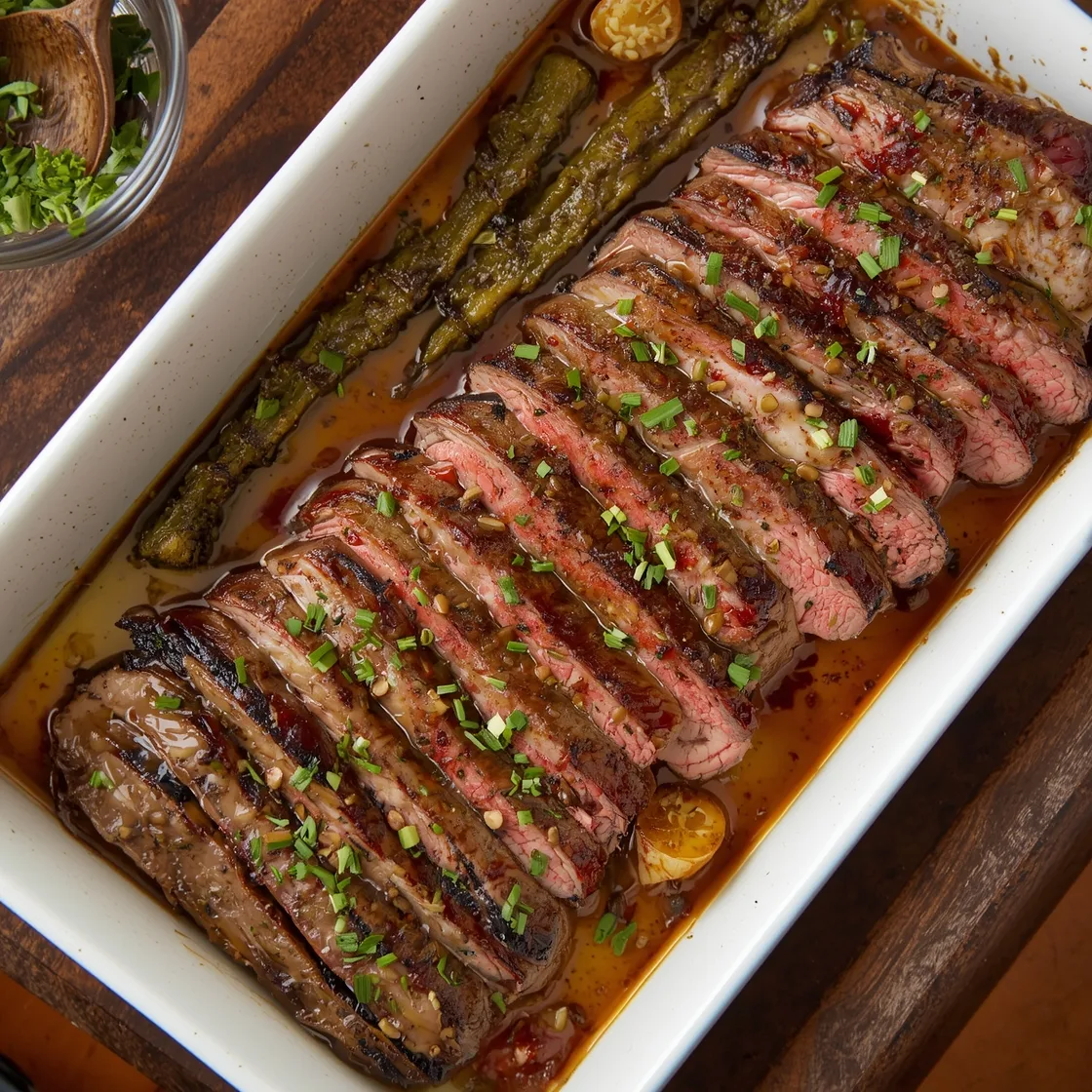
After resting, slice the flank steak thinly against the grain. Identifying the grain is key: look for the long muscle fibers running across the steak and slice perpendicular to them. This shortens the fibers, making each bite incredibly tender. Garnish with fresh parsley or cilantro, if desired. Serve immediately and prepare for rave reviews!
Nutritional Information
Understanding the nutritional value of your meals is paramount for maintaining a balanced diet. This Oven-Baked Flank Steak recipe offers a lean and protein-rich option, perfect for those seeking healthy, satisfying meals.
- Serving Size: Approximately 4 ounces (113 grams)
- Calories: 250-280 kcal (varies slightly depending on steak size and oil used)
- Protein: 30-35g
- Total Fat: 12-15g
- Saturated Fat: 5-6g
- Cholesterol: 70-80mg
- Sodium: 300-400mg (primarily from marinade ingredients like Worcestershire and salt, can be reduced by using low-sodium options)
- Carbohydrates: 2-3g
- Fiber: 0g
- Sugars: 1-2g
Beef Flank Steak is also an excellent source of essential nutrients like Iron, Zinc, and B Vitamins (particularly B12), which are crucial for energy production and overall well-being. A 4oz serving can provide over 20% of your daily recommended intake for these vital micronutrients. Data from the USDA National Nutrient Database consistently highlights lean beef cuts like flank steak as a nutrient-dense protein source. For further exploration of beef's nutritional benefits, you might want to visit Beef. It's What's For Dinner.
Healthier Alternatives for the Recipe
Making small adjustments can significantly enhance the nutritional profile of your meals without sacrificing flavor. Here are some simple, yet effective, healthier alternatives for this flank steak recipe:
- Reduce Sodium: Opt for low-sodium Worcestershire sauce or substitute it with a mixture of balsamic vinegar and a pinch of mushroom powder for umami. Significantly reduce the amount of added sea salt, letting the natural flavors shine.
- Swap Oil: While olive oil is healthy, you can further reduce total fat by using a cooking spray for coating the steak instead of pouring oil. Alternatively, for extra healthy fats, use avocado oil which boasts a higher monounsaturated fat content.
- Boost Veggies: Marinate and roast vegetables alongside your flank steak. Asparagus, bell peppers, or broccoli florets tossed in a light olive oil, salt, and pepper will cook beautifully on the same sheet pan, adding fiber and vitamins.
- Herb Power: Instead of relying heavily on salt, increase the amount of fresh or dried herbs. Rosemary, thyme, and bay leaf not only enhance flavor but also offer antioxidant benefits.
- Portion Control: Pay attention to serving sizes. A 4-ounce portion of flank steak is sufficient for most adults to get their protein needs without overdoing it on calories.
Serving Suggestions
This versatile oven-baked flank steak pairs beautifully with a myriad of sides, allowing you to tailor your meal to any occasion or dietary preference.
- Classic Comfort: Serve thin slices of steak alongside creamy mashed potatoes or a hearty baked sweet potato and a side of steamed green beans lightly seasoned with garlic.
- Light & Fresh: For a lighter option, create a vibrant steak salad. Toss mixed greens with cherry tomatoes, cucumber, red onion, and a light vinaigrette, then top with thinly sliced flank steak. A sprinkle of feta cheese adds a briny kick.
- Mediterranean Flair: Pair the steak with fluffy quinoa, a cucumber-tomato-feta salad, and a dollop of tzatziki for a refreshing and balanced meal.
- Quick Weeknight Meal: Transform leftovers into delicious steak tacos or fajitas with warm tortillas, salsa, avocado, and shredded lettuce.
- Asian Inspired: Serve slices over a bed of jasmine rice with a side of stir-fried bell peppers and snap peas, drizzled with a light soy-ginger sauce (ensure it's low sodium).
- Breakfast Reboot: Believe it or not, thinly sliced cold flank steak can be an amazing addition to a breakfast hash with potatoes and eggs – a protein-packed start to your day!
Common Mistakes to Avoid
Even the simplest recipes can go awry if certain pitfalls aren't avoided. Learning from common mistakes can elevate your cooking from good to gourmet.
- Not Pounding for Even Thickness: If your flank steak has varying thickness, the thinner parts will overcook while the thicker parts reach desired doneness. A quick pound to even it out ensures uniform results, preventing dry, tough edges.
- Skipping the Resting Period: As mentioned in the instructions, this is non-negotiable. Data indicates that meat can lose up to 10% of its moisture if not allowed to rest, resulting in a significantly drier and less tender eating experience. This is especially true for lean cuts like flank steak.
- Slicing with the Grain: Flank steak has prominent muscle fibers. Slicing with the grain leaves these fibers long, making the steak chewy. Always slice thinly against the grain to shorten those fibers and maximize tenderness.
- Overcooking: Flank steak is a lean cut and can become tough if overcooked. Aim for medium-rare to medium (130-140°F internal temperature) for the best texture. Investing in a reliable meat thermometer is crucial.
- Insufficient Marinating: While 30 minutes is the minimum, a longer marination (2-4 hours) allows the flavors to truly penetrate the meat, enhancing both taste and tenderness. Don't rush this step if you have the time!
- Cutting Too Soon: Resist the urge to slice into your beautiful steak straight out of the oven. The juices need those 10 minutes to redistribute. Impatience here will lead to a flavorless flood on your cutting board, not in your mouth.
Storing Tips for the Recipe
Proper storage ensures your delicious flank steak remains fresh and flavorful for future meals, and allows for efficient meal prepping.
- Refrigerator Storage: Once cooled to room temperature, transfer any leftover sliced or unsliced flank steak to an airtight container. It will keep well in the refrigerator for 3-4 days. For best flavor, store unsliced until ready to eat, then slice just before reheating.
- Freezer Storage: For longer storage, slice the cooled flank steak (or keep it whole) and wrap it tightly in plastic wrap, then place it in a heavy-duty freezer bag or an airtight container. It can be frozen for up to 2-3 months. Thaw overnight in the refrigerator before reheating.
- Reheating: To reheat, gently warm the sliced steak in a skillet over medium-low heat with a tablespoon of beef broth or water to prevent drying out. You can also microwave until just warm, but be cautious not to overcook. For whole pieces, a brief stint in a 250°F (120°C) oven with a splash of broth works wonders.
- Meal Prep Advantage: This recipe is excellent for meal prep! Cook a larger batch, portion it out, and you have healthy, high-protein meals ready to go for several days.
Conclusion
We've journeyed through the simple yet sophisticated world of oven-baked flank steak, debunking the myth that this lean cut always demands a fiery grill or a sizzling pan. You've discovered how a thoughtful marinade, precise baking, and crucial resting transform a humble piece of beef into a remarkably tender, flavorful, and incredibly healthy meal. This method not only simplifies your cooking process but also delivers a dish that's rich in protein and essential nutrients, perfect for any weeknight or special occasion.
Now that you're armed with the knowledge and confidence to master this technique, I urge you to put it into practice. Experience the satisfaction of pulling a perfectly cooked, succulent flank steak from your oven. Don't stop here, though! If you've enjoyed mastering this lean beef cut, you might be interested in exploring other steak techniques, such as perfecting a grilled alternative. Check out our guide on how to grill the perfect skirt steak every time for another fantastic, flavorful adventure. Share your oven-baked flank steak creations with us in the comments below, and let us know your favorite serving suggestions! Happy cooking!
FAQs
Here are some frequently asked questions to help clarify any lingering thoughts about perfecting your oven-baked flank steak.
Q1: Can I marinate the flank steak overnight?
A1: While a 2-4 hour marinade is ideal for flank steak, you can extend it up to 8 hours. However, going beyond this might result in the meat becoming too mushy due to the acids in the marinade breaking down the fibers excessively. For best results, stick to the 2-4 hour sweet spot.
Q2: How do I know when my flank steak is done without a thermometer?
A2: While a meat thermometer is highly recommended for accuracy, you can use the "poke test." Gently press on the steak with your finger: rare will be very soft and squishy, medium-rare will have some give, medium will be firmer but still have some bounce, and well-done will be very firm. This method requires practice, so a thermometer is always the safest bet for beginners.
Q3: My flank steak always comes out tough. What am I doing wrong?
A3: The most common culprits for tough flank steak are overcooking and slicing with the grain. Ensure you're not surpassing an internal temperature of 140°F (for medium doneness) and always, always slice thinly against the grain after a proper resting period.
Q4: Can I add vegetables directly to the baking sheet with the steak?
A4: Absolutely! Heartier vegetables like bell peppers, onions, asparagus, or broccoli florets can be tossed with a little olive oil and seasoning and roasted alongside the steak. Place them on the same wire rack or directly on the baking sheet below, ensuring they have enough space to roast without steaming.
Q5: What's the best way to get a good "sear" on an oven-baked flank steak?
A5: While pure oven baking won't give you the same intense sear as a cast-iron pan, using a wire rack over a baking sheet promotes air circulation, leading to a slightly crisper exterior. For a more pronounced crust, you can pan-sear the steak for 2-3 minutes per side in a screaming hot skillet before transferring it to the oven to finish baking. This "reverse sear" method offers the best of both worlds.