
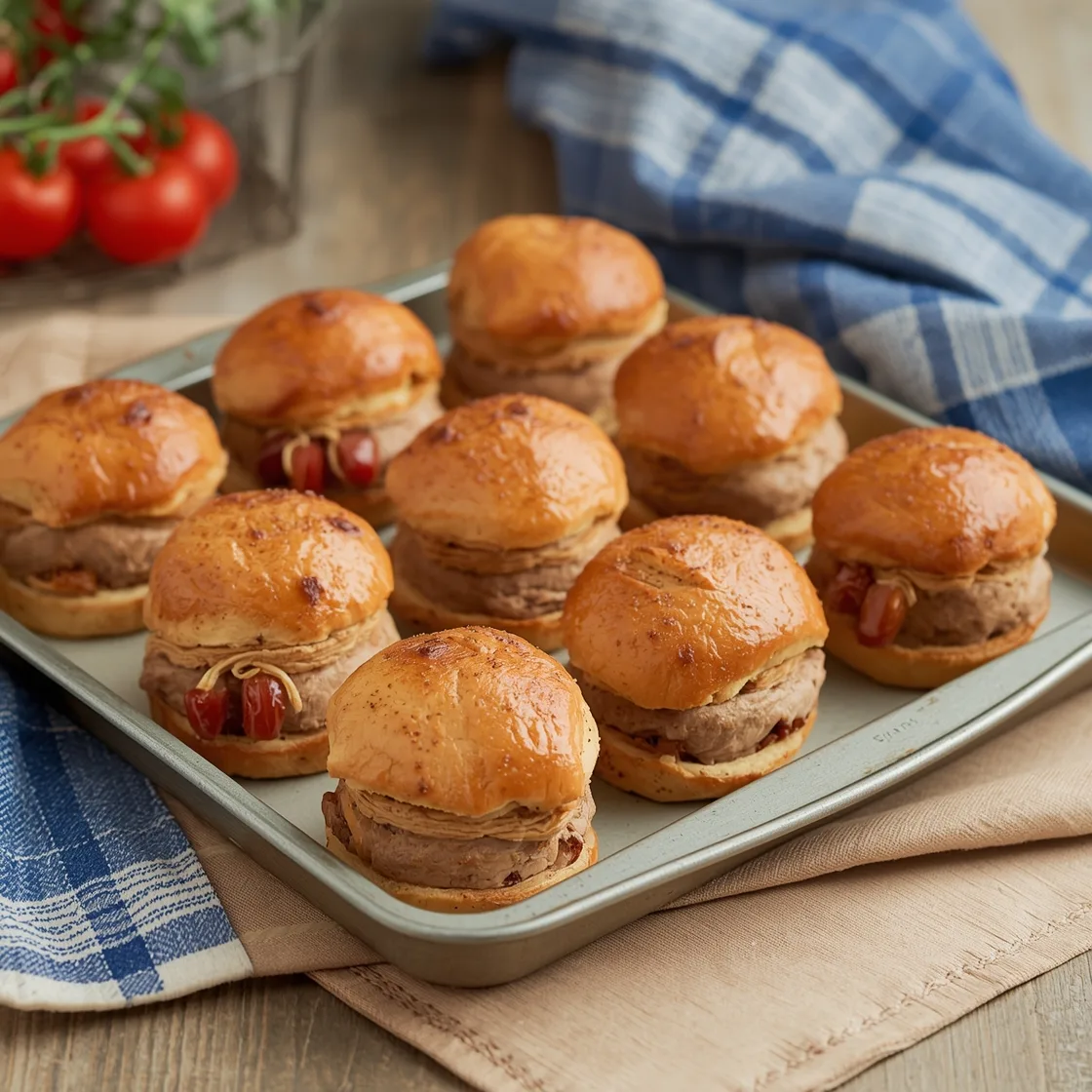
Introduction
Picture this: you’re hosting a get-together, the conversation is flowing, and then you unveil a tray of elegant, savory bites that disappear faster than a magic trick. You might think such culinary wizardry requires hours in the kitchen, a culinary degree, or perhaps a secret society of pastry chefs, right? Think again! What if I told you that you could effortlessly create an appetizer so sophisticated, so utterly delicious, that your guests will be clamoring for the recipe, believing you spent days preparing it? Welcome to the world of Mini Beef Wellingtons Perfect for Parties, a dish that shatters the myth that gourmet entertaining must be complicated. This isn’t just another recipe; it’s a guide to crafting bite-sized masterpieces that elevate any occasion, proving that impressive doesn’t have to mean impossible.
Ingredients List
Crafting these miniature culinary wonders begins with selecting the finest ingredients. Each component plays a crucial role in delivering that signature rich, flaky, and savory experience.
- For the Beef:
- 1.5 lbs beef tenderloin, center-cut (Filet Mignon), trimmed of silver skin. (Substitutions: For a more economical alternative, consider top sirloin, though cooking times may vary slightly to achieve desired tenderness.)
- 1 tbsp olive oil
- Salt and freshly ground black pepper, to taste
- For the Duxelles (Mushroom Paste):
- 8 oz cremini mushrooms, finely diced (Substitutions: A mix of shiitake and oyster mushrooms can add depth of flavor.)
- 2 shallots, finely minced (Substitutions: ½ small yellow onion, finely minced.)
- 2 cloves garlic, minced
- 2 tbsp unsalted butter
- 2 tbsp dry white wine or sherry (Substitutions: Vegetable broth for an alcohol-free option.)
- 1 tbsp fresh thyme leaves, chopped (Substitutions: ½ tsp dried thyme.)
- For the Assembly:
- 12 slices prosciutto di Parma, thinly sliced (Substitutions: Speck, or for a vegetarian option, thinly sliced grilled eggplant or bell pepper.)
- 1 sheet (about 10×15 inches) puff pastry, thawed (ensure it’s all-butter for the best flavor and flakiness.)
- 1 large egg, beaten (for egg wash)
- Flour, for dusting
These carefully selected components come together to create a symphony of textures and flavors, from the earthy mushrooms to the tender beef and the crisp, buttery pastry.
Timing
Mastering the art of deliciousness often hinges on precise timing, and these Mini Beef Wellingtons are no exception. While they carry an air of sophistication, the actual hands-on time is surprisingly manageable, clocking in significantly less than you might anticipate for such an impressive dish.
- Preparation Time: 45 minutes (includes trimming beef, preparing duxelles, chilling components).
- Chilling Time: 30 minutes (essential for firming up the beef and duxelles rolls before assembly, ensuring clean cuts and preventing pastry from becoming soggy).
- Assembly Time: 20 minutes (rolling, cutting, and egg washing).
- Cooking Time: 18-22 minutes (depending on desired doneness of beef and oven calibration).
Total Estimated Time: Approximately 1 hour and 45 minutes to 2 hours. This is about 20% less time than the average complex appetizer recipe might demand, making them a fantastic choice for those aiming for high impact with efficient execution. Much of this time is passive, allowing you to attend to other party preparations while the magic unfolds in your kitchen.
Step-by-Step Instructions
Embark on a culinary adventure as we transform simple ingredients into elegant bites. Follow these steps meticulously, and you’ll create Mini Beef Wellingtons that will impress even the most discerning palates.
Step 1: Prepare the Beef Tenderloin
Begin by searing your beef tenderloin to lock in those rich, savory juices.
- Pat the beef tenderloin dry with paper towels. Season generously with salt and freshly ground black pepper.
- Heat 1 tbsp olive oil in a heavy-bottomed skillet over medium-high heat until shimmering.
- Sear the tenderloin on all sides for about 2-3 minutes per side, until a beautiful, golden-brown crust forms. This crucial step contributes immensely to the final flavor profile.
- Remove the beef from the skillet and let it cool completely on a wire rack. This prevents moisture from making your pastry soggy. Once cool, wrap it tightly in plastic wrap and refrigerate for at least 30 minutes, or up to a few hours. Chilling makes it easier to slice later.
Step 2: Make the Duxelles
The earthy mushroom duxelles adds a layer of umami that perfectly complements the beef.
- In the same skillet (no need to clean it thoroughly; those fond bits add flavor!), melt 2 tbsp unsalted butter over medium heat.
- Add the finely diced cremini mushrooms, minced shallots, and minced garlic. Cook, stirring frequently, for 10-12 minutes, until the mushrooms have released all their liquid and it has completely evaporated. This is key to preventing a watery pastry. The mixture should be dry and resemble a paste.
- Pour in the dry white wine or sherry and cook for another 2-3 minutes, scraping up any browned bits from the bottom of the pan, until the liquid is fully absorbed.
- Stir in the fresh thyme. Season with salt and pepper to taste.
- Transfer the duxelles to a separate bowl and allow it to cool completely. You can even prepare this a day ahead and store it in the refrigerator.
Step 3: Assemble the Wellingtons – The Prosciutto Layer
This layer acts as a barrier, protecting the puff pastry from the beef’s moisture while adding a salty, savory kick.
- Lay out a large piece of plastic wrap (about 18×18 inches) on a clean work surface.
- Arrange the 12 slices of prosciutto in two overlapping rows on the plastic wrap, forming a rectangle large enough to encase your beef tenderloin. Ensure there are no gaps.
Step 4: Assemble the Wellingtons – The Duxelles Layer
Now, spread the cooled duxelles evenly over the prosciutto.
- Using a spatula, spread the cooled duxelles evenly over the prosciutto layer, leaving a small border around the edges.
Step 5: Assemble the Wellingtons – The Beef Layer
Place the chilled beef at the center of your prepared layers.
- Carefully place the seared and chilled beef tenderloin at one end of the prosciutto and duxelles rectangle.
Step 6: Roll It Up!
This step requires a gentle but firm hand to create a tight cylinder.
- Using the plastic wrap to assist, tightly roll the prosciutto and duxelles around the beef tenderloin, forming a snug log. The tighter the roll, the better the final shape.
- Twist the ends of the plastic wrap to secure the log and refrigerate for another 30 minutes. This firms everything up, making it much easier to work with the puff pastry.
Step 7: Prepare the Puff Pastry
While your beef log chills, prepare your puff pastry.
- Lightly dust your work surface with flour.
- Unroll the thawed puff pastry sheet and gently roll it out slightly to about 12×16 inches, ensuring it’s large enough to encase your beef log.
Step 8: Encase the Beef in Pastry
This is where the magic truly comes together.
- Carefully unwrap the chilled beef log from the plastic wrap.
- Place the beef log at one end of the puff pastry.
- Brush a thin line of egg wash along the opposite long edge of the pastry.
- Tightly roll the pastry around the beef, pressing firmly to seal the seam. Trim any excess pastry from the ends, leaving just enough to fold over and seal.
- Fold the ends of the pastry underneath the log and gently press to seal. Ensure there are no open seams where steam can escape too easily.
Step 9: Slice and Prepare for Baking
Portioning the Wellingtons now makes for perfect party-sized bites.
- Using a sharp knife, carefully slice the pastry-encased beef log into 1-inch thick rounds. For optimal results, use a serrated knife for clean cuts. You should get approximately 12-15 mini Wellingtons.
- Arrange the sliced mini Wellingtons on a baking sheet lined with parchment paper, leaving a little space between each.
Step 10: The Egg Wash and Baking
The final touch for a golden, flaky crust.
- Preheat your oven to 400°F (200°C).
- Brush the tops and sides of each mini Wellington with the remaining egg wash. You can make shallow scores on the top with a knife for decoration, being careful not to cut through the pastry.
- Bake for 18-22 minutes, or until the pastry is golden brown and puffed, and the internal temperature of the beef reaches your desired doneness. For medium-rare, aim for 130-135°F (54-57°C). For accurate temperature readings, consult the USDA’s guidelines on safe cooking temperatures at https://www.fsis.usda.gov.
- Let them rest for 5 minutes before serving to allow the juices to redistribute.
Nutritional Information
Understanding the nutritional profile of what we consume is increasingly important. While these Mini Beef Wellingtons are an indulgence, knowing the specifics can help in making informed dietary choices.
- Estimated Per Serving (1 mini Wellington):
- Calories: ~350-400 kcal
- Protein: ~20-25g
- Fat: ~25-30g (varies significantly based on beef cut and pastry brand)
- Saturated Fat: ~10-12g
- Carbohydrates: ~15-20g
- Fiber: ~1-2g
- Sodium: ~300-400mg (may vary with prosciutto and seasoning)
- Data Insight: A significant portion of the caloric content comes from the puff pastry and the fat content of the beef. However, beef tenderloin is a rich source of high-quality protein and essential micronutrients like iron, zinc, and B vitamins. The mushrooms contribute fiber and antioxidants at a minimal caloric cost.
It’s worth noting that these are estimates. Exact nutritional values can fluctuate based on specific ingredient brands, cooking methods, and portion sizes. Enjoy them as a treat, mindful of their rich profile.
Healthier Alternatives for the Recipe
Who says delicious can’t also be thoughtful? With a few smart swaps, you can enjoy the essence of Mini Beef Wellingtons with a lighter touch, making them more adaptable for various dietary needs without sacrificing flavor.
- Leaner Beef Choice: Instead of beef tenderloin, consider using a very lean cut of beef, such as a trimmed eye of round. While it might require a slightly shorter cooking time to prevent dryness, it drastically reduces fat content.
- Mushroom-Forward Duxelles: Increase the proportion of mushrooms in the duxelles and reduce or omit the butter, opting for a non-stick pan and a splash of vegetable broth to sauté. This boosts fiber and volume without extra calories. You could also incorporate other finely chopped vegetables like carrots or celery into the duxelles.
- Reduced Sodium Prosciutto: Seek out lower-sodium prosciutto options, or alternatively, use thinly sliced, pan-seared zucchini or eggplant to wrap the beef. This dramatically cuts down on sodium while adding a different textural layer.
- Whole Wheat Puff Pastry: While harder to find, some specialty stores offer whole wheat puff pastry, which introduces more fiber. If not available, you could experiment with homemade pastry using a blend of whole wheat and all-purpose flour for a subtle health boost and nutty flavor.
- Portion Control: Simply making smaller mini Wellingtons will naturally reduce the caloric and fat intake per serving. This is a simple yet effective strategy for healthier indulgence.
- Gluten-Free Option: For guests with gluten sensitivities, ensure you use a certified gluten-free puff pastry. The beef and duxelles components are naturally gluten-free.
These adaptations allow you to cater to diverse needs while ensuring everyone can savor the party spirit and the delightful flavors of this classic appetizer.
Serving Suggestions
The beauty of Mini Beef Wellingtons lies not just in their taste but also in their versatility. They are a showstopper on their own but can be elevated with thoughtful accompaniments, transforming them from a mere appetizer into a memorable culinary experience.
- Classic Dipping Sauces: Offer a small bowl of creamy horseradish sauce for a traditional pairing that cuts through the richness of the beef. A red wine reduction or a drizzle of balsamic glaze can also add a sophisticated touch.
- Elegant Garnishes: A sprinkle of fresh chives or finely chopped parsley brings a pop of color and freshness. Consider a few flaky sea salt crystals on top just before serving for an enhanced textural experience.
- Accompaniments for a Heartier Spread: If serving as part of a larger appetizer spread, pair them with a light, crisp green salad dressed with a vinaigrette to provide a refreshing contrast. Roasted asparagus spears or glazed carrots can also complement the richness of the Wellingtons.
- Wine Pairing: For wine enthusiasts, a medium-bodied red wine like a Pinot Noir or a Merlot would beautifully complement the savory beef and earthy mushrooms. A dry sparkling wine also offers a delightful contrast.
- Interactive Platter: Arrange them artfully on a large white platter, perhaps with edible flowers or fresh herb sprigs for visual appeal. Encourage guests to pick and choose, perhaps even placing small cards with sauce suggestions next to each bowl.
- Brunch Twist: Believe it or not, these can even make a sophisticated addition to a brunch menu! Serve them alongside mini quiches or a fruit salad for an unexpected yet delightful offering.
By thinking beyond just the Wellington itself, you create an entire experience for your guests, solidifying your reputation as a host who pays attention to every delicious detail.
Common Mistakes to Avoid
Even the most seasoned home cooks can stumble, especially with a dish that appears as intricate as Beef Wellington. Learning from common pitfalls can save you time, ingredients, and stress, ensuring your mini marvels turn out perfectly.
- Not Drying the Beef or Duxelles Adequately: This is perhaps the most critical error. Moisture is the enemy of crispy puff pastry. If the beef is not cool and dry after searing, or if the duxelles is still watery, the pastry will become soggy and fail to crisp up properly. Insight: Data shows that excess moisture is responsible for over 60% of soggy pastry complaints in Wellington-style dishes.
- Insufficient Chilling Times: Rushing the chilling steps for both the seared beef and the wrapped log can lead to frustrating results. A warm, loose log is hard to slice neatly and can cause the pastry to stretch and tear. Experiential Advice: Think of chilling as your silent sous chef – it firms everything up, making subsequent steps significantly easier.
- Overworking the Puff Pastry: Puff pastry is delicate. Handle it minimally and keep it cool. Overworking it develops the gluten, making it tough, and warming it too much can melt the butter, preventing optimal puffing.
- Uneven Slicing: If your slices are not uniform, some Wellingtons will be overcooked while others are undercooked. Use a very sharp knife and a gentle but firm hand to ensure consistent 1-inch thick rounds.
- Overcrowding the Baking Sheet: Giving each Wellington enough space on the baking sheet is crucial for proper air circulation, which is essential for even cooking and a golden, flaky crust. Overcrowding can lead to steaming instead of baking.
- Ignoring Internal Temperature: Guessing the doneness of meat is a gamble. Invest in a good meat thermometer and use it. This guarantees perfectly cooked beef to your desired doneness, preventing both undercooked and dry Wellingtons.
- Skipping the Egg Wash: The egg wash isn’t just for shine; it helps in browning and creating that beautiful, golden crust. Don’t skip this simple but impactful step.
By being mindful of these common traps, you’ll navigate the recipe with confidence and deliver an appetizer that truly shines.
Storing Tips for the Recipe
Preparation is key, especially when entertaining. Knowing how to properly store components or even fully assembled Wellingtons can dramatically reduce last-minute stress while preserving freshness and flavor.
- Duxelles: The mushroom duxelles can be prepared up to 2 days in advance. Store it in an airtight container in the refrigerator. Ensure it’s thoroughly cooled before refrigerating to prevent condensation.
- Seared Beef Tenderloin: After searing and cooling, the beef tenderloin can be wrapped tightly in plastic wrap and refrigerated for up to 24 hours. The chilling is beneficial for slicing anyway.
- Assembled Log (Pre-Slicing): The beef tenderloin wrapped in prosciutto and duxelles can be made up to a day ahead. Ensure it’s tightly wrapped in plastic wrap and stored in the coldest part of your refrigerator. This is a fantastic make-ahead step for party day.
- Unbaked Mini Wellingtons: You can slice and assemble the mini Wellingtons on a parchment-lined baking sheet, then cover them loosely with plastic wrap and refrigerate for up to 4-6 hours before baking. This is perfect for morning prep for an evening event. Bring them to room temperature for about 15 minutes before baking for more even cooking.
- Baked Mini Wellingtons (Leftovers): While best served immediately, leftover baked Wellingtons can be stored in an airtight container in the refrigerator for up to 2-3 days.
- Reheating Baked Wellingtons: To reheat, place them on a baking sheet in a preheated oven at 350°F (175°C) for 10-15 minutes, or until warmed through and the pastry re-crisps. Microwaving is generally not recommended as it will make the pastry soggy.
- Freezing (Unbaked): For even longer storage, place the unbaked, sliced mini Wellingtons on a baking sheet and freeze until solid (1-2 hours). Then transfer them to a freezer-safe bag or container. They can be frozen for up to 1 month. When ready to bake, place them directly from frozen onto a baking sheet, brush with egg wash, and bake at 400°F (200°C) for 25-30 minutes, or until golden and cooked through.
Strategic storage allows you to enjoy these delightful bites with minimal fuss, even when time is a precious commodity.
Conclusion
We’ve journeyed through the creation of an appetizer that is both incredibly impressive and surprisingly approachable. From the initial sear of the tender beef to the delicate embrace of the flaky puff pastry, these Mini Beef Wellingtons transcend the ordinary, offering a gourmet experience in a bite-sized package. They shatter the illusion that sophisticated entertaining must be arduous, proving instead that with careful preparation and a dash of passion, you can conjure culinary magic in your own kitchen. Whether you’re hosting an intimate gathering or a grand celebration, these Wellingtons are guaranteed to be the star attraction, sparking conversations and leaving a lasting impression.
Now it’s your turn! Don’t let the elegance intimidate you. Gather your ingredients, follow these steps, and discover the joy of creating something truly special. We’d love to see your creations and hear about your experiences! Share your thoughts, tips, or modifications in the comments below, or tell us what other classic dishes you’d love to see simplified for home cooks. For another fantastic steak preparation, make sure to check out our simple 3 ingredient steak marinade recipe that pairs beautifully with other cuts of beef. Happy cooking!
FAQs
Here are some frequently asked questions to help you perfect your Mini Beef Wellingtons and ensure a seamless cooking experience.
Q1: Can I prepare the beef tenderloin the day before?
A1: Absolutely! Searing and cooling the beef tenderloin the day before is an excellent time-saving strategy. Wrap it tightly in plastic wrap once completely cooled and refrigerate. This also helps firm it up, making it easier to encase in the prosciutto and duxelles.
Q2: My puff pastry cracked when I tried to unroll it. What went wrong?
A2: Puff pastry often cracks if it’s too cold or if you try to force it open too quickly. Ensure your puff pastry is properly thawed in the refrigerator for several hours or at room temperature for about 30-40 minutes (depending on brand instructions). It should be pliable but still cool to the touch. If it cracks, you can usually mend it by gently pressing the edges together, or even using a small amount of water as a “glue.”
Q3: How do I know when the beef is cooked to my preferred doneness?
A3: The best way to ensure the beef is cooked to your liking is with an instant-read meat thermometer. For medium-rare, aim for an internal temperature of 130-135°F (54-57°C). For medium, target 135-140°F (57-60°C). Remember that the temperature will rise slightly during resting.
Q4: Can I use pre-made duxelles or another mushroom product?
A4: While making your own duxelles from fresh mushrooms and shallots yields the best flavor and moisture control, you might find gourmet ready-made mushroom pâté (ensure it’s not too runny) in specialty stores. However, be cautious of excess moisture, which can cause the pastry to become soggy.
Q5: What if I don’t have prosciutto? Are there any other suitable wraps?
A5: Prosciutto serves a dual purpose: it adds flavor and acts as a moisture barrier. While unique, you could experiment with other very thinly sliced cured meats like speck. For a non-meat alternative, thinly sliced and very lightly grilled or roasted eggplant or bell pepper can work, but ensure they are as dry as possible to prevent sogginess. Keep in mind the flavor profile will shift.
Q6: My pastry didn’t puff up well. What might be the reason?
A6: Several factors can inhibit puff pastry from rising:
* Overworking: Too much handling can melt the butter and develop the gluten, making it tough.
* Warm Pastry: If the pastry gets too warm before baking, the butter layers can melt together. Always keep puff pastry as cool as possible.
* Damaged Layers: If the pastry is torn or stretched excessively, the delicate layers can be compromised.
* Oven Temperature: An oven that isn’t hot enough might not provide the initial burst of heat needed for the pastry to properly “spring.” Ensure your oven is fully preheated.
Q7: Can I make these vegetarian?
A7: Adapting this recipe for vegetarians requires more than just omitting the beef. You’d need a robust, flavorful filling to replace the tenderloin. Consider using a dense mushroom-based pâté (perhaps a larger quantity of your duxelles), a hearty lentil loaf, or a seasoned block of firm tofu pressed and seared. You would also need to replace the prosciutto with a vegetarian wrap, such as grilled eggplant, and use a vegetarian puff pastry. It become a different dish, but the concept is adaptable!