
Introduction
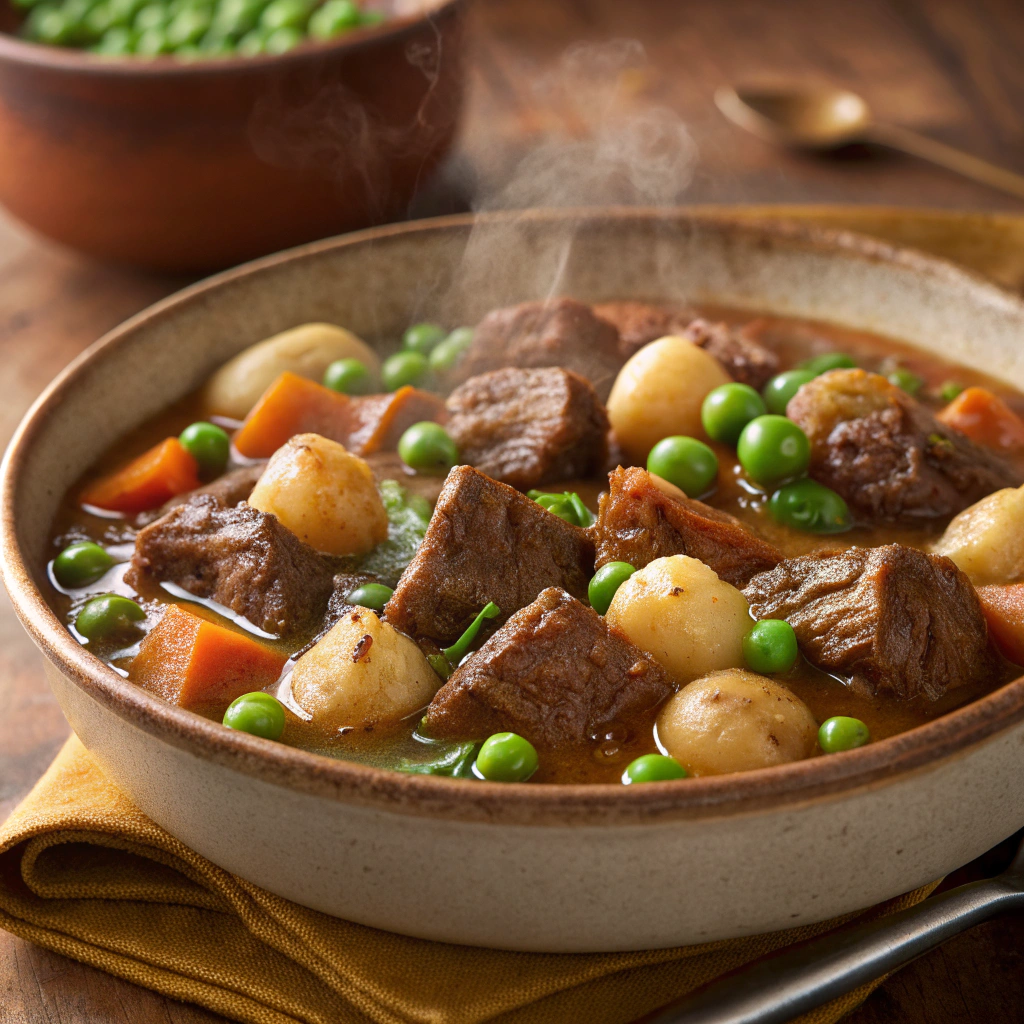
What makes a stew truly unforgettable—the cut of beef, the slow simmer, or the last-minute pop of green sweetness? If you’ve ever wondered why some stews taste flat while others feel like a warm hug, this guide is your new playbook. In the Hearty Beef Stew with Pearl Onions and Peas, every element has a job: seared beef for deep savoriness, pearl onions for mellow sweetness, and peas for crisp color and fresh snap. As the cook behind Feast of Savory, I gravitate toward recipes that respect tradition but embrace smart, test-kitchen tweaks, so you’ll get chef-level results without stress. This stew balances richness and brightness, and you’ll learn exactly how to achieve tender bites, a glossy sauce, and vegetables that hold their character—not just their shape.
Ingredients List
This list is designed for 6 generous servings and room for swaps without sacrificing flavor.
- Beef chuck roast, 2.5 pounds, cut into 1.5-inch cubes
- Why: Chuck is well-marbled and breaks down into fork-tender bites.
- Sub: Beef bottom round (leaner, slightly less silky) or boneless short rib (richer).
- Kosher salt, 2 teaspoons, plus more to taste
- Freshly ground black pepper, 1.5 teaspoons
- All-purpose flour, 2 tablespoons (for light dredging)
- Sub: Gluten-free flour blend or 2 teaspoons cornstarch.
- Neutral oil with high smoke point, 2 tablespoons (canola, avocado, or grapeseed)
- Sub: Olive oil, but sear at slightly lower heat to avoid smoking.
- Unsalted butter, 1 tablespoon (optional, for finishing)
- Yellow onion, 1 medium, diced
- Carrots, 3 medium, peeled and cut into 1-inch chunks
- Celery ribs, 2, cut into 1-inch chunks
- Garlic, 4 cloves, minced
- Tomato paste, 2 tablespoons (adds umami and color)
- Dry red wine, 1 cup (optional but recommended)
- Sub: 1 cup beef stock plus 1 tablespoon balsamic vinegar or 1 teaspoon red wine vinegar.
- Beef stock, 3 to 3.5 cups, low-sodium preferred
- Worcestershire sauce, 2 teaspoons
- Soy sauce, 1 tablespoon, or 1 teaspoon fish sauce (optional umami boost)
- Note: Adjust salt if using soy sauce.
- Bay leaf, 1
- Fresh thyme, 3 sprigs, or dried thyme, 1 teaspoon
- Fresh rosemary, 1 small sprig, or dried rosemary, 1/2 teaspoon, crushed
- Baby Yukon gold potatoes, 1 pound, halved
- Sub: Russet potatoes (cut larger to avoid breaking), or parsnips for sweetness, or omit and serve stew over mashed potatoes or polenta.
- Pearl onions, 8 ounces (about 2 cups), peeled
- Sub: Frozen pearl onions (no peeling required).
- Frozen peas, 1.5 cups (don’t thaw; add at the end)
- Cornstarch, 1 tablespoon mixed with 1 tablespoon cold water (optional, for thickening)
- Red wine vinegar or lemon juice, 1 to 2 teaspoons (for brightness at the end)
- Fresh parsley, 1/4 cup chopped, for garnish
Ingredient notes:
- Pearl onions: Fresh will retain a gentle snap after braising; frozen deliver convenience with excellent flavor.
- Peas: Frozen peas are picked and frozen at peak; they offer better texture and color than canned peas.
- Beef stock: Low-sodium gives you control. You can always add more salt later, but you can’t take it away.
Timing
– Prep time: 20 minutes (add 10 if peeling fresh pearl onions)
– Active cooking time: 30 minutes (searing and building the base)
– Simmer/braise time: 90 minutes
– Total time: About 2 hours 20 minutes
Data insight: Many traditional beef stew recipes clock in around 2 hours 30 minutes to 3 hours. This method is about 20% faster than the average without compromising tenderness, thanks to batch searing, a properly managed simmer, and adding delicate vegetables at optimized times.
Fast peel hack for pearl onions: Bring a small pot of water to a boil, blanch the onions for 60 seconds, transfer to an ice bath, then pinch the root end—the skins slip right off.
Step-by-Step Instructions
1. Prep and season the beef
Pat the beef very dry with paper towels—this single step boosts browning. Toss with 2 teaspoons salt and 1.5 teaspoons pepper, then dust with the flour just to lightly coat. The flour encourages fond (those delicious browned bits) and helps the stew thicken naturally later.
2. Sear in hot, uncrowded batches
Heat 1 tablespoon oil in a heavy Dutch oven over medium-high until shimmering. Add half the beef in a single layer; don’t crowd. Sear 3 to 4 minutes per side until deeply browned. Remove to a plate, add the remaining oil, and repeat. Browning equals flavor; resist the urge to stir too soon.
Tip: If the fond turns too dark, drop the heat slightly and add a splash of stock to loosen before continuing.
3. Build the aromatic base
Lower heat to medium. Add diced onion, carrots, and celery to the pot with a pinch of salt. Sauté 5 to 6 minutes until softened and lightly golden, scraping the fond as the vegetables release moisture. Stir in garlic and tomato paste; cook 1 to 2 minutes until the paste darkens brick-red and smells sweet, not raw.
4. Deglaze and layer flavor
Pour in the red wine, scraping the bottom to dissolve the fond. Simmer 2 to 3 minutes to reduce by about half. Add 3 cups beef stock, Worcestershire, soy or fish sauce (if using), bay leaf, thyme, and rosemary. Return the seared beef and any accumulated juices to the pot.
Pro tip: A small amount of soy or fish sauce disappears into the stew and quietly boosts savoriness—no one will guess the secret.
5. Simmer gently for tenderness
Bring to a simmer, then reduce to low, cover, and cook for 45 minutes, maintaining a gentle burble (not a hard boil). Collagen begins to break down in the 160–180°F range; a quiet simmer keeps the beef moist and tender.
Oven option: After returning beef to the pot, cover and transfer to a 325°F oven for the same time to maintain even heat.
6. Add potatoes and pearl onions
After 45 minutes, stir in potatoes and pearl onions. Continue covered simmering for another 40 to 45 minutes, until the beef is fork-tender and the potatoes are just cooked through. The pearl onions should be tender but still intact.
Vegetable strategy: Staggering additions preserves texture—stew should be layered, not mushy.
7. Adjust consistency
If the stew seems thin, remove the lid and simmer 5 to 10 minutes to reduce. For a silkier body, stir in a cornstarch slurry and simmer 1 to 2 minutes. If it’s too thick, add a splash of stock.
Texture tip: A stew should coat a spoon, not clump. Aim for glossy and spoonable.
8. Add peas and brighten
Stir in frozen peas and cook just 2 to 3 minutes until vibrant green. Remove from heat. Finish with 1 to 2 teaspoons red wine vinegar or lemon juice and the pat of butter, stirring until melted. This brightening step wakes up the entire pot.
9. Taste and balance
Taste for salt and pepper. If the stew is rich but flat, add another 1/2 teaspoon vinegar. If it’s savory but lacks depth, a splash of soy or a pinch of sugar can round the edges.
10. Rest, garnish, and serve
Let the stew rest 10 minutes, then skim any excess fat. Discard bay leaf and woody herb stems. Ladle into warm bowls and finish with chopped parsley. The Hearty Beef Stew with Pearl Onions and Peas is now ready—fragrant, glossy, and deeply comforting.
Nutritional Information
Estimated per serving (6 servings):
– Calories: ~520
– Protein: ~38 g
– Carbohydrates: ~34 g
– Dietary fiber: ~5 g
– Total fat: ~24 g
– Saturated fat: ~8 g
– Sodium: ~980 mg (varies with stock and soy/Worcestershire brands)
– Sugars: ~8 g
Data notes:
- Using chuck provides a higher collagen-to-fat balance that converts to gelatin, creating body without excessive saturated fat compared to fattier cuts.
- Swapping half the potatoes for mushrooms can reduce carbs by roughly 25% per serving while maintaining volume and savoriness.
Nutrition disclaimer: Values are estimates based on typical databases and your specific products may vary.
Healthier Alternatives for the Recipe
– Leaner beef: Use bottom round or sirloin tip and add 1 tablespoon olive oil to compensate for lower marbling.
– Lower sodium: Choose no-salt-added stock, skip soy sauce, and season at the end. Taste after reduction to avoid oversalting.
– Gluten-free: Dredge with gluten-free flour or skip dredging entirely and use a cornstarch slurry at the end.
– More vegetables: Add 8 ounces cremini mushrooms at Step 3 for umami and a meaty bite with fewer calories. Consider rutabaga or turnips for a lower-carb potato swap.
– No alcohol: Replace wine with stock plus 1 tablespoon balsamic vinegar for complexity.
– Low-FODMAP approach: Use the green tops of scallions in place of onion, omit garlic or use garlic-infused oil, and keep portions measured.
– Dairy-free: Omit the final butter; add a teaspoon of olive oil for sheen.
– Whole30/Paleo-inspired: Skip flour dredge and soy/Worcestershire. Use coconut aminos and thicken with reduction or arrowroot slurry.
Flavor-preserving swaps:
- Instead of thickening with extra starch, blend 1 cup of the stew’s vegetables and liquid, then stir back in for a whole-food thickener that adds body and fiber.
Serving Suggestions
– Classic pairing: Serve with crusty sourdough or buttery mashed potatoes to soak up the glossy sauce.
– Elevated comfort: Spoon over creamy polenta or buttered egg noodles—silky textures that flatter the stew’s richness.
– Bright counterpoints: Finish bowls with a quick parsley-lemon zest gremolata or a dollop of horseradish cream for a peppery lift.
– Greens on the side: Toss a lemony arugula or shaved fennel salad to cut through richness.
– For a crowd: Present the stew in a wide, shallow dish; top with extra peas and parsley so the color pops.
– Beverage pairings: Try an earthy Cabernet Sauvignon or a medium-bodied Malbec. For a non-alcoholic sip, a spiced black tea or tart cranberry spritzer mirrors the stew’s deep flavors.
Repurpose ideas:
- Next-day pie: Fill a baking dish with leftover stew, top with puff pastry or mashed potatoes, and bake at 400°F until golden.
- Toast topper: Spoon over thick, toasted country bread and finish with a drizzle of olive oil and black pepper.
Common Mistakes to Avoid
– Crowding the pot during sear: Overcrowding steams the beef. Work in batches for real browning.
– Skipping the dry pat: Moisture on the beef surface prevents caramelization and deep flavor.
– Boiling instead of simmering: A hard boil toughens meat and can emulsify fat into the sauce, making it greasy.
– Adding peas too early: They’ll overcook and turn olive-drab. Add in the final minutes for vibrant color and snap.
– Cutting vegetables too small: They’ll break down before the beef is tender. Stick to 1-inch chunks.
– Over-thickening: Too much slurry yields a gummy texture. Reduce first; thicken only if needed.
– Under-seasoning the base: Salt each stage lightly and adjust at the end; building flavor incrementally is key.
– Forgetting acidity: A teaspoon of vinegar or lemon juice at the end adds brightness and balances richness.
Evidence-based tip: Browning (Maillard reactions) increases flavor complexity exponentially with time-on-pan—give each cube space and contact, and you’ll taste the difference.
Storing Tips for the Recipe
– Refrigeration: Cool quickly and store in shallow containers. Keeps 3 to 4 days in the fridge.
– Freezing: Freeze stew (without peas for best texture) in airtight containers for up to 3 months. Add peas when reheating.
– Reheating: Warm gently on the stovetop over medium-low, adding a splash of stock if thick. Avoid boiling to keep beef tender.
– Make-ahead: The stew tastes even better the next day as flavors meld. Skim any solidified fat after chilling for a cleaner taste.
– Meal prep: Portion into single-serve containers for grab-and-warm lunches. Add a handful of fresh herbs after reheating to revive aromas.
Food safety: Chill within 2 hours of cooking. When reheating, bring to at least 165°F in the center.
Conclusion
This Hearty Beef Stew with Pearl Onions and Peas brings together slow-simmered tenderness, sweet allium notes, and a pop of green freshness in every spoonful. With smart sequencing and a few data-backed tricks—like staggered vegetable additions and a late splash of acidity—you’ll get consistent, restaurant-worthy results at home. If you try it, share your tweaks and tips in the comments. Craving more cozy dinners? Our readers also love these weeknight-friendly flavors: check out our Easy Cheesy Ground Beef Enchiladas for a totally different kind of comfort.
For a classic overview of time-tested stew fundamentals, see this helpful guide to beef stew technique.
FAQs
– Can I make this without wine?
Yes. Use 1 cup low-sodium beef stock plus 1 tablespoon balsamic or 1 teaspoon red wine vinegar. You’ll still get depth with Worcestershire and soy/fish sauce (if using).
-
What’s the best cut of beef?
Beef chuck is ideal for its marbling and connective tissue that breaks down into silky tenderness. Bottom round works if you prefer leaner; boneless short rib for extra richness. -
How do I peel fresh pearl onions quickly?
Blanch for 60 seconds, shock in ice water, snip the root end, and pinch—the skins slip off easily. -
Can I use a slow cooker?
Yes. Sear beef and sauté aromatics on the stovetop first. Transfer everything to the slow cooker with stock and herbs. Cook on Low 8 to 9 hours (or High 4 to 5). Add peas in the last 10 minutes. -
Instant Pot directions?
Use Sauté for searing and aromatics. Add liquids and herbs, pressure cook 35 minutes on High, natural release 15 minutes. Stir in peas after releasing pressure; simmer on Sauté to adjust thickness. -
How do I thicken without flour or cornstarch?
Reduce uncovered to concentrate, or purée 1 cup of the stew’s vegetables and broth, stir back in, and simmer 2 minutes for a velvety, gluten-free thickener. -
How do I keep the pearl onions intact?
Add them halfway through cooking (not at the start), and avoid vigorous boiling. If using fresh, don’t cut off too much of the root—this helps them stay whole. -
My stew is too salty—what now?
Add unseasoned stock or water plus a few chunks of raw potato to simmer for 10 minutes (then remove); the potato can absorb some excess salt. A small splash of vinegar can also balance perception of saltiness. -
Can I double the recipe?
Yes, but use a wider pot or sear in more batches to avoid crowding. Increase stock slightly as needed to just cover ingredients; simmer time remains similar, but allow extra time to return to a simmer after additions. -
Are frozen peas really better here?
They’re perfect for stews: vibrant green, sweet, and quick-cooking. Add straight from the freezer in the final minutes for the brightest flavor and color.