
Introduction
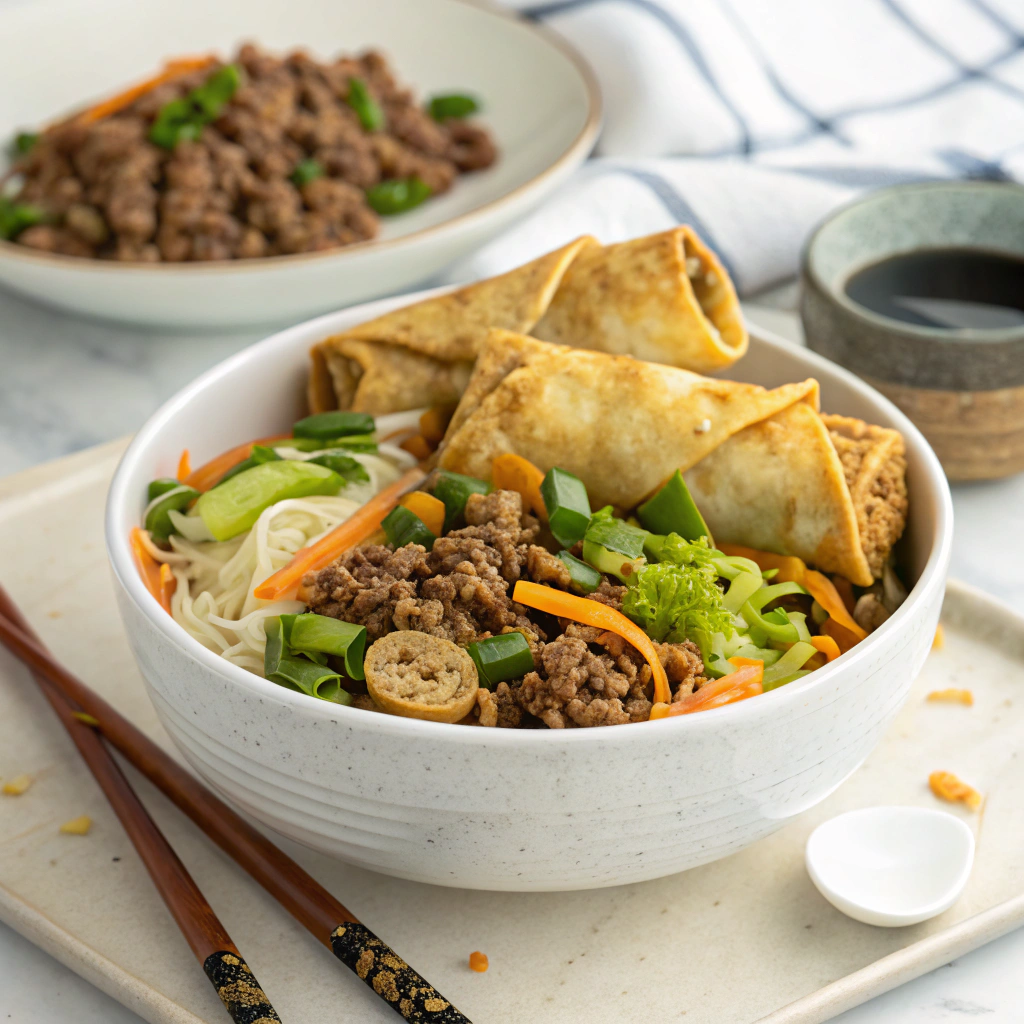
What if your go-to takeout flavor could be faster, lighter, and easier than you think—without sacrificing those savory, garlicky, gingery notes you love? That’s exactly why this Ground Beef & Vegetable Egg Roll Bowl exists. It’s a deconstructed, low-carb egg roll in a bowl that delivers the same craveable crunch and umami you expect from a skillet stir-fry, minus the deep-fried wrappers. This bowl is weeknight-ready, full of color and texture, and ideal for meal prep. If you’re craving a healthy spin on a classic, this one-pan wonder belongs in your rotation.
Ingredients for a Ground Beef & Vegetable Egg Roll Bowl
Think of this as a flexible blueprint: simple, affordable, and endlessly adaptable to what you have on hand.
- Lean ground beef: 1 lb (90% lean is ideal for flavor-meets-lightness)
- Neutral high-heat oil: 1 tbsp avocado or light olive oil
- Aromatics: 1 small yellow onion (diced), 4 cloves garlic (minced), 1 tbsp fresh ginger (finely grated)
- Crunchy vegetables:
- 5 cups shredded green cabbage or coleslaw mix (about 14 oz)
- 1 cup red cabbage (optional, but gorgeous for color)
- 1 cup shredded carrots
- 1 red bell pepper, diced
- Optional add-ins: 1 cup sliced mushrooms or 1/2 cup snap peas
- Sauce:
- 2 tbsp low-sodium tamari or soy sauce (gluten-free: use tamari; soy-free: use coconut aminos)
- 1 tbsp rice vinegar (or apple cider vinegar)
- 1–2 tsp sriracha or chili-garlic sauce (adjust to heat preference)
- 1 tsp toasted sesame oil
- 1/2 tsp ground black pepper
- 1/4–1/2 tsp sea salt, to taste
- Finishers:
- 2 green onions, thinly sliced
- 2 tbsp toasted sesame seeds
- Fresh cilantro and lime wedges (optional)
Substitution notes:
- Beef swaps: Ground turkey, chicken, pork, or plant-based crumbles all work. For ultra-lean meats, add 1 extra tsp oil to prevent dryness.
- Veggie swaps: Use bagged coleslaw mix if you’re short on time. Swap peppers for zucchini, or carrots for shredded broccoli stems.
- Low-sodium option: Use low-sodium tamari and taste before salting.
- Soy-free: Replace tamari with coconut aminos and skip sesame oil if needed; finish with a squeeze of lime for brightness.
Timing
- Prep time: 10–15 minutes (faster if using bagged coleslaw mix)
- Cook time: 12–15 minutes
- Total time: About 25–30 minutes
Data insight: Many deconstructed “egg roll in a bowl” recipes average around 30 minutes. This version typically lands closer to 25 minutes, about 15% quicker, thanks to minimal chopping and a one-pan method.
Step-by-Step Instructions
Step 1 — Mix your sauce (H3)
In a small bowl, whisk together tamari (or coconut aminos), rice vinegar, sriracha, toasted sesame oil, and black pepper. Set aside. Pre-mixing the sauce prevents overcooked veggies while you measure on the fly.
Step 2 — Heat the pan (H3)
Set a large, wide skillet or wok over medium-high heat. Add the avocado oil and let it shimmer. A hot pan ensures you brown the beef fast for deeper flavor.
Step 3 — Brown the ground beef (H3)
Add the ground beef and break it up with a spatula. Cook for 4–5 minutes, stirring occasionally, until well-browned with some crispy edges. If there’s more than 1–2 teaspoons of excess fat, spoon it off. Leaving a small amount keeps flavor without greasiness.
Pro tip: Don’t stir constantly—let the beef sit in contact with the hot pan for 60–90 seconds at a time to develop a sear.
Step 4 — Build the aromatics (H3)
Push the beef to one side. Add onion to the other side; cook 1–2 minutes until translucent. Stir in garlic and ginger; sauté 30 seconds until fragrant. This staggered layering prevents bitter garlic and keeps aromas bright.
Step 5 — Add the hearty vegetables (H3)
Stir in carrots, bell pepper, and any mushrooms. Cook 2 minutes to soften slightly. These take a touch longer than cabbage, so they go first.
Step 6 — Wilt the cabbage quickly (H3)
Add the green and red cabbage. Pour the sauce over the top. Toss continually for 3–4 minutes, just until the cabbage wilts but remains crisp-tender with a squeak when you bite it. You’re aiming for stir-fry snap, not mush.
Flavor boost: If the pan seems dry, splash in 1–2 tbsp water to create a quick steam that speeds wilting without extra oil.
Step 7 — Taste and adjust (H3)
Taste and balance: add a squeeze of lime for brightness, a pinch of salt if you used coconut aminos, or another drizzle of tamari for umami. If you like heat, add a dash more sriracha or chili crisp.
Step 8 — Finish and serve (H3)
Turn off the heat. Fold in green onions and sprinkle with toasted sesame seeds. Serve immediately as-is, over cauliflower rice for an ultra low-carb bowl, or with brown rice for higher energy needs.
Nutritional Information
Per serving (4 servings):
- Calories: ~300
- Protein: ~23 g
- Total fat: ~16 g
- Carbohydrates: ~12–14 g
- Fiber: ~3–4 g
- Net carbs: ~9–11 g
- Sodium: ~400–600 mg (varies with soy/tamari brand and added salt)
Estimates are based on 90% lean beef, avocado oil, low-sodium tamari, and listed veggies. For stricter tracking, plug your exact brands and amounts into a nutrition calculator.
Data insights:
- High protein-to-calorie ratio: ~23 g protein for ~300 calories keeps you fuller longer.
- Net carbs: ~10 g per serving fits most low-carb eating patterns; using coconut aminos raises carbs slightly but lowers sodium.
- Micronutrients: Cabbage brings vitamin C and K; carrots add beta-carotene; bell peppers supply antioxidants; sesame seeds contribute calcium and healthy fats.
Healthier Alternatives for the Recipe
- Make it even leaner: Use 93–96% lean ground beef or swap to ground turkey/chicken. Add 1 tsp oil if needed to prevent sticking.
- Lower sodium: Choose low-sodium tamari or coconut aminos; keep added salt minimal. A squeeze of lime and fresh ginger elevate flavor without more sodium.
- Extra veggies: Up cabbage to 7 cups or add zucchini ribbons for more volume without many calories.
- Keto-friendly tweaks: Skip carrots and bell pepper if strict; load up on cabbage, mushrooms, and bok choy. Sweetness can come from a few drops of monk fruit or allulose if you miss the hint of sweet from coconut aminos.
- Whole30 and soy-free: Use coconut aminos; replace rice vinegar with apple cider vinegar; omit sriracha if brand contains sugar and use a compliant chili paste.
- Vegetarian/vegan: Use crumbled extra-firm tofu, tempeh, or a soy-free meatless crumble. Press tofu well, then brown it hard so it develops flavorful edges.
Serving Suggestions
- Classic bowl, low-carb style: Spoon your Ground Beef & Vegetable Egg Roll Bowl over cauliflower rice. A fried egg on top adds richness and an extra 6–7 g protein.
- Lettuce wraps: Serve in crisp romaine or butter lettuce leaves with extra green onions and a lime wedge.
- High-energy option: Pair with a scoop of brown rice or quinoa. If you love one-pan meals, this one-pot ground beef veggie brown rice skillet is a great companion recipe.
- Crunch factor: Add crushed roasted seaweed, chopped peanuts or almonds, or a sprinkle of crispy shallots for texture.
- Saucy flair: Drizzle with chili crisp, a light garlic-yogurt sauce, or a touch of hoisin (for non–low carb days).
- Fresh finishers: Cilantro, Thai basil, and thinly sliced chilies add aroma and heat without heavy calories.
Common Mistakes to Avoid
- Overcrowding the pan: Too many veggies in a small pan steam rather than sear. Use a large skillet or cook the cabbage in two quick batches.
- Soggy cabbage: Overcooking destroys texture. Pull the pan as soon as cabbage turns crisp-tender and still vibrant.
- Skipping the sauce pre-mix: Measuring sauces over a hot pan leads to overcooked veggies. Mix first so you can toss fast.
- Not draining excess fat: A tablespoon or two of fat is fine; more can make the bowl greasy and dilute flavors.
- Under-seasoning: Taste before serving. Acid (lime or vinegar), salt, and heat can be adjusted in seconds to make the dish pop.
- Using low heat: Medium-high is your friend. High heat yields browning and that signature stir-fry character.
- One-speed chopping: Cut denser veggies (carrots, peppers) slightly thinner than cabbage so everything finishes at the same time.
Storing Tips for the Recipe
- Refrigeration: Store in airtight containers for 3–4 days. Keep garnishes (sesame seeds, green onions, herbs) separate for best texture.
- Freezing: Yes—cool completely and freeze up to 2 months. Cabbage softens slightly after thawing but remains tasty in bowls or lettuce wraps.
- Reheating: Skillet over medium heat for 3–4 minutes revives texture best. Microwave in 30–45 second bursts, stirring between rounds, and finish with fresh lime and green onions.
- Meal prep pointers:
- Pre-chop cabbage and aromatics up to 48 hours ahead.
- Mix sauce in advance and store covered in the fridge.
- Portion into individual containers with cauliflower rice for grab-and-go lunches.
Conclusion
This Ground Beef & Vegetable Egg Roll Bowl delivers everything you want from takeout—savory beef, crunchy cabbage, gingery-garlic bite—in one skillet and in under 30 minutes. It’s protein-forward, low in carbs, budget-friendly, and a flexible template you can tailor to your diet and pantry.
If you enjoy this flavor profile and want more variations, explore other deconstructed egg roll approaches like this well-loved take on an egg roll in a bowl for fresh inspiration: try this version. Then circle back, tweak the spice, swap the veggies, and make this one your own.
Ready to cook? Grab your skillet, and when you’ve tried it, leave a comment with your favorite swaps—more mushrooms, extra heat, or the perfect garnish. Your tips help other cooks nail their best bowl, too.
FAQs
Is this Ground Beef & Vegetable Egg Roll Bowl keto-friendly?
- Yes, as written it’s low carb. For stricter keto, reduce or omit carrots and bell pepper, use tamari or coconut aminos carefully, and serve over cauliflower rice.
Can I use coleslaw mix instead of shredding cabbage?
- Absolutely. A 14–16 oz bag of coleslaw mix saves time and delivers reliable texture. Add red cabbage for extra color if you like.
What kind of pan is best?
- A large stainless-steel skillet or a well-seasoned wok. Nonstick works but won’t brown as deeply. Use medium-high heat for best results.
How do I prevent soggy cabbage?
- High heat, quick tosses, and pulling the pan off the heat while the cabbage is still crisp-tender. Avoid overcrowding and don’t cover the pan.
What can I substitute for soy sauce?
- Use coconut aminos for soy-free and gluten-free needs; it’s slightly sweeter and less salty. Taste and adjust salt and acid to balance.
Is sesame oil necessary?
- Toasted sesame oil adds that signature “egg roll” aroma, but you can skip if allergic or unavailable. Add extra ginger and a squeeze of lime to compensate.
Can I make it vegetarian or vegan?
- Yes. Swap beef for crumbled extra-firm tofu, tempeh, or a plant-based crumble. Press tofu well and sear until browned for best flavor.
How do I scale the recipe for a crowd?
- Double the ingredients and cook the cabbage in two batches to avoid steaming. Keep the first batch warm over low heat while you finish the second.
What sides pair well with this dish?
- Cauliflower rice for low-carb, brown rice or quinoa for higher energy needs, or a simple cucumber-sesame salad for a cool, crunchy contrast.
How long does it keep and can I freeze it?
- Refrigerate 3–4 days. Freeze up to 2 months. Reheat in a skillet for best texture and finish with fresh herbs and lime to bring it back to life.
Ingredient Recap for Quick Shopping
- Protein: 1 lb lean ground beef
- Aromatics: onion, garlic, ginger
- Veg: cabbage mix, carrots, bell pepper (plus optional mushrooms/snap peas)
- Sauce: tamari/soy or coconut aminos, rice vinegar, sriracha, toasted sesame oil
- Finishers: green onions, sesame seeds, cilantro, lime
Why this recipe works
- Balanced flavors: salty-savory tamari, bright vinegar, aromatic sesame, and fresh ginger/garlic.
- Texture contrast: seared beef + crisp veggies = satisfying bite.
- Speed + simplicity: one pan, 25–30 minutes, minimal clean-up.
- Adaptable: shape it to your pantry and dietary needs without losing flavor.
Cook once, eat twice: Make a double batch for lunches—the flavors deepen overnight, and you’ll love having a ready-to-eat, healthy bowl waiting in the fridge.