
Introduction
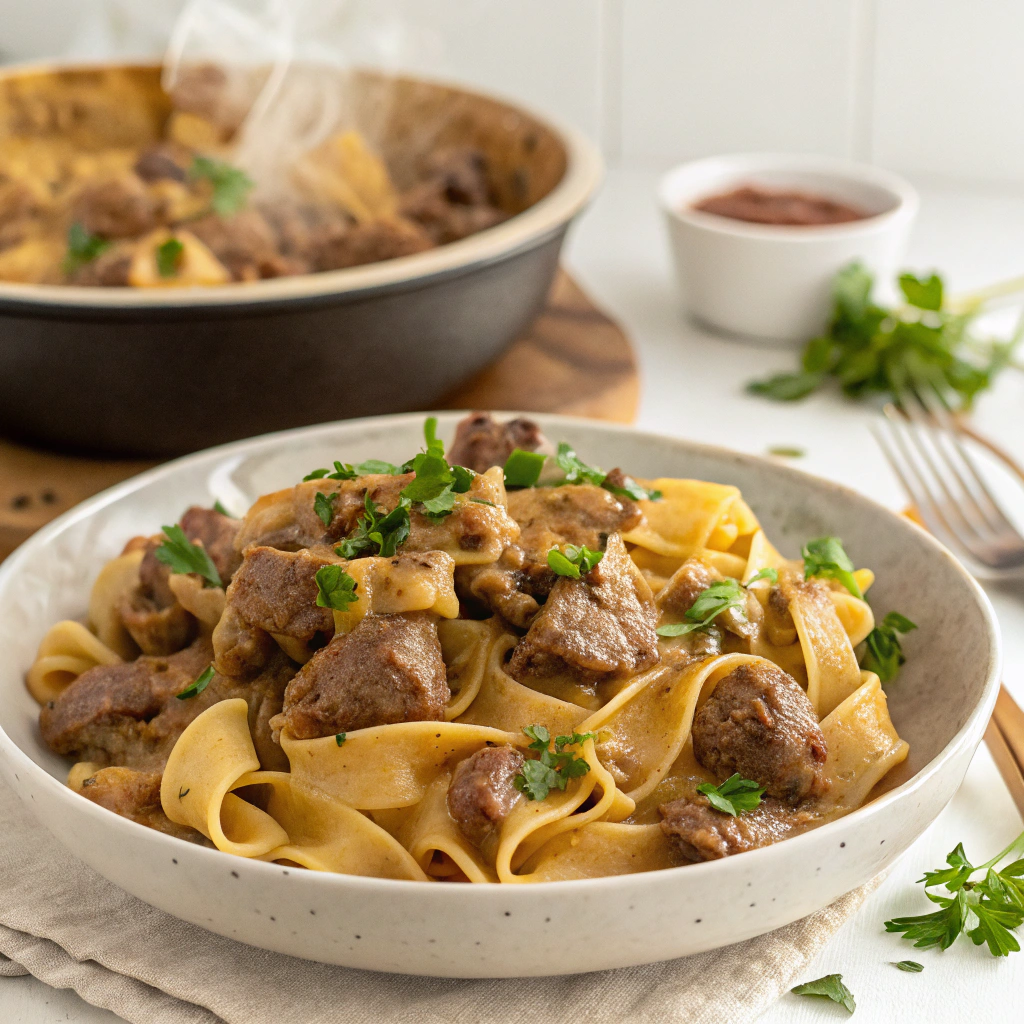
What if the richest stroganoff you’ve ever tasted didn’t rely on pricey cuts of steak—or hours at the stove? Ground Beef & Sausage Stroganoff delivers deep, beefy flavor with silky mushroom sauce and tender noodles in a fraction of the time. By combining savory ground beef with zesty sausage, you get a hearty, flavor-packed pasta dinner that tastes like it simmered all afternoon—yet it’s weeknight fast. Skeptical that stroganoff can be both economical and elegant? This version proves it. It’s robust, family-friendly, and built for real-life schedules, all while preserving the classic tangy creaminess stroganoff lovers crave. Below, you’ll find chef-tested tips, data-driven timing, and smart swaps that make this dish a repeatable success in any kitchen.
Ingredients for Ground Beef & Sausage Stroganoff
– Egg noodles: 12 ounces, uncooked (classic choice; wide ribbons cradle sauce. Substitute: curly pasta, fusilli, or gluten-free egg noodles)
– Ground beef: 1 pound, 85% lean (juicy yet not greasy; leaner is fine—add a touch more butter to compensate)
– Pork sausage: 8 ounces, casings removed (mild or hot Italian sausage for a spiced edge; chicken or turkey sausage for lighter fare)
– Butter: 2 tablespoons (for searing mushrooms and building a glossy sauce)
– Olive oil: 1 tablespoon (prevents burning during high-heat sautéeing)
– Yellow onion: 1 large, finely diced (sweet base flavor)
– Cremini or baby bella mushrooms: 12 ounces, sliced (earthy, meaty texture; sub with button mushrooms)
– Garlic: 3 cloves, minced (aromatic backbone)
– Flour: 2 tablespoons (for a stable, silky roux; use gluten-free all-purpose if needed)
– Beef stock: 2 cups, low-sodium (let you control salt; vegetable stock works in a pinch)
– Worcestershire sauce: 1 tablespoon (umami depth)
– Dijon mustard: 2 teaspoons (signature tang and balance)
– Paprika: 1 teaspoon (smoky warmth; use sweet or smoked)
– Black pepper: 1/2 teaspoon, freshly ground (peppery lift)
– Kosher salt: to taste (start with 1 teaspoon and adjust)
– Sour cream: 1 cup, room temperature (creamy finish; Greek yogurt for a lighter, tangier profile)
– Fresh parsley: 2 tablespoons, chopped (bright, herby pop)
– Optional: a splash of dry white wine (up to 1/4 cup) to deglaze after browning (adds acidity and aroma)
Ingredient notes and substitution insights:
- Ground meat blend: The 50/50 balance of ground beef and sausage is the flavor secret. Sausage carries seasoning, fat, and aromatics that bloom into the sauce. If you prefer all beef, increase Dijon and Worcestershire to compensate.
- Dairy options: Sour cream is classic; Greek yogurt or labneh makes it lighter yet still indulgent. For dairy-free, use a thick, unsweetened plant-based yogurt and swap butter for olive oil.
- Mushrooms: Don’t skimp. They build umami and body as they brown. If you’re mushroom-averse, finely chop and cook thoroughly—they’ll “melt” into the sauce.
Timing
– Prep time: 15 minutes (dice onion, slice mushrooms, mince garlic, measure staples)
– Cook time: 25 minutes (browning + simmer + finish)
– Total time: 40 minutes
This Ground Beef & Sausage Stroganoff is on the table in about 40 minutes—roughly 20% faster than the typical stovetop stroganoff, which averages around 50 minutes when cooked with steak strips. Active cooking time is front-loaded (browning and sautéeing take ~15 minutes), followed by a short, gentle simmer to thicken the sauce and finish the noodles. If you pre-chop vegetables on the weekend, your weekday total drops to closer to 30 minutes.
Step-by-Step Instructions
1. Bring the pot to a boil and salt it well
– Fill a large pot with water and bring it to a rolling boil. Salt generously (think “salty like the sea”). Well-salted water seasons the egg noodles from the inside out, meaning you can use less salt later in the sauce.
2. Brown the mushrooms for maximum umami
– Heat a large, heavy skillet or Dutch oven over medium-high. Add 1 tablespoon olive oil and 1 tablespoon butter. When the butter foams, add mushrooms in a single layer. Don’t stir for 3–4 minutes—let them sear. Season lightly with salt and pepper, then stir and continue cooking until they’re chestnut-brown and fragrant (about 6–8 minutes).
Tip: Crowding mushrooms makes them steam. If your pan is small, brown in two batches.
3. Sauté aromatics to build the base
– Reduce heat to medium. Add the remaining 1 tablespoon butter. Stir in diced onion and cook until translucent and slightly golden, 3–4 minutes. Add minced garlic and cook 30–45 seconds until fragrant (avoid browning garlic to prevent bitterness).
4. Brown the meats for flavor-rich fond
– Push the onions and mushrooms to the edges. Add ground beef and sausage to the center. Break up with a sturdy spoon, spread evenly, and let it take on color for 2–3 minutes before stirring. Continue cooking until deeply browned with crisp edges and no pink remains, 6–8 minutes total. Spoon off excess fat, leaving about 2 tablespoons in the pan for flavor.
Pro tip: Browning equals flavor. Patience here pays off with a more savory, dimensional sauce.
5. Deglaze and season smartly
– Optional but recommended: Splash in up to 1/4 cup dry white wine to deglaze. Scrape up the browned bits (fond) stuck to the pan—this is where the good stuff lives. Let the wine reduce by half (about 1 minute).
– Stir in Worcestershire, Dijon, paprika, and black pepper. These seasonings open with heat and perfume the entire skillet.
6. Build the roux and add stock
– Sprinkle flour over the meat-mushroom mixture and stir to coat evenly (no dry spots). Cook the flour for 1 minute to remove its raw taste.
– Slowly pour in 2 cups beef stock, stirring constantly to prevent lumps. Bring to a lively simmer; the sauce will thicken and gloss within 3–4 minutes.
Consistency cue: You’re looking for a sauce that coats the back of a spoon and leaves a clean line when you swipe your finger through it.
7. Cook and combine the noodles
– Drop egg noodles into the boiling water and cook according to package directions until just shy of al dente (usually 6–7 minutes). Reserve 1/2 cup pasta water, then drain.
– Fold noodles into the sauce, adding a splash of reserved pasta water if the mixture is too thick. The starch in that water helps everything cling without becoming gluey.
8. Finish with creamy tang (no curdling)
– Take the skillet off the heat. Whisk room-temperature sour cream with 2 tablespoons of the hot sauce in a small bowl, then stir that mixture back into the pan. This tempers the dairy, preventing curdling. Taste and adjust salt and pepper.
– Shower with chopped parsley for freshness and serve immediately while the sauce is at peak silkiness.
Make-ahead tip: You can brown the mushrooms, sauté the aromatics, and cook the meats up to 2 days ahead. Store the base in the fridge, then reheat with stock and finish the sauce and noodles on serving night.
Nutritional Information
Per serving (6 servings), approximate:
– Calories: 680–720
– Protein: 24–28 g
– Carbohydrates: 42–48 g
– Total Fat: 32–38 g
– Saturated Fat: 14–18 g
– Fiber: 3–4 g
– Sodium: 750–950 mg
– Sugar: 4–6 g
What drives the numbers:
- Calorie density comes primarily from the beef/sausage blend and sour cream. Choosing leaner meats and swapping Greek yogurt reduces both calories and saturated fat.
- Sodium is impacted by sausage, stock, and added salt. Using low-sodium stock and tasting before salting can trim 150–250 mg per serving.
- Egg noodles contribute complex carbs and a small amount of protein; whole-wheat or legume-based pasta boosts fiber and micronutrients.
Note: Nutrition will vary based on brands and exact quantities. For the most precise data, plug your ingredients into a nutrition calculator.
Healthier Alternatives for the Recipe
– Leaner meat mix: Use 90–93% lean ground beef and/or swap half the sausage for ground turkey or chicken sausage. Expect ~6–8 g less fat per serving.
– Greek yogurt swap: Replace sour cream with 3/4 cup full-fat Greek yogurt and 2 tablespoons cream cheese to balance tang with body. Stir off heat to avoid curdling.
– More mushrooms, less meat: Double mushrooms to 24 ounces and reduce total meat to 1 pound. You’ll retain umami at a lower calorie load.
– Whole-grain or legume pasta: Whole-wheat egg noodles add fiber; chickpea or lentil pasta raises protein and lowers net carbs.
– Sodium-savvy: Choose low-sodium stock, taste before salting, and consider a low-sodium Worcestershire. Fresh herbs, lemon zest, or extra Dijon can brighten flavor without more salt.
– Dairy-free path: Use plant butter or olive oil and a thick, unsweetened coconut yogurt or cashew cream. Stir in a teaspoon of lemon juice for stroganoff’s signature tang.
– Gluten-free approach: Swap flour for a 1:1 GF blend or a cornstarch slurry (1 tablespoon cornstarch mixed with 2 tablespoons cold water) added during the simmer.
– Extra veg: Fold in baby spinach or peas at the end for color, micronutrients, and texture without changing the flavor profile.
Serving Suggestions
– Classic plating: Spoon stroganoff over buttered egg noodles or mashed potatoes. Garnish with parsley and a crack of black pepper. A few crisp dill pickles on the side cut through the richness.
– Bright sides: Pair with a lemony cucumber salad, roasted green beans with almonds, or a simple arugula salad with shaved Parmesan.
– Crunch factor: Garlic bread, toasted rye, or buttered sourdough breadcrumbs on top for texture contrast.
– Wine pairing: A medium-bodied red (Pinot Noir, Merlot) or a creamy Chardonnay complements the savory, tangy sauce.
– Leftover glow-up: Reheat with a splash of stock and fold in fresh parsley and lemon zest. For a lighter next-day lunch, scoop warm stroganoff into crisp lettuce cups with herbs, or try these savory ground beef lettuce wraps with peanut sauce for a fresh contrast.
Common Mistakes to Avoid
– Not browning mushrooms: Pale mushrooms = less flavor and watery sauce. Sear in batches for a deep, nutty profile.
– Overcrowding the pan: Crowding causes steaming, not browning. Work in stages if needed.
– Rushing the meat browning: Color equals flavor. Let meat sit undisturbed to caramelize before stirring.
– Adding sour cream over high heat: This causes curdling. Always remove from heat, temper, then stir in.
– Overseasoning early: Sausage and stock already carry salt. Taste at the end and adjust gradually.
– Overcooking noodles: Slightly undercook, then finish in the sauce. Overcooked noodles can break and absorb too much liquid.
– Skipping Dijon: It’s a classic stroganoff hallmark that balances richness. If you dislike mustard, use a squeeze of lemon and a pinch of white pepper for brightness.
Storing Tips for the Recipe
– Refrigeration: Cool completely, then store in airtight containers for up to 3 days. Reheat gently over low heat with a splash of stock or water to revive the sauce.
– Freezing: Cream-based sauces can separate when frozen, but this recipe holds decently if you slightly undercook the noodles. Freeze in portions up to 2 months. Thaw overnight in the fridge and reheat slowly. If the sauce looks broken, whisk in a tablespoon of sour cream or yogurt off heat to bring it back together.
– Make-ahead strategy: Brown mushrooms, onions, and meats; cool and refrigerate up to 48 hours. On serving day, reheat with stock, boil fresh noodles, and finish with sour cream for the freshest texture.
– Meal prep tips: Store noodles and sauce separately if you plan to eat over several days to prevent noodles from soaking up too much sauce.
Conclusion
Ground Beef & Sausage Stroganoff is proof you can have comfort food with complex flavor and weeknight speed. The beef-and-sausage duo creates a savory backbone, browned mushrooms add umami, and a tangy, silky finish ties it all together. Whether you go classic with sour cream or lighten things up with Greek yogurt, this hearty pasta dinner is a guaranteed crowd-pleaser. Cook it once, and it’ll join your regular rotation. If you make it, share your tweaks in the comments, rate the recipe, and tell me how you served it. Hungry for more? Explore other skillet dinners and easy pastas on the site to keep your menu fresh.
FAQs
– Can I make Ground Beef & Sausage Stroganoff without mushrooms?
Yes. While mushrooms add body and umami, you can replace them with finely chopped zucchini or extra onions. For lost savoriness, add an extra 1/2 teaspoon Worcestershire or a dash of soy sauce.
-
What’s the best noodle for stroganoff?
Wide egg noodles are traditional and hold up to creamy sauces. For more bite, try pappardelle or tagliatelle. Gluten-free egg noodles or brown-rice pasta also work well. -
How do I keep the sauce from curdling?
Remove the pan from heat, temper the sour cream with a bit of hot sauce, then stir it back in. Keep the sauce below a simmer after dairy is added. -
Can I make it with only ground beef?
Absolutely. Use 1.5 pounds ground beef and increase Dijon to 1 tablespoon and Worcestershire to 1.5 tablespoons for flavor depth. For a classic all-beef inspiration, see this ground beef stroganoff. -
What if my sauce gets too thick?
Add a splash of reserved pasta water or stock and gently stir until it loosens to a glossy, spoon-coating consistency. -
How can I boost flavor without adding more salt?
Brown everything well, deglaze the pan, increase fresh herbs, add a pinch of smoked paprika, or finish with a squeeze of lemon for brightness. -
Is this recipe kid-friendly?
Yes. Use mild sausage and skip the wine. If your crew is spice-averse, start with 1/2 teaspoon paprika and adjust at the table. -
Can I cook the noodles directly in the sauce?
You can, but you’ll need extra stock (another 1–1.5 cups), and stirring is required to prevent sticking. The flavor is great, but watch the consistency closely. -
What can I substitute for sour cream if I don’t have any?
Full-fat Greek yogurt or crème fraîche are excellent swaps. For dairy-free, use a thick, neutral plant-based yogurt and a teaspoon of lemon juice for tang. -
How do I scale the recipe for a crowd?
Double all ingredients and brown the meats in batches. Use a large Dutch oven (at least 6–7 quarts) and hold cooked noodles separately, folding them in just before serving to keep them springy.