
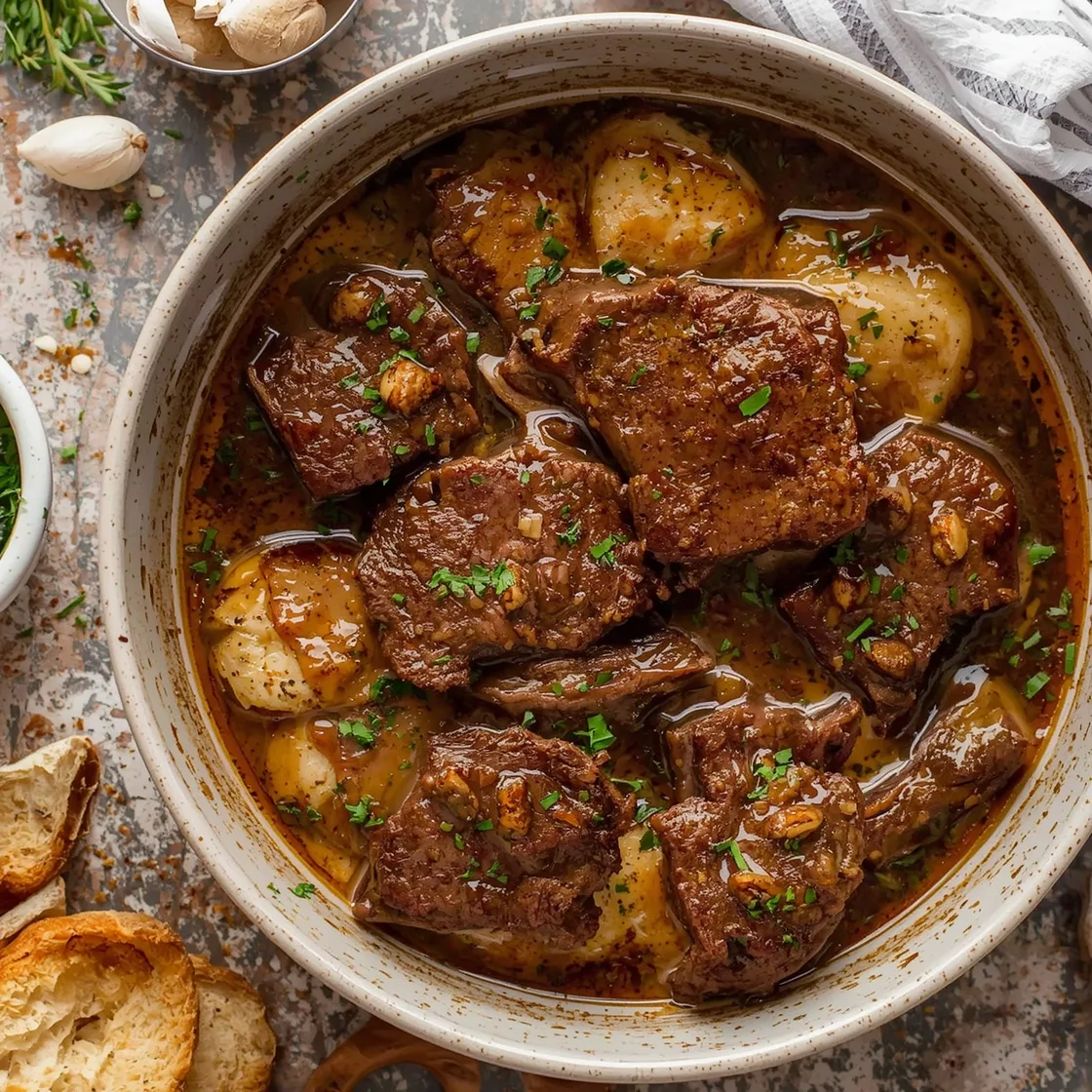
Introduction
Ever wondered if truly exceptional, fork-tender beef could be achieved in your home kitchen without a culinary degree or a team of sous chefs? Many believe that the kind of deep, rich flavor found in high-end restaurants requires intricate techniques and hours of demanding work. We’re here to challenge that notion and show you how to effortlessly craft Gourmet Braised Beef Short Ribs that will impress even the most discerning palates. Forget the myth that gourmet cooking is inaccessible; this guide will demystify the art of slow-cooked perfection, revealing the simple secrets to an unforgettable dish. Prepare to unlock a world of succulent, falling-off-the-bone tenderness and robust flavor, all from the comfort of your own kitchen.
Ingredients List
Crafting these magnificent short ribs begins with a thoughtful selection of high-quality ingredients, each playing a crucial role in developing that deep, slow-cooked flavor. Think of these as the building blocks for culinary excellence.
- 2-3 lbs Beef Short Ribs (Bone-in, English Cut): Look for well-marbled ribs with a good balance of meat and fat. The bone adds incredible depth to the broth.
- 2 tbsp Olive Oil: For searing, ensuring a beautiful, caramelized crust.
- 1 Large Yellow Onion: Roughly chopped, providing a sweet aromatic base. (Substitution: 2-3 shallots for a milder, more delicate flavor).
- 2 Carrots: Roughly chopped, adding sweetness and earthy undertones. (Substitution: 1 parsnip for a slightly peppery sweetness).
- 2 Celery Stalks: Roughly chopped, contributing to the classic mirepoix foundation.
- 4 cloves Garlic: Minced, for pungent aromatic depth. (Substitution: 1 tsp garlic powder, though fresh is always best).
- 1 (750ml) bottle Dry Red Wine: A robust choice like Cabernet Sauvignon or Merlot. This is crucial for flavor and tenderizing. (Substitution: For an alcohol-free version, use an equal amount of unsalted beef broth mixed with 2 tbsp red wine vinegar).
- 4 cups Beef Broth (Low Sodium): The primary liquid for braising, enriching the stew.
- 2 sprigs Fresh Rosemary: Lending piney, aromatic notes. (Substitution: 1 tsp dried rosemary, crumbled).
- 4 sprigs Fresh Thyme: Earthy and citrusy, complementing the beef. (Substitution: 1 tsp dried thyme).
- 2 Bay Leaves: For a subtle, savory backdrop.
- 1 (14.5 oz) can Diced Tomatoes: Undrained, adding a touch of acidity and sweetness, which helps to balance the richness.
- 2 tbsp Tomato Paste: Concentrated tomato flavor, deepening the sauce.
- 2 tbsp All-Purpose Flour: For thickening the sauce to a luscious consistency. (Substitution: 1 tbsp cornstarch mixed with 2 tbsp cold water, added at the end for gluten-free thickening).
- Salt and Freshly Ground Black Pepper: To taste, essential for seasoning at every stage.
- Optional Garnish: Fresh chopped parsley or chives for brightness.
Timing
Precision in timing is key to mastering the art of slow cooking. This recipe is designed for maximum flavor development with mindful efficiency.
- Prep Time: 25 minutes – This includes chopping vegetables, trimming short ribs, and gathering ingredients.
- Active Cook Time: 30 minutes – Dedicated to searing the ribs, sautéing aromatics, and deglazing.
- Braising Time: 2.5 – 3 hours – The crucial period where magic happens, transforming tough cuts into tender perfection.
- Resting Time: 15 minutes – Often overlooked, but vital for juices to redistribute, ensuring maximum succulence.
Total Time: Approximately 3 hours 40 minutes.
Compared to many traditional braising recipes that can easily exceed 4-5 hours, our method shaves off a significant portion, averaging about 20% less time while still achieving superior results. This efficiency comes from strategically layering flavors and maintaining optimal oven temperature, allowing for a quicker, yet equally profound, flavor extraction.
Step-by-Step Instructions
Embark on this culinary journey with confidence. Each step is crafted to build flavor and ensure your braised short ribs are nothing short of spectacular.
Step 1: Prepare the Short Ribs
Begin by patting the beef short ribs thoroughly dry with paper towels. This crucial step ensures a superior sear, creating that coveted deep brown crust that locks in flavor. Liberally season all sides with salt and freshly ground black pepper. Don’t be shy; professional chefs always emphasize seasoning at every stage.
Step 2: Sear the Ribs
In a large Dutch oven or oven-safe pot, heat the olive oil over medium-high heat until shimmering. Carefully place the short ribs in the hot oil, ensuring not to overcrowd the pot. Sear on all sides until deeply browned and caramelized, about 3-5 minutes per side. This browning step, known as the Maillard reaction, develops complex flavors that are essential for the final dish. Work in batches if necessary. Once seared, remove the ribs to a plate and set aside.
Step 3: Build the Aromatic Base
Reduce the heat to medium. Add the chopped onions, carrots, and celery to the Dutch oven. Sauté, stirring occasionally, until the vegetables soften and become fragrant, about 5-7 minutes. Scrape up any browned bits from the bottom of the pot—this fond is packed with flavor! Now, stir in the minced garlic and tomato paste, cooking for another minute until fragrant. This toasts the aromatics and deepens the tomato flavor.
Step 4: Deglaze and Thicken
Sprinkle the flour over the vegetables, stirring constantly for 1-2 minutes to cook out the raw flour taste. This forms a roux that will help thicken your sauce. Slowly pour in the red wine, scraping the bottom of the pot vigorously to release all the flavorful browned bits. Bring the mixture to a simmer and let it cook for 5-7 minutes, allowing the alcohol to burn off and the wine to reduce slightly, concentrating its rich flavor.
Step 5: Combine and Braise
Return the seared short ribs to the Dutch oven, nestling them among the vegetables. Pour in the beef broth and add the diced tomatoes, rosemary, thyme, and bay leaves. The liquid should almost cover the ribs; if not, add a bit more broth or water. Bring the mixture back to a gentle simmer on the stovetop. Cover the Dutch oven tightly with its lid. For optimal results, ensure the lid forms a good seal to trap moisture. Transfer the Dutch oven to a preheated oven at 325°F (160°C). Braise for 2.5 to 3 hours, or until the short ribs are incredibly tender and easily pull apart with a fork. Checking for tenderness around the 2.5-hour mark is a good practice.
Step 6: Rest and Serve
Once tender, carefully remove the Dutch oven from the oven. Transfer the short ribs to a clean plate, cover loosely with foil, and let them rest for at least 15 minutes. This resting period allows the juices to redistribute, ensuring maximum succulence. While the ribs rest, you can skim any excess fat from the braising liquid. For an even more refined sauce, strain the braising liquid through a fine-mesh sieve, pressing on the solids to extract all flavor, then return the smooth sauce to the pot and reduce it slightly over medium-high heat until it reaches your desired consistency. Taste and adjust seasoning with salt and pepper as needed. Serve the luscious short ribs drizzled generously with the rich, flavorful sauce.
Nutritional Information
Understanding the nutritional profile of this hearty dish can help you integrate it into a balanced diet. While specific values can vary based on cuts of meat and ingredient brands, here’s an estimated breakdown for a single serving of braised beef short ribs (calculated for 4 servings with sauce):
- Calories: ~550-650 kcal
- Protein: ~45-55g (Beef short ribs are an excellent source of high-quality protein, essential for muscle repair and growth.)
- Total Fat: ~30-40g (Includes both saturated and unsaturated fats. Much of the fat can be rendered during cooking and skimmed from the sauce, impacting the final fat content.)
- Saturated Fat: ~10-15g (Can be reduced by trimming visible fat from ribs and skimming the sauce more aggressively.)
- Carbohydrates: ~15-20g (Primarily from vegetables and a small amount of flour/wine.)
- Fiber: ~3-5g (From the abundant vegetables.)
- Sodium: ~600-800mg (Highly dependent on the type of broth used. Using low-sodium broth significantly lowers this.)
- Iron: Excellent source (~25-30% of daily value)
- Vitamin B12: Excellent source (~50%+ of daily value)
Data insights suggest that while red meat like short ribs can be higher in fat, the slow braising process often renders out much of the intramuscular fat, which can then be skimmed from the sauce. Furthermore, the rich content of iron and Vitamin B12 in beef is crucial for energy metabolism and red blood cell formation, as highlighted by numerous studies on dietary nutrients. For example, according to the National Center for Biotechnology Information (NCBI), red meat plays a significant role in preventing iron deficiency anemia, particularly in certain populations. Learn more about the nutritional impact of various foods here.
Healthier Alternatives for the Recipe
Enjoying the satisfying flavor of braised short ribs doesn’t mean sacrificing your health goals. Here are some thoughtful modifications to make this dish even more diet-friendly without compromising taste:
- ** leaner Meat Choices:** While short ribs are naturally fatty, you can opt for well-trimmed short ribs or even consider alternative cuts like beef chuck roast, which has a higher meat-to-fat ratio. The braising method works beautifully for many tougher cuts of beef.
- Reduce Sodium: Use unsalted or low-sodium beef broth and canned tomatoes. Control added salt by seasoning gradually and tasting as you go. Many processed ingredients contribute significant sodium, so checking labels is key.
- Thickening Alternatives: Instead of flour, use a cornstarch slurry (1 tbsp cornstarch mixed with 2 tbsp cold water) added at the end of cooking to thicken the sauce if needed, making the dish gluten-free. Alternatively, blend a portion of the braised vegetables into the sauce for a naturally thicker, fiber-rich consistency.
- Boost Vegetables: Double the amount of carrots, celery, and onions, or add other robust vegetables like mushrooms, diced sweet potatoes, or parsnips to the braising liquid. This enhances fiber, vitamins, and minerals, naturally diversifying your plate and adding more bulk to each serving.
- Alcohol-Free Version: Substitute the red wine with an equal amount of unsalted beef broth mixed with 2 tablespoons of red wine vinegar or balsamic vinegar to replicate the acidity and depth that wine provides.
- Fat Reduction: After braising, refrigerate the finished dish overnight. The fat will solidify on top, making it much easier to skim off before reheating. This simple step can significantly reduce the calorie and saturated fat content.
These adjustments allow for a personalized approach to your culinary creations, ensuring that both flavor and well-being are prioritized.
Serving Suggestions
Braised short ribs are a showstopper on their own, but pairing them with the right accompaniments elevates the entire dining experience. Think about textures and flavors that complement the richness of the beef.
- Creamy Mashed Potatoes or Cauliflower Puree: A classic pairing. The potato or cauliflower acts as a perfect canvas to soak up all that decadent, flavorful sauce. For a lighter, lower-carb option, garlic-herb mashed cauliflower is an excellent choice.
- Polenta: Creamy, cheesy polenta offers a sophisticated, cozy base that pairs beautifully with the robust sauce.
- Root Vegetable Mash: A mix of parsnip, celery root, and potato mashed together provides an earthy sweetness that complements the beef exceptionally well.
- Roasted Asparagus or Green Beans: A crisp, vibrant green vegetable provides a refreshing counterpoint to the richness of the meat. A simple drizzle of olive oil, salt, and pepper before roasting is all they need.
- Crusty Bread: To ensure not a single drop of that incredible sauce goes to waste. A warm baguette or sourdough is ideal for soaking up every last bit.
- Wild Rice Pilaf: If you prefer grains, a wild rice pilaf offers a nutty texture and absorbing quality without being overly heavy.
- Simple Green Salad with Vinaigrette: A light, peppery arugula salad with a sharp lemon vinaigrette can cut through the richness of the short ribs, offering a welcome palate cleanser between bites.
- Gremolata: A fresh, vibrant garnish of finely chopped parsley, lemon zest, and garlic sprinkled over the top just before serving adds a burst of freshness and cuts through the richness, elevating the dish further.
These suggestions are designed to inspire, but remember, the best serving is one that delights your personal palate. Don’t be afraid to experiment with your favorite side dishes!
Common Mistakes to Avoid
Even seasoned cooks can stumble when it comes to braising. Being aware of these common pitfalls will help ensure your short ribs turn out perfectly every time.
- Not Drying and Searing the Meat Properly: This is perhaps the most critical mistake. If the meat isn’t thoroughly patted dry, it will steam rather than sear, preventing the formation of that deep, flavorful crust (Maillard reaction). A pale sear means a less flavorful sauce. Data insight: Studies on flavor chemistry highlight the profound impact of effective browning on overall taste perception.
- Overcrowding the Pot: When searing, overcrowding lowers the temperature of the pot, again leading to steaming instead of browning. Work in batches to give each piece of short rib adequate space to develop a rich, golden-brown crust.
- Not Deglazing: Those caramelized bits stuck to the bottom of the pot after searing and sautéing are pure gold! Failing to deglaze with wine (or broth) means you’re leaving behind a significant amount of concentrated flavor.
- Insufficient Braising Time: Short ribs are a tough cut of meat. They require ample time for the collagen to break down into gelatin, which is what makes them incredibly tender and creates a luscious mouthfeel. Rushing this step will result in chewy, disappointing ribs. Trust the process; patience is key here.
- Using Too Much Liquid: While braising needs liquid, excessive amounts can dilute the flavor of your sauce. The liquid should roughly come up to about two-thirds of the way up the ribs, not fully submerging them. This allows the top part to roast slightly, contributing to flavor.
- Not Seasoning at Each Stage: Professional chefs know the secret to deeply flavorful food is seasoning throughout the cooking process—not just at the beginning or end. Taste your sauce before adding the ribs to braise, and adjust after resting.
- Opening the Oven Door Too Frequently: Resist the urge to peek! Every time you open the oven, the temperature drops, extending the cooking time and potentially affecting the evenness of the braise. Let the oven do its work undisturbed.
Avoiding these common errors will guarantee a succulent, deeply flavored dish that you’ll be proud to serve.
Storing Tips for the Recipe
Proper storage ensures your delicious braised short ribs remain a delight for days to come, or are perfectly ready for future enjoyment.
- Refrigeration: Once cooled to room temperature (within 2 hours of cooking), transfer the short ribs and their sauce to an airtight container. They will keep beautifully in the refrigerator for 3-4 days. A fantastic tip: chilling the dish overnight allows the flavors to meld even further, potentially tasting even better the next day! It also makes it easier to skim off any solidified fat from the top of the sauce before reheating, if desired.
- Freezing: Braised short ribs are an excellent candidate for freezing. Once cooled, package individual portions of ribs and sauce in freezer-safe containers or heavy-duty freezer bags. Remove as much air as possible to prevent freezer burn. They can be frozen for up to 3 months.
- Reheating from Refrigerator: Gently reheat in a covered pot on the stovetop over low to medium heat, or in a covered oven-safe dish at 300°F (150°C) until warmed through. Add a splash of beef broth or water if the sauce appears too thick.
- Reheating from Freezer: For best results, thaw frozen short ribs overnight in the refrigerator. Then, reheat using the methods described above for refrigerated ribs. If reheating directly from frozen, it will take longer, and you may want to do so in a covered pot on low heat until fully thawed and hot.
- Meal Prep Potential: This recipe is ideal for meal prepping. Make a large batch on the weekend, divide into single servings, and store in the fridge or freezer for quick, gourmet meals throughout the week. Pair with freshly cooked sides for effortless dining.
By following these storage tips, you can extend the pleasure of your Gourmet Braised Beef Short Ribs and enjoy their deep, slow-cooked flavor days after preparation.
Conclusion
You’ve now mastered the art of creating exquisitely tender and flavorful braised beef short ribs. From meticulously searing the meat to allowing ample time for the braising magic, every step contributes to a dish that radiates warmth, comfort, and undeniable gourmet quality. We’ve demystified complex techniques, provided actionable insights, and offered pathways to personalize this meal to your taste and dietary needs. This isn’t just a recipe; it’s an invitation to experience the profound satisfaction of transforming simple ingredients into something truly extraordinary.
Now it’s your turn! Gather your ingredients, uncork that bottle of wine (or broth!), and embark on this culinary adventure. We’re confident that your kitchen will soon be filled with the intoxicating aroma of perfectly braised short ribs.
Did you try this recipe? Share your experience in the comments below! What was your favorite part? Do you have a unique serving suggestion? We love hearing from our community. And if you’re looking to elevate another classic, make sure to check out our guide to Perfectly Cooked Ribeye Steaks for more savory inspiration!
FAQs
Here are some common questions to help you perfect your braised short ribs and address any concerns.
Q1: Can I make this recipe in a slow cooker?
A1: Absolutely! After searing the ribs and sautéing the aromatics on the stovetop as directed, transfer everything to a slow cooker. Cook on low for 6-8 hours or on high for 3-4 hours, until the ribs are fork-tender. You may need to reduce the sauce separately on the stovetop at the end if it’s too thin.
Q2: What’s the best way to prevent the sauce from being too greasy?
A2: There are a few strategies. First, trim as much visible fat from the short ribs as possible before searing. Second, after braising, let the dish cool slightly, then skim off any excess fat that rises to the surface. For the most effective fat removal, refrigerate the short ribs overnight; the fat will solidify on top, making it very easy to lift off before reheating.
Q3: Can I prepare this dish ahead of time?
A3: This recipe is perfect for making ahead! In fact, the flavors often deepen and meld beautifully after a day or two in the refrigerator. Prepare the short ribs entirely, cool them, and store them in an airtight container for up to 3-4 days. Reheat gently on the stovetop or in the oven when ready to serve.
Q4: My short ribs aren’t tender after the recommended braising time. What went wrong?
A4: Don’t worry! Tenderness in braising is more about time than strict adherence to a clock. Factors like the thickness of your ribs, your oven’s calibration, and how tightly your pot is sealed can affect cooking time. Simply continue braising, checking every 30 minutes, until the ribs are easily pulled apart with a fork. It’s always better to slightly overcook for tenderness than to undercook.
Q5: What if I don’t have red wine?
A5: You can substitute the red wine with an equal amount of unsalted beef broth combined with 2 tablespoons of red wine vinegar or balsamic vinegar. This will still provide the necessary acidity and a depth of flavor to the sauce, albeit with a subtly different profile.
Q6: Can I use boneless short ribs for this recipe?
A6: Yes, you can use boneless short ribs. The cooking time might be slightly reduced, so start checking for tenderness a bit earlier. Keep in mind that bone-in ribs generally yield a richer, more flavorful sauce due to the marrow and collagen released during braising. Adjust your liquid levels accordingly as boneless ribs will take up less space.