
Introduction
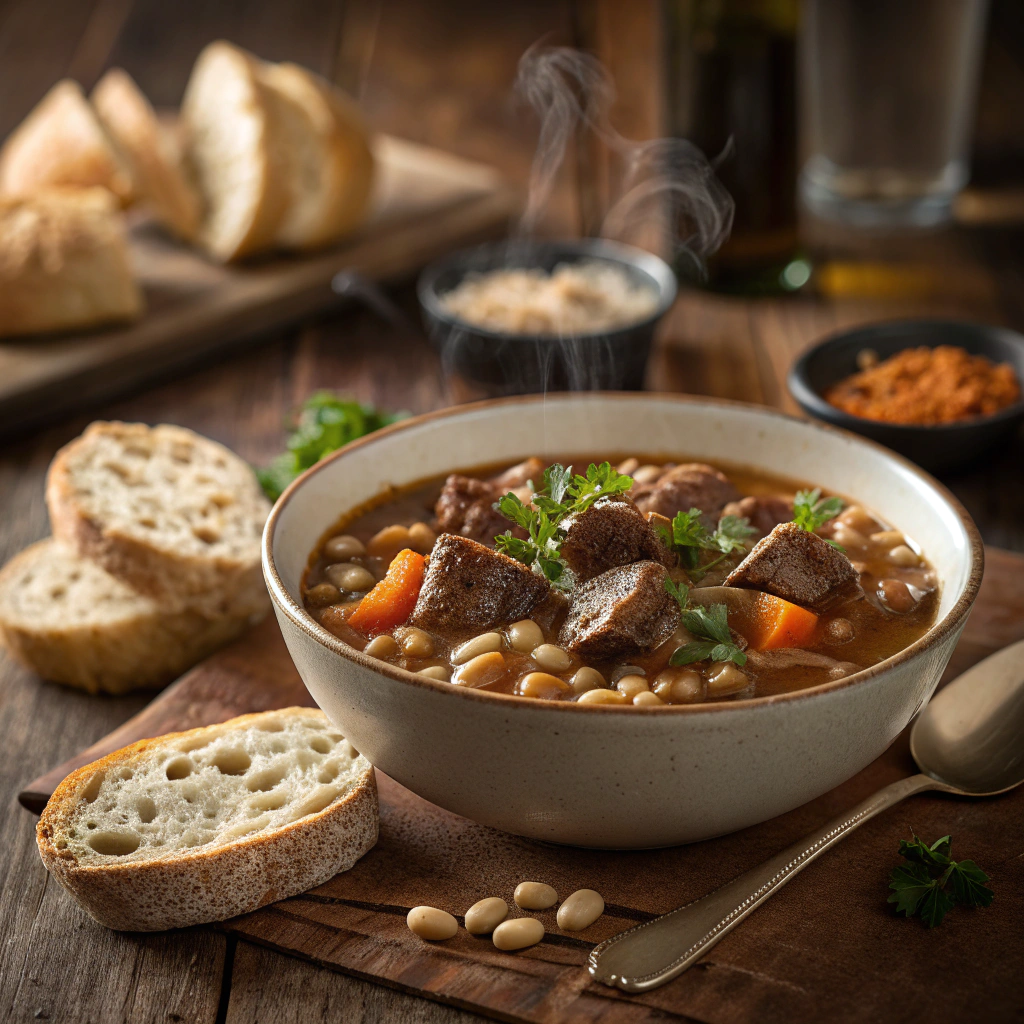
What if everything you’ve heard about long-simmered soups needing all day on the stove isn’t the whole story? This Beef Bean & Barley Soup challenges that idea by delivering deep, slow-simmered flavor and satisfying texture in about 90 minutes. Built on seared beef, creamy beans, and nutty barley, it’s the kind of protein-packed comfort bowl that makes weeknight cooking feel like a weekend luxury. I developed this method to squeeze maximum flavor from everyday ingredients—no fancy equipment, just smart layering and a few cook’s tricks honed across years of testing and teaching home cooks how to streamline hearty, wholesome meals without losing the soul of the dish.
Ingredients List
Serves: 8 generous bowls
- 1.5 pounds beef chuck roast or stew beef, cut into 1-inch cubes (sub: top round for leaner, or ground beef for speed)
- 1.5 teaspoons kosher salt, divided (adjust to taste; use 1 teaspoon if broth isn’t low-sodium)
- 1 teaspoon freshly ground black pepper
- 2 tablespoons olive oil (or avocado oil, ghee, or beef tallow)
- 1 large yellow onion, diced
- 2 medium carrots, diced
- 2 celery ribs, diced
- 4 garlic cloves, minced
- 2 tablespoons tomato paste
- 1 tablespoon Worcestershire or low-sodium soy sauce (umami boost)
- 8 cups low-sodium beef broth (homemade or store-bought)
- 1 can (14.5 ounces) fire-roasted diced tomatoes, with juices (optional but great for body and color)
- 3/4 cup pearl barley, rinsed (sub: hulled barley for more fiber and chew; or brown rice if gluten-free)
- 2 cans (15 ounces each) beans, rinsed and drained—mix it up: cannellini + red kidney, or pinto + black beans
- 2 bay leaves
- 1 teaspoon dried thyme (or 1 tablespoon fresh)
- 1/2 teaspoon dried rosemary, crumbled (or 1 teaspoon fresh, minced)
- 1/2 teaspoon smoked paprika (optional, for gentle warmth)
- Parmesan rind, 1 to 2 inches (optional but magical umami)
- 1 tablespoon sherry vinegar or lemon juice, to finish
- Fresh parsley, chopped, for garnish
Substitution and add-in ideas:
- Mushroom boost: Add 8 ounces cremini or baby bella mushrooms with the aromatics for added savoriness.
- Extra veg: Stir in 2 cups chopped kale or spinach in the last 5 minutes for color and micronutrients.
- Heat lovers: A pinch of red pepper flakes or a drizzle of chili crisp at the end turns cozy into bold.
- Broth: Swap half the beef broth for chicken broth to lighten the flavor while keeping richness.
Sensory note: You’re aiming for a broth that’s glossy and aromatic, beef that’s tender but intact, beans that are creamy not mushy, and barley with a pleasing chew.
Timing
– Prep time: 20 minutes (dice vegetables, cube beef, rinse barley, open and rinse beans)
– Cook time: 70 minutes (15 minutes to brown and build flavor, 45–50 minutes to simmer until tender, final 5 minutes to finish and adjust)
– Total time: 90 minutes
Data insight: Traditional beef barley soups often clock 110–120 minutes, especially if cuts are larger or dried beans are used. This streamlined approach lands roughly 20% faster without sacrificing depth by front-loading flavor (thorough browning, concentrated aromatics) and using canned beans.
Alternative timing:
- Slow cooker: 6–8 hours on Low (add barley during last 1.5–2 hours).
- Instant Pot: 30 minutes at High Pressure + natural release 15 minutes (simmer with barley on Sauté 10–15 more minutes).
Step 1: Pat, season, and preheat
Pat beef cubes very dry with paper towels. Season with 1 teaspoon kosher salt and black pepper. Preheat a large Dutch oven over medium-high heat until hot; add 1 tablespoon oil. Dry beef plus a hot pan equals superior browning.
Step 2: Sear in batches for a caramelized foundation
Sear beef in 2–3 batches, turning every 1–2 minutes until browned on at least two sides, 6–8 minutes total per batch. Don’t crowd the pot; steam is the enemy of crust. Transfer browned beef to a bowl and repeat with remaining oil and beef.
Step 3: Build the flavor base with aromatics
Lower heat to medium. Add onion, carrot, and celery with a pinch of salt. Cook, stirring, 5–6 minutes until softened and lightly golden. Stir in garlic and tomato paste; cook 1–2 minutes until the paste turns brick red and smells sweet, not raw.
Step 4: Deglaze and layer umami
Add Worcestershire (or soy sauce) to dissolve any browned bits. Pour in 1 cup broth, scraping the bottom with a wooden spoon. These fond bits are your flavor bank—don’t leave any behind.
Step 5: Return beef and add the simmer crew
Return seared beef and any juices. Add remaining broth, tomatoes (if using), barley, beans, bay leaves, thyme, rosemary, smoked paprika, and Parmesan rind. Bring to a lively simmer.
Step 6: Gentle simmer for tender beef and perfect barley
Reduce to low, cover partially, and simmer 45–50 minutes, stirring occasionally. Aim for small, steady bubbles. Overly aggressive boiling will toughen beef and blow out bean skins.
Step 7: Finish bright and balanced
Fish out bay leaves and Parmesan rind. Stir in vinegar or lemon juice. Taste and adjust with remaining 1/2 teaspoon salt if needed, more pepper, and a splash more acid if the broth tastes flat.
Step 8: Rest and garnish
Let the pot sit off heat 5 minutes—this helps flavors settle and the broth slightly thicken. Ladle into bowls and top with parsley. Optionally add a drizzle of good olive oil or a dollop of Greek yogurt for silkiness.
Nutritional Information
Estimated per serving (8 servings total; based on 1.5 lb chuck, 2 cans beans, 3/4 cup pearl barley, low-sodium broth, and 2 tbsp oil):
– Calories: ~390
– Protein: ~30 g
– Carbohydrates: ~32 g
– Dietary fiber: ~8 g
– Total fat: ~12 g (saturated fat ~4 g)
– Sodium: ~720 mg (varies with broth and added salt)
– Sugars: ~6 g
Data insights:
- Protein density: Roughly 30 g protein per ~390 calories makes this a satisfying, muscle-friendly meal.
- Fiber matrix: Barley + beans deliver a hearty 8 g fiber per serving, supporting fullness and digestion.
- Sodium optimization: Using low-sodium broth and salting to taste at the end trims excess sodium without dulling flavor.
Note: Nutrition will vary with cut of beef, brand of broth, and ingredient choices. Consider these ballpark figures for planning.
Healthier Alternatives for the Recipe
– Leaner beef: Use top round, sirloin tip, or trimmed 90% lean ground beef to shave saturated fat while keeping robust flavor.
– More plants, same comfort: Swap half the beef for mushrooms or eggplant; you’ll keep umami and cut calories.
– Gluten-free path: Replace barley with brown rice, sorghum, or buckwheat groats. Add them with enough simmer time to reach al dente.
– Lower sodium: Choose no-salt-added broth and tomatoes; season largely at the end with acid (vinegar/lemon) and herbs for an impression of saltiness.
– Low-carb version: Halve the barley and use one can of beans; bulk up with extra mushrooms, zucchini, or cabbage.
– Heart-healthy fats: Finish with extra-virgin olive oil rather than butter; add walnuts or hemp hearts as a garnish for omega-rich crunch.
– Collagen-forward: Use bone broth and include the Parmesan rind; both contribute body and a luscious mouthfeel without extra fat.
Serving Suggestions
– Classic cozy: Ladle into warm bowls and top with fresh parsley, cracked pepper, and a drizzle of olive oil. Serve with toasted sourdough or whole-grain rolls.
– Bright and herbaceous: Add a quick gremolata (lemon zest, garlic, parsley) or a spoon of basil pesto to each bowl.
– Creamy contrast: A dollop of Greek yogurt or crème fraîche adds tang and silkiness that complements the smoky paprika and beefy broth.
– Heat and crunch: Top with chili crisp and toasted pumpkin seeds for texture.
– Next-day transformations:
– Reduce to stew consistency by simmering uncovered and serve over mashed potatoes or polenta.
– Spoon into a baked sweet potato for a high-fiber lunch.
– Make a “soup-and-salad” meal with a citrusy kale salad for brightness.
Craving another beef dinner with weeknight speed? Try this flavor-packed Mongolian Ground Beef with Rice Noodles—a fast, savory complement to today’s slow-simmered comfort.
Common Mistakes to Avoid
– Skipping the sear: Browning isn’t optional; it’s where the soup’s backbone forms. Pale beef = pale flavor.
– Overcrowding the pot: Sear in batches so beef caramelizes instead of steaming.
– Boiling hard: A furious boil toughens beef and buries aromatics. Keep the simmer gentle and consistent.
– Adding barley too early (for slow cooker): It can overcook and bloat. In the slow cooker, add during the last 1.5–2 hours.
– Overseasoning up front: Salt concentrates as liquid reduces. Hold some salt until the end and finish with acid for pop.
– Not deglazing: Leaving browned bits behind = leaving flavor behind. Always scrape up fond after searing.
– Forgetting the rest: Five minutes off heat helps flavors meld and the texture settle.
– Using regular-sodium broth plus soy/Worcestershire: This can overshoot sodium. Choose low- or no-salt broth if adding umami boosters.
Storing Tips for the Recipe
– Refrigeration: Cool quickly and store in airtight containers up to 4 days. The flavor improves on day two.
– Freezing: Freeze up to 3 months. Barley continues to absorb liquid over time; if you plan to freeze, cook barley separately to al dente and combine when reheating.
– Separate components for best texture:
– Soup base (broth + beef + veg + beans) in one container.
– Barley in a second container.
Combine during reheating so the grains don’t over-swell.
– Reheating: Warm gently on the stovetop over medium-low, adding broth or water as needed. Avoid a rolling boil to keep beef tender and beans intact.
– Meal-prep jars: Portion into 2-cup containers with a lemon wedge on top (wrapped) and a packet of chili oil. Add greens when reheating for freshness.
Conclusion
This Beef Bean & Barley Soup proves you can achieve slow-simmered depth and weeknight practicality in a single pot. With protein from beef, fiber-rich beans and barley, and a broth that balances umami and brightness, it’s the hearty bowl that keeps everyone full and happy. Give it a spin, then tell me how you made it your own—extra mushrooms? A pesto swirl? Drop a comment, share with a soup-loving friend, and bookmark this method for cool-weather cooking. Hungry for more comforting bowls? Explore additional beef and weeknight-friendly recipes right after you ladle up a second bowl.
FAQs
Q: Can I use dried beans instead of canned?
A: Yes. Soak 1 cup dried beans (navy, cannellini, or kidney) overnight, then simmer in unsalted water until tender before adding to the soup. Add them during the last 20 minutes so they don’t overcook. Adjust salt at the end.
Q: What’s the best cut of beef?
A: Chuck roast hits the sweet spot of flavor and tenderness thanks to its marbling. For leaner options, try top round (simmer gently to avoid dryness) or 90% lean ground beef for speed—browned thoroughly before adding liquids.
Q: How do I make it in a slow cooker?
A: Sear beef and sauté aromatics on the stovetop first (non-negotiable for flavor), then transfer everything but the barley to the slow cooker. Cook on Low for 6–8 hours, add barley during the last 1.5–2 hours, and finish with vinegar and parsley.
Q: Instant Pot timing?
A: Brown beef on Sauté, cook aromatics with tomato paste, deglaze, add remaining ingredients (except vinegar and parsley). Pressure cook 30 minutes, natural release 15 minutes. If barley needs more time, simmer on Sauté 10–15 minutes more. Finish with vinegar and parsley.
Q: Is barley gluten-free?
A: No—barley contains gluten. For a GF version, use brown rice, buckwheat groats, or sorghum. Start with slightly less than barley and cook to your preferred texture.
Q: How can I lower sodium without losing flavor?
A: Use no-salt-added broth and tomatoes, keep salt low during cooking, then finish with sherry vinegar or lemon juice. Umami boosters like mushroom powder, a Parmesan rind, or a dash of Worcestershire (low-sodium) lift flavor without relying solely on salt.
Q: Can I skip the tomatoes?
A: Absolutely. The soup will be a bit lighter in color and slightly less tangy, but still rich and satisfying. Consider an extra teaspoon tomato paste for body or a splash more vinegar at the end.
Q: What if the soup thickens too much when reheated?
A: It’s normal for barley to keep absorbing liquid. Stir in 1/2 to 1 cup broth or water during reheating until your preferred consistency returns. Taste and re-balance salt and acid afterward.
Q: Where can I compare another classic approach to this style of soup?
A: For a different take and ingredient ratios, check this well-loved version: Beef Barley Bean Soup. It’s a useful benchmark as you customize this method to your kitchen.
Q: Can I halve or double the recipe?
A: Yes. Halve all ingredients for 4 servings or double for crowd-pleasing portions. If doubling, use a larger Dutch oven (at least 7–8 quarts) and add up to 10 extra minutes for the simmer to maintain a gentle bubble.
Enjoy the process, trust the simmer, and let this pot of comfort work its savory magic.