
Introduction
What if the bowl that crushes your takeout cravings could also be weeknight-fast, veggie-forward, and deeply savory? That’s the promise of this Asian Ground Beef & Cauliflower Rice Bowl. It’s the kind of skillet dinner that checks all the boxes: umami-rich, protein-packed, and low on carbs without feeling like a compromise. If you’ve ever believed cauliflower rice is bland or watery, this recipe will change your mind with sizzling beef, gingery aromatics, and a glossy sauce that clings to every grain.
Ingredients List
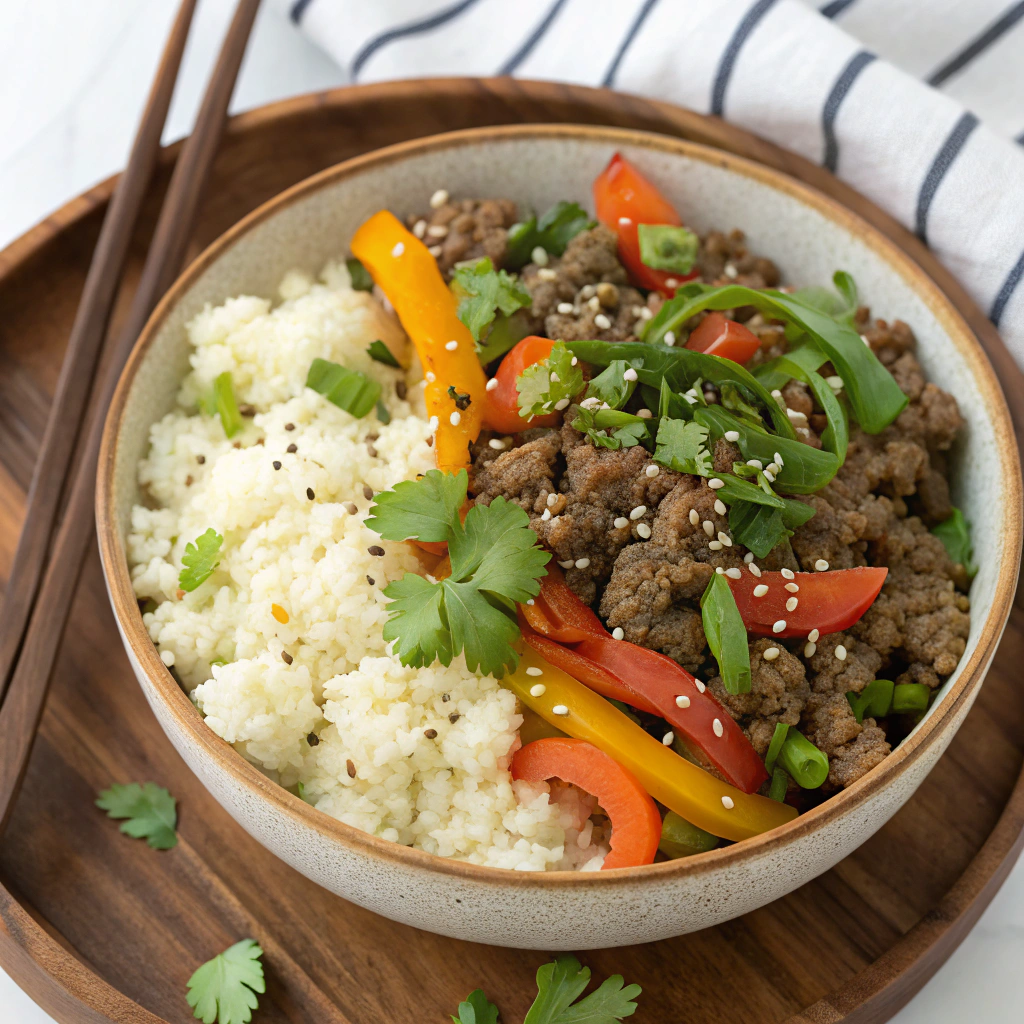
This bowl layers aromatic ground beef, tender-crisp vegetables, and fluffy cauliflower rice under a glossy, garlicky-soy glaze. The result is a craveable, balanced meal with color, texture, and plenty of flavor.
For the beef and sauce:
- 1 lb (450 g) 90% lean ground beef
- 1 tablespoon neutral oil (avocado, canola, or grapeseed)
- 4 cloves garlic, finely minced
- 1 tablespoon fresh ginger, grated or minced
- 3 scallions, thinly sliced (whites and greens separated)
- 1/4 cup low-sodium soy sauce or tamari (gluten-free)
- 1 tablespoon toasted sesame oil
- 1 tablespoon rice vinegar
- 1 tablespoon brown sugar or honey (adjust to taste)
- 1 tablespoon gochujang or 2 teaspoons sriracha (mild to medium heat)
- 1 teaspoon fish sauce (optional, big umami payoff)
- 1/2 teaspoon black pepper
- 1 teaspoon cornstarch (optional, for a lightly glossy finish)
- Red pepper flakes to taste (optional)
For the cauliflower rice and vegetables:
- 4 cups riced cauliflower (fresh or frozen; about 16 oz/450 g)
- 1 cup shredded carrots
- 1 small red bell pepper, thinly sliced
- 1/2 cup snap peas or thinly sliced cabbage (optional)
- 1 tablespoon neutral oil (if sautéing cauliflower rice separately)
- Pinch of salt (if needed)
Toppings and finishing:
- 1 tablespoon toasted sesame seeds
- Lime wedges
- Extra scallion greens
- Fresh cilantro or basil (optional)
- Fried or jammy eggs (optional but amazing)
- Quick pickled cucumbers or kimchi (optional)
Substitution ideas:
- Protein swap: Ground turkey or chicken works; for plant-based, use crumbled extra-firm tofu or a meatless ground.
- Heat level: Dial gochujang down for mild, or add chili crisp for extra spice.
- Sweetness: Replace brown sugar with maple syrup, coconut sugar, or a no-sugar sweetener like allulose/monk fruit.
- Gluten-free: Use tamari or coconut aminos and confirm your gochujang or chili paste is gluten-free.
- Low-sodium: Start with 2 tablespoons soy sauce and adjust at the end.
Timing
This recipe was designed to be weeknight-fast without sacrificing depth of flavor.
- Prep time: 10 minutes (measure sauce, mince aromatics, slice veggies)
- Cook time: 12–15 minutes
- Total time: 22–25 minutes
Context: That’s roughly 20–30% quicker than many 30–35 minute stir-fry bowls, especially if you start with pre-riced cauliflower and a microplane for garlic/ginger. For meal-prep, you can shave off another 5 minutes by mixing the sauce a day ahead.
Step-by-Step Instructions
Step 1: Whisk the sauce
In a small bowl, whisk soy sauce/tamari, sesame oil, rice vinegar, brown sugar, gochujang, fish sauce (if using), black pepper, and cornstarch. Taste and calibrate: more sweetness for balance, more vinegar for brightness, or a splash of water if you prefer a lighter glaze.
Pro tip: Dissolving cornstarch in the sauce prevents clumping and yields a shiny, clingy finish.
Step 2: Get the pan hot
Heat a large skillet over medium-high until it’s hot enough that a drop of water sizzles on contact. Add 1 tablespoon neutral oil and swirl to coat. Hot pan = better browning.
Pro tip: A 12-inch skillet or wok is ideal. Crowding a smaller pan traps steam and turns beef gray instead of browned.
Step 3: Brown the beef
Add ground beef in an even layer. Let it sear undisturbed for 2–3 minutes to build a browned crust, then break it into small crumbles. Continue cooking until most of the pink is gone.
Pro tip: Season with a pinch of salt only if needed; soy sauce will bring saltiness later. Push the beef to one side of the pan to make room for aromatics.
Step 4: Bloom garlic and ginger
Reduce heat to medium. In the open space of the skillet, add garlic, ginger, and scallion whites. Stir for 30–45 seconds until fragrant. Fold into the beef.
Pro tip: Aromatics burn fast. If your pan runs hot, splash in a teaspoon of the sauce to deglaze and cool the surface.
Step 5: Sauce and glaze
Give the sauce a quick stir and pour it over the beef. Toss to coat and simmer 1–2 minutes until slightly thickened and glossy. If it tightens too much, add 1–2 tablespoons water to loosen.
Pro tip: The sauce should cling to beef without pooling. If it pools, let it reduce another minute; if it thickens too quickly, lower the heat.
Step 6: Cook the cauliflower rice
Option A (same pan, fastest): Transfer the glazed beef to a bowl. Add 1 tablespoon oil to the same skillet, then cauliflower rice, carrots, peppers, and snap peas/cabbage. Stir-fry 3–5 minutes until tender-crisp. Season lightly with salt.
Option B (steam-sauté, fluffiest): Add cauliflower rice to a second skillet with a splash of water. Cover 2 minutes to steam, then uncover and sauté 2–3 minutes to evaporate moisture. Stir in veggies for the last 1–2 minutes.
Pro tip: Cauliflower rice should be tender with a bit of bite—avoid overcooking, which leads to mush and wateriness.
Step 7: Combine and finish
Return the beef to the pan with the cauliflower rice, toss gently, and warm through for 1 minute. Finish with scallion greens and sesame seeds. Taste and adjust salt, heat, or acidity with a squeeze of lime.
Pro tip: For extra richness, top each bowl with a fried or jammy egg—the runny yolk creates an instant “sauce.”
Nutritional Information
These estimates are for 4 servings and will vary based on brands and optional ingredients. Calculated using typical USDA averages for 90% lean beef, cauliflower, and listed amounts:
Per serving (approximate):
- Calories: 320–360
- Protein: 25–28 g
- Carbohydrates: 14–18 g
- Fiber: 4–6 g
- Total fat: 16–19 g
- Saturated fat: 5–6 g
- Sodium: 650–800 mg
- Sugars: 5–8 g
Insight: Compared to similar rice bowl recipes, using cauliflower rice reduces total carbs by about 60–70% and increases vegetable volume, which can improve satiety. Choosing 93–96% lean beef trims 40–60 calories per serving.
Healthier Alternatives for the Recipe
Build-it-your-way: Here are smart swaps to tailor the Asian Ground Beef & Cauliflower Rice Bowl to your goals without sacrificing flavor.
- Leaner protein: Use 93–96% lean beef or ground turkey/chicken. Tip: Add 1–2 teaspoons extra sesame oil at the end for flavor if you miss the richness.
- Lower sodium: Start with 2 tablespoons low-sodium soy/tamari; add more only after tasting. Swap fish sauce for an extra pinch of umami powder or a splash of mushroom broth.
- No added sugar: Replace brown sugar with allulose or monk fruit. If the sauce tastes flat, add a little more vinegar and a squeeze of lime for brightness.
- More fiber and micronutrients: Fold in extra crucifers (shredded cabbage, broccoli rice) or leafy greens (spinach, kale). Aim for 2 cups veg per serving.
- Paleo-friendly: Use coconut aminos for soy sauce, omit cornstarch, and sweeten with a paleo-compliant option like honey or dates.
- Keto-friendly: Keep gochujang modest, use a zero-calorie sweetener, and add an egg or avocado for more fat.
- Plant-based: Replace beef with crumbled extra-firm tofu or plant-based ground and use vegan fish sauce alternative or omit it.
Serving Suggestions
The right toppings transform a good bowl into a signature dish. Try these:
- Classic and cozy: Beef, cauliflower rice, scallions, sesame seeds, and a jammy egg.
- Fresh and crunchy: Quick pickled cucumbers, shredded cabbage, cilantro, and lime.
- Heat lovers’ dream: Chili crisp, sliced fresh chiles, and a drizzle of sriracha-mayo.
- Seoul-inspired: Add kimchi, roasted seaweed strips, and a sprinkle of furikake.
- Family-style bar: Set out bowls of toppings—sesame seeds, scallions, cucumbers, kimchi, eggs—so everyone customizes their own.
- Make it a meal: Pair with miso soup or a simple sesame-cucumber salad.
If you enjoy bold, sweet-savory profiles, you’ll also love our easy ground beef bulgogi for another weeknight win.
Common Mistakes to Avoid
Keep your Asian Ground Beef & Cauliflower Rice Bowl stellar every time by dodging these pitfalls:
- Overcrowding the pan: Crowding leads to steaming instead of browning. Use a large skillet or cook in two batches.
- Gray, soggy beef: Start with a hot pan and don’t stir for the first 2–3 minutes. Maillard browning equals flavor.
- Mushy cauliflower rice: Cook over medium-high heat and stop when just tender. If using frozen, steam off excess moisture by sautéing uncovered.
- Overseasoning: Soy sauce and gochujang bring salt. Taste first, then adjust salt at the end.
- Burned aromatics: Add garlic and ginger after beef is mostly browned and stir just until fragrant.
- Too much sauce: You want a clingy glaze, not a soup. Thicken with a touch more heat or a dash more cornstarch slurry if needed.
- Bland final bowl: Finish with acid (lime), freshness (scallions/herbs), and texture (sesame seeds), which makes each bite pop.
Storing Tips for the Recipe
Make it once, enjoy it twice (or more). This bowl is meal-prep friendly.
- Refrigeration: Store in airtight containers for up to 4 days. Keep toppings (scallions, cucumbers, herbs) separate to preserve crunch.
- Reheating: Microwave in 60–90 second bursts, stirring between, or rewarm in a skillet over medium heat with a splash of water to rehydrate. Add fresh lime and scallions before serving.
- Freezing: Freeze beef and sauce together up to 2 months. Freeze cauliflower rice separately for the best texture. Thaw overnight in the fridge.
- Batch prep: Double everything and cook beef in two quick batches for ideal browning. Portion into 4–6 meal-prep bowls with toppings to add day-of.
Conclusion
This Asian Ground Beef & Cauliflower Rice Bowl delivers everything we crave in a weeknight dinner: speed, balance, and bold flavor. You get tender, caramelized beef, bright aromatics, and a deeply savory glaze over a bed of light, fluffy cauliflower rice—plus endless topping options to make it your own. If you’re after a low-carb rice bowl that tastes like takeout and cooks in less time than delivery, you’ve found your go-to.
Now it’s your turn: Make the recipe, customize your toppings, and share how you personalize your bowl. Love a spicier kick? Prefer extra veggies? Drop your tweaks in the comments and rate the recipe so other readers can benefit from your tips. Craving more weeknight-friendly flavors? Explore our similar skillet bowls and meal-prep favorites next.
FAQs
Can I use frozen cauliflower rice?
Yes. Don’t thaw first. Add straight to a hot pan, cook uncovered to evaporate moisture, and stop when just tender. If it’s watery, cook 1–2 more minutes to steam off liquid.
What can I substitute for gochujang?
Use sriracha or chili-garlic sauce. For mild heat, try a pinch of red pepper flakes. If skipping heat entirely, add an extra 1/2 teaspoon brown sugar and an extra 1 teaspoon vinegar to balance flavor.
How do I make this gluten-free?
Use tamari instead of soy sauce and check your gochujang brand for gluten-free labeling. If in doubt, swap with sriracha or a gluten-free chili paste.
Is this recipe good for meal prep?
Absolutely. It stores well for 4 days. Keep garnishes separate and add fresh lime/scallions after reheating for the best flavor.
How can I lower the sodium?
Start with 2 tablespoons low-sodium soy/tamari, add water to the sauce if needed, and skip fish sauce. Taste and finish with lime juice for brightness instead of more salt.
What if I don’t like cauliflower rice?
Use half cauliflower rice and half cooked jasmine or brown rice for a “lighter” bowl that still keeps carbs moderate. Or serve the beef over full rice and with a side salad.
Can I make this dairy-free and paleo?
It’s already dairy-free. For paleo, use coconut aminos, honey or date syrup, and omit cornstarch (reduce the sauce a minute longer to thicken naturally).
How do I keep the beef extra juicy?
Don’t overcook—pull it as soon as it loses pink color. If using very lean beef or poultry, stir in 1–2 teaspoons sesame oil at the end to add richness without heavy calories.
What vegetables work best?
Carrots, bell peppers, cabbage, snap peas, mushrooms, and zucchini all shine. Aim for varied colors and textures. Harder veggies (carrots) benefit from thin slicing; watery veg (zucchini) should be cooked hot and fast.
Can I double the recipe?
Yes, but brown the beef in two batches for proper sear. Combine everything at the end and taste to adjust seasoning. If the pan gets crowded, the beef will steam and lose flavor.
Related Inspiration
For another fast, sweet-savory, skillet-style dish, check out this take on a similar bowl from around the web: Asian beef and cauliflower rice bowls for contrast and ideas you can borrow or blend into your version.
Chef’s Notes and Personalization Tips
- Sauce memory tip: salty, sweet, sour, heat, and umami. If a taste feels “missing,” check which of the five you need to bump.
- Texture matters: Balance tender beef, crisp-tender veg, and fluffy cauliflower rice. A sprinkle of sesame seeds on top adds a crucial crunch.
- Pantry rescue: If you’re out of rice vinegar, use apple cider vinegar and an extra pinch of sugar. No sesame oil? Add a tiny splash of toasted sesame seeds to mimic aroma.
- Family-friendly version: Keep the base mild and serve chili oil or sriracha on the side. Kids often enjoy the beef with carrots and bell peppers.
Make this your signature Asian Ground Beef & Cauliflower Rice Bowl—fast, flexible, and endlessly customizable for the way you love to eat.