
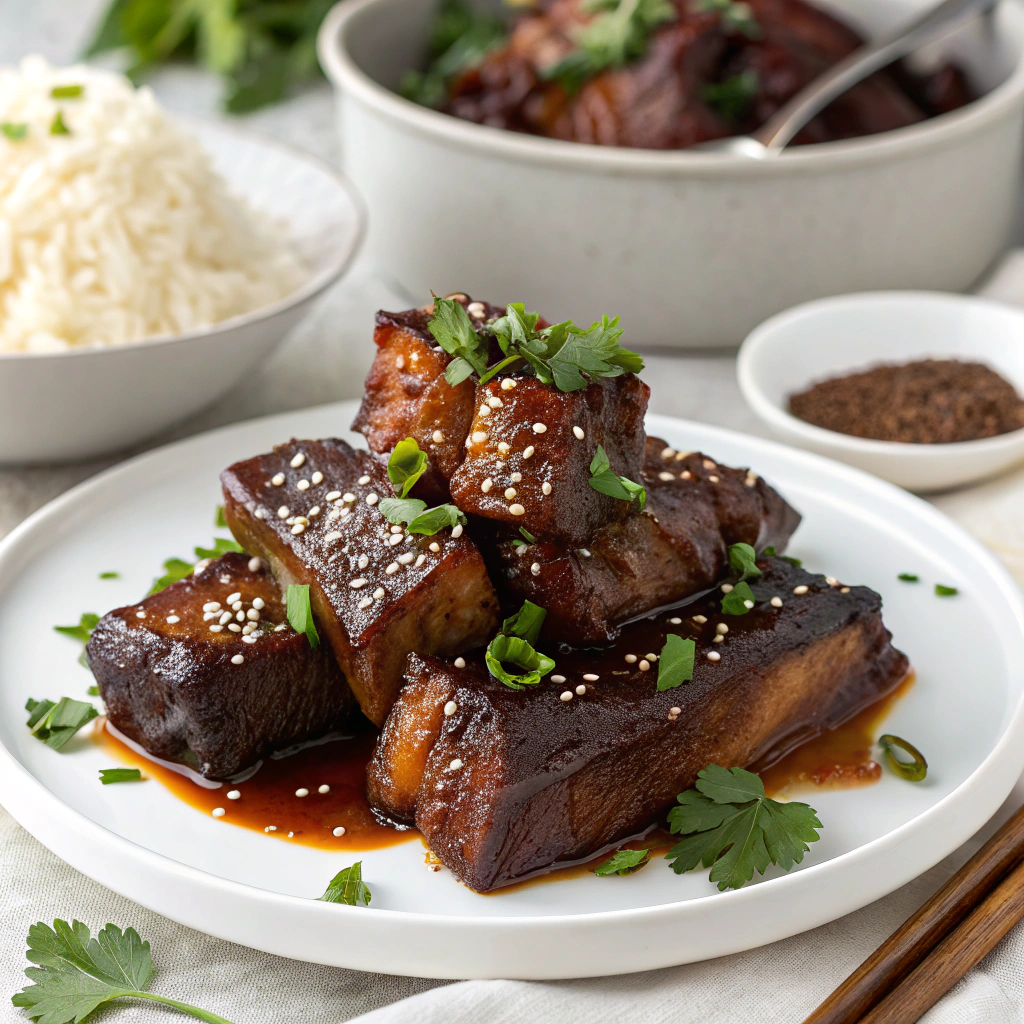
Caramelized Slow-Roast Asian Beef Short Ribs – Bold & Flavorful
Introduction
Can slow-roasted short ribs be sticky-sweet, deeply savory, and restaurant-level without an overnight marinade or special equipment? Absolutely. These Caramelized Slow Roast Asian Beef Short Ribs bring lacquered edges, fork-tender meat, and a glossy, umami-forward glaze to your table with a method that’s equal parts simple and impressive. In under four hours, you’ll coax out layers of soy, ginger, garlic, and five-spice, with gentle heat doing most of the work. The result is a show-stopping centerpiece you can make on a busy weekend and repurpose into luxurious leftovers all week.
Ingredients
Serves 6
Beef and aromatics
- 4–4.5 lb beef short ribs (English cut, bone-in preferred for richer flavor and presentation)
- 1 large yellow onion, thickly sliced
- 6 cloves garlic, smashed
- 2-inch piece fresh ginger, sliced
- 1–2 stalks lemongrass, lightly bruised (optional but adds citrusy lift)
- 2 scallions, cut into 2-inch lengths (plus extra thinly sliced for garnish)
- 1 star anise pod
- 1 cinnamon stick
- 1 tsp Chinese five-spice powder
Glaze and braising liquid
- 1/3 cup dark soy sauce (or use all-purpose soy; add 1 tsp molasses for color if needed)
- 1/3 cup light soy sauce (or tamari for gluten-free)
- 1/3 cup rice vinegar (or use apple cider vinegar for a brighter, fruitier edge)
- 1/2 cup dark brown sugar, packed (sub: coconut sugar for a lighter caramel note; or 1/3 cup honey + 1 tbsp brown sugar)
- 3 tbsp hoisin sauce
- 2 tbsp gochujang or chili paste (adjust to heat preference; swap with sriracha for milder heat)
- 2 tbsp toasted sesame oil
- 1 cup beef stock (low-sodium recommended)
- 1/2 cup water
To finish
- 1–2 tbsp honey (optional, to amplify the glossy finish)
- 1 tbsp rice vinegar (to brighten at the end)
- 1 tsp cornstarch mixed with 2 tsp cold water (only if you prefer a thicker glaze)
- Toasted sesame seeds, chopped cilantro, and lime wedges for serving
Substitution notes
- Boneless short ribs: Work well; reduce total cook time by ~20–30 minutes and check doneness earlier.
- Beef chuck roast (3.5–4 lb): A budget-friendly swap; slice into large 3-inch chunks for similar texture.
- Low-sugar version: Reduce brown sugar to 1/3 cup and skip the honey finish. The glaze will still caramelize.
- Aromatics: If lemongrass isn’t available, add the zest of 1 lime to the glaze at the end to mimic its citrusy lift.
Timing
- Prep time: 20 minutes (trim ribs, measure ingredients, preheat)
- Active stovetop sear: 15 minutes
- Oven slow-roast: 2 hours 45 minutes to 3 hours 15 minutes, depending on rib thickness and bone-in vs boneless
- Glaze reduction and finish: 10–15 minutes
- Total time: About 3 hours 45 minutes
Data context: Many slow-roast short rib recipes run 4–5 hours. This streamlined method targets about 3 hours 45 minutes total—roughly 20% less than average—by using a high-impact glaze and steady, moderate heat for efficient collagen breakdown without drying.
Step-by-Step Instructions
Step 1 – Preheat and position your oven rack
Preheat oven to 325°F (163°C). Move a rack to the lower third so your Dutch oven sits centered for even heat circulation. This lower, even heat is key for converting collagen to silky gelatin while preventing the sugary glaze from scorching.
Step 2 – Pat dry and season generously
Pat ribs dry with paper towels. Season all sides with kosher salt and freshly cracked black pepper. Dry surfaces sear better: moisture on the surface leads to steaming instead of browning, slowing down caramelization.
Step 3 – Build the base aromatics
In a heavy Dutch oven, add 1 tbsp neutral oil over medium-high heat. When shimmering, sear ribs in batches, 2–3 minutes per side, until mahogany brown with fond (those browned bits) forming on the pot. Don’t crowd; overcrowding lowers the temperature and prevents browning. Remove ribs to a tray.
Step 4 – Sauté aromatics into the fond
Lower heat to medium. Add onion, garlic, and ginger; sauté 2–3 minutes until fragrant and lightly browned, scraping up fond with a wooden spoon. Add lemongrass, scallions, star anise, cinnamon stick, and five-spice. Toast the spices for 30 seconds to bloom their oils.
Step 5 – Whisk the umami-glaze
In a bowl, whisk dark soy, light soy, rice vinegar, brown sugar, hoisin, gochujang, and sesame oil. Add beef stock and water; whisk to combine. Taste: it should be savory, slightly sweet, with a tangy backbone. Adjust heat with more gochujang or balance sweetness with a splash more vinegar.
Step 6 – Return ribs and add liquid
Nestle ribs back into the pot, meaty side down at first to absorb flavor. Pour glaze mixture over. Liquids should come 1/2 to 2/3 up the sides of the ribs—not fully submerged. This ratio encourages braising below the liquid and caramelization above.
Step 7 – Slow-roast, covered, then uncovered for color
Cover and transfer to the oven. Braise for 2 hours, checking midway to ensure a gentle simmer. After 2 hours, uncover and flip ribs so meaty sides face up. Return to oven uncovered for 45–75 minutes, basting every 20 minutes. The uncovered phase evaporates moisture and concentrates sugars for that lacquered finish.
Step 8 – Test for tenderness like a pro
Ribs are done when a skewer slides in with little resistance and meat pulls back from the bone by about 1/2–3/4 inch. Internal temp can be 200–205°F (93–96°C), but tenderness is the gold standard. If not quite yielding, give them another 15–20 minutes and recheck.
Step 9 – Reduce the glaze to glossy perfection
Transfer ribs to a platter and tent with foil. Skim excess fat from the pot. Place pot over medium heat and simmer the braising liquid 5–10 minutes until syrupy and glossy, stirring. For a thicker sauce, whisk in the cornstarch slurry and simmer 1–2 minutes. Balance at the end with 1 tbsp honey for shine and 1 tbsp rice vinegar for brightness.
Step 10 – Glaze and garnish
Brush reduced glaze over ribs, letting it cling to nooks and caramelized edges. Sprinkle with sesame seeds, sliced scallions, and cilantro. Serve with lime wedges for a citrus pop to cut the richness.
Why these Caramelized Slow Roast Asian Beef Short Ribs work
- Layered umami: Two soy sauces plus hoisin and gochujang create depth without needing a long marinade.
- Balanced sweet-acid: Dark brown sugar caramelizes while rice vinegar keeps flavors lively, preventing cloying sweetness.
- Covered-then-uncovered braise: Ensures tenderness first, then delivers the shiny, sticky finish you crave.
- Spice architecture: Five-spice, star anise, and cinnamon provide warmth that reads “Asian-inspired” without overpowering the beef.
Nutritional Information
Approximate per-serving values (6 servings):
- Calories: 630–690
- Protein: 42–47 g
- Total fat: 38–44 g
- Saturated fat: 14–17 g
- Carbohydrates: 20–24 g
- Total sugars: 15–18 g
- Fiber: ~1 g
- Sodium: 950–1,150 mg (varies with soy brand)
Notes: - Removing the fat cap from chilled leftovers can reduce fat per serving by 5–8 g.
- Using low-sodium soy and stock can lower sodium by 20–30%.
Healthier Alternatives for the Recipe
- Leaner cut strategy: Swap half the short ribs with 2 lb beef shank or well-marbled chuck. You’ll retain richness while cutting saturated fat per serving.
- Lower sugar glaze: Reduce brown sugar to 1/3 cup and skip the honey finish. Or use date syrup (1/4 cup) plus 1 tbsp brown sugar for a more complex, less refined sweetness.
- Gluten-free: Use tamari or certified gluten-free soy, and ensure hoisin is GF or swap with 1 tbsp miso + 1 tsp maple syrup for similar depth.
- Lower sodium: Use low-sodium soy and stock; finish with a squeeze of lime and extra ginger instead of more soy.
- Dairy-free and egg-free: This dish is naturally both; just double-check condiment labels.
- Spice calibration: For family-friendly heat, cut gochujang to 1 tbsp and add 1 tsp smoked paprika for aroma without the burn.
- Veg-forward pairing: Serve with a mountain of garlicky sautéed greens or a crunchy sesame slaw to balance richness without sacrificing flavor.
Serving Suggestions
- Rice bowl elegance: Spoon over jasmine rice with quick-pickled cucumbers (rice vinegar, a pinch of sugar, and salt), fresh herbs, and a drizzle of extra glaze.
- Lettuce wrap party: Pile rib meat into butter lettuce leaves with shredded carrot, daikon, and a squeeze of lime. Add crushed roasted peanuts for texture.
- Noodle night: Toss with chewy udon or rice noodles; add blanched bok choy and shiitakes. Finish with chili crisp for heat lovers.
- Bao or slider bar: Shred meat into steamed bao or brioche sliders with kimchi, scallions, and mayo whisked with a little gochujang.
- Contrasting sides: Serve alongside coconut rice, roasted sesame sweet potatoes, or a crisp miso-sesame cabbage salad.
- Make it a feast: For a cozy two-course dinner, follow with a comforting pasta like our savory, kid-friendly bowtie pasta with ground beef to keep the family gathered at the table.
Common Mistakes to Avoid
- Skipping the sear: Browning builds flavor that carries through the entire braise. Without it, your sauce can taste flat.
- Overcrowding the pot: Sear in batches. If the pan is crammed, meat steams and never develops that caramelized crust.
- Fully submerging ribs: Keep liquid at 1/2 to 2/3 up the ribs. Full submersion dilutes caramelization and slows the glaze effect.
- Opening the oven too often: Baste every 20 minutes during the uncovered phase—no more. Constant peeking drops the temperature and extends cooking time.
- Neglecting to skim fat: A quick skim before reducing the glaze yields a cleaner, shinier finish and better texture on the palate.
- Over-thickening the sauce: Add cornstarch only if needed; a natural reduction produces the best sheen and cling.
- Rushing tenderness: Even with great searing, collagen needs time. If a skewer meets resistance, give it more oven time.
Storing Tips for the Recipe
- Refrigeration: Cool completely and store ribs with their liquid in an airtight container for up to 4 days. For best flavor, chill overnight—flavors meld and the fat solidifies for easy removal.
- Freezing: Freeze in portions with sauce for up to 3 months. Thaw overnight in the fridge for even reheating.
- Reheating: Reheat gently on the stovetop over low heat, adding a splash of stock or water to loosen the glaze. Or cover and warm in a 300°F (150°C) oven for 20–25 minutes.
- Make-ahead advantage: Cook a day before. On Day 2, remove fat cap, reheat, and reduce glaze to a glossy finish right before serving; the flavor is even better.
- Meal prep ideas: Shred leftover meat and portion into rice bowls, lettuce wraps, or noodle salads for easy weeknight lunches.
Conclusion
Big flavor doesn’t have to mean big effort. These Caramelized Slow Roast Asian Beef Short Ribs deliver sticky, lacquered edges, tender pull-apart meat, and a sauce that begs to be spooned over everything—from rice to noodles to steamed greens. You’ll crisp where it counts, braise to tenderness, and finish with a bright, glossy glaze that tastes like hours more work than it was.
If you make this, drop your tweaks in the comments—did you go spicy, extra gingery, or swap in tamari? Share a photo, rate the recipe, and tell others how you served it. Craving more cozy comfort? Explore our other weeknight-friendly mains and sides to round out your table.
FAQs
Can I make these in a slow cooker?
Yes. Sear ribs and aromatics as written, then transfer to a slow cooker with the liquids. Cook on Low for 7–8 hours or High for 4–5 hours. Transfer liquid to a saucepan and reduce to a glaze on the stove before finishing the ribs under the broiler for 2–3 minutes to caramelize.
What about the Instant Pot?
Sear on Sauté, then pressure cook on High for 45–50 minutes with natural release for 15 minutes. Reduce the cooking liquid on Sauté until syrupy and finish under the broiler for caramelization.
Do I need both dark and light soy?
It’s ideal for color and depth. If you have only one, use it and add 1 tsp molasses to approximate the color and savoriness of dark soy. Tamari works well for gluten-free.
Will boneless short ribs change the timing?
Slightly. Start checking around 2 hours 15 minutes during the oven phase; they often hit tenderness earlier than bone-in. Expect a bit less beefy intensity without the bones, but still excellent texture.
My sauce tastes too salty—what now?
Balance with 1–2 tsp brown sugar and 1–2 tbsp water, then simmer. A squeeze of lime or splash of rice vinegar also helps restore balance.
How do I keep the glaze from burning?
Keep oven at 325°F (163°C), baste during the uncovered phase, and let the sauce reduce on the stovetop instead of in a too-hot oven. If using honey, add it near the end of stovetop reduction.
Can I make it ahead for guests?
Absolutely. Make the day before, chill, remove fat cap, and reheat gently. Reduce the glaze right before serving and brush over the ribs to bring back the shine.
What sides pair best?
Neutral starches (jasmine rice, coconut rice, or rice noodles) and crisp, fresh elements (cucumber salad, sesame slaw, steamed bok choy). The fresh crunch balances the rich, sticky beef.
What if I don’t have gochujang?
Use 1–2 tsp chili-garlic sauce or sriracha. For no-heat households, replace with 1 tsp miso plus 1/2 tsp smoked paprika for savory depth without spiciness.
How do I scale the recipe?
For 8–10 servings, multiply everything by 1.5 and use a larger Dutch oven or two pans. Add 15–25 minutes to the uncovered phase, rotating pans midway. Liquids should still be 1/2 to 2/3 up the ribs.
Chef’s Notes and Extra Inspiration
- Flavor boosters: A splash of Shaoxing wine or dry sherry (2 tbsp) adds aromatic depth; add with the braising liquid.
- Texture tip: After glazing, a quick 2–3 minutes under the broiler can add extra charred edges—just keep an eye on it.
- Cross-referencing technique: If you want to compare caramelization methods and glaze ratios, this approach pairs well with techniques you’ll find in resources like this caramelized short rib inspiration, while remaining distinct in spices and finish.
Enjoy the bold, balanced magic of these Caramelized Slow Roast Asian Beef Short Ribs—proof that low, slow, and a little science make the most impressive dinners feel effortless.