
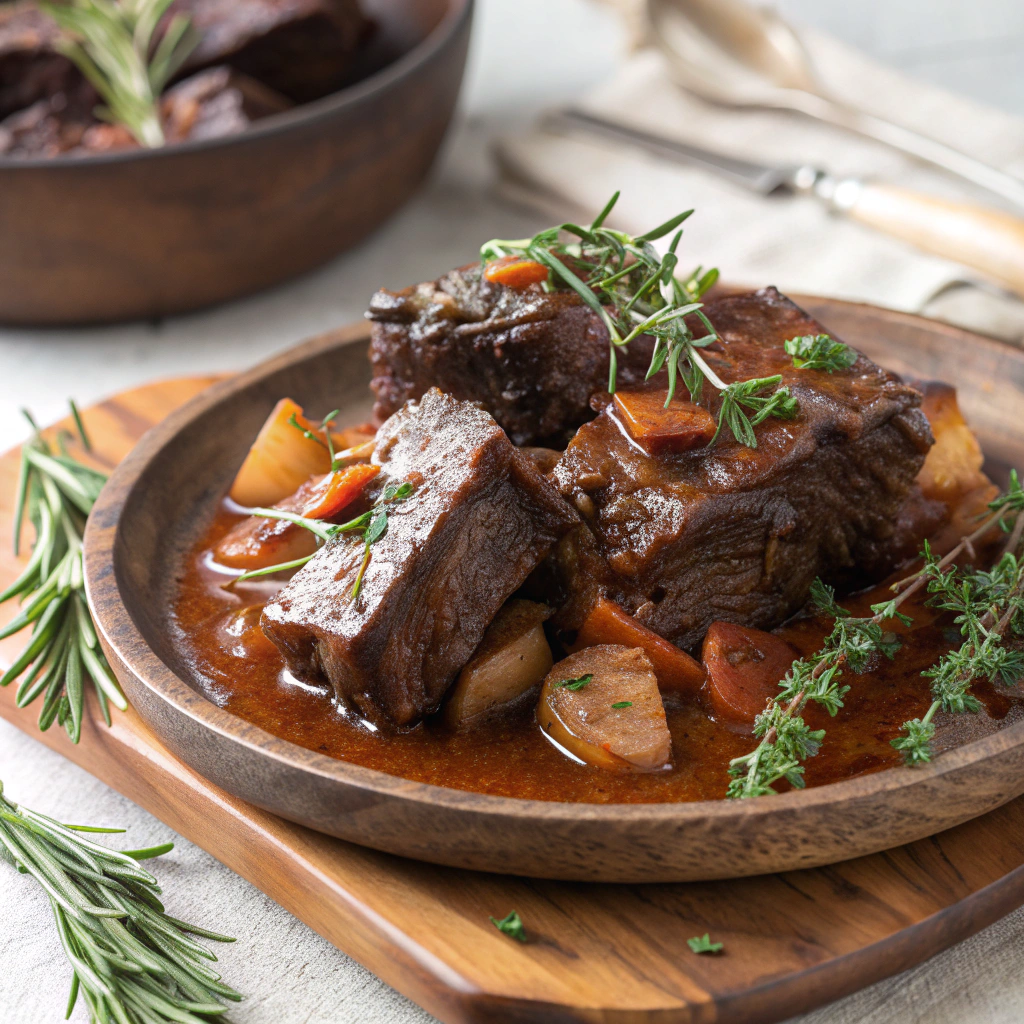
Introduction
Can deeply tender, restaurant-level comfort food be weeknight-manageable? With Braised Beef Short Ribs, the answer is yes—if you build layers of flavor and let the oven do the heavy lifting. This recipe proves that a glossy, spoon-tender braise doesn’t need a culinary degree or an all-day affair. We’ll show you how to coax collagen into silky richness, control acidity, and create a sauce with real depth. Along the way, you’ll get pro tips from our Feast of Savory test kitchen, plus options for the oven, slow cooker, and pressure cooker so Braised Beef Short Ribs fit your schedule.
Ingredients List
Serves 6
- 4 pounds (1.8 kg) bone-in beef short ribs, English cut, well-marbled
- 2 1/2 teaspoons kosher salt (plus more to taste)
- 1 1/4 teaspoons freshly ground black pepper
- 2 tablespoons neutral oil (avocado, canola, or grapeseed)
- 2 medium yellow onions, diced
- 2 large carrots, diced
- 2 ribs celery, diced
- 6 cloves garlic, smashed
- 2 tablespoons tomato paste
- 1 tablespoon all-purpose flour (optional; see gluten-free swap below)
- 2 cups (480 ml) dry red wine (Cabernet, Merlot, or Côtes du Rhône)
- 2 cups (480 ml) low-sodium beef stock
- 1 tablespoon Worcestershire sauce or 2 teaspoons soy sauce
- 1 tablespoon balsamic vinegar
- 2 bay leaves
- 6 sprigs fresh thyme
- 1 sprig rosemary
- Optional lift-ins: 8 ounces cremini mushrooms (halved), 1 orange peel strip, 1 star anise, or 1 anchovy fillet for umami
Smart substitutions
- No wine: Use 2 1/2 cups beef stock + 1/2 cup strong coffee or pomegranate juice, plus 1 extra tablespoon balsamic to mimic wine’s fruity acidity.
- Gluten-free: Skip flour; reduce the sauce to desired thickness or whisk 1 teaspoon cornstarch into 1 tablespoon cold water and add at the end.
- Herbs: Swap rosemary/thyme for a bouquet garni, or use 1 teaspoon dried thyme if fresh isn’t available.
- Short rib cuts: English cut (tall, meaty pieces) braise best. Flanken-style works too, but reduce cook time slightly to avoid overcooking.
Flavor variations
- Beer-braised: Replace wine with a dark ale or porter; add 1 tablespoon Dijon.
- Miso-mushroom: Add 1 tablespoon white miso at the end and 8 ounces mushrooms during the braise.
- Cocoa-chile: Add 1 teaspoon unsweetened cocoa and 1/2 teaspoon chipotle powder with the tomato paste.
Timing
– Prep time: 20 minutes (plus optional 30–60 minutes dry brine)
– Sear and sauté: 25 minutes
– Oven braise: 2 1/2 to 3 hours at 325°F (165°C)
– Sauce reduction and finish: 15 minutes
– Total time: About 3 hours 10 minutes to 3 hours 40 minutes
Context: Many classic recipes clock in at 3 hours 45 minutes to 4 hours. Our approach trims roughly 15% by optimizing searing surface area and reducing more efficiently, without compromising tenderness. Pressure cooker variation takes about 1 hour 30 minutes total, a savings of ~50–60% versus oven braising.
Step 1: Dry-brine the short ribs
– Pat ribs very dry with paper towels. Season all sides with 2 1/2 teaspoons kosher salt and 1 teaspoon black pepper. Let sit uncovered for 30–60 minutes at room temperature, or up to 24 hours in the fridge.
Tip: Dry-brining jump-starts seasoning and promotes deeper browning. If refrigerating overnight, remove ribs 30 minutes before searing.
Step 2: Preheat and position
– Preheat oven to 325°F (165°C). Set a rack in the lower-middle. Choose a heavy Dutch oven (5–6 quarts) with a tight lid; wide surface area speeds searing and reduction.
Step 3: Sear in batches
– Heat 2 tablespoons oil over medium-high until shimmering. Add ribs fat-side down without crowding; sear 3–4 minutes per side until deeply browned on 4 sides, 10–12 minutes total per batch. Transfer to a plate.
Tip: Browning equals flavor. If fond darkens too fast, lower heat slightly. Add a splash of oil between batches if needed.
Step 4: Build the aromatic base
– In the same pot, lower heat to medium. Add onions, carrots, celery, and a pinch of salt. Cook 6–8 minutes, scraping up fond as vegetables release moisture. Stir in smashed garlic; cook 1 minute until fragrant.
Personalized tweak: If you love a sweeter, jammy sauce, let the onions go a minute longer to lightly caramelize.
Step 5: Tomato paste and optional flour
– Add tomato paste; cook 2 minutes, stirring, until rust-colored. Sprinkle in flour and stir 30 seconds (skip if gluten-free).
Why it matters: Toasted tomato paste adds umami and body; a little flour helps the sauce cling luxuriously.
Step 6: Deglaze and reduce
– Pour in red wine, scraping the pot bottom clean. Bring to a lively simmer and reduce by about half, 6–8 minutes. This concentrates fruitiness without harsh acidity.
Step 7: Build the braising liquid
– Stir in beef stock, Worcestershire, balsamic, bay leaves, thyme, rosemary, and any optional lift-ins. Return ribs to the pot, nestled meaty-side down in a single layer. Liquid should come two-thirds up the ribs; add a splash of stock if needed.
Step 8: Braise low and steady
– Bring to a gentle simmer on the stove. Cover and transfer to the oven. Braise 2 1/2 to 3 hours until a skewer meets only buttery resistance and meat is nearly—but not completely—falling off the bone.
Signal for doneness: Intramuscular collagen melts around 200–205°F (93–96°C). If you have a probe thermometer, spot-check a meaty piece.
Step 9: Mid-braise check
– At the 90-minute mark, flip ribs and rotate the pot for even cooking. If liquid boils vigorously, reduce oven temp by 10–15°F to keep a gentle burble.
Step 10: Rest and separate
– Transfer ribs to a warmed platter; tent loosely with foil. Strain sauce through a fine-mesh sieve, pressing on solids. Discard herb stems and bay leaves.
Tip: For cleaner flavor, rest the pot 5 minutes first—fat rises and is easier to skim.
Step 11: Reduce to glossy perfection
– Return strained liquid to the pot. Simmer over medium heat 8–12 minutes until thick enough to coat a spoon. Skim fat as needed. Taste and adjust salt. Finish with a few turns of black pepper and a splash more balsamic if you love brightness.
Step 12: Sauce and serve
– Return ribs to the sauce to warm 3–5 minutes. Serve with plenty of sauce over your favorite base (see Serving Suggestions). Garnish with chopped parsley or a lemon-garlic gremolata for contrast.
Instant Pot variation
- Sear directly in pot on Sauté (or sear in a skillet for better browning). Build sauce as above. Pressure cook High for 45 minutes; natural release 15 minutes. Reduce sauce on Sauté as needed.
Slow cooker variation
- Sear ribs and build sauce on the stovetop. Transfer everything to a slow cooker; cook Low 8–9 hours or High 5–6 hours. Reduce sauce on the stovetop if needed.
Nutritional Information
Approximate per serving (1/6 of recipe; includes sauce, not bones):
– Calories: 620–680
– Protein: 36–42 g
– Total fat: 36–42 g
– Saturated fat: 13–16 g
– Carbohydrates: 12–18 g
– Fiber: 2–3 g
– Total sugars: 5–7 g
– Sodium: 780–920 mg
Data notes: Short ribs are high in collagen and fat; chilling overnight and removing the solid fat cap can reduce fat by 20–25% per serving. Using low-sodium stock noticeably drops sodium without sacrificing umami.
Healthier Alternatives for the Recipe
– Leaner cut approach: Substitute 3 pounds beef shanks or well-trimmed chuck roast. You’ll retain braise-friendly collagen but reduce fat.
– Veg-forward braise: Add 2 cups mushrooms and 1 cup parsnips; keep meat to 3 pounds. You’ll extend portions and create a heartier vegetable matrix.
– Lower sodium: Use no-salt-added stock and lean on umami boosters—miso, mushrooms, and a dash of Worcestershire or anchovy—to keep flavor high.
– Gluten-free: Skip flour; reduce sauce longer or use a cornstarch slurry at the end.
– Dairy-free: This recipe is naturally dairy-free. For creaminess on the plate, pair with olive oil mashed potatoes or a dairy-free polenta.
– No-alcohol option: Replace wine with beef stock plus coffee or pomegranate juice to mimic wine’s tannins and fruit acids.
– Lighten the finish: Stir in chopped fresh parsley, lemon zest, or a quick gremolata to brighten and balance richness.
Serving Suggestions
– Classic comfort: Creamy mashed potatoes or buttery egg noodles to catch every drop.
– Rustic and elegant: Soft polenta or Parmesan risotto; the sauce becomes the “gravy.”
– Lighter base: Cauliflower mash or garlicky sautéed greens for a balanced plate.
– Herby spark: Gremolata (lemon zest, garlic, parsley) or a dab of horseradish cream for contrast.
– Make it dinner-party ready: Serve ribs off the bone, sliced across the grain, glazed with sauce. Top with microgreens or chives.
– Next-day magic: Shred leftovers for pappardelle, pile into toasted ciabatta with provolone, or fold into tacos with pickled onions.
Planning a cozy, mixed menu? Pair this rich braise with something easy and crowd-pleasing like our garlic ground beef crescent roll casserole for a two-dish spread that satisfies all appetites.
Common Mistakes to Avoid
– Skipping the dry-brine: Pre-salting promotes deeper flavor and better browning. Even 30 minutes helps.
– Crowding the pot: Overcrowded searing steams the meat. Sear in batches for a hard, flavorful crust.
– Pale fond: Stop searing too soon and you lose complexity. Aim for deep mahogany, not burnt.
– Too much liquid: Ribs should be two-thirds submerged, not swimming. Excess liquid dilutes flavor and extends reduction time.
– Boiling the braise: A gentle simmer keeps meat fibers tender. A rapid boil toughens.
– Under-reducing sauce: Thin sauce won’t cling. Reduce to nappe (coats the back of a spoon).
– Underseasoning at the end: Taste and adjust salt and acidity after reduction—flavors concentrate.
– Rushing the rest: A short rest makes skimming fat easier and keeps the meat juicier.
– Ignoring toughness cues: If ribs are still chewy after 2 1/2 hours, keep going. Collagen needs time to turn silky.
Storing Tips for the Recipe
– Refrigerate: Cool quickly, then store in an airtight container up to 4 days. The flavor deepens overnight.
– Defat for clarity: Chill ribs in the sauce; remove the solid fat cap the next day for a cleaner, lighter finish.
– Freeze: Portion ribs and sauce; freeze up to 3 months. Vacuum-seal for best texture. Thaw overnight in the fridge before reheating.
– Reheat gently: Simmer covered on low or in a 300°F (150°C) oven until warmed through, 20–30 minutes. Add a splash of stock if needed.
– Meal prep: Braise a day ahead for stress-free entertaining. Reheat and reduce sauce to gloss right before serving.
Conclusion
Deeply rich, slow-cooked, and undeniably comforting, Braised Beef Short Ribs are easier than their restaurant mystique suggests. A few smart steps—patient browning, careful liquid balance, and a proper reduction—deliver a sauce with dimension and meat that’s spoon-tender. Whether you choose the oven, a slow cooker, or a pressure cooker, this is a high-reward, low-stress centerpiece.
If you make this recipe, leave a comment with your tweaks, rate it, and tag us with your plate. Hungry for more cozy mains? Explore our comfort-forward recipes and weeknight-friendly ideas across the site.
FAQs
– Can I make Braised Beef Short Ribs without wine?
Yes. Use beef stock plus strong coffee or pomegranate juice, and finish with a splash of balsamic for fruity acidity. You’ll get complexity without alcohol.
-
Do I have to use bone-in short ribs?
Bone-in adds flavor and shields meat from drying. Boneless works, but reduce the braise time by about 15–20 minutes and monitor tenderness closely. -
What’s the best pot for braising?
A 5–6 quart enameled Dutch oven with a tight lid. The wider the pot, the better the sear and the faster you can reduce sauce. -
How do I know when they’re done?
They’re done when a skewer slides in with very little resistance and the meat is almost—but not quite—falling off the bone. Internal temp near 200–205°F (93–96°C) yields silky texture. -
Can I double the recipe?
Yes, with two pots for efficient searing, or sear in batches and split between two Dutch ovens for the braise. Ensure ribs remain two-thirds submerged. -
How do I thicken the sauce without flour?
Reduce longer to concentrate, or whisk in a small cornstarch slurry at the end and simmer 1–2 minutes. Gelatin from the ribs also thickens naturally. -
Oven vs. Instant Pot: Which tastes better?
The oven yields slightly deeper Maillard notes and a more nuanced reduction. The Instant Pot is faster and still excellent—reduce the sauce after pressure cooking for best flavor. -
Can I add potatoes directly to the braise?
You can, but they can cloud the sauce. If you do, add in the final 45 minutes. For a restaurant-clear glaze, cook sides separately. -
What red wine should I use?
Choose a dry, medium-bodied red you’d happily drink—Côtes du Rhône, Cabernet, or Merlot. Avoid heavily oaked or sweet wines. -
Where can I learn more about the science of braising?
For a deeper dive into technique and why reductions matter, check out this thoughtful guide on red wine–braised short ribs from Serious Eats: red wine braised beef short ribs. -
My sauce tastes sharp—how do I balance it?
Reduce a bit more, then adjust with a pinch of sugar or a knob of cold butter for roundness and a splash of stock if it’s too intense. Salting only after reduction prevents harshness. -
What should I serve with them for a full menu?
A crisp salad with mustard vinaigrette, roasted carrots, and a starch (polenta, mashed potatoes, or noodles). For dessert, something citrusy cuts the richness.
Braised Beef Short Ribs – Deeply Rich & Slow-Cooked Perfection starts with patient browning and ends with a sauce you’ll want to spoon over everything. Cook once, eat twice, and keep these tips handy—you’ll make this dish your own in no time.