
Introduction
Can a hearty beef soup taste rich and complex without tomatoes? Absolutely. This Vegetable Beef Soup Without Tomatoes is proof that you can skip acidic ingredients and still get deep, layered flavor with a silky broth and tender beef. Whether you’re avoiding tomatoes for allergies, GERD, or nightshade sensitivity, or you simply ran out of canned tomatoes, this tomato-free approach leans on umami, aromatics, and smart finishing techniques to deliver a bowl that’s soothing, savory, and weeknight-friendly.
I’ve tested this method repeatedly to dial in the balance of sweetness (from root vegetables), savoriness (from mushrooms, soy or tamari, and browned beef), and brightness (from a splash of vinegar or lemon at the end). The result: a cozy, allergy-friendly soup that feels classic—just without tomatoes. Below, you’ll find the exact ingredients, timing, and step-by-step instructions, plus healthier swaps, common pitfalls to avoid, and storage tips for better leftovers.
Ingredients List
– Beef: 1.5 lb beef chuck, cut into 1-inch cubes (chuck delivers melt-in-your-mouth results). Sub: top round or stew meat; for leaner, try sirloin and shorten simmer time.
-
Kosher salt and black pepper: 1.5 tsp kosher salt (divided), 1 tsp black pepper, plus more to taste.
-
Olive oil or avocado oil: 2 tbsp for high-heat searing.
-
Aromatics:
- 1 large yellow onion, diced
- 3 carrots, sliced into 1/2-inch coins
- 2 celery stalks, diced
- 3 garlic cloves, minced
- 8 oz mushrooms, sliced (cremini or button; mushrooms add essential umami in place of tomatoes)
-
Vegetables:
- 2 medium Yukon Gold potatoes, cubed (about 3 cups). Sub for nightshade-free: turnips, parsnips, rutabaga, or cauliflower florets.
- 1 cup green beans, trimmed and chopped
- 1 cup rutabaga or turnip, peeled and cubed (optional but great for sweetness and body)
-
Herbs and seasonings:
- 1 tsp dried thyme
- 1 tsp dried oregano
- 1 bay leaf
- 1/2 tsp granulated onion and 1/2 tsp granulated garlic (optional flavor boosters)
- Pinch of crushed fennel seed (optional for subtle sausage-like depth, tomato-free)
-
Broth and umami enhancers:
- 6 cups low-sodium beef broth
- 1 cup water (or more broth)
- 1 tbsp low-sodium soy sauce or tamari (gluten-free)
- 1–2 tsp Worcestershire sauce (optional; check label if fish-free is needed; coconut aminos can substitute)
-
Acid and finish:
- 2 tsp red wine vinegar or 1 tbsp lemon juice (for brightness without tomatoes)
- Fresh parsley, chopped (for garnish)
- Optional thickener: 1 tbsp cornstarch + 1 tbsp cold water slurry (if you like a slightly thicker broth)
Sensory tip: Mushrooms and a quick sear on the beef create those roasty, caramelized notes people often attribute to tomatoes. A tiny splash of acid at the end wakes up the whole pot.
Timing
– Prep time: 20 minutes (dice veggies, cube beef)
– Sear time: 10 minutes
– Simmer time: 55–60 minutes
– Total time: About 90 minutes
Data insight: Classic beef-and-veg soups frequently clock in at 110–120 minutes. This method’s 90-minute timeline is roughly 20% faster than many long-simmer recipes, thanks to 1-inch beef cubes and a strategic veggie add-in schedule that prevents overcooking.
Alternate methods:
- Instant Pot: 10 min sauté to sear, 35 min high pressure, 10 min natural release.
- Slow Cooker: Sear beef on the stovetop first; then 6–8 hours on Low or 3–4 hours on High.
Step 1 — Prep and season the beef
Pat the 1.5 lb beef chuck dry with paper towels for better browning. Toss with 1 tsp kosher salt and 1/2 tsp black pepper. Dry surfaces + salt = more Maillard browning, which is your foundation for a tomato-free but flavor-packed soup. Aim for 1-inch cubes so the meat cooks through in under an hour while staying tender.
Step 2 — Sear for fond
Heat a Dutch oven over medium-high. Add 1 tbsp oil, then half the beef, spacing the cubes (overcrowding steams the meat). Sear 2–3 minutes per side until deep brown. Transfer to a plate and repeat with the remaining oil and beef. Don’t rush: the browned bits (fond) stuck to the pot are liquid gold for your broth.
Step 3 — Build the aromatic base
Lower heat to medium. Add onion, carrot, and celery with a pinch of salt. Cook 5–6 minutes, scraping up fond as the onions release moisture. Stir in mushrooms and cook 3–4 minutes more; they’ll concentrate and add savory backbone. Add minced garlic and cook 30 seconds, just until fragrant. Sprinkle in thyme, oregano, granulated onion/garlic, and fennel seed if using; warm the spices for 30 seconds to bloom flavors.
Step 4 — Deglaze and add liquids
Splash in 1/2 cup broth to deglaze, scraping up any remaining fond. Return seared beef (and its juices) to the pot. Add remaining broth and water, bay leaf, soy or tamari, and Worcestershire if using. Bring to a gentle simmer. Taste the broth now; it should be pleasantly savory even before the vegetables go in.
Step 5 — Layer in hearty vegetables
Add potatoes and rutabaga/turnip (if using). These take longer to soften and will gently thicken the broth as their starches release. Keep the simmer gentle—vigorous boiling toughens beef. Skim any foam; it’s mostly proteins that can cloud the broth. Cook covered at a low simmer for about 35 minutes.
Step 6 — Add quick-cooking vegetables
Stir in green beans and continue simmering uncovered for 10–15 minutes, until vegetables are tender and beef yields easily to a fork. If adding starch like barley or small pasta, add it now (barley: 20–25 minutes; small pasta: 8–10 minutes). For gluten-free, use diced parsnips or cooked rice added at the end.
Step 7 — Brighten and balance
Pull out the bay leaf. Stir in red wine vinegar or lemon juice. Acid is key in a Vegetable Beef Soup Without Tomatoes—it lifts and balances the beefy richness. Taste and tune: add remaining 1/2 tsp salt if needed, more pepper, or another teaspoon of soy/tamari for deeper savoriness. If you like a slightly thicker broth, whisk the cornstarch slurry into a simmering pot for 1–2 minutes. Finish with chopped parsley.
Step 8 — Rest and serve
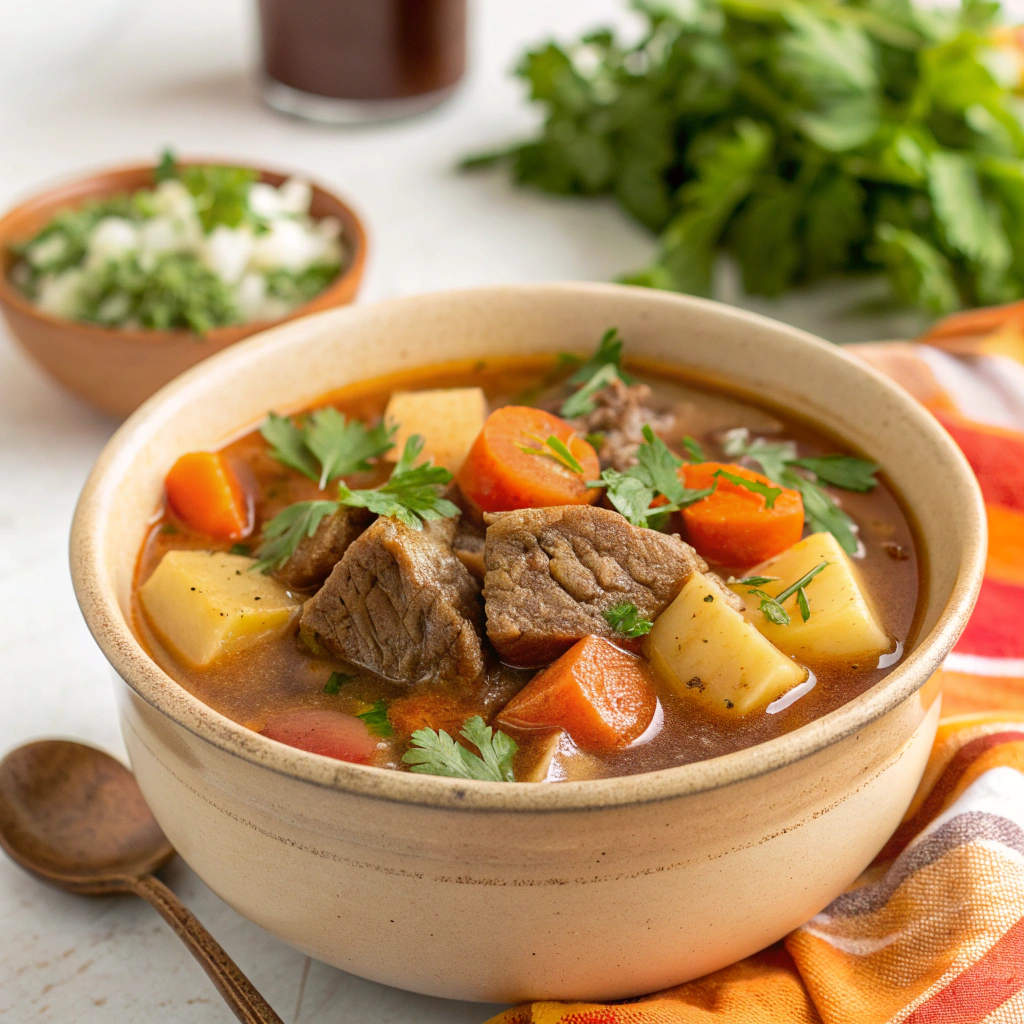
Let the soup rest 5 minutes off heat; flavors settle and the beef relaxes. Ladle into warm bowls and garnish with extra parsley or a drizzle of good olive oil. The broth should be glossy and aromatic, with tender beef and vegetables that hold their shape—not mushy.
Nutritional Information
Approximate per-serving nutrition (6 servings):
– Calories: ~320
– Protein: ~28 g
– Carbohydrates: ~27 g
– Fat: ~11 g
– Fiber: ~4 g
– Sodium: ~720 mg (varies by broth and soy/tamari brand)
– Key micros: Vitamin A from carrots, potassium from potatoes/turnips, iron and zinc from beef.
Methodology: Estimates calculated using standard USDA data for chuck roast, vegetables, and low-sodium broth. Actual values vary with specific brands, added starches, and salt adjustments.
Data insight: Compared with tomato-based versions, this soup’s acidity is lower, which many readers with reflux find gentler, while mushrooms and a small amount of soy/tamari reintroduce umami typically contributed by tomatoes.
Healthier Alternatives for the Recipe
– Leaner protein: Use sirloin or 90–93% lean ground beef (brown separately and drain). You’ll reduce fat while keeping protein high.
– Nightshade-free: Replace potatoes with turnips, rutabaga, parsnips, or cauliflower; avoid paprika and chili. Keep the umami via mushrooms and a touch of tamari or coconut aminos.
– Gluten-free: Use tamari instead of soy sauce; skip barley/pasta and sub cooked brown rice or quinoa stirred in at the end.
– Lower sodium: Choose no-salt-added broth; start with half the soy/tamari and season at the end. Fresh herbs amplify flavor without extra salt.
– Higher fiber and whole grains: Stir in pearled barley or farro (not GF) during simmering, or finish with a handful of baby kale or chopped spinach to wilt in the last 2 minutes.
– Dairy-free creaminess: Blend 1 cup of the cooked vegetables with a ladle of broth and stir back in for body—no dairy needed.
– AIP-inspired simplification: Skip pepper and seed-based spices; lean on fresh herbs, garlic-infused oil, and bone broth for depth.
Personalized tip: Cooking for mixed dietary needs? Make the base soup as written without barley or pasta. Serve grains on the side so each person can customize their bowl.
Serving Suggestions
– Classic pairing: Crusty bread, cornbread, or a slice of buttered sourdough. For GF, try warm polenta squares or a gluten-free roll.
– Over grains: Ladle over rice, quinoa, or cauliflower rice to soak up the broth.
– Leafy greens: Serve with a lemony arugula salad or a simple vinaigrette-dressed slaw for contrast.
– Fresh finishers: A shower of parsley, chives, or dill; a swirl of extra-virgin olive oil; or a small spoon of dairy-free yogurt for cool creaminess.
– Make it a meal prep bowl: Portion soup into 2-cup containers; add a side of cooked barley or rice separately to keep texture ideal all week.
Craving a fast stovetop alternative on busy nights? Try our Honey Garlic Beef and Broccoli Stir Fry—it’s ready in a fraction of the time and scratches that savory, beefy itch.
Common Mistakes to Avoid
– Skipping the sear: Browning the beef isn’t optional. It builds a roasted, tomato-free depth that defines this soup.
– Overcrowding the pot: Sear in batches. Crowded cubes steam and turn gray, dulling flavor.
– Boiling hard: A vigorous boil tightens beef fibers. Keep it to a gentle simmer for tender bites.
– One-and-done seasoning: Season in layers—beef, aromatics, and at the end after acid is added. Final salt/umami tuning transforms the broth.
– Adding quick-cook veg too early: Green beans (and greens, if added) should go in near the end to stay crisp-tender and bright.
– No acid finish: Without tomatoes, a splash of vinegar or lemon is your flavor lifter. Don’t skip it.
– Overthickening: A heavy hand with starch dulls flavors. If thickening, do it lightly and simmer 1–2 minutes to cook out raw taste.
– Neglecting broth quality: Low-sodium, good-tasting broth is key. If your broth isn’t great straight from the carton, the soup won’t be either.
Storing Tips for the Recipe
– Cool fast: Transfer to shallow containers and refrigerate within 2 hours for food safety and best texture.
– Fridge: Keeps 4 days. Flavor is often even better on day 2 as aromatics meld.
– Freezer: Freeze up to 3 months. Leave 1 inch headspace in containers to allow for expansion.
– Pasta/barley warning: Starches continue absorbing liquid. If planning to store, cook them separately and add to bowls when reheating.
– Reheating: Warm gently on the stovetop over medium-low or in the microwave at 60–70% power, adding a splash of water/broth if needed.
– Freshen it up: After reheating, add a squeeze of lemon and a handful of chopped parsley to wake up flavors.
Meal-prep idea: Freeze in single-serve portions for “instant” lunches. For variety, stash small bags of frozen spinach, peas, or corn to add during reheating.
Conclusion
This Vegetable Beef Soup Without Tomatoes delivers everything you crave from a classic beef-and-veg bowl—comforting warmth, tender beef, and a nuanced, savory broth—without relying on tomatoes. With mushroom umami, a disciplined sear, and a bright acidic finish, it’s a recipe you’ll make on repeat. If you cook it, leave a rating and share your tweaks in the comments—what veggies did you use? Which finishing acid did you love most? Hungry for more easy beef dinners after soup night? Bookmark our weeknight-friendly recipes and come back for seconds.
If you’re curious how a tomato-based version differs, check out this take from another kitchen: Vegetable Beef Soup.
FAQs
Q: What’s the best beef cut for this tomato-free soup?
A: Beef chuck is the gold standard for tenderness and flavor after simmering. If you need leaner, use sirloin and reduce simmer time to avoid drying out.
Q: How do I get rich flavor without tomatoes?
A: Sear the beef well, use mushrooms for umami, season in layers, and finish with a small splash of vinegar or lemon to balance richness—this mimics the brightness tomatoes usually bring.
Q: Can I make this in the Instant Pot?
A: Yes. Sauté to sear beef and aromatics, add liquids and hearty veg, then pressure cook 35 minutes with a 10-minute natural release. Add quick-cook veg after releasing pressure and simmer briefly on Sauté.
Q: Is this soup nightshade-free?
A: It can be. Skip potatoes and paprika/chili (none are required here) and use turnips, parsnips, rutabaga, or cauliflower. The recipe is inherently tomato-free.
Q: How can I thicken the broth slightly?
A: Stir in a cornstarch slurry (1 tbsp cornstarch + 1 tbsp water) and simmer 1–2 minutes. Alternatively, blend a cup of cooked vegetables with some broth and stir back in.
Q: What can I use instead of Worcestershire sauce?
A: Coconut aminos or extra tamari/soy sauce work well. For soy-free and gluten-free needs, coconut aminos plus a pinch of nutritional yeast can replace umami.
Q: Can I add grains or pasta?
A: Definitely. Add barley during the simmer (20–25 minutes) or small pasta in the last 8–10 minutes. For storage, cook these separately to maintain texture.
Q: What if my broth tastes flat at the end?
A: First, add a small splash of acid (vinegar or lemon). Then adjust salt. If it still needs depth, add 1/2–1 tsp soy/tamari and a knob of butter or drizzle of olive oil to round the flavor.
Q: How many servings does this make?
A: About 6 generous servings. Budget-wise, it often lands under $3 per serving depending on local prices and your produce choices.
Q: Can I make it vegetarian?
A: Yes. Swap beef for hearty mushrooms (shiitake + cremini) and use vegetable broth. Add a can of drained chickpeas or white beans for protein and body.