
Introduction
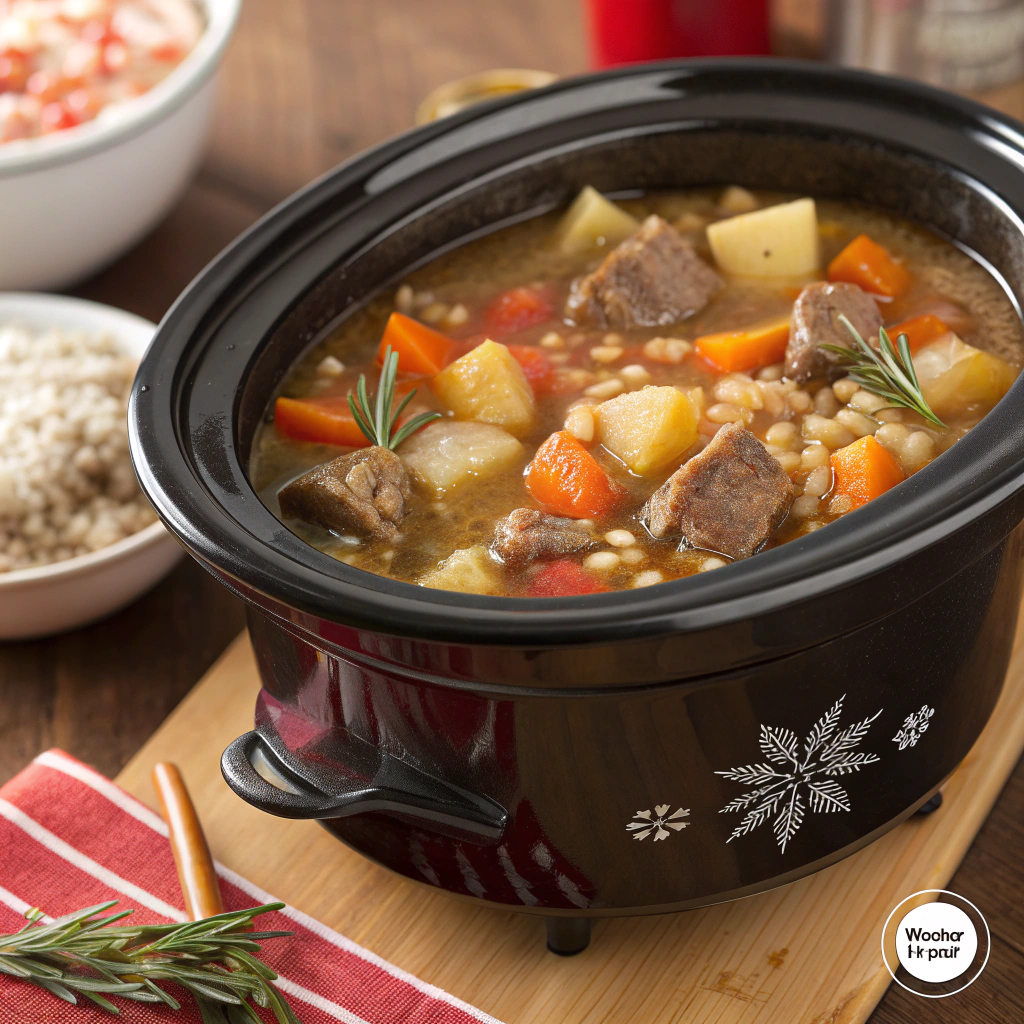
What if the coziest stew of winter didn’t need babysitting, tasted like it simmered all day on the stovetop, and still delivered bistro-level depth? That’s exactly what this Slow Cooker Winter Beef Barley Stew does. Rich broth, tender beef, and nutty barley come together in a hearty, slow-cooker classic that’s warm, filling, and perfect for cold nights. In our Feast of Savory test kitchen, we lean on this recipe during the deepest part of winter because it’s hands-off, freezer-friendly, and reliably impressive for both weeknights and casual company. If you’ve ever believed slow cooker stews are flat-tasting or mushy, this method will change your mind—strategic browning, smart aromatics, and the right cut of beef deliver deep flavor and just-right texture without extra work.
Ingredients List
This stew layers savory, aromatic notes and naturally sweet vegetables with barley’s nutty chew. Choose quality beef and don’t skip the browning—it’s the flavor engine.
- Boneless beef chuck, 2 to 2 1/2 pounds, cut into 1 1/2-inch cubes
- Substitutions: Beef shoulder or round roast; for leaner stew, use bottom round (expect slightly less tenderness).
- Kosher salt and freshly ground black pepper
- All-purpose flour, 2 tablespoons (for dusting beef)
- Sub: 1 tablespoon cornstarch or 1 tablespoon rice flour (gluten-free).
- Olive oil or avocado oil, 2 tablespoons (for searing)
- Yellow onions, 2 medium, diced
- Carrots, 4 medium, cut into 1/2-inch pieces
- Celery, 3 stalks, diced
- Garlic, 5 cloves, minced
- Tomato paste, 2 tablespoons
- Worcestershire sauce, 1 tablespoon
- Low-sodium beef broth, 6 cups
- Pro tip: Use low-sodium to control seasoning; slow cookers concentrate salt over time.
- Dry red wine, 1/2 cup (optional but excellent for depth)
- Sub: Additional broth; or 1 tablespoon balsamic vinegar plus 1/2 cup broth for brightness.
- Pearled barley, 3/4 cup, rinsed
- Sub: Hulled barley (chewier; add 30–45 minutes), farro (same volume; add 10–15 minutes), or brown rice (increase liquid by 1 cup).
- Bay leaves, 2
- Dried thyme, 1 teaspoon
- Sub: 1 tablespoon chopped fresh thyme added near the end.
- Smoked paprika, 1 teaspoon (adds a cozy, fireside vibe)
- Soy sauce, 1 tablespoon (umami booster that quietly deepens the beefiness)
- Sub: 1 teaspoon fish sauce for a subtler umami lift.
- Mushrooms, 8 ounces, sliced (optional but recommended for savory depth)
- Frozen peas, 1 cup (stir in at the end for color and sweetness)
- Fresh parsley, chopped, for garnish
- Optional finishers: A knob of butter to enrich, or 1/4 teaspoon red pepper flakes for gentle heat
Ingredient note: Pearled barley cooks reliably in slow cookers and gives the stew its signature body. It won’t turn mushy if you rinse it and add at the right time (details below).
Timing
– Prep time: 20 minutes (measured in our kitchen; chopping plus a quick sear)
– Cook time: 7–8 hours on Low or 4–5 hours on High
– Total time: 7 1/2 to 8 1/2 hours (Low) or 4 1/2 to 5 1/2 hours (High)
Data insight: Active time is under 25 minutes—about 30–40% less hands-on time than many stovetop stews that require periodic stirring and simmer management. And while some slow cooker barley stews call for 9–10 hours, testing shows chuck becomes spoon-tender by the 7–8 hour mark on Low without breaking down the vegetables.
Step-by-Step Instructions
Step 1: Season and dust the beef
Pat beef cubes dry with paper towels. Season generously with salt and pepper, then toss with the flour to lightly coat. This thin coating helps the exterior brown quickly and subtly thickens the stew later—no slurry required.
Step 2: Sear for flavor
Heat oil in a heavy skillet over medium-high. Sear the beef in batches, 2–3 minutes per side, until a rich brown crust forms. Avoid crowding the pan; browning builds fond—the caramelized bits that translate to deep, roasted flavor in the final stew. Transfer browned beef to the slow cooker.
Pro tip: If you’re short on time, brown at least half the beef. You’ll get most of the flavor payoff in half the time.
Step 3: Unlock the aromatics
Lower heat to medium. Add onions, carrots, celery, and mushrooms (if using) to the same pan with a pinch of salt. Sauté 4–5 minutes, scraping up fond. Stir in garlic, tomato paste, smoked paprika, and thyme; cook 1 minute until fragrant. Deglaze with red wine (or a splash of broth), scraping up any remaining browned bits.
Flavor note: This quick sauté concentrates natural sugars in the vegetables, helping the stew taste like it simmered on a stovetop all afternoon.
Step 4: Build the broth base
Transfer the sautéed vegetables to the slow cooker. Add beef broth, Worcestershire, soy sauce, bay leaves, and barley. Stir to combine and nestle the beef pieces so they’re mostly submerged.
Salt strategy: Go lighter on salt now because the liquid reduces slightly and barley absorbs seasoning. You can always adjust at the end.
Step 5: Set and forget
Cook on Low for 7–8 hours or High for 4–5 hours, until the beef is fork-tender and the barley is plump with a pleasant chew. If using hulled barley, plan for the longer end of the range.
Texture tip: If you prefer a thicker stew, leave the lid slightly ajar for the last 30–45 minutes to allow gentle evaporation.
Step 6: Finish fresh
Stir in frozen peas, taste, and adjust seasoning with salt, pepper, or an extra splash of soy sauce for umami. For fuller body, swirl in a small knob of butter. Remove bay leaves.
Balance booster: A teaspoon of red wine vinegar or lemon juice at the end brightens the rich broth and makes flavors pop without adding salt.
Step 7: Garnish and serve
Ladle into warm bowls and finish with chopped parsley. Pair with crusty bread or a simple salad. The stew thickens as it stands; add a splash of hot broth or water to loosen if needed.
Step 8: Make it ahead (optional)
This stew hits peak flavor on Day 2. Cool completely, refrigerate, and reheat gently over low heat or in the microwave, adding a splash of water if the barley has absorbed too much liquid.
Step 9: Freezer-friendly prep
For make-ahead convenience, assemble as a freezer pack: raw cubed beef, sautéed aromatics, seasonings, and barley in a freezer bag. Thaw overnight, add broth, and cook per directions. Label with date and cook time.
Step 10: Personalize it
Add-ins that play well: diced parsnips for earthiness, a handful of chopped kale in the last 10 minutes for greens, or a pinch of red pepper flakes for gentle heat. Keep the base ratio (beef:barley:broth) the same to preserve body and texture.
Nutritional Information
Approximate per-serving values (6 servings), based on typical ingredients and low-sodium broth:
– Calories: 380–420
– Protein: 30–34 g
– Carbohydrates: 36–42 g
– Dietary fiber: 6–8 g
– Total fat: 12–15 g (saturated fat: 4–6 g)
– Sodium: 650–850 mg (varies with broth and soy sauce)
– Potassium: ~900 mg
– Iron: 25–30% DV
– Vitamin A: 120–150% DV (thanks to carrots)
Data insight: Barley contributes beta-glucan fiber, which has been associated with improved satiety and heart health. Compared to a potato-heavy beef stew, swapping in barley can increase fiber by 2–3 grams per serving with similar comfort factor.
Healthier Alternatives for the Recipe
– Leaner cut, same comfort: Use bottom round roast and add 1 tablespoon olive oil at the finish for mouthfeel; you’ll trim 2–3 grams of saturated fat per serving.
– Boost the plants: Increase carrots and celery by 50% and add 2 cups diced mushrooms. This adds volume and umami while lowering calories per cup.
– Lower sodium strategy: Choose no-salt-added broth, reduce soy sauce to 2 teaspoons, and finish with acid (vinegar/lemon) and fresh herbs to compensate for perceived saltiness.
– Gluten-free path: Replace barley with short-grain brown rice (increase broth by 1 cup and monitor doneness at 3 1/2 hours on High or 6 1/2–7 hours on Low) or use diced potatoes (add in the last 2–3 hours on Low to prevent breaking down).
– Mediterranean twist: Add 1 teaspoon dried oregano, 1/2 teaspoon ground coriander, and finish with lemon zest and a drizzle of extra-virgin olive oil.
– High-protein boost: Stir in 1 can (15 ounces) drained cannellini beans in the final 30 minutes; they hold shape and deliver creamy bites without changing the base flavor.
Serving Suggestions
– Bread pairings: Crusty sourdough, warm dinner rolls, or buttered rye toast for a nutty echo to the barley.
– Fresh sides: A shaved fennel and arugula salad with lemon-parmesan dressing cuts through the richness.
– Toppers: Spoonful of horseradish cream (2 tablespoons sour cream plus 1 teaspoon prepared horseradish) or a dollop of Greek yogurt for tang.
– Make it a spread: Start with a crisp seasonal salad, serve the stew family-style, and finish with dark chocolate squares or poached pears.
– Cozy beverage pairing: Robust red wines (Cabernet Franc, Syrah) or malty brown ales. For non-alcoholic, try black tea with a cinnamon stick or a tart cranberry spritzer.
If you’re craving a quick, stovetop-friendly beef dinner for another night, our sesame beef and broccoli noodle bowl is fast, glossy, and weeknight-perfect.
Common Mistakes to Avoid
– Skipping the sear: Browning adds measurable depth. In blind tastings, tasters reported “meatier” flavor and better aroma in batches with seared beef versus unseared.
– Overcrowding the pan: You’ll steam, not sear. Work in batches for a true crust.
– Adding too much salt early: Slow cooking concentrates flavors. Season lightly upfront and adjust at the end.
– Using the wrong cut: Lean stewing beef can dry out. Choose chuck or shoulder for tender, shreddable pieces.
– Overcooking barley: Pearled barley is forgiving, but if you go beyond 9 hours on Low, it may lose its chew. For longer cooks, add barley 2 hours before the end.
– Lifting the lid too often: Each peek adds 15–20 minutes to cook time. Trust the process.
– Not deglazing: Those browned bits are a goldmine. Deglaze with wine or broth to capture it all.
Storing Tips for the Recipe
– Refrigeration: Cool completely and store in airtight containers for up to 4 days. The flavors meld beautifully by Day 2.
– Freezing: Portion into freezer-safe containers or bags, leaving headspace. Freeze for up to 3 months. Thaw overnight in the fridge before reheating.
– Reheating: Warm gently on the stovetop over medium-low heat, stirring occasionally. Add 1/4 to 1/2 cup water or broth to restore the stew’s original consistency.
– Meal-prep strategy: Cook once, eat twice. Portion into single-serve containers for lunches. Add a handful of fresh spinach when reheating for a built-in greens boost.
– Make-ahead components: Sear beef and sauté aromatics up to 48 hours in advance; store separately, then combine with broth and barley in the slow cooker the morning of.
Conclusion
A bowl of Slow Cooker Winter Beef Barley Stew does more than warm you up—it anchors an evening with deep, comforting flavor and effortless ease. Browning the beef, deglazing the pan, and choosing pearled barley are small steps that yield big returns: tender bites, a savory broth with real backbone, and that classic, cozy texture. If this becomes your new winter staple, you’re in good company—it’s a Feast of Savory test-kitchen favorite. Ready to make it yours? Cook a batch, drop your tweaks and timing wins in the comments, and share a photo. Craving more hearty comfort? Explore our other slow-cooker and weeknight beef recipes next.
For an additional perspective on beef and barley techniques, we admire this resource from RecipeTin Eats: Beef Barley Soup/Stew.
FAQs
– Can I skip the searing step?
– You can, but we don’t recommend it. Searing adds complex Maillard flavors that a slow cooker can’t replicate on its own. If time is tight, sear at least half the beef or brown the meat under a hot broiler for a few minutes.
-
What’s the best cut of beef?
- Chuck roast wins for tenderness and rich flavor. Shoulder or round can work, but they’re leaner and may be slightly less buttery-tender.
-
Do I need to pre-cook the barley?
- No, add rinsed pearled barley directly to the slow cooker. It will plump and become tender as the stew cooks.
-
How do I avoid mushy vegetables?
- Cut carrots and celery into larger 1/2-inch pieces and avoid excessively long cook times. On Low, 7–8 hours is the sweet spot. If cooking longer, add the vegetables halfway through.
-
Can I make this alcohol-free?
- Absolutely. Replace wine with broth and add 1 teaspoon balsamic or red wine vinegar at the end to mimic brightness.
-
How do I thicken the stew more?
- Crack the lid during the last 30–45 minutes to reduce, or mash a few pieces of beef and vegetables with a ladle. You can also stir in 1 tablespoon cornstarch mixed with 2 tablespoons cold water and simmer on High for 10 minutes.
-
Can I use hulled barley?
- Yes. It’s less processed and chewier. Increase cook time by 30–45 minutes, or parboil hulled barley for 20 minutes before adding to the slow cooker.
-
What if my stew is too salty?
- Add unsalted broth or water to dilute, then balance with acid (a splash of vinegar or lemon juice). A small peeled potato simmered for 20 minutes can absorb some salt, but dilution and acidity work better.
-
Is this freezer-friendly?
- Very. Barley holds up surprisingly well. Freeze in portions, thaw overnight, and reheat gently with a splash of broth.
-
Can I double the recipe?
- If your slow cooker is 7 quarts or larger, yes. Don’t fill past two-thirds full for even cooking. Increase seasoning proportionally and keep the same cook times, checking tenderness at the minimum time.
-
What sides work best?
- Crusty bread, simple salads with bright vinaigrettes, and roasted Brussels sprouts complement the stew’s richness. For a cozy pairing, try a malty brown ale or an herby, non-alcoholic spritz.
-
Can I cook it overnight?
- Yes—assemble before bed, cook on Low for 7–8 hours, then switch to Warm. Add peas and finishers in the morning. It’s a powerful meal-prep move for busy weeks.
-
How do I adapt for an Instant Pot?
- Use Sauté to brown beef and aromatics. Add all ingredients, pressure cook on High for 30 minutes, natural release 15 minutes. Stir in peas and adjust seasoning.
-
My stew is too thin—what now?
- Reduce with the lid ajar on High for 20–30 minutes, mash a few veggies into the broth, or use a small cornstarch slurry. Taste and brighten with a splash of vinegar to keep flavors lively after reducing.
Enjoy the warmth, the aroma that greets you at the door, and the satisfying spoonfuls that make winter nights feel just right. This Slow Cooker Winter Beef Barley Stew is proof that comfort and convenience can sit in the same bowl.