
Introduction
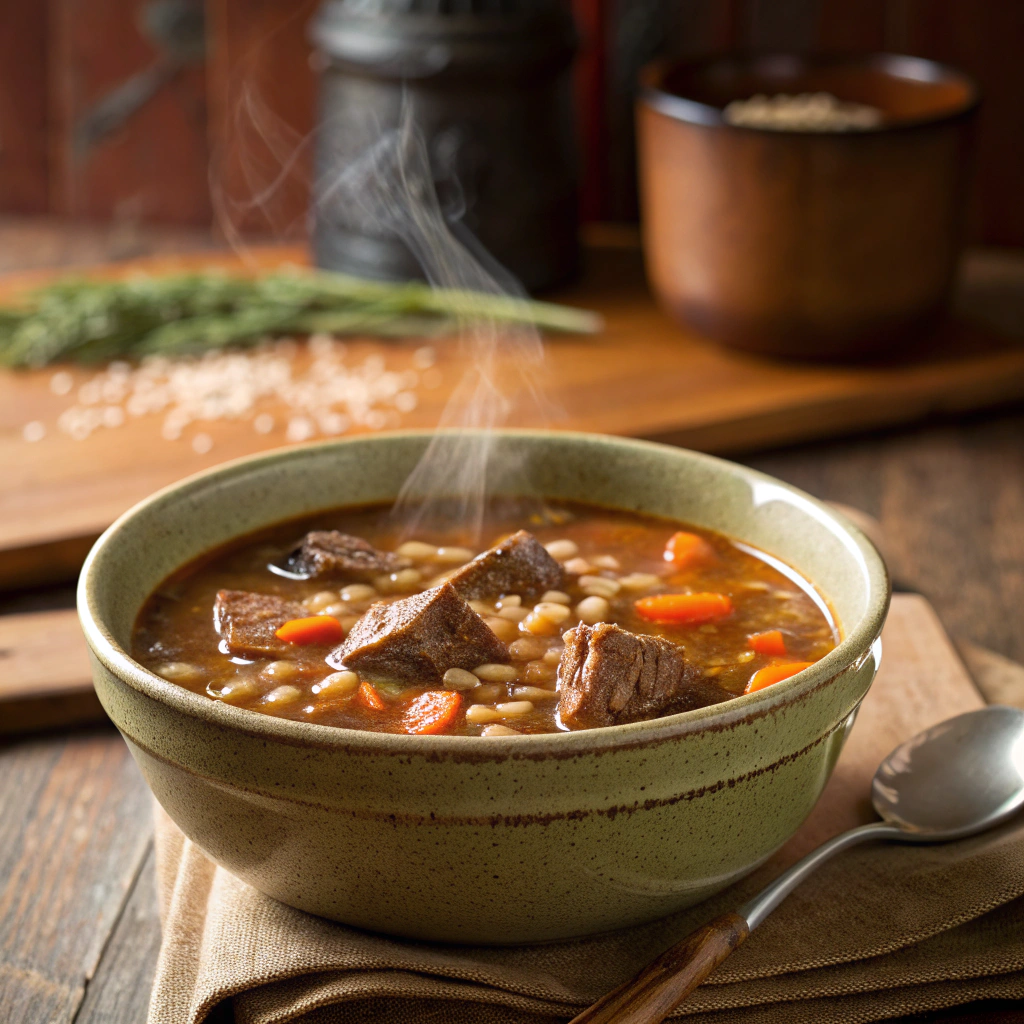
What if the most comforting soup you’ll make this month starts with yesterday’s roast? Leftover Roast Beef Barley Soup turns scraps of Sunday dinner into a rich, cozy bowl that tastes slow-simmered and intentional. This recipe respects your time and ingredients, transforming leftover roast beef, barley, and pantry staples into a deeply savory meal that freezes beautifully, reheats like a dream, and stretches your grocery budget. If you’ve ever wondered whether leftovers can become the star of the week, this Leftover Roast Beef Barley Soup proves the answer is yes—every spoonful says “second-day magic.”
As a cook who believes everyday comfort food deserves chef-level flavor without fuss, I lean on small technique upgrades—blooming tomato paste, layering aromatics, and a smart splash of acidity—to make this soup taste like it simmered all day, even when it didn’t.
Ingredients List
– Leftover roast beef, 2 to 3 cups, shredded or diced (use chuck, round, or sirloin; trim excess fat and gristle)
– Pearl barley, 3/4 cup (or quick-cooking barley if you need speed; see Timing)
– Beef stock or broth, 6 cups (low-sodium recommended so you can season precisely)
– Olive oil or neutral oil, 1 tablespoon
– Unsalted butter, 1 tablespoon (optional, for richness)
– Yellow onion, 1 large, diced
– Celery, 2 ribs, diced
– Carrots, 2 medium, diced
– Garlic, 3 cloves, minced
– Tomato paste, 1 tablespoon (adds umami and body)
– Worcestershire sauce, 1 to 2 teaspoons (deepens savoriness)
– Dry thyme, 1 teaspoon (or 3 sprigs fresh)
– Dry rosemary, 1/2 teaspoon, crushed (or 1 sprig fresh)
– Bay leaf, 1
– Black pepper, 1/2 teaspoon, plus more to taste
– Kosher salt, to taste (start with 1 teaspoon if using low-sodium broth)
– Optional flavor boosters:
– Red wine, 1/4 cup (for deglazing, cooks off)
– Mushrooms, 1 cup, sliced (umami bump)
– Diced potatoes, 1 cup (extra heartiness)
– Frozen peas, 3/4 cup (added at the end for color/sweetness)
– Fresh parsley, 2 tablespoons, chopped (bright finish)
– Lemon juice or red wine vinegar, 1 to 2 teaspoons (balances richness at the end)
Substitutions and swaps:
- No barley? Use farro, brown rice, or small pasta (ditalini). Adjust cook time.
- Gluten-free? Barley contains gluten. Substitute quinoa or cauliflower rice (added last 5 minutes).
- Vegetarian spin: Skip beef, increase mushrooms to 2 cups, use vegetable broth, and add a can of cannellini beans.
- Add-ins for extra depth: a rind of Parmesan during simmer (remove before serving) or a spoon of miso stirred in off heat.
Timing
– Prep time: 15 minutes (dice aromatics, shred beef)
– Cook time with pearl barley: 45 minutes
– Total time: About 60 minutes, which is roughly 20% faster than many barley soups that average 75 minutes when starting from raw beef.
– Using quick-cooking barley: 30 to 35 minutes total
– Instant Pot approach: 12 minutes on High Pressure + 10 minutes natural release (add leftover beef after pressure cooking to prevent drying)
– Slow cooker: 4 to 5 hours on Low (add leftover beef in the last 30 to 45 minutes)
Data note: Pearl barley typically softens in 35 to 45 minutes at a gentle simmer. Quick barley cuts that down to 10 to 12 minutes. To keep leftover beef tender, let it reheat at the end rather than simmering the entire time.
Step 1 – Prep and personalize your pot
– Dice onion, celery, and carrots into even pieces (1/4 to 1/2 inch). Shred or cube your leftover roast beef.
– Tip: Trim any large fat caps or tough connective tissue; those rendered beautifully the first day but can feel waxy in soup.
– Personalize: Decide now if you’ll include mushrooms, potatoes, or peas.
Step 2 – Build a flavorful base
– Heat oil and butter in a heavy pot over medium heat.
– Add onion, celery, and carrots with a pinch of salt; cook 6 to 8 minutes, stirring occasionally, until onions turn translucent and edges begin to caramelize.
– Add garlic; cook 30 seconds until fragrant.
– Pro tip: Sweating aromatics slowly releases natural sugars that sweeten the soup without adding sugar.
Step 3 – Bloom umami
– Stir in tomato paste and cook 1 minute until the paste deepens in color.
– Sprinkle in thyme and rosemary; bloom for 30 seconds to release aromatic oils.
– Optional: Add mushrooms now; sauté 3 minutes to release moisture.
Step 4 – Deglaze like a pro
– Pour in red wine or 1/2 cup of the broth to deglaze. Scrape up browned bits on the bottom of the pot—this is pure flavor.
– Add Worcestershire and bay leaf.
Step 5 – Simmer barley to perfection
– Add remaining broth and bring to a low boil.
– Stir in barley. Reduce to a gentle simmer, cover partially, and cook:
– Pearl barley: 35 to 40 minutes
– Quick barley: 10 to 12 minutes
– Stir occasionally to prevent sticking and ensure even cooking.
– Optional: Add diced potatoes with the barley if using.
Step 6 – Add the leftover roast beef
– When barley is almost tender, gently fold in the leftover roast beef.
– Simmer 5 to 8 minutes—just until heated through.
– Tip: Adding precooked beef late keeps it succulent. Long simmering can make it stringy.
Step 7 – Finish with freshness
– Remove bay leaf. Stir in peas and parsley.
– Taste and adjust with salt, pepper, and 1 to 2 teaspoons of lemon juice or vinegar to brighten.
– Texture tip: If soup is thicker than you’d like (barley continues to absorb), add 1/2 to 1 cup hot broth or water.
Step 8 – Rest and serve
– Remove from heat and rest 5 minutes; flavors meld and barley settles.
– Ladle into bowls. Add a drizzle of good olive oil, extra herbs, or cracked pepper.
Nutritional Information
Approximate per serving (6 servings):
– Calories: 320
– Protein: 23 g
– Carbohydrates: 42 g
– Dietary fiber: 7 g
– Total fat: 8 g
– Saturated fat: 3 g
– Sodium: 820 mg (varies with broth)
– Potassium: ~750 mg
– Iron: ~3 mg
Notes:
- Barley contributes beta-glucan fiber, which is associated with heart-health benefits.
- Using low-sodium broth and controlling salt at the end helps manage sodium.
- Adding mushrooms and peas increases potassium and micronutrients without significant calories.
Estimates are calculated with typical databases; actual values vary based on ingredients and portion size.
Healthier Alternatives for the Recipe
– Lower sodium: Choose low-sodium broth and season with acid (lemon/vinegar) and herbs to amplify perceived saltiness.
– More fiber: Use hulled barley instead of pearl barley (increase simmer time by 15 to 20 minutes). Add an extra carrot and a cup of mushrooms.
– Leaner protein: Use leaner leftover beef cuts, or substitute leftover turkey or rotisserie chicken (add at the end).
– Gluten-free version: Replace barley with brown rice (simmer 35 to 40 minutes), quinoa (15 minutes), or cauliflower rice (add in the last 5 minutes).
– Vegetarian and high-protein: Swap beef for 1 can cannellini beans and 1 can lentils, drained and rinsed; mushrooms for umami.
– Low-carb: Replace barley with finely chopped cauliflower and celery root; simmer only 8 to 10 minutes after adding.
– Gut-friendly: Finish with a spoon of miso off the heat to preserve probiotics, or add a splash of apple cider vinegar for gentle acidity.
Serving Suggestions
– Garnish smartly: A squeeze of lemon, chopped parsley, and a crack of black pepper brighten the bowl. For richness, swirl in yogurt or sour cream.
– Bread pairing: Serve with warm, crusty bread or cheesy toast soldiers. Garlic-rubbed sourdough is especially good for dunking.
– Fresh crunch: A simple arugula salad with shaved Parmesan and lemon-olive oil balances the soup’s savoriness.
– Make it a meal prep star: Portion into lidded containers with an extra splash of broth on top so reheating yields perfect texture.
– Cozy upgrade: Ladle soup into oven-safe bowls, top with a slice of bread and provolone, and broil until bubbly for a French-onion-meets-beef-barley vibe.
– Flavor maps:
– Smoky: Add a pinch of smoked paprika or a splash of liquid smoke.
– Herby: Finish with dill and chives.
– Spicy: Stir in Calabrian chili paste or red pepper flakes.
– Gravy twist: If you have leftover gravy from roast night—or from our oven-baked beef tips with thick gravy—whisk a few tablespoons into the broth to create a silkier, beefier base.
Common Mistakes to Avoid
– Overcooking the leftover beef: Long simmering dries it out. Add at the end, heat gently.
– Not rinsing barley: Rinse pearl barley in a sieve to remove dust and excess starch that can cloud the soup.
– Boiling too vigorously: A furious boil toughens meat fibers and can split vegetables. Keep it at a gentle simmer.
– Heavy-handed salt early: Broth reduces slightly as it simmers; season generously at the end instead.
– Skipping deglaze: Those browned bits equal free flavor—use wine or broth to lift them.
– Crowding the pot: Overfilling reduces circulation and even cooking. Use a 5- to 6-quart pot for best results.
– Neglecting acidity: A tiny splash of lemon juice or vinegar brightens and balances rich beef and barley.
– Adding quick-cooking veggies too soon: Peas and tender greens go in at the end to avoid mush.
– Forgetting carryover absorption: Barley drinks broth as it cools. Hold extra hot broth for reheating.
Storing Tips for the Recipe
– Cool quickly: Divide soup into shallow containers to bring temperature down faster (food safety sweet spot).
– Refrigeration: Store up to 4 days. Barley will continue to absorb liquid; keep extra broth on hand.
– Freezing: Up to 3 months. For best texture, slightly undercook barley before freezing or freeze broth and barley separately.
– Reheat: Stovetop over medium-low heat, adding broth or water as needed. Microwave in 1-minute bursts, stirring in between.
– Lunch-ready portions: Freeze flat in zip-top bags so they thaw quickly, or use 2-cup deli containers.
– Flavor insurance: Label with date and add a sticky note reminder to finish with fresh parsley and lemon when serving.
Conclusion
Leftover Roast Beef Barley Soup proves that weeknight comfort can be both practical and elevated. With layered aromatics, bloomed spices, and a smart finish of herbs and acidity, your leftovers become a bowl worth craving. It’s budget-friendly, freezer-friendly, and endlessly adaptable for dietary needs and taste preferences.
If you’re curious to compare techniques or want another take on this cozy classic, check out this helpful reference from The Country Cook: Leftover Roast Beef Barley Soup.
Now it’s your turn—pull that roast from the fridge, make this soup tonight, and tell me how you personalized it. Did you go herby, smoky, spicy—or all three? Share your version and any time-saving swaps in the comments so other readers can try them too.
FAQs
– Can I use hulled barley instead of pearl barley?
– Yes. Hulled barley retains more of the bran layer, so it’s slightly chewier and higher in fiber. Add 15 to 20 minutes to the simmer time and check for tenderness.
-
What’s the difference between pearl and quick-cooking barley?
- Pearl barley is polished and typically cooks in 35 to 45 minutes. Quick-cooking barley is pre-steamed and dried, so it softens in about 10 to 12 minutes. Quick barley is great for weeknights; pearl barley has a slightly better bite.
-
My leftover beef is dry—can soup fix it?
- Absolutely. Trim any overly dry bits and add the meat toward the end to rehydrate gently in hot broth. A teaspoon of butter or splash of olive oil can also restore succulence.
-
Can I make this in an Instant Pot?
- Yes. Sauté aromatics on Sauté mode, add broth and barley, and pressure cook 12 minutes with a 10-minute natural release. Stir in leftover beef after pressure release and heat on Sauté for 2 to 3 minutes.
-
How do I adapt it for a slow cooker?
- Add aromatics, barley, broth, and seasonings; cook on Low for 4 to 5 hours. Stir in leftover beef during the last 30 to 45 minutes to warm through without drying.
-
What if I don’t have tomato paste?
- Skip it and add 1 teaspoon soy sauce or a splash of balsamic vinegar for depth. A small spoonful of marmite or miso also provides umami.
-
Can I add bones or a beef shank for extra flavor?
- Yes—simmer a beef shank or marrow bone in the broth for 30 to 45 minutes before adding barley, then remove before serving. This boosts body and collagen. If you do, reduce added salt until the end.
-
How can I thicken the soup?
- Let barley simmer a bit longer, smash a few potato pieces against the pot, or whisk 1 teaspoon cornstarch with cold water and stir in while simmering for 2 minutes.
-
Can I make it dairy-free?
- Definitely. Use oil instead of butter and skip any dairy garnishes. Finish with olive oil and herbs for richness.
-
What can I use instead of barley for a gluten-free version?
- Quinoa or brown rice are excellent. For a low-carb take, add riced cauliflower during the last 5 minutes—no long simmer needed.
-
How do I keep leftovers from turning stodgy?
- Store barley soup with extra broth and add another splash when reheating. If you anticipate leftovers, cook and store the barley separately and combine when serving.
-
How do I boost flavor if my broth tastes flat?
- Add a pinch of salt, a splash of acid (lemon or vinegar), fresh herbs, and a small pat of butter or drizzle of olive oil. A few drops of fish sauce or Worcestershire can also amplify umami.
By leaning on simple, smart techniques and using what you already have, Leftover Roast Beef Barley Soup becomes more than a “use-up” meal—it’s a signature cozy dish you’ll plan for.