
Introduction
What if the bold, glossy flavor of your favorite takeout could hit the table faster than your delivery app—without a wok, pricey cuts of steak, or hours of prep? Mongolian Ground Beef with Rice Noodles proves it’s not only possible, it’s repeatable in just 20 minutes. The secret: ground beef for speed, rice noodles for slurpable comfort, and a balanced sweet-savory sauce that clings to every strand. If you’ve ever believed Mongolian beef needs flank steak or a restaurant burner to taste right, this weeknight-friendly version will change your mind—and your dinner rotation.
Ingredients for Mongolian Ground Beef with Rice Noodles
This is a generous, family-style batch (4 hearty servings) with a sauce-forward finish. Expect sweet-savory depth, gingery heat, and a silky sheen on the noodles.
- Rice noodles: 8 oz (225 g) wide or medium-width rice noodles. These soak quickly and hold sauce beautifully.
- Ground beef: 1 lb (450 g), 85–90% lean. Rich, satisfying, and weeknight-easy.
- Neutral oil: 1 tbsp (avocado, canola, or grapeseed) for browning.
- Garlic: 4 cloves, finely minced, for a fragrant, savory base.
- Fresh ginger: 1 tbsp, finely grated, for zingy warmth.
- Green onions: 6, thinly sliced; separate whites and greens.
- Red bell pepper: 1, thinly sliced (optional), for sweetness and crunch.
- Toasted sesame seeds: 1 tbsp, for nutty finish.
- Red pepper flakes or chili-garlic sauce: to taste, for heat.
Sauce (tangy, glossy, and balanced):
- Low-sodium soy sauce: 1/3 cup
- Beef broth or water: 1/3 cup
- Brown sugar (light): 1/4 cup, packed
- Hoisin sauce: 1–2 tbsp, for body and umami
- Rice vinegar: 1 tbsp, for brightness
- Toasted sesame oil: 1–2 tsp, for aroma
- Cornstarch: 1 tbsp, whisked with 2 tbsp water (slurry) to thicken
Smart substitutions and swaps:
- Protein: Ground turkey, chicken, or pork all work; plant-based crumbles or crumbled extra-firm tofu are solid vegetarian options.
- Gluten-free: Use tamari or coconut aminos in place of soy sauce, and a gluten-free hoisin.
- Noodles: Swap in brown rice noodles for more fiber; udon or spaghetti also work if you don’t need gluten-free.
- Sweetness: Honey or maple syrup for brown sugar; start with 2 tbsp and adjust.
- Thickener: Arrowroot powder instead of cornstarch if preferred; use 2 tsp arrowroot.
- Veggies: Add snap peas, broccoli florets, shredded carrots, mushrooms, or baby spinach to make it a full one-pan dinner.
Flavor notes to expect:
- Aroma: Garlic-ginger perfume, toasted sesame, and caramelized beef.
- Taste: Sweet-savory Mongolian sauce with a pop of vinegar and optional chili heat.
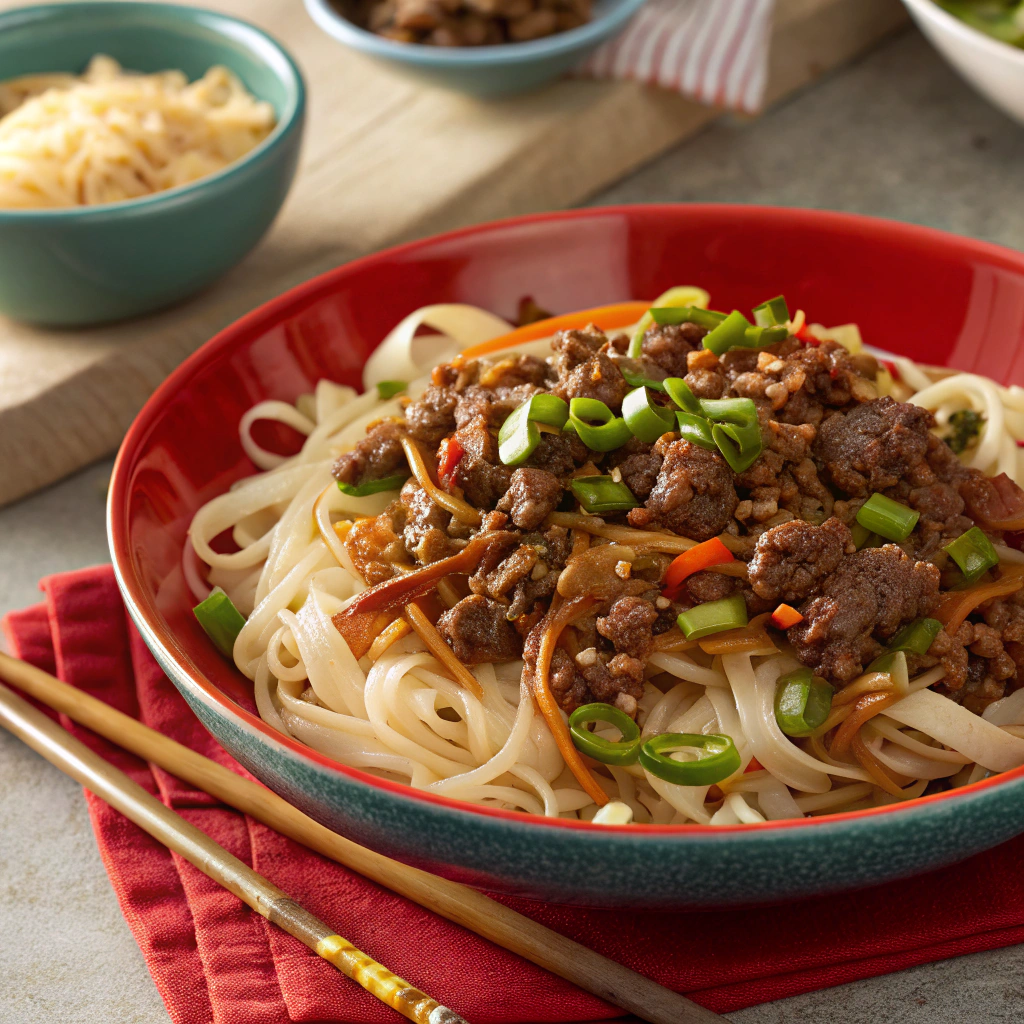
- Texture: Springy noodles coated in a glossy sauce, tender beef crumbles, and crisp-tender peppers.
Timing for Mongolian Ground Beef with Rice Noodles
– Prep time: 5–8 minutes (while the noodles soak)
– Cook time: 10–12 minutes
– Total time: About 20 minutes
Why it’s fast:
- Rice noodles soak in hot water—no boiling required.
- Ground beef browns quickly and doesn’t need marinating.
- One big skillet eliminates juggling multiple pans.
Context:
Most homemade noodle stir-fries clock in around 30 minutes. This version consistently lands near 20, so you’ll sit down 30–35% sooner than many from-scratch dinners without sacrificing flavor.
Step 1 — Soak the noodles
Add rice noodles to a large bowl and cover with very hot tap water (or just-off-boil water if your tap doesn’t run hot). Soak 6–8 minutes until pliable but not fully soft; they’ll finish in the pan. Drain. Tip: If you’re new to rice noodles, err on the firmer side—over-soaked noodles can break or turn mushy later.
Step 2 — Whisk the Mongolian sauce
In a measuring cup, whisk soy sauce, broth, brown sugar, hoisin, rice vinegar, and sesame oil. In a separate small bowl, stir cornstarch with water to make a smooth slurry. Keep both nearby. Tip: Taste the sauce base now; it should be sweet-savory with a gentle tang. Adjust sugar or vinegar to match your preference.
Step 3 — Sear the ground beef
Heat oil in a large skillet over medium-high. Add ground beef, season with a pinch of salt and black pepper, and break it into large crumbles. Let it sit for 1–2 minutes to develop a browned crust before stirring; this caramelization is where a lot of Mongolian-style flavor begins. Cook until no pink remains, 4–5 minutes. Drain excess fat if needed.
Step 4 — Build aromatic depth
Add garlic, ginger, and the white/light green parts of the green onions. Stir-fry 30–60 seconds until fragrant. If using bell pepper or other quick-cooking veggies, add them now and cook 1–2 minutes to crisp-tender.
Step 5 — Deglaze and sauce it up
Pour in the sauce base and bring to a lively simmer, scraping up browned bits from the pan (flavor gold). Simmer 1–2 minutes to warm through.
Step 6 — Thicken to glossy perfection
Whisk the cornstarch slurry again, then drizzle it into the bubbling sauce while stirring. Cook 60–90 seconds until the sauce turns shiny and lightly coats a spoon. If you want extra saucy noodles, add 2–3 tbsp water or broth.
Step 7 — Toss in the noodles
Add drained rice noodles to the skillet. Use tongs to toss gently for 1–2 minutes, letting them drink in the sauce. If the pan looks dry, splash in a bit more broth or hot water. Taste and adjust: more vinegar for brightness, a pinch of sugar for roundness, or chili for heat.
Step 8 — Finish and garnish
Turn off the heat. Fold in green onion tops and sprinkle with toasted sesame seeds. For heat lovers, add red pepper flakes or a drizzle of chili-garlic sauce.
Step 9 — Plate with intention
Twirl portions into bowls for noodle-forward presentation. Top with extra green onions and sesame seeds. If you like contrast, add a quick cucumber ribbon salad or lime wedges on the side for a fresh, cooling counterpoint.
Step 10 — Make it yours
– Big, bold sauce: Double the sauce ingredients (except cornstarch—add only 50% more) for extra coating power.
– Crispier beef: Spread beef in a single layer and let it brown undisturbed longer before breaking it up.
– Family-friendly: Keep the chili on the table so everyone controls their heat level.
Nutritional Information for Mongolian Ground Beef with Rice Noodles
Estimated per serving (4 servings):
– Calories: ~560
– Protein: ~30 g
– Carbohydrates: ~65 g
– Total fat: ~18–22 g
– Fiber: ~2–3 g
– Added sugar: ~12 g
– Sodium: ~900–1,100 mg (using low-sodium soy sauce)
Notes:
- Using 93% lean beef reduces total fat by ~5–7 g per serving.
- Tamari or coconut aminos can reduce sodium, though coconut aminos taste sweeter; cut added sugar slightly if using them.
- Adding 2 cups of non-starchy vegetables (broccoli, snap peas) bumps fiber by ~1–2 g per serving with minimal calories.
Healthier Alternatives for the Recipe
– Leaner swap: Use 93% lean ground beef or ground turkey to lower saturated fat. Add 1 tsp neutral oil if the pan feels dry.
– Lower sugar: Reduce brown sugar to 1–2 tbsp; balance with a splash more hoisin or extra ginger for complexity.
– Lower sodium: Use low-sodium tamari and low-sodium broth, and finish with a squeeze of lime to boost perceived saltiness without more sodium.
– More fiber: Swap in brown rice noodles and add extra veggies: broccoli, snap peas, bok choy, or shredded cabbage.
– Gluten-free: Use tamari and a gluten-free hoisin. Rice noodles are naturally gluten-free.
– Low carb: Substitute shirataki noodles or spiralized zucchini. Cook sauce a bit longer to reduce and intensify flavor so it clings to watery veg noodles.
– Higher protein: Add an egg (like egg drop technique into the sauce), or stir in edamame. Doubling the green onions adds flavor without calories.
Serving Suggestions
– Bowl it up: Ladle into warm bowls and top with scallion greens, sesame seeds, and a dash of chili oil. Bright finish: squeeze of lime or rice vinegar.
– Veg-forward: Serve over a bed of garlicky sautéed cabbage for crunch and volume without extra carbs.
– Fresh contrast: Pair with smashed cucumber salad or a simple Asian-style slaw (rice vinegar, a touch of honey, sesame oil).
– Make it a spread: Add steamy edamame, roasted broccoli, or blistered shishitos for a cozy, shareable table.
– Drinks: Crisp pilsner, jasmine tea, or a light, fruity red like chilled Beaujolais to cut the richness.
Common Mistakes to Avoid
– Over-soaking rice noodles: They should be pliable, not soft, before hitting the pan. They’ll finish cooking in sauce.
– Skipping the brown: Rushing the beef prevents browning and flavor development. Let it sear before stirring.
– Adding slurry to a cool pan: The sauce must be bubbling to activate starch and thicken; otherwise it stays thin and floury.
– Overseasoning with regular soy: Use low-sodium soy or cut with broth; it’s easier to add salt later than to fix an overly salty sauce.
– Soggy veggies: Add tender vegetables after the aromatics and cook only 1–2 minutes to keep crunch.
– Breaking noodles: Toss gently with tongs rather than aggressively stirring with a spoon.
Storing Tips for the Recipe
– Refrigeration: Store leftovers in an airtight container up to 3–4 days. Add a teaspoon of water before reheating to re-loosen the sauce.
– Reheating: Microwave in short bursts with a damp paper towel on top or reheat in a skillet over medium with a splash of water/broth.
– Freezing: Rice noodles don’t freeze well once sauced; they can turn mushy. For freezer meal prep, freeze the cooked beef plus sauce base separately, then add freshly soaked noodles when reheating.
– Make-ahead: Whisk the sauce up to 1 week in advance and stash in the fridge. Pre-sliced scallions keep well for 2–3 days. Noodles are best soaked just before cooking.
Conclusion
Mongolian Ground Beef with Rice Noodles is the weeknight dinner that overdelivers: fast, intensely flavorful, and endlessly adaptable. Browning ground beef creates deep flavor without a marinade, rice noodles soak in minutes, and a balanced sauce ties it all together in one skillet. If you’re building a reliable roster of quick dinners, this one’s a keeper.
Craving more easy, budget-friendly dinners that punch above their weight? Try our savory one-pan favorite: Ground Beef Sweet Potato Hash. And if you love exploring variations, you might also enjoy this tasty spin on beef-and-noodle comfort: Mongolian Ground Beef Noodles.
Cook it tonight, then come back and share your tweaks—extra ginger, more heat, or veggie-packed? Your version could be the one other readers make next.
FAQs
– Can I use a different noodle?
Yes. Rice noodles are classic for a gluten-free, silky bite, but udon, lo mein, spaghetti, or even ramen bricks will work. Cook wheat noodles to al dente, then toss in the sauce as directed.
-
How do I keep noodles from clumping?
Soak just until pliable, drain well, and toss them into the hot sauce promptly. If they’ve stuck a bit, a splash of hot water or broth and gentle tongs action will separate them. -
Is the recipe gluten-free?
Use rice noodles, tamari (or coconut aminos), and a gluten-free hoisin. Everything else is naturally gluten-free. -
Can I make it spicier?
Definitely. Add 1–2 tsp chili-garlic sauce, a pinch of crushed red pepper, or finish with chili oil. Build heat gradually so it enhances rather than overwhelms the sweet-savory balance. -
What if my sauce is too salty?
Reduce with a bit more broth and balance with 1–2 tsp brown sugar or a squeeze of lime. Next time, choose low-sodium soy or cut soy with water in the sauce base. -
Can I double the recipe?
Yes—use a wider pan or cook the beef in two batches for proper browning. Double all sauce ingredients and increase cornstarch to 1.5 tbsp (not 2 tbsp) to avoid a gluey texture; you can always add more slurry if needed. -
Can I use frozen ground beef?
Thaw overnight in the fridge for best texture. In a pinch, thaw sealed beef in a cold-water bath, changing water every 30 minutes. Starting from frozen in the pan will steam rather than brown the meat. -
Do I have to use hoisin?
Hoisin adds depth and body. If you don’t have it, add 1 tsp oyster sauce or an extra 1 tsp brown sugar plus a touch more soy and ginger to round the flavor. -
How can I add more veggies without making it watery?
Choose quick-cooking, low-moisture options (snap peas, bell pepper, shredded carrots) and stir-fry briefly. If using high-moisture greens like spinach, add them at the end and cook just until wilted. -
What’s the best pan for this recipe?
A large stainless steel or nonstick skillet works great. A carbon-steel wok is excellent if you have one, but it’s not required—the key is surface area so the beef can actually sear.