
Introduction
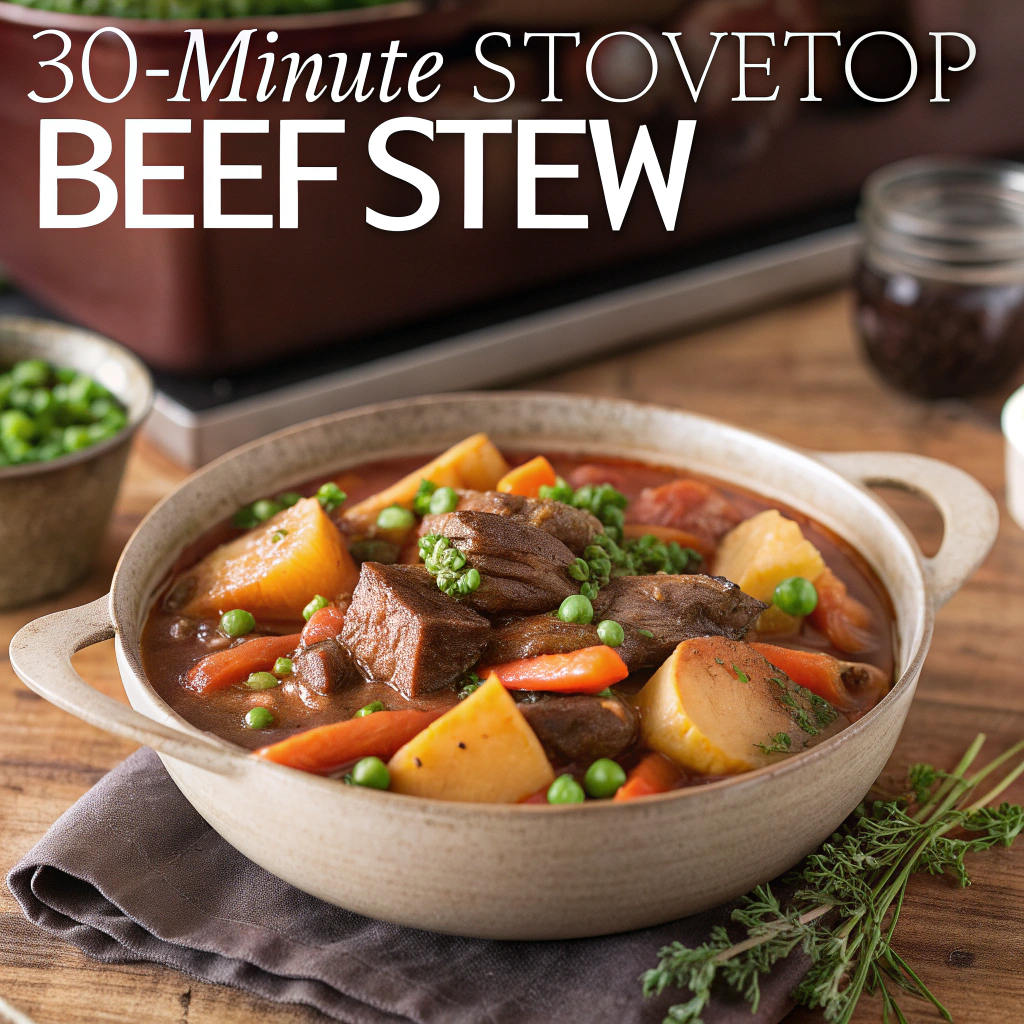
Can a deeply savory, stick-to-your-ribs beef stew truly be ready in half an hour without a pressure cooker? The short answer: yes. This 30-Minute Stovetop Beef Stew with Chuck Roast turns the classic “low and slow” wisdom on its head by changing the cut size, boosting umami, and accelerating browning and thickening. If you think a fast stew can’t deliver tender beef, glossy gravy, and all the comforting aromas you expect, this recipe is ready to surprise you—in just one pot and 30 minutes.
Ingredients List
Make every minute count by leaning on small, even cuts and a few smart flavor enhancers. The goal is maximum surface area (for quick browning) and fast-cooking vegetables so the stew is silky and spoonable by the time the beef is perfectly tender.
- Chuck roast, 1.5 lb (680 g), trimmed and cut into 1/2-inch cubes
- Why chuck? It’s marbled enough to stay juicy and tender with a short stovetop simmer, and those little cubes soften fast.
- Substitutions: top blade/flat iron (similar marbling), sirloin tip (leaner; reduce sear time), or pre-cut “stew meat” (choose well-marbled pieces).
- Baking soda, 1/2 tsp (optional, for ultra-fast tenderizing)
- Kosher salt and black pepper
- Olive oil or avocado oil, 2 tbsp
- Onion, 1 medium (about 150 g), small dice
- Carrots, 2 medium (about 200 g), small dice
- Celery, 2 ribs (about 100 g), small dice
- Garlic, 2–3 cloves, minced
- Tomato paste, 1 tbsp (for a rich, caramelized base)
- Red wine, 1/4 cup (optional; sub extra stock)
- Low-sodium beef stock, 4 cups
- Baby potatoes, 2 cups (about 300 g), 1/2-inch cubes
- Substitutions: Yukon Gold (waxy and holds shape), sweet potato (faster cooking, lightly sweet), or parsnips (peppery, earthy).
- Worcestershire sauce, 1 tbsp
- Soy sauce, 1 tsp (umami booster; use tamari or coconut aminos if gluten-free)
- Dijon mustard, 1 tsp (brightness, balances richness)
- Bay leaf, 1
- Dried thyme, 1 tsp (or 1 tbsp fresh)
- Smoked paprika, 1 tsp (sub sweet paprika for milder flavor)
- Cornstarch, 2 tbsp + cold water, 2 tbsp (slurry)
- Substitutions: potato starch or arrowroot for gluten-free; beurre manié (soft butter + flour) for classic richness; omit for a brothy stew.
- Frozen peas, 1 cup (optional; stir in at the end)
- Fresh parsley, chopped, 2 tbsp
- Red wine vinegar or lemon juice, 1–2 tsp (optional, for finishing brightness)
Sensory notes:
- Tomato paste deepens the stew’s mahogany color and adds sweet, concentrated umami.
- Worcestershire and soy sauce build a savory backbone that tastes like hours of simmering.
- Dijon and a splash of vinegar at the end sharpen the flavors and keep the fast stew from tasting “flat.”
Timing
– Prep time: 10 minutes (cube beef small; dice veggies small and evenly)
– Cook time: 20 minutes
– Total time: 30 minutes
Context: A traditional beef stew often simmers 90–150 minutes. At 30 minutes, this version is roughly 65–80% faster than the average stove-braised stew, thanks to small-dice cuts, a turbo-charged fond, and a quick thickener.
Step-by-Step Instructions
Step 1: Quick-tenderize and season the beef
– Optional but effective: Sprinkle the 1/2-inch chuck cubes with 1/2 tsp baking soda and 1 tsp kosher salt. Toss and let stand 15 minutes while you prep vegetables. This raises surface pH so browning is faster and helps keep the beef tender in a short simmer.
– Rinse briefly and pat dry very well before searing. Season with black pepper.
Tip: Dry beef browns better. Water on the surface steams instead of searing, costing you caramelization and flavor.
Step 2: Sear fast to build fond
– Heat a wide, heavy pot (Dutch oven or 4–5 qt saucepan) over medium-high until hot. Add 1 tbsp oil.
– Add half the beef in a single layer; don’t crowd. Sear 2–3 minutes, stirring once, until browned edges form. Transfer to a plate. Repeat with remaining beef and 1 tbsp oil.
Personalized tweak: If your burner runs gentle, extend sear by 1–2 minutes. A robust fond (the browned bits) is the flavor engine of a 30-minute stew.
Step 3: Sweat the aromatics
– Reduce heat to medium. Add onion, carrot, and celery with a pinch of salt. Cook 3–4 minutes, scraping up browned bits with released vegetable moisture.
– Stir in garlic and cook 30 seconds until fragrant.
Data-driven tip: Cutting vegetables to 1/2-inch dice shortens their tenderizing time by 30–40%, aligning them with the beef’s speed-cook.
Step 4: Caramelize tomato paste and add umami
– Push veggies to the sides. Add tomato paste to the center and cook 60–90 seconds, stirring, until brick red and slightly sticky.
– Stir in Worcestershire, soy, and Dijon. The pot will smell deeply savory—exactly what you want for a “fast tastes slow” stew.
Step 5: Deglaze
– Pour in red wine (if using) and simmer 30–60 seconds, scraping to dissolve fond. Let it reduce until nearly syrupy.
– Add beef stock and bay leaf; bring to a lively simmer.
No wine? Use 1/4 cup stock plus 1 tsp balsamic or red wine vinegar for acidity.
Step 6: Add potatoes and seared beef
– Stir in potatoes, thyme, and smoked paprika. Return seared beef and any juices to the pot. Keep at a strong simmer (not a rolling boil) for 10–12 minutes, uncovered, until potatoes are just tender and beef is supple.
Pro move: A lively simmer concentrates faster than a gentle burble, so your broth becomes glossy and savory in minutes.
Step 7: Thicken to glossy perfection
– Stir cornstarch and cold water until smooth. Reduce heat to medium-low and drizzle in slurry while stirring.
– Simmer 1–2 minutes until the stew turns glossy and coats a spoon. If you prefer thicker, add another 1 tsp slurry at a time; if too thick, loosen with stock or water.
Tip: Slurry must be cold and the stew should be simmering gently. Boiling hard can break down starch and thin the sauce.
Step 8: Finish with greens and brightness
– Stir in peas and simmer 1 minute to heat through.
– Remove from heat; discard bay leaf. Add parsley and a teaspoon of vinegar or lemon juice to lift the flavors. Taste and adjust salt and pepper.
Step 9: Rest and serve
– Let the stew stand 2–3 minutes. This short rest helps the sauce settle and the beef reabsorb juices. Serve hot.
Nutritional Information
Per serving (6 servings), approximate:
– Calories: 380–420
– Protein: 22–26 g
– Carbohydrates: 20–26 g
– Dietary fiber: 3–5 g
– Total fat: 20–26 g
– Saturated fat: 6–9 g
– Sodium: 700–950 mg (with low-sodium stock; adjust to taste)
– Potassium: ~900 mg
– Iron: ~3 mg
– Vitamin A: 100–150% DV (with carrots and peas)
– Vitamin C: 20–35% DV (with potatoes and peas)
How we estimate: These values assume 1.5 lb chuck roast, 2 tbsp oil, 4 cups low-sodium stock, 300 g potatoes, and 1 cup peas. Actual numbers vary by cut, trimming, and stock brand. For precise macros, input your ingredients into a nutrition calculator.
Healthier Alternatives for the Recipe
– Leaner beef: Swap half the chuck with top sirloin (reduce fat, maintain beefy flavor) or increase mushrooms by 1–2 cups to keep volume and umami.
– Lower sodium: Use unsalted stock; replace soy sauce with coconut aminos and reduce Worcestershire by half. Finish with lemon to enhance perceived saltiness.
– More fiber and micronutrients: Add 1 cup diced mushrooms, 1 cup chopped kale (stir in at the end), or 1/2 cup barley (par-cook barley separately if you must stay at 30 minutes).
– Gluten-free and grain-free: Use tamari or coconut aminos instead of soy sauce; thicken with arrowroot or potato starch.
– Whole30/Paleo-friendly: Omit Worcestershire (often contains sugar) and soy; use coconut aminos and fish sauce (1/2 tsp) to replace umami; thicken with arrowroot.
– Lower fat: Reduce oil to 1 tbsp; blot rendered fat after searing or chill the stew briefly and remove surface fat before reheating.
– Alternative starches: Sweet potatoes cook quickly and add natural sweetness; rutabaga or turnips provide a lower-carb root option with a peppery edge.
Serving Suggestions
– Rustic and classic: Ladle into warm bowls with a shower of parsley and cracked pepper. Add a side of crusty bread or buttery biscuits to swipe up the glossy gravy.
– Comfort-forward: Spoon over creamy polenta or mashed potatoes for a double-comfort bowl.
– Bright and fresh: Top with a quick gremolata (minced parsley, lemon zest, garlic) or a dollop of horseradish yogurt to cut through richness.
– Weeknight spread: Serve with a crisp green salad (shaved fennel, lemon, olive oil) to balance the stew’s deep flavors.
– Beverage pairings: Cabernet Sauvignon, a malty porter, or iced black tea with lemon. Each complements the stew’s savory base.
If you love quick, hearty skillet meals too, try our Ground Beef Sweet Potato Hash—another weeknight favorite that leans on smart cuts and fast techniques.
Common Mistakes to Avoid
– Overcrowding the pan during sear: Crowding steams the beef and sabotages fond. Work in two batches for superior browning and deeper flavor.
– Cutting large cubes: Bigger pieces take longer to tenderize. Keep beef and potatoes at 1/2-inch cubes so they cook through in the same window.
– Skipping the tomato paste caramelization: Raw paste tastes tinny; quickly toasting it transforms the flavor and color.
– Boiling aggressively: A fierce boil toughens proteins and can turn potatoes mealy. Aim for a strong simmer.
– Thickening too early: Wait until potatoes are tender; adding the slurry too soon can lock you into a texture before ingredients are fully cooked.
– Overseasoning with salty stock and soy: Use low-sodium stock. Build salt in stages and finish with acid to lift flavors without excess sodium.
– Neglecting the finish: Fresh herbs and a splash of vinegar or lemon brightens and balances the stew, making it taste “long-cooked.”
Storing Tips for the Recipe
– Refrigeration: Cool quickly and refrigerate in airtight containers up to 4 days. The flavors meld and improve by day two.
– Freezing: Freeze up to 3 months. For best texture, undercook potatoes by 2 minutes or use waxy potatoes (Yukon Gold) to prevent graininess after thawing.
– Reheating: Thaw overnight in the fridge. Reheat gently on the stovetop over medium-low, adding water or stock as needed to loosen. Avoid boiling to keep beef tender.
– Meal prep: Cube beef and vegetables up to 2 days ahead. Store beef separately (dry and sealed), and toss cut potatoes in cold water with a pinch of salt to prevent browning (drain well before cooking).
Conclusion
You don’t need a free afternoon to enjoy a soul-satisfying bowl of stew. With small, even cuts, a high-heat sear, umami boosters, and a quick cornstarch finish, this 30-Minute Stovetop Beef Stew with Chuck Roast delivers the depth you crave on a weeknight timeline. Grab a Dutch oven, make it tonight, and let me know your favorite spin—extra mushrooms, a kale finish, or sweet potatoes? Share your results and tips, and explore more fast, flavor-first dinners on the site.
Curious how other cooks speed up stew? Compare techniques with this inspiration from the web: an easy 30-minute beef stew that also leans into quick browning and clever shortcuts.
FAQs
– Can I use pre-cut “stew meat”?
Yes, but choose well-marbled pieces. Trim any large connective tissue and keep cubes around 1/2 inch for fast tenderness. If they’re larger, add 5–10 minutes.
-
Do I have to use baking soda on the beef?
No, it’s optional. It helps speed tenderizing, especially for leaner or less marbled cuts. Rinse and pat dry before searing to avoid off flavors. -
What if I don’t have cornstarch?
Use 2 tbsp potato starch or arrowroot mixed with cold water. Or make a quick beurre manié: mash 1 tbsp soft butter with 1 tbsp flour, whisk in, and simmer 2–3 minutes. -
Will the stew still be good if I skip the wine?
Absolutely. Use stock plus a teaspoon of vinegar or lemon at the end for brightness. The key is balancing richness with a touch of acid. -
Can I add mushrooms or other vegetables?
Definitely. Add 1–2 cups sliced mushrooms in Step 3 with the aromatics. For green beans or kale, add in the final 3–4 minutes so they stay vibrant. -
How do I keep the beef tender in such a short time?
Use well-marbled chuck, cut small; sear quickly; and simmer (don’t boil) in a flavorful liquid. The small cubes become tender in roughly 12 minutes. -
My gravy isn’t glossy—what happened?
Ensure the slurry is fully mixed and added to a hot, gently simmering stew. If it’s dull or thin, simmer another minute or add 1 tsp more slurry. -
Can I make this dairy-free and gluten-free?
Yes. There’s no dairy in the base recipe, and using cornstarch or arrowroot plus tamari or coconut aminos keeps it gluten-free. -
How can I boost protein without adding more beef?
Stir in 1 cup cooked lentils or chickpeas in the last 5 minutes. They absorb flavors quickly and add fiber. -
What pot works best?
A wide Dutch oven or heavy-bottomed saucepan promotes fast evaporation and better browning, giving you richer flavor in less time. -
Can I make it spicier?
Add 1/4–1/2 tsp crushed red pepper or a teaspoon of harissa with the tomato paste. Smoked paprika can be increased for more warmth without heat. -
Is this recipe good for batch cooking?
Yes—double it in a large Dutch oven. Sear beef in three batches, then combine and proceed. It refrigerates and freezes well.
Enjoy a bowl that tastes like a slow Sunday simmer, made squarely for weeknights.