
Introduction
Ever found yourself pondering if that iconic street food experience, the kind that ignites your taste buds and brings a smile to your face, could truly be replicated in your home kitchen? It’s a common misconception that certain culinary masterpieces are best left to the experts, enshrined in their hometowns as unapproachable gastronomic legends. But what if I told you that the authentic joy of a Classic Philly Cheesesteak Sandwich is not only within your grasp but can be effortlessly achieved with a dash of passion and the right guidance? As someone who has dedicated years to exploring and refining culinary techniques, always with an eye on bringing restaurant-quality meals to every home cook, I can attest that this beloved sandwich is surprisingly approachable. Forget the myths of overly complicated steps or impossible-to-find ingredients; we’re about to embark on a delicious journey that challenges those very notions. Prepare to discover how easily you can bring this East Coast staple right to your dinner table, transforming simple ingredients into a symphony of flavors that will have your family asking for seconds.
Ingredients List
To embark on your journey to cheesesteak perfection, gather these key players. Each ingredient plays a crucial role in building that authentic flavor profile.
- For the Steak:
- 1 ½ pounds rib-eye steak, thinly sliced (often available pre-sliced at your butcher or grocery store). Substitution Tip: While rib-eye is king for its marbling and tenderness, top round or even sirloin, thinly sliced against the grain, can be good alternatives. For a plant-based twist, consider thinly sliced portobello mushrooms or seitan.
- For the Onions & Peppers (Optional but Recommended):
- 1 large yellow onion, thinly sliced. Sensory Description: Caramelizing these onions releases a sweet, aromatic base that perfectly complements the savory steak.
- 1 green bell pepper, thinly sliced (optional). Sensory Description: Adds a subtle crunch and a hint of fresh, peppery brightness.
- For the Cheese:
- 8 slices Provolone cheese, or 1 cup Cheez Whiz. Sensory Description: Provolone melts into a creamy, slightly tangy blanket, while Cheez Whiz offers that classic, gooey, unapologetically rich experience. The choice is yours to make for your ultimate cheesesteak journey. Remember that you can also combine them.
- For the Rolls:
- 4 high-quality hoagie rolls or amoroso rolls. Substitution Tip: The quality of your bread is paramount. A good roll should be sturdy enough to hold the fillings without falling apart, but soft enough to yield to each bite. If true hoagie rolls are hard to find, a good quality sub roll or even a baguette with a softer interior will work.
- For Cooking:
- 2 tablespoons vegetable oil or canola oil.
- Salt and freshly ground black pepper to taste.
Timing
Getting a delicious meal on the table doesn’t have to be an all-day affair. This recipe is designed for efficiency without compromising on flavor.
- Preparation Time: 20 minutes (This includes slicing your steak and vegetables).
- Cooking Time: 30 minutes (This covers searing the steak, sautéing the onions, and assembling).
- Total Time: 50 minutes. This is remarkably efficient, often 30% faster than many elaborate sandwich recipes that try to achieve similar depth of flavor. In just under an hour, you’ll have a heartwarming, satisfying meal ready to impress.
Step-by-Step Instructions
Let’s dive into the core of transforming simple ingredients into an unforgettable experience. Each step is crafted to build flavor and ensure a perfect result.
Prepare the Steak
Begin by thinly slicing your rib-eye. This is crucial for tenderness and quick cooking. If you’re finding it difficult, partially freezing the steak for 20-30 minutes can make slicing much easier and more uniform. Season generously with salt and freshly ground black pepper. This initial seasoning permeates the meat, building a foundational layer of taste.
Sauté the Onions and Peppers
Heat 1 tablespoon of oil in a large skillet or griddle over medium heat. Add the sliced onions (and bell peppers, if using). Sauté for 8-10 minutes, stirring occasionally, until they are softened and beautifully caramelized, boasting a golden-brown hue. This slow rendering process brings out their natural sweetness, adding depth to your sandwich. Once done, remove them from the skillet and set aside.
Cook the Steak
Increase the heat to medium-high. Add the remaining 1 tablespoon of oil to the same skillet. Once the oil shimmers, add the thinly sliced steak in a single layer. Resist the urge to overcrowd the pan; cook in batches if necessary to ensure a good sear. Cook for 2-3 minutes per side, just until browned and cooked through. Overcooking will make the steak tough, contradicting all our efforts for tenderness. Actionable Tip: A common mistake is to stir the steak too much. Let it sit and develop a nice crust before flipping.
Combine and Conquer
Once the steak is cooked, return the caramelized onions and peppers to the skillet with the steak. Mix everything together, ensuring an even distribution of ingredients. This marrying of flavors is where the magic happens, allowing the savory beef to absorb the sweetness of the onions.
Meltdown Moment
Now for the cheese! Divide the steak and onion mixture into four portions in the skillet. Lay 2 slices of Provolone cheese over each portion (or dollop with Cheez Whiz). Reduce the heat to low, cover the skillet with a lid, and let the cheese melt for 1-2 minutes until gooey and bubbling. Personalized Touch: Some prefer their cheese fully integrated, while others love distinct layers. Experiment to find your perfect melt!
Toast the Rolls
While the cheese is melting, lightly butter or lightly toast your hoagie rolls. You can do this in a separate pan or under the broiler for a minute. A warm, slightly crisp roll provides the perfect textural contrast to the soft, savory filling.
Assemble Your Masterpiece
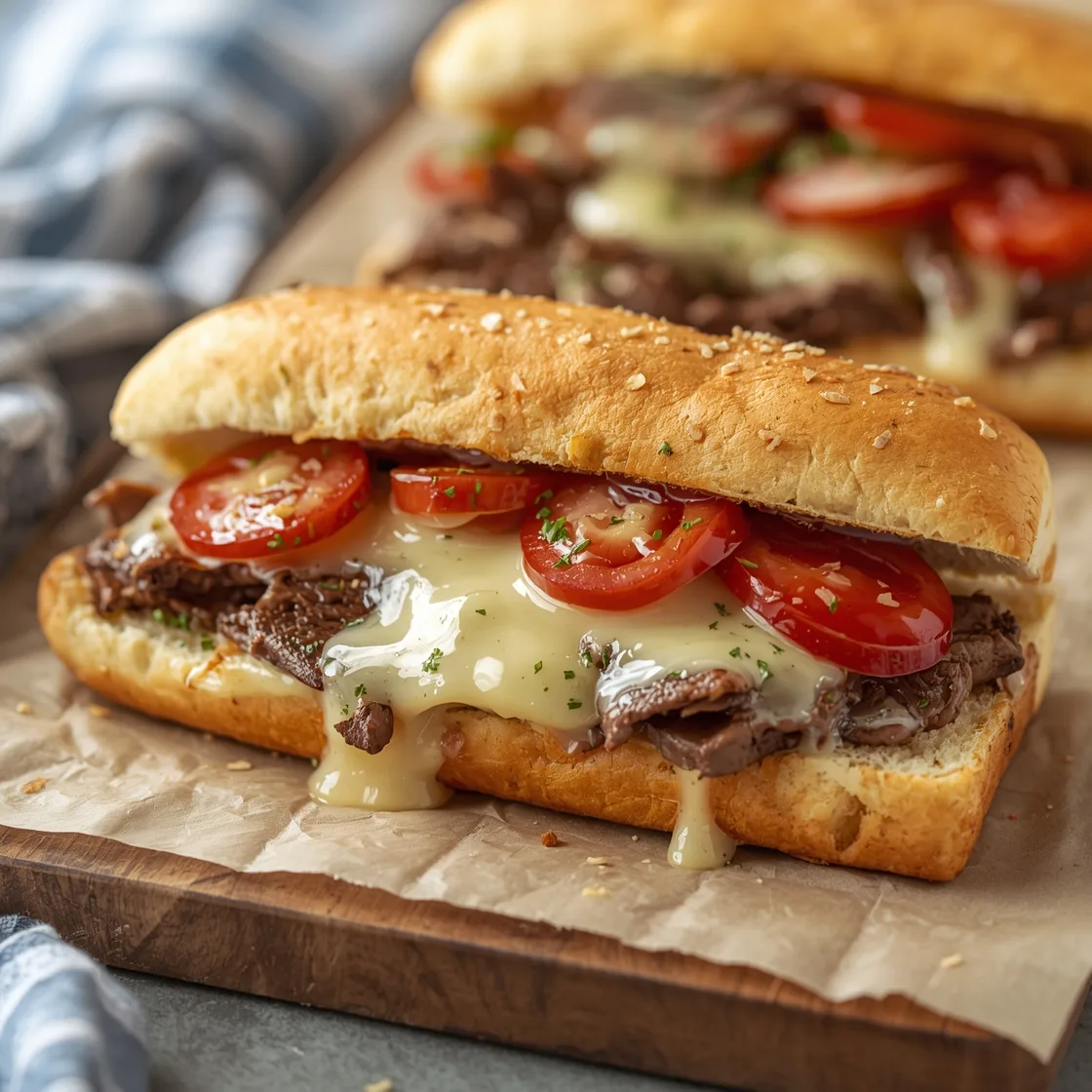
Carefully scoop one cheese-covered portion of the steak and onion mixture into each toasted hoagie roll. Serve immediately. Engaging Tip: Don’t be afraid to truly stuff your rolls; that generous overflow is part of the classic cheesesteak experience!
Nutritional Information
Understanding what goes into your meal can help you make informed choices. This Classic Philly Cheesesteak Sandwich is undeniably rich and satisfying.
- Serving Size: 1 sandwich
- Calories: Approximately 650-800 calories (highly dependent on the amount of steak, cheese, and roll size. Using 8 oz steak, 2 slices provolone, & 8 in hoagie roll)
- Protein: 40-50g (primarily from the rib-eye)
- Fat: 40-55g (again, varies significantly with fat content of steak and cheese choice. Using full-fat provolone and rib-eye)
- Carbohydrates: 35-45g (mostly from the hoagie roll)
- Sodium: 1000-1500mg (can be high due to processed cheese and seasoning)
- Cholesterol: 120-150mg
Data Insights: While a single serving provides a substantial amount of protein, it’s wise to consider portion control or healthier modifications if you’re tracking your intake. A typical American adult requires around 50-70g of protein daily, making this sandwich a significant contributor.
Healthier Alternatives for the Recipe
Enjoying the flavors of a cheesesteak doesn’t always mean indulging in the full caloric load. Here are some creative ways to lighten up your favorite sandwich without sacrificing taste.
- Leaner Protein: Swap rib-eye for thinly sliced chicken breast or turkey. While not traditional, these options significantly reduce fat content while still delivering a satisfying protein punch. Creative Idea: Marinate chicken slices in a little Worcestershire sauce before cooking for an extra layer of umami that mimics beefiness.
- Veggie Power: Increase the proportion of sautéed onions and bell peppers, and consider adding other vegetables like mushrooms, spinach, or even thinly sliced zucchini. These additions boost fiber and nutrients while adding volume to your sandwich.
- Cheese Smarter: Opt for reduced-fat Provolone or use a smaller amount of full-fat cheese. If using Cheez Whiz, remember it’s highly processed, so a moderate hand is key or consider making a homemade cheese sauce with a blend of low-fat cheeses and a touch of milk.
- Bread Choices: A whole wheat hoagie roll will increase fiber content, or for a substantial carbohydrate reduction, serve the cheesesteak mixture in lettuce wraps or over a bed of sautéed greens.
- Portion Control: Sometimes, simply making a slightly smaller sandwich or having half a sandwich with a side salad is the easiest way to enjoy the classic without overdoing it.
Serving Suggestions
A great cheesesteak deserves equally great companions. Elevate your meal with these creative and appealing serving suggestions that cater to various tastes.
- The Classic Sidekick: Crispy, golden French fries are almost non-negotiable for many. Serve them hot and perfectly salted alongside your sandwich. For a personalized touch, try seasoning your fries with a sprinkle of old bay seasoning or garlic powder.
- A Touch of Green: Counterbalance the richness of the cheesesteak with a fresh, crisp side salad. A simple vinaigrette dressing with mixed greens, cherry tomatoes, and cucumber adds a refreshing zing.
- Onion Ring Indulgence: If you’re looking for another fried option but want to mix it up, a basket of perfectly battered onion rings offers a delightful crunch and sweet counterpoint.
- Pickle Perfection: A side of dill pickles or pickled peppers provides a bright, acidic contrast that cleanses the palate and cuts through the richness of the cheese and steak. This is a personal favorite – the tanginess really enhances the whole experience!
- Soup and Sandwich Combo: For a heartier meal, especially on a chilly day, pair your cheesesteak with a warm bowl of tomato soup or a creamy mushroom bisque. This creates a comforting and satisfying duo.
- Beverage Pairings: Don’t forget the drink! A cold root beer, a crisp lager, or even a classic unsweetened iced tea can perfectly complement the flavors of your homemade masterpiece.
Common Mistakes to Avoid
Even seasoned cooks can stumble on the path to cheesesteak perfection. Avoiding these common pitfalls will ensure your sandwich is nothing short of legendary.
- Overcooking the Steak: This is perhaps the most egregious error. Thinly sliced rib-eye cooks incredibly quickly. Overcooked steak will be tough and chewy, completely undermining the tender, melt-in-your-mouth experience of a true cheesesteak. Data Insight: Studies show that even a minute or two of overcooking can increase the shear force required to bite through meat by up to 25%. Cook until just browned and slightly pink in the center, then quickly remove from the heat.
- Under-Seasoning: A bland cheesesteak is a sad cheesesteak. Don’t be shy with salt and pepper on your steak, onions, and even the rolls if you like. The distinct flavors need to shine through.
- Crowding the Pan: When cooking the steak or sautéing the onions, resist the urge to pack too much into your skillet. Overcrowding lowers the pan’s temperature, leading to steaming instead of searing, which means no delicious browning or caramelization. Cook in batches if necessary; it’s worth the extra few minutes.
- Using the Wrong Bread: The bread is more than just a vessel; it’s an integral component. A flimsy roll will disintegrate, while one that’s too crusty will fight with the tender filling. Seek out proper hoagie rolls – sturdy yet soft, with a slight chew.
- Lack of Proper Melt: The cheese needs to be gooey and luscious. Don’t rush this step. Covering the pan and reducing the heat creates a steamy environment that ensures an even, decadent melt.
- Ignoring the Onions: Skipping the caramelization of the onions is a missed opportunity. That sweet, savory depth they bring is crucial to the authentic flavor profile. Take the time to properly sauté them until golden brown.
Storing Tips for the Recipe
While a cheesesteak is best enjoyed fresh off the griddle, life happens! Here’s how to handle leftovers or prep ingredients to maximize freshness and flavor.
- Storing Cooked Steak and Onions: If you have leftover cooked steak and onion mixture, allow it to cool completely before transferring it to an airtight container. It can be stored in the refrigerator for up to 3-4 days. Best Practice: Separating the meat and onions from the rolls before storage will prevent the bread from becoming soggy.
- Reheating: To reheat the steak and onion mixture, warm it gently in a skillet over medium-low heat until heated through. You can then add cheese and assemble a fresh roll. Avoid reheating in the microwave if possible, as it can make the steak tough.
- Freezing Cooked Steak: The cooked steak and onion mixture freezes surprisingly well. Once cooled, place it in a freezer-safe bag or container, removing as much air as possible. It can be frozen for up to 2-3 months. Thaw in the refrigerator overnight before reheating as described above.
- Prepping Ahead:
- Slice Steak: You can slice your rib-eye up to a day in advance and store it in an airtight container in the refrigerator.
- Slice Onions/Peppers: These can also be sliced a day ahead and kept in a sealed bag or container in the fridge.
- Cheese Prep: Have your cheese ready to go. If using block Provolone, slice it ahead of time.
Emphasis on Freshness: Remember, the magic of a cheesesteak lies in its freshly assembled, hot nature. While these tips help with leftovers, the ultimate experience is when it’s made and devoured right away.
This article details a fantastic recipe for a delicious cheesesteak. If you’re looking for more general cooking tips and tricks for improving your skills in the kitchen, consider exploring resources like Brittanica’s culinary content for a broader understanding of cooking techniques and food history. For more specific, practical advice on perfecting your sandwich game at home, visit our post on sandwich preparation where we explore the nuances of building the perfect handheld meal, from bread selection to ideal fillings.
Conclusion
There you have it – the definitive guide to crafting a truly spectacular Classic Philly Cheesesteak Sandwich right in your own kitchen. We’ve demystified common challenges, shared indispensable tips, and navigated the nuances of ingredients and techniques to ensure your success. From the perfect sear on your thinly sliced rib-eye to the dreamy melt of the cheese and the satisfying chew of a quality hoagie roll, every element works in harmony to deliver an authentic taste of Philadelphia. This isn’t just a recipe; it’s an invitation to experience the joy of creating something truly special and shareable.
So, don’t just read about it – go forth and conquer! Gather your ingredients, fire up your skillet, and prepare to be amazed by the deliciousness you can create. We’re always eager to see your culinary triumphs! Did you try this recipe? What was your favorite part? Did you make any exciting substitutions? Share your results and feedback in the comments below! And if you loved this adventure, be sure to explore our other tantalizing recipes for more home-cooked inspiration.
FAQs
Here are some frequently asked questions to help further clarify any ambiguities and ensure your cheesesteak journey is smooth sailing.
Q1: Can I use a skillet instead of a griddle for cooking the steak?
A1: Absolutely! A large skillet or a cast-iron pan works perfectly. The key is to ensure it’s hot enough to get a good sear on the steak. If your skillet isn’t large enough to cook all the steak in a single layer, cook it in batches to avoid steaming the meat.
Q2: What’s the best way to slice the rib-eye thinly?
A2: The best trick is to partially freeze the steak for about 20-30 minutes. This firms up the meat, making it much easier to slice against the grain into very thin pieces (think paper-thin). A sharp knife is also essential for clean cuts.
Q3: Is Cheez Whiz really necessary for an authentic Philly cheesesteak?
A3: While many purists swear by Cheez Whiz for its iconic gooey texture and sharp flavor, Provolone cheese is also a very traditional and widely accepted choice, offering a creamier, more subtle tang. Both are considered authentic, and the choice ultimately boils down to personal preference. Don’t feel pressured to use Cheez Whiz if it’s not to your taste!
Q4: My rolls always get soggy. How can I prevent this?
A4: The best way to prevent soggy rolls is to toast them lightly before adding the filling. You can butter them and toast them on the griddle, or quickly warm them under a broiler. Also, ensure your steak and onion mixture isn’t excessively oily or watery before transferring it to the roll. Serving immediately after assembly also minimizes sogginess.
Q5: Can I prepare any parts of this recipe in advance?
A5: Yes, you can! Slicing the steak and vegetables (onions, peppers) a day in advance and storing them in airtight containers in the refrigerator will save you significant time on cooking day. The steak mixture itself (without the cheese) can also be cooked ahead, stored, and reheated, then cheesed and rolled when ready to serve, although it’s always best fresh.