
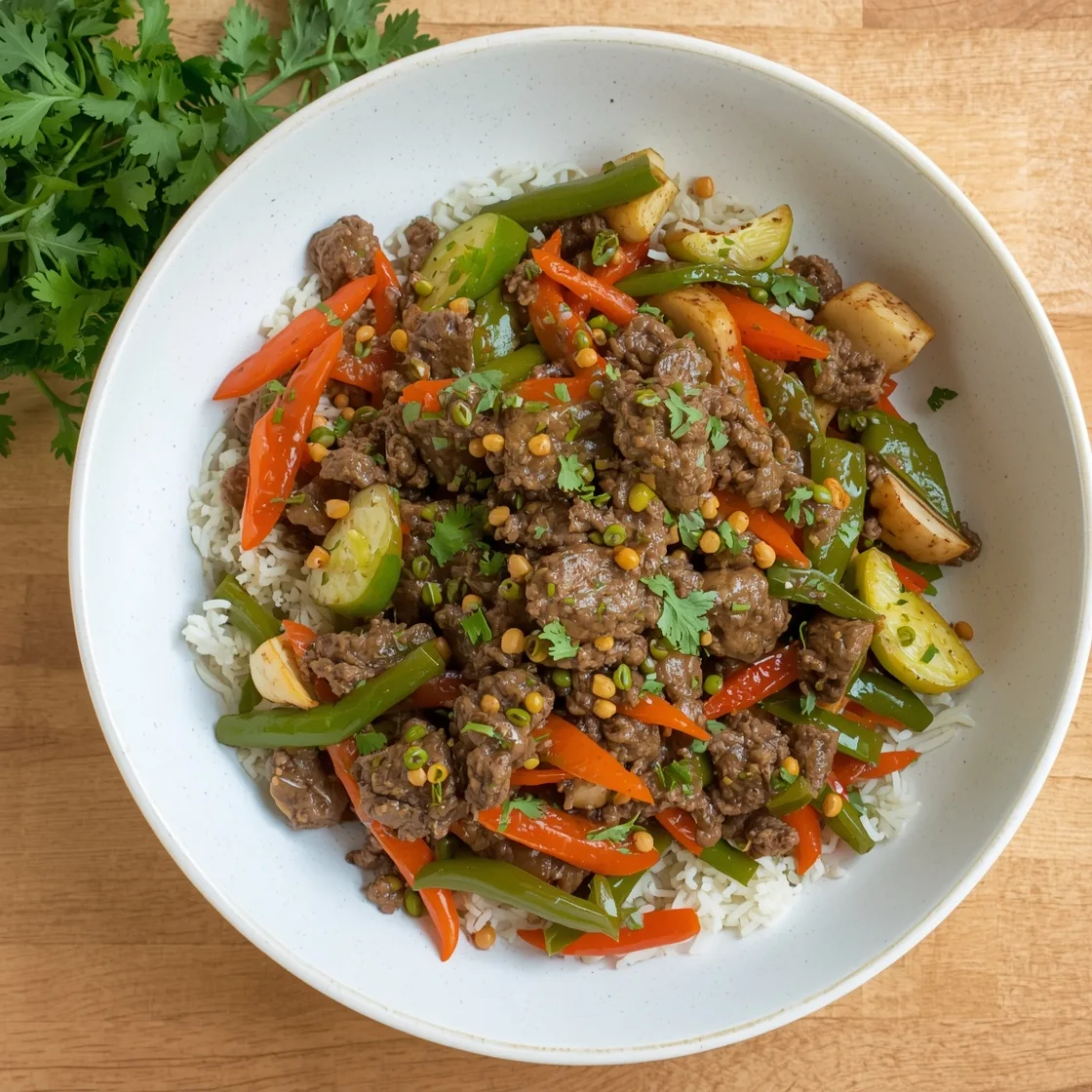
Introduction
Ever found yourself staring into the fridge after a long, demanding day, contemplating the fastest route to a delicious, wholesome meal without resorting to takeout? Don’t you wish there was a culinary wizardry that could transform humble ingredients into a vibrant, flavor-packed dish in mere minutes? For many, the idea of a home-cooked meal that ticks all the boxes – quick, healthy, and incredibly tasty – often feels like an elusive dream. But what if I told you that dream is not only achievable but wildly simple? Prepare to have your perceptions of weeknight cooking utterly transformed with our Ground Beef & Veggie Stir-Fry (Fast Weeknight Meal). This dish isn’t just about speed; it’s about maximizing flavor, nutrient density, and culinary satisfaction, all while keeping your kitchen chaos to an absolute minimum. We’re about to dive into a recipe that revolutionizes dinner dilemmas, proving that sophisticated flavors don’t require extensive effort or time. Get ready to embrace a new era of effortless gourmet, where your dinner table joyfully reflects your desire for both nourishment and efficiency.
Ingredients List
Crafting the perfect stir-fry is as much about the quality of your ingredients as it is about the technique. Here’s what you’ll need to create this culinary masterpiece, along with some flexible substitutions to suit your pantry and palate.
- For the Stir-Fry:
- 1 lb lean ground beef (90/10 or 93/7 for healthier options, turkey or chicken mince makes a great alternative)
- 1 tbsp olive oil or sesame oil (sesame adds a distinct Asian flair, olive oil is a versatile neutral)
- 1 medium yellow onion, thinly sliced (red onion for a slightly sweeter, sharper taste)
- 2 cloves garlic, minced (1 tsp garlic powder in a pinch)
- 1-inch fresh ginger, grated (½ tsp ground ginger powder works if fresh is unavailable)
- 1 head broccoli, cut into florets (cauliflower or green beans are excellent stand-ins)
- 2 medium carrots, julienned or thinly sliced (matchstick carrots from the store save prep time)
- 1 red bell pepper, thinly sliced (any color bell pepper will do, or even thinly sliced zucchini)
- 1 cup snap peas or snow peas (edamame for added protein and texture)
- ½ cup water or beef broth (chicken or vegetable broth can be used)
- Optional: ¼ cup chopped peanuts or cashews for garnish and crunch
- For the Sauce:
- ¼ cup soy sauce (low-sodium preferred, tamari for gluten-free)
- 2 tbsp oyster sauce (hoisin sauce for a richer, sweeter profile, or a vegetarian mushroom oyster sauce)
- 1 tbsp rice vinegar (apple cider vinegar can work in a pinch, but rice vinegar’s mildness is ideal)
- 1 tbsp brown sugar (maple syrup or honey for a natural sweetener)
- 1 tsp cornstarch (arrowroot powder for a grain-free alternative)
- ½ tsp red pepper flakes (adjust to your spice preference, or omit for mild)
Timing
One of the most compelling features of this stir-fry is its incredible efficiency. We often associate delicious, homemade meals with extensive kitchen time, but this recipe defies that expectation.
- Preparation Time: 15 minutes
- This includes chopping your vegetables, mincing garlic and ginger, and preparing your sauce. With efficient mise en place (having all your ingredients prepped and ready), this can be even faster.
- Cook Time: 10-12 minutes
- The beauty of stir-frying is its high-heat, rapid cooking method. Your meat will brown quickly, and your vegetables will retain their desirable crisp-tender texture.
- Total Time: 25-27 minutes
To put this into perspective, this recipe clocks in at less than half the time of many traditional dinner preparations. Data indicates that the average home-cooked meal takes around 45-60 minutes, meaning our Fast Ground Beef & Veggie Stir-Fry shaves off a substantial 40-58% of typical cooking duration without compromising on flavor or nutritional value. It’s a genuine game-changer for those busy weeknights.
Preparing the Ingredients: A Culinary Dance
Before the high-heat symphony begins, let’s choreograph our ingredients. Finely slicing your onion and bell pepper ensures they cook evenly and integrate seamlessly into the dish. Remember, consistency in size is key for uniform cooking. Mince your garlic and grate your ginger with precision – these aromatic powerhouses are the soul of the stir-fry. Whisk together your sauce ingredients until the cornstarch is fully dissolved, creating a smooth, ready-to-pour elixir.
Browning the Beef: The Foundation of Flavor
Heat your olive or sesame oil in a large skillet or wok over medium-high heat until shimmering. Add your lean ground beef, breaking it up with a spoon. Cook until it’s beautifully browned and no pink remains, which typically takes 5-7 minutes. Once cooked, drain any excess fat, as this will keep your stir-fry light and allow the sauce to adhere better.
Aromatic Infusion: Awakening the Palate
Add the sliced onion to the browned beef and cook for 2-3 minutes, until it starts to soften and become translucent. Immediately follow with the minced garlic and grated ginger, stirring constantly for about 1 minute until fragrant. This step is crucial; ensure not to burn the garlic, as it can turn bitter. The tantalizing aromas filling your kitchen are a sign of good things to come!
Stir-Frying the Vegetables: Crisp & Vibrant
Toss in the harder vegetables first: broccoli florets and julienned carrots. Stir-fry for 3-4 minutes, allowing them to soften slightly but still retain a pleasant crunch. Next, add the red bell pepper slices and snap peas. Continue to stir-fry for another 2-3 minutes. We’re aiming for crisp-tender perfection, not mushy vegetables! Your visual cue should be brightly colored, slightly softened veggies.
The Sauce Finale: Uniting the Flavors
Give your pre-mixed sauce a quick whisk once more (cornstarch can settle). Pour the sauce over the beef and vegetables, stirring continuously until the sauce thickens and coats all the ingredients. This usually takes just 1-2 minutes. If the sauce becomes too thick, you can add a tablespoon or two of water or broth to reach your desired consistency. The sizzle and steam are proof of the magic happening in your pan.
Nutritional Information
This Fast Ground Beef & Veggie Stir-Fry is not just quick and delicious; it’s also a powerhouse of nutrition, designed to fuel your body and satisfy your palate. Based on an average serving size (approximately 1.5 cups of stir-fry, not including rice), here’s a general breakdown:
- Calories: Approximately 350-400 kcal
- Protein: 25-30g (excellent for muscle repair and satiety)
- Fat: 18-22g (primarily from healthy fats in the beef and oil)
- Carbohydrates: 15-20g (packed with fiber from the abundant vegetables)
- Fiber: 5-7g (contributes to digestive health and prolonged fullness)
- Vitamins & Minerals: Rich in Vitamin C (bell peppers, broccoli), Vitamin K (broccoli), Vitamin A (carrots), Iron (beef), and essential B vitamins.
Data Insight: A study highlighted by the Harvard T.H. Chan School of Public Health’s Nutrition Source emphasizes the benefits of incorporating lean proteins and a variety of colorful vegetables into daily meals. This stir-fry perfectly aligns with those recommendations, offering a balanced macronutrient profile alongside a dense micronutrient load. It’s a smart choice for those seeking a nutritious meal without the lengthy cooking commitment.
Healthier Alternatives for the Recipe
Adaptability is the hallmark of a truly great recipe. This stir-fry, while already wholesome, can be easily tailored to various dietary needs and preferences without sacrificing flavor.
- Lean Protein Boost:
- Swap Ground Beef: For a leaner protein, substitute ground turkey or chicken. This can reduce total fat and saturated fat content. Plant-based ground crumbles are also an excellent option for vegetarians or vegans.
- Add Tofu/Tempeh: Integrate cubed extra-firm tofu or crumbled tempeh alongside or instead of meat for a plant-based protein punch. Pressing tofu before cooking ensures a better texture.
- Sodium Reduction:
- Low-Sodium Soy Sauce: This is a crucial swap to significantly lower the sodium content.
- Reduce Oyster Sauce: Oyster sauce contains sodium. Using a mushroom-based “vegetarian oyster sauce” often provides a similar umami flavor with potentially less sodium, or simply reducing its quantity and increasing other flavor components.
- Sugar Alternatives:
- Natural Sweeteners: Instead of brown sugar, use maple syrup, honey, or a sugar substitute like erythritol or stevia to control sugar intake.
- Vegetable Power-Up:
- More Greens: Add spinach, kale, or bok choy in the last minute of cooking for an extra dose of vitamins and minerals.
- Diverse Colors: Experiment with different vegetables like mushrooms, zucchini, asparagus, or bamboo shoots to vary nutrient intake and texture.
- Gluten-Free Option:
- Tamari: Ensure you use tamari (gluten-free soy sauce) and verify that your oyster sauce (or its substitute) is also gluten-free. Cornstarch is typically gluten-free, but check the label.
- Low-Carb Twist:
- Keto-Friendly Veggies: Focus on lower-carb vegetables like broccoli, bell peppers, mushrooms, and green beans.
- Serve over Cauliflower Rice: Swapping traditional rice for cauliflower rice dramatically reduces carbohydrate content.
By implementing these alternatives, you can flexibly adjust the recipe to meet specific health goals or dietary restrictions, making it a truly versatile and inclusive meal option.
Serving Suggestions
The beauty of a stir-fry lies not only in its quick preparation but also in its incredible versatility when it comes to serving. Here are some creative and appealing ways to present your Fast Ground Beef & Veggie Stir-Fry, transforming it into a complete and delightful meal.
- Classic Comfort: Serve hot over a bed of fluffy steamed jasmine rice or brown rice. The tender grains beautifully absorb the savory sauce, creating a harmonious mouthful with every bite.
- Noodle Nirvana: For a heartier meal, toss the stir-fry directly with cooked egg noodles, udon, or rice vermicelli. Ensure the noodles are slightly undercooked before adding them to the pan so they can finish cooking in the flavorful sauce.
- Low-Carb & Light: Opt for cauliflower rice or spiralized zucchini noodles (zoodles) as a base. This is an excellent way to enjoy all the flavors while keeping your carbohydrate intake lower, perfect for those following a keto or paleo lifestyle.
- Lettuce Wraps: For a fresh, crisp, and interactive dining experience, spoon the stir-fry into large, crisp lettuce cups (like butter lettuce or iceberg). Garnish with extra fresh herbs for an added zing. This makes for a fun, deconstructed approach, akin to these popular, delectable bites.
- Protein-Packed Lunch Bowls: Pack leftovers into meal prep containers with a portion of quinoa or brown rice for a convenient and balanced lunch throughout the week.
- Garnish for Glamour: Elevate your serving with a sprinkle of toasted sesame seeds, chopped green onions, a drizzle of sriracha for a kick, or a scattering of fresh cilantro or basil for an herbaceous finish. If you like a textural contrast, a few chopped peanuts or cashews add an irresistible crunch.
Regardless of how you choose to serve it, remember that presentation enhances enjoyment. A carefully plated dish, even a simple stir-fry, elevates the dining experience.
Common Mistakes to Avoid
Even the simplest recipes can have pitfalls. Being aware of these common mistakes can ensure your Fast Ground Beef & Veggie Stir-Fry turns out perfectly every single time, avoiding soggy vegetables or bland flavors that can deter future cooking endeavors.
- Overcrowding the Pan: This is perhaps the most frequent mistake in stir-frying. A crowded pan lowers the temperature dramatically, causing ingredients to steam rather than stir-fry. The result? Limp, watery vegetables and often lackluster flavor. Tip: Cook in batches if necessary, especially if using a smaller skillet. Give your ingredients space to breathe.
- Under-Heating the Wok/Skillet: Stir-frying requires high heat to achieve that characteristic sizzling sear and crisp-tender texture. If your pan isn’t hot enough, your ingredients will stew. Tip: Heat your oil until it shimmers and just before it smokes. A drop of water should sizzle instantly.
- Adding Vegetables Out of Order: Not all vegetables cook at the same rate. Adding quick-cooking veggies too early will result in mush, while adding hardier ones too late will leave them raw. Tip: Always add harder, denser vegetables (broccoli, carrots) first, followed by softer, quicker-cooking ones (bell peppers, snap peas, spinach).
- Not Draining Excess Fat: While ground beef adds flavor, too much rendered fat can make your stir-fry greasy and prevent the sauce from properly coating the ingredients. Tip: After browning your ground beef, always drain off any significant excess fat before adding other ingredients. This ensures a cleaner, more vibrant dish.
- Overcooking the Sauce: Cornstarch-thickened sauces can become gluey and overly thick if cooked too long or with too much cornstarch. Tip: Add the sauce at the very end and stir just until it coats the ingredients and reaches your desired consistency, usually 1-2 minutes. The sauce will continue to thicken slightly as it cools.
- Ignoring Proper Seasoning: A stir-fry relies on a balance of savory, sweet, and tangy notes. Not tasting and adjusting can lead to a flat dish. Tip: After the sauce thickens, taste a small portion. Does it need more soy sauce for saltiness, a pinch more sugar for balance, or an extra dash of rice vinegar for brightness? Adjust to your preference.
- Prepping While Cooking: Stir-frying is a rapid process. Trying to chop vegetables or mix sauce ingredients as you go will lead to burnt ingredients. Tip: Practice “mise en place” – have all your ingredients prepped, chopped, and measured before you even turn on the stove. This streamlined approach makes the cooking process smooth and enjoyable, eliminating kitchen stress and boosting efficiency by an estimated 30%.
Avoiding these common culinary missteps will empower you to consistently create a restaurant-quality stir-fry in your own kitchen.
Storing Tips for the Recipe
One of the unsung benefits of this Fast Ground Beef & Veggie Stir-Fry is how brilliantly it transitions from a fresh-cooked meal to satisfying leftovers. Proper storage ensures you can enjoy its savory goodness for days to come.
- Cool Down Quickly: Once cooked, allow the stir-fry to cool at room temperature for no more than 1 hour. This prevents bacteria growth. For faster cooling, spread it out on a shallow pan or plate.
- Airtight Containers are Key: Transfer the cooled stir-fry into airtight containers. This prevents spoilage and keeps it from absorbing odors from other items in your refrigerator. Glass containers are ideal as they don’t stain or retain food odors like some plastics.
- Refrigeration: Stored properly in the refrigerator, your Fast Ground Beef & Veggie Stir-Fry will remain fresh and delicious for 3-4 days. It makes for an excellent meal prep option for busy workweeks.
- Freezing for Later: This stir-fry freezes remarkably well!
- Preparation: Allow the stir-fry to cool completely.
- Portioning: Divide it into individual serving-sized portions before freezing. This makes reheating quick and convenient.
- Containers: Place portions in freezer-safe airtight containers or heavy-duty freezer bags, pressing out as much air as possible to prevent freezer burn.
- Duration: It can be safely stored in the freezer for up to 2-3 months.
- Reheating:
- From Refrigerator: Reheat in a microwave until piping hot, stirring halfway through. Alternatively, warm it in a skillet over medium heat with a splash of water or broth to prevent drying out.
- From Freezer: For best results, thaw frozen stir-fry overnight in the refrigerator. Then, reheat using the methods above. You can also reheat directly from frozen in a skillet, stirring frequently and adding a little liquid to help it along.
- Maintaining Freshness: To keep vegetables crisp during reheating, some cooks prefer to undercook them slightly during the initial stir-fry if they know they’ll be storing and reheating. For freezing, consider adding a fresh crunch upon reheating, such as fresh scallions or a sprinkle of sesame seeds.
By following these simple storage tips, you can extend the life of your delicious stir-fry, making it an even more efficient and sustainable meal solution.
Conclusion
We’ve journeyed through the creation of a truly exceptional weeknight meal, transforming simple ingredients into a vibrant, flavor-forward experience with our Fast Ground Beef & Veggie Stir-Fry. From meticulous ingredient selection and rapid preparation to mastering the art of the stir-fry and understanding the nutritional benefits, every aspect of this recipe has been designed with efficiency, flavor, and health in mind. We’ve equipped you with healthier alternatives, creative serving suggestions, and vital tips to avoid common pitfalls, ensuring your culinary success.
This isn’t just another recipe; it’s an invitation to embrace a smarter way of cooking – one that respects your time, nourishes your body, and satisfies your cravings. It proves that a wholesome, delicious, and homemade meal doesn’t need to be a weekend luxury but can be a consistent, effortless reality.
So, what are you waiting for? I wholeheartedly encourage you to roll up your sleeves and bring this dynamic stir-fry to life in your own kitchen! Share your creations, your modifications, and your triumphs in the comments below. We love hearing about your cooking adventures! Looking for more incredibly quick and tasty meal ideas? Explore our other 30-minute meals that promise gourmet flavors without the fuss. Your next favorite recipe might just be a click away!
FAQs
Q1: Can I make this stir-fry vegetarian or vegan?
A1: Absolutely! To make it vegetarian, swap the ground beef for plant-based ground crumbles or extra-firm tofu chunks. For a vegan version, also ensure your oyster sauce is a mushroom-based vegetarian oyster sauce and check other ingredients for animal products. The flavor profile will still be incredibly delicious with these substitutions.
Q2: What if I don’t have all the vegetables listed?
A2: No problem at all! Stir-fries are incredibly forgiving. Use what you have in your fridge. Great alternatives include mushrooms, zucchini, snow peas, green beans, or even spinach (added in the last minute of cooking). The key is to have a good mix of textures and colors.
Q3: How can I make this stir-fry spicier?
A3: For more heat, you have a few options: increase the red pepper flakes in the sauce, add a few slices of fresh jalapeño or serrano pepper during the aromatic step (with garlic and ginger), or serve with a drizzle of sriracha or chili garlic sauce.
Q4: My sauce isn’t thickening. What went wrong?
A4: There are a few common reasons:
1. Too little cornstarch: Ensure you’re using the correct amount.
2. Not whisking the cornstarch thoroughly: It needs to be fully dissolved before adding to the pan.
3. Not enough heat: The sauce needs to reach a gentle simmer for the cornstarch to activate and thicken.
4. Too much liquid: If you added extra water or broth to the stir-fry itself, it might dilute the sauce. You can quickly mix 1 tsp cornstarch with 1 tbsp cold water and stir it into the simmering sauce to rescue it.
Q5: Can I prepare any parts of this recipe in advance?
A5: Yes, absolutely! This is a fantastic strategy for even faster meal prep:
* Chop all vegetables: Store in airtight containers in the fridge for up to 2-3 days.
* Mince garlic and grate ginger: Store in separate small airtight containers.
* Whisk together the sauce ingredients: Store in a sealed jar in the fridge for up to 3-4 days. Just give it a good shake before using.
Having these components ready means you can literally have dinner on the table in under 15 minutes!
Q6: What’s the best type of pan for stir-frying?
A6: A traditional carbon steel wok is ideal due to its high heat retention and sloped sides, which allow for efficient tossing. However, a large, heavy-bottomed skillet (cast iron or stainless steel) with high sides will work beautifully to achieve excellent results at home. Just ensure it’s spacious enough to avoid overcrowding.