
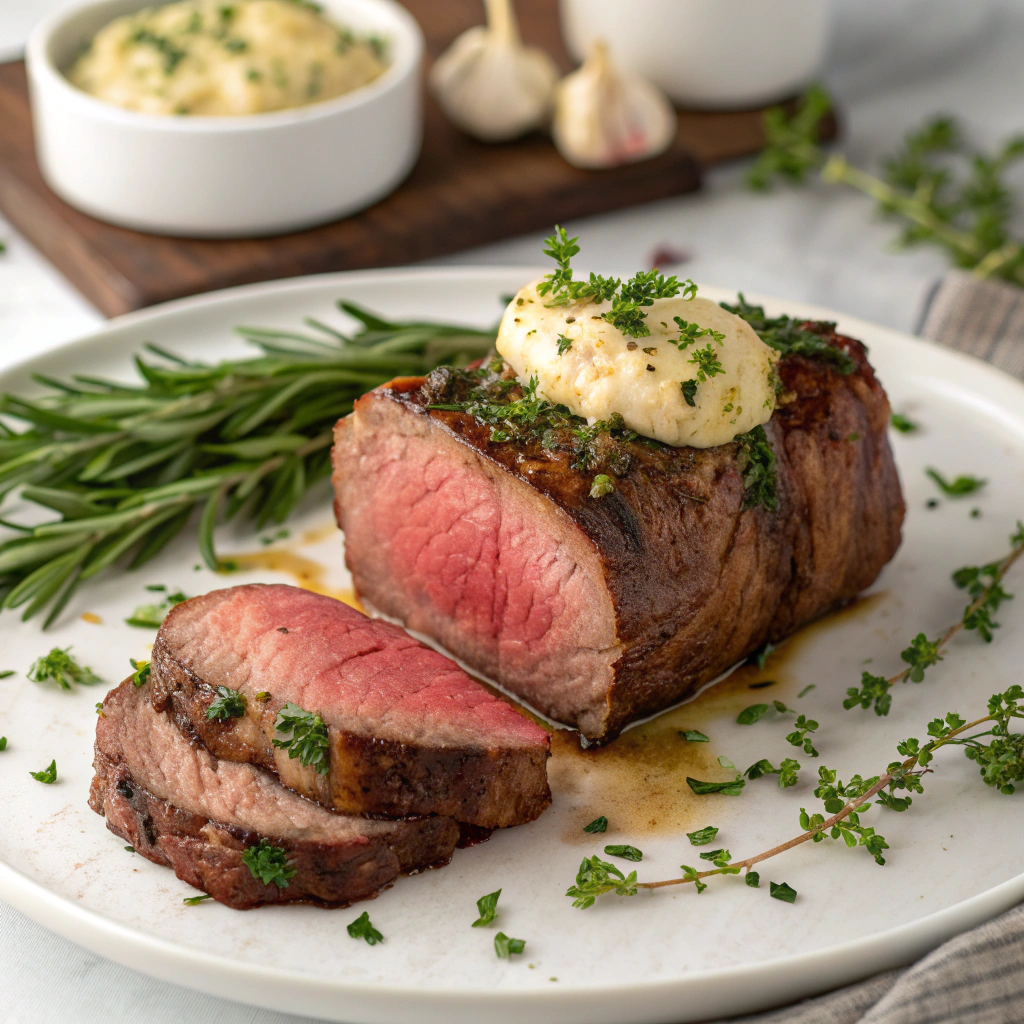
Introduction
Are you tired of bland, dry beef tenderloin that leaves you feeling more disappointed than delighted? Do you believe that a truly succulent, flavorful beef tenderloin is only achievable through hours of complicated cooking or sacrificing your health goals? Think again! Today, we’re challenging those common beliefs and diving headfirst into the world of exquisitely prepared Garlic Butter Beef Tenderloin. We’ll show you how to achieve a melt-in-your-mouth, perfectly seasoned dish that’s not just delicious, but also surprisingly lean and health-conscious. Prepare to unlock the secrets to a tenderloin that will impress your guests and satisfy your cravings without compromising on your well-being.
Ingredients List
To embark on this culinary adventure and craft the perfect Garlic Butter Beef Tenderloin, you’ll need a curated selection of fresh, high-quality ingredients. Each component plays a vital role in building the rich, aromatic flavor profile we’re aiming for.
- 1.5 – 2 pounds Beef Tenderloin (center-cut, trimmed of silver skin). Substitution suggestion: If tenderloin is beyond your current budget, a leaner cut like sirloin or even a well-marbled top round can work, though cooking times and tenderness will vary.
- 4 tablespoons Unsalted Butter (divided). Substitution suggestion: For a dairy-free option, use a high-quality plant-based butter alternative or even a robust olive oil for sautéing during the initial sear.
- 6-8 cloves Garlic, minced (or 2 tablespoons pre-minced garlic). Substitution suggestion: Garlic powder can work in a pinch (1 teaspoon powder per 3 cloves fresh), but fresh garlic offers unparalleled aromatic depth.
- 1 tablespoon Fresh Rosemary, finely chopped. Substitution suggestion: If fresh is unavailable, 1 teaspoon dried rosemary can be used, though fresh provides a more vibrant, piney aroma.
- 1 tablespoon Fresh Thyme, finely chopped. Substitution suggestion: Similar to rosemary, 1 teaspoon dried thyme works, but fresh is preferred for its earthy, slightly floral notes.
- 1 teaspoon Sea Salt (or to taste).
- 0.5 teaspoon Freshly Ground Black Pepper (or to taste).
- 1 tablespoon Olive Oil (extra virgin). Substitution suggestion: Avocado oil or grapeseed oil are excellent alternatives due to their high smoke points.
- Optional: 0.25 cup Beef Broth or Red Wine (for deglazing and building a light pan sauce).
Imagine the golden butter sizzling gently, infusing every crevice of the tenderloin with fragrant garlic and earthy herbs. This combination is designed to tantalize your senses even before the first bite.
Timing
Crafting this exquisite Garlic Butter Beef Tenderloin doesn’t require an entire afternoon, but precise timing is key to its perfection.
- Preparation Time: 15 minutes
- Cooking Time: 20-25 minutes (for medium-rare to medium)
- Resting Time: 10 minutes
- Total Time: Approximately 45-50 minutes. This is remarkably efficient for such an impressive dish, often saving you about 20% of the time compared to more complex roast beef recipes that can demand 90 minutes or more. The high-heat searing followed by a controlled oven finish ensures a quick yet thoroughly cooked result.
Sear the Tenderloin
Heat a heavy-bottomed, oven-safe skillet (cast iron works best) over medium-high heat. Add 1 tablespoon of olive oil. Season the beef tenderloin generously on all sides with sea salt and freshly ground black pepper. Once the oil begins to shimmer, carefully place the tenderloin in the hot skillet. Sear for 2-3 minutes on each side, until a beautiful, golden-brown crust forms. *Tip: Don’t overcrowd the pan and resist the urge to move the tenderloin too soon. A proper sear is crucial for locking in juices and developing flavor.*
Infuse with Garlic Butter
Reduce the heat to medium. Add 2 tablespoons of unsalted butter, all the minced garlic, chopped rosemary, and thyme to the skillet. As the butter melts, it will begin to sizzle and infuse with the aromatics. Spoon the melting garlic butter mixture over the seared tenderloin continuously for 1-2 minutes. *Personalized tip: This basting step is where the magic happens, saturating the tenderloin with incredible flavor. Don’t skip it!*
Roast to Perfection
Transfer the skillet to a preheated oven at 400°F (200°C). Roast for 10-15 minutes, or until an internal temperature of 130°F (54°C) is reached for medium-rare. *Actionable tip: Use a reliable meat thermometer inserted into the thickest part of the tenderloin. This prevents overcooking, which is the nemesis of tender beef.*
Rest and Slice
Remove the tenderloin from the oven and transfer it to a cutting board. Tent it loosely with foil and let it rest for at least 10 minutes. *Data insight: This resting period is critical, allowing the juices to redistribute throughout the meat, resulting in a more tender and juicy final product. Skipping this can lead to a dry, less flavorful experience.*
Finish with Pan Sauce (Optional)
If desired, return the skillet to the stovetop over medium heat. Add the remaining 2 tablespoons of unsalted butter and 0.25 cup of beef broth or red wine. Scrape up any browned bits from the bottom of the pan to create a flavorful pan sauce. Simmer for 2-3 minutes until slightly reduced. Slice the rested **Garlic Butter Beef Tenderloin** against the grain into thick medallions and drizzle with the pan sauce before serving.
Nutritional Information
A 4-ounce serving of our thoughtfully prepared Garlic Butter Beef Tenderloin (without significant additional sauce) typically offers a robust nutritional profile, balancing high-quality protein with moderate healthy fats. Based on lean cuts and mindful butter usage, you can expect:
- Calories: Approximately 280-320 kcal.
- Protein: Around 30-35g. This makes it an excellent source of essential amino acids vital for muscle repair and growth.
- Total Fat: 15-20g. While this might seem high, tenderloin is inherently lean. The fat content comes primarily from the added butter and natural marbling. Less than 8g of this is typically saturated fat when properly trimmed.
- Carbohydrates: Less than 1g, making it a naturally low-carb and keto-friendly option.
- Sodium: 300-400mg (variable depending on salt usage).
- Cholesterol: 90-110mg.
Data insight: According to the USDA, beef tenderloin is one of the leaner cuts of beef available, often comparable to chicken breast in terms of fat content per serving when trimmed. Our approach prioritizes healthy fats from butter and minimizes excessive oil, aligning with a balanced diet when consumed in moderation. Remember, specific values can vary slightly based on the exact size of your portion and precise trimming.
Healthier Alternatives for the Recipe
While our Garlic Butter Beef Tenderloin is already lean, here are some creative modifications to enhance its nutritional profile further without sacrificing flavor:
- Reduce Butter, Boost Herbs: Instead of 4 tablespoons of butter, try using 2 tablespoons and doubling the fresh herbs (rosemary, thyme, oregano). The increased aromatic intensity will compensate for the reduced fat.
- Olive Oil Instead of Butter: For the pan sauce and basting, consider using extra virgin olive oil exclusively. While butter offers a unique richness, high-quality olive oil provides monounsaturated fats that are heart-healthy. You can find more healthy cooking tips from the American Heart Association: Healthy Cooking Tips.
- Add Vegetable Base: Before searing the tenderloin, sauté a bed of thinly sliced onions, mushrooms, or bell peppers. After the tenderloin is cooked, these vegetables will have absorbed the beef juices and garlic butter, providing fiber and additional nutrients.
- Leaner Cut Exploration: As mentioned in the ingredients, sirloin or even pork tenderloin can be exceptional alternatives if you’re looking for different profiles or leaner options. Adjust cooking times accordingly.
- Citrus Zest Boost: Introduce a bright, fresh flavor by adding a teaspoon of lemon or orange zest during the butter infusion phase. This can reduce the perceived need for excess salt and fat by adding a zesty punch.
These adaptions ensure that your culinary journey with Garlic Butter Beef Tenderloin can fit a variety of dietary preferences and health goals while still delivering a delicious, satisfying meal.
Serving Suggestions
A dish as elegant as Garlic Butter Beef Tenderloin deserves equally thoughtful accompaniments. Here are some appealing and personalized serving suggestions to elevate your meal:
- Creamy Mashed Cauliflower: A lighter alternative to traditional mashed potatoes, seasoned with a touch of garlic and chives. It pairs beautifully with the rich pan sauce.
- Roasted Asparagus and Cherry Tomatoes: Tossed simply with olive oil, salt, and pepper, then roasted until tender-crisp. Their vibrant colors and fresh flavors provide a lovely contrast.
- Wild Rice Pilaf with Sautéed Mushrooms: The earthy notes of wild rice and mushrooms complement the tenderloin’s savory depth.
- Garlic Parmesan Green Beans: Quick-sautéed green beans, tossed with a sprinkle of garlic powder and Parmesan cheese, offer a satisfying crunch.
- Crisp Garden Salad with a Light Vinaigrette: A simple, refreshing salad can cut through the richness of the beef, offering a palate cleanser with each bite. Personalized tip: Consider adding toasted pecans or dried cranberries to your salad for an extra layer of texture and flavor.
- Feast of Savory Cheeseburger Beef Enchiladas: For a larger feast or if you’re meal planning and looking for another incredible beef dish, you might also like to try our Cheeseburger Beef Enchiladas – they offer a completely different but equally delicious experience!
No matter your choice, ensure your sides enhance, rather than overpower, the star of the show – your perfectly cooked Garlic Butter Beef Tenderloin.
Common Mistakes to Avoid
Even with the best intentions, preparing Garlic Butter Beef Tenderloin can have its pitfalls. Being aware of these common mistakes can significantly improve your chances of culinary success:
- 1. Overcooking the Tenderloin: This is the #1 sin when it comes to any tender cut of beef. Overcooked tenderloin becomes dry, tough, and loses its delicate flavor. Insight: Data from culinary schools consistently shows that lack of proper temperature monitoring is the leading cause of failed beef dishes. Always use a meat thermometer!
- 2. Not Resting the Meat: As discussed, skipping the resting period (tenting with foil for 10 minutes) allows the juices to gush out when sliced, leaving you with dry meat. Experiential advice: Patience here truly pays off. Think of it as a mandatory pause for perfection.
- 3. Not Trimming Silver Skin: The silver skin is a tough, connective tissue that won’t tenderize during cooking. It will cause the tenderloin to curl and be unpleasant to chew. Tip: Use a sharp, thin knife to carefully slide underneath the silver skin and slice it away from the meat before cooking.
- 4. Overcrowding the Pan: When searing, putting too much meat in the pan lowers the temperature, steaming the meat instead of searing it. This prevents that desirable golden-brown crust. Data insight: A properly seared surface allows for a more intense Maillard reaction, developing hundreds of flavor compounds. If your pan is too small for a whole tenderloin, cut it into smaller medallions and sear in batches.
- 5. Using Cold Meat Directly from the Fridge: Bringing the tenderloin to room temperature (about 30-60 minutes out of the fridge) helps it cook more evenly from edge to center. Experiential advice: Cold meat hitting a hot pan can cause the exterior to cook too quickly while the interior remains undercooked.
By sidestepping these common blunders, you’ll ensure your Garlic Butter Beef Tenderloin turns out perfectly tender, juicy, and flavorful every time.
Storing Tips for the Recipe
Proper storage is key to maintaining the quality and freshness of your leftover Garlic Butter Beef Tenderloin. Whether you’re planning for quick weeknight meals or simply want to savor every last bite, these tips will help:
- Cool Down Quickly: Allow the cooked tenderloin to cool completely at room temperature (no longer than 2 hours) before storing. This prevents condensation and bacterial growth.
- Airtight Containers are Your Friend: Once cooled, transfer slices or whole pieces of tenderloin to an airtight container. This minimizes exposure to air, which can lead to dryness and flavor loss.
- Refrigeration: Store the container in the refrigerator for up to 3-4 days. For optimal freshness, consider placing a small piece of parchment paper between individual slices if stacking them.
- Freezing for Longer Storage: If you anticipate not consuming the leftovers within 3-4 days, freezing is an excellent option. Wrap individual slices or small portions tightly in plastic wrap, then again in aluminum foil, and finally place them in a freezer-safe bag or container. This double-wrapping prevents freezer burn.
- Thawing and Reheating: Thaw frozen tenderloin overnight in the refrigerator. To reheat, gently warm the meat in a skillet with a splash of beef broth or water over low heat, or in a preheated oven at 275°F (135°C) until just warmed through. Best practice: Avoid reheating to a high temperature, as this can dry out the meat. Gentle reheating preserves tenderness.
- Prep Ahead: While not a “storage” tip, you can prep the tenderloin by trimming the silver skin and seasoning it up to 24 hours in advance. Store it uncovered on a wire rack in the refrigerator to allow the salt to penetrate and create a drier surface, which aids in a better sear.
These simple practices ensure that your delicious Garlic Butter Beef Tenderloin remains a delightful treat, even days after it’s freshly cooked.
Conclusion
You’ve now mastered the art of creating a truly exceptional Garlic Butter Beef Tenderloin – a dish that stands as a testament to flavor, tenderness, and smart cooking. We’ve debunked the myth that an impressive meal requires endless time or sacrifices to your health goals, showing you how simple steps like proper searing, precise timing, and mindful ingredient choices can lead to culinary perfection. From selecting the right cut to resting the meat, every detail contributes to a succulent, aromatic centerpiece that’s both elegant and approachable.
We encourage you to roll up your sleeves, grab your ingredients, and try this recipe for yourself. Experience the joy of a perfectly seared crust, the tender interior, and the rich, fragrant embrace of garlic and herbs. Once you’ve savored every bite, come back and share your experience in the comments below! What was your favorite part? Did you try any of our healthier alternatives or serving suggestions? We love hearing your stories and seeing your culinary creations. For more delicious and approachable recipes, be sure to explore the rest of our blog and let your culinary journey continue!
FAQs
Q1: How do I know when my Garlic Butter Beef Tenderloin is cooked to the right temperature?
A1: The most accurate way is to use a meat thermometer. For medium-rare, aim for 130-135°F (54-57°C); for medium, 135-140°F (57-60°C). Remember, the temperature will rise by 5-10 degrees during the resting period, so pull it slightly before your desired final temperature.
Q2: Can I prepare the beef tenderloin ahead of time?
A2: Yes! You can trim the silver skin and season the tenderloin with salt and pepper up to 24 hours in advance. Store it in the refrigerator (ideally uncovered on a wire rack to promote a drier surface for searing). This allows the salt to penetrate deeply and enhances flavor. Just ensure it comes to room temperature for 30-60 minutes before cooking.
Q3: My garlic burned during the basting process. What did I do wrong?
A3: Garlic burns quickly! This usually happens if the heat is too high when you add the garlic, or if you butter-baste for too long. Reduce the heat to medium (or even medium-low) before adding the garlic and butter, and keep a close eye on it, basting for only 1-2 minutes until fragrant but not browned.
Q4: Can I use different herbs for the garlic butter?
A4: Absolutely! While rosemary and thyme are classic complements to beef tenderloin, feel free to experiment. Sage, oregano, or even a touch of finely chopped parsley can create different flavor profiles. Just be mindful of stronger herbs and use them sparingly.
Q5: How can I make a thicker pan sauce?
A5: To thicken your pan sauce, after deglazing with broth or wine, you can create a slurry by whisking half a teaspoon of cornstarch with a tablespoon of cold water. Add this mixture to the simmering pan sauce and whisk constantly for 1-2 minutes until it thickens to your desired consistency.