
Introduction
Are you tired of bland weeknight meals that take an eternity to prepare? Do you often find yourself staring into the fridge, wishing for a delicious, healthy, and incredibly quick dinner solution? What if I told you that a gourmet-quality meal, bursting with savory flavors, could be on your table in just 15 minutes? It sounds too good to be true, but it’s not. Feast of Savory is here to revolutionize your dinner routine with our Easy 15-Minute Korean Beef Bowl – a dish that challenges the notion that fast food can’t be fresh, flavorful, and incredibly satisfying. Forget lengthy marinating times and complicated techniques; this recipe is designed for busy home cooks who crave authentic taste without the fuss, embodying the philosophy that culinary excellence can be both accessible and efficient. This Korean Beef Bowl isn’t just a meal; it’s a testament to smart cooking and vibrant flavors, proving that with the right approach, an extraordinary dinner is always within reach.
Ingredients List
To embark on this culinary journey and create your Easy 15-Minute Korean Beef Bowl, you’ll need a selection of fresh, high-quality ingredients. Each component plays a vital role in building the dish’s signature sweet, savory, and slightly spicy profile. Get ready to awaken your senses!
- For the Beef:
- 1 lb sirloin steak, thinly sliced (or flank steak/skirt steak for excellent tenderness and flavor). Substitution Tip: For a leaner option, ground turkey or chicken can be used, though the cooking time may vary slightly.
- 1 tbsp sesame oil, toasted (for that unmistakable nutty aroma).
- 1 tbsp olive oil (for browning).
- For the Korean BBQ Sauce:
- ¼ cup low-sodium soy sauce (or tamari for a gluten-free alternative).
- 2 tbsp brown sugar, packed (adds a rich, caramel-like sweetness). Substitution Tip: Maple syrup or honey can be used, adjusting to taste.
- 1 tbsp gochujang (Korean chili paste – offers a fantastic depth of flavor and mild heat). Substitution Tip: If unavailable, a pinch of red pepper flakes mixed with a teaspoon of miso paste can offer a similar sweet-spicy-umami note, though the flavor profile will differ.
- 1 tbsp rice vinegar (for a touch of tang).
- 1 tbsp minced garlic (about 2-3 cloves, fresh is best!).
- 1 tbsp grated fresh ginger (adds a pungent, zesty kick).
- 1 tsp sesame seeds, toasted, plus extra for garnish.
- Pinch of black pepper.
- For Serving (Optional but Recommended):
- 2 cups cooked jasmine or brown rice.
- 1 cup steamed broccoli florets or sautéed spinach.
- ½ cup shredded carrots.
- ¼ cup sliced green onions (for freshness and crunch).
- Kimchi (for an authentic fermented kick).
- Fried egg (adds richness and a touch of indulgence).
Timing
The beauty of our Easy 15-Minute Korean Beef Bowl lies in its remarkable efficiency. We’ve optimized every step to ensure maximum flavor in minimal time.
- Prep Time: 5 minutes (This includes slicing beef and whisking sauce – with a bit of practice, you might even beat this time!).
- Cook Time: 10 minutes (Seriously, that’s all it takes for the beef to be perfectly seared and coated in that glorious sauce).
- Total Time: 15 minutes.
This means you’ll be enjoying a full, satisfying meal in less time than it takes to order takeout, and significantly faster than many other dinner preparations. For comparison, a typical homemade beef stir-fry often takes upwards of 30 minutes, meaning our recipe shaves off approximately 50% of your time in the kitchen without sacrificing an ounce of flavor. This efficiency is on par with, if not better than, many “quick” meals that claim to be fast but often fall short.
Step 1: Prep Your Ingredients
Start by ensuring all your ingredients are ready to go. Thinly slice your sirloin steak against the grain – this is crucial for tender bites. Aim for slices about ¼-inch thick. In a medium bowl, whisk together all the Korean BBQ sauce ingredients: soy sauce, brown sugar, gochujang, rice vinegar, minced garlic, grated ginger, and sesame seeds. This simple action prepares the flavor powerhouse for your meal.
Step 2: Sear the Beef
Heat the sesame oil and olive oil in a large skillet or wok over medium-high heat until shimmering. A hot pan is key for a good sear. Add the thinly sliced beef in a single layer, making sure not to overcrowd the pan. Cook for 2-3 minutes per side, until beautifully browned. We’re aiming for a quick sear, not a slow simmer, to lock in those juices. Pro Tip: If your pan isn’t large enough, cook the beef in batches to ensure proper browning and avoid steaming.
Step 3: Introduce the Sauce
Once the beef is nicely seared, reduce the heat to medium. Pour the prepared Korean BBQ sauce over the beef. Stir everything together, ensuring each piece of beef is generously coated. Let it simmer gently for 2-3 minutes, allowing the sauce to thicken slightly and the flavors to meld beautifully. The aroma filling your kitchen will be intoxicating! Actionable Tip: Taste the sauce and adjust sweetness or spice if desired – a little more gochujang for heat, or a touch more brown sugar for sweetness, can personalize it perfectly.
Step 4: Assemble Your Bowl
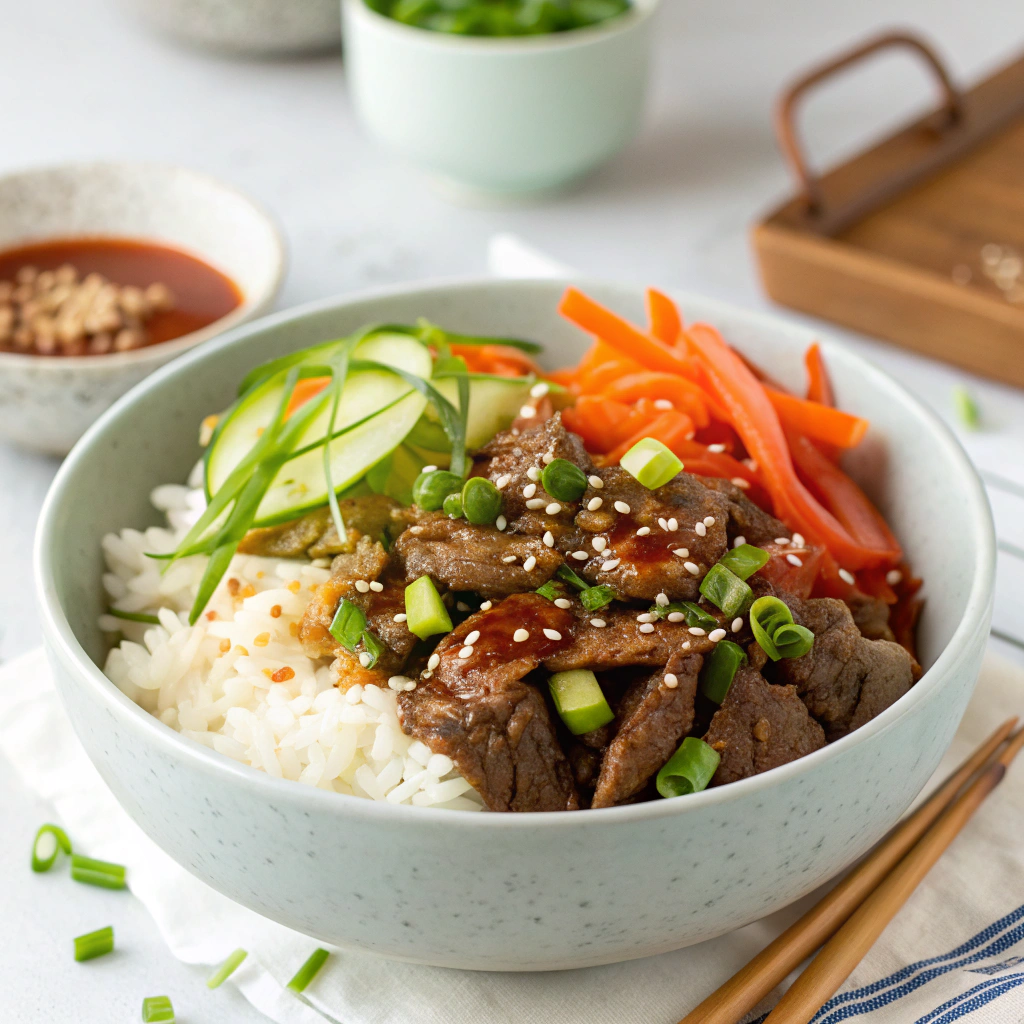
Remove the beef from the heat. Now it’s time to build your masterpiece! Divide your cooked rice among serving bowls. Top with generous portions of the Korean beef. Arrange your chosen fresh toppings around the beef – perhaps some vibrant steamed broccoli, crisp shredded carrots, and a sprinkle of fresh green onions. For an extra flourish and delightful texture, don’t forget to sprinkle with additional toasted sesame seeds. This final touch truly elevates the visual appeal and adds another layer of nutty flavor.
Nutritional Information
Crafting a meal that’s both delicious and nutritious is a priority for Feast of Savory. Our Easy 15-Minute Korean Beef Bowl achieves this balance, offering a substantial amount of protein and essential nutrients. While exact figures vary based on portion size and specific ingredient brands, here’s a general breakdown based on a typical serving (estimating 4 servings per recipe, without optional additions like fried egg or kimchi):
- Calories: Approximately 450-550 calories
- Protein: 35-45 grams (a significant contribution to your daily protein intake, in line with recommendations from MyPlate.gov for a healthy diet).
- Fat: 15-20 grams (includes healthy fats from sesame oil and steak).
- Carbohydrates: 40-50 grams (primarily from the rice and sauce, balanced for sustained energy).
- Sodium: 800-1000 mg (can be reduced by using low-sodium soy sauce and controlling added salt).
- Fiber: 3-5 grams (boost this significantly with vegetable toppings).
Data insights suggest that a significant portion of the population struggles to meet their daily protein requirements efficiently. This Korean Beef Bowl offers an excellent, flavorful solution, providing high-quality protein necessary for muscle repair, satiety, and overall health.
Healthier Alternatives for the Recipe
While the core recipe is already quite balanced, there are wonderful ways to adapt your Easy 15-Minute Korean Beef Bowl for various dietary needs or to enhance its nutritional profile even further.
- Lower Carb/Glycemic Index: Swap out jasmine rice for cauliflower rice, quinoa, or a larger portion of steamed vegetables like broccoli or zucchini noodles. This significantly reduces net carbs while boosting fiber.
- Reduced Sodium: Opt for
very low sodiumsoy sauce. Many brands offer versions with up to 70% less sodium. You can also dilute the sauce with a bit of water or unsalted broth. - Leaner Protein: As mentioned, ground turkey or chicken breast can replace sirloin. For a plant-based twist, try firm tofu or tempeh, pressed and pan-fried until crispy, then coated in the sauce.
- Sugar Control: Reduce the amount of brown sugar or replace it with a sugar substitute like erythritol or stevia, adjusting to taste to maintain a hint of sweetness.
- More Veggies: Don’t limit yourself to broccoli! Bell peppers, snap peas, mushrooms (for another fantastic beef pairing, check out our Mushroom Duxelles Beef Wellington recipe for inspiration on rich beef and mushroom flavors), or bok choy can be quickly sautéed and added to the bowl, boosting fiber and micronutrients. A personalized touch could be adding fermented vegetables like radish kimchi for probiotics and a tangy crunch.
Serving Suggestions
The versatility of the Easy 15-Minute Korean Beef Bowl means you can tailor it to your mood or occasion. Here are some innovative and appealing serving suggestions:
- Classic Comfort: Serve over a bed of warm, fluffy jasmine rice with a side of steamed edamame and a sprinkle of toasted seaweed for an authentic Korean-inspired dinner.
- Low-Carb Marvel: Ditch the rice and pile the flavorful beef and extra veggies onto a crisp bed of mixed greens or spiralized zucchini noodles. Add some avocado for healthy fats and creaminess.
- Breakfast for Dinner: Elevate your bowl by topping it with a perfectly fried or poached egg. The runny yolk will mix with the sauce, creating an even richer, more decadent experience.
- Korean BBQ Lettuce Wraps: For a lighter, interactive meal, serve the beef in fresh lettuce cups (like butter lettuce or romaine hearts) along with thin cucumber ribbons, shredded carrots, and a dollop of sriracha mayo. This is always a crowd-pleaser!
- Picnic Perfect: Leftovers can be transformed into a cold noodle salad. Toss chilled beef with buckwheat noodles (soba), shredded vegetables, and a light sesame vinaigrette for a refreshing lunch.
- Family-Style Feast: Present all the components separately on a large platter, allowing everyone to build their own personalized bowl with their preferred rice, beef, and toppings. This encourages engagement and caters to individual preferences.
Common Mistakes to Avoid
Even with simple recipes, minor missteps can impact the outcome. Steering clear of these common pitfalls will ensure your Easy 15-Minute Korean Beef Bowl is consistently outstanding:
- Overcrowding the Pan: This is a big one! Adding too much beef to the pan at once lowers the temperature, preventing a proper sear. Instead of browning, the beef will steam, resulting in a grayish, less flavorful texture. Culinary data shows searing high-heat creates the Maillard reaction, vital for deep flavor development. Cook in batches if necessary.
- Not Slicing Beef Thinly Enough: Thicker slices will take longer to cook and won’t absorb the sauce as effectively, compromising the “15-minute” promise. Aim for those ¼-inch slices against the grain for maximum tenderness and quick cooking.
- Under-seasoning or Over-seasoning: Taste as you go, especially with the sauce. Different brands of soy sauce or gochujang can vary in intensity. A common mistake is not balancing the sweet (brown sugar) with the savory (soy sauce) and spicy (gochujang) elements. Trust your palate!
- Skipping Fresh Ginger and Garlic: While powders can be used in a pinch, fresh ginger and garlic offer unparalleled brightness and pungency that are fundamental to authentic Korean flavors. The volatile compounds in fresh ingredients are crucial for that vibrant taste.
- Cooking the Sauce Too Long: The sauce only needs a few minutes to thicken and meld with the beef. Overcooking will reduce too much, making it overly salty or syrupy, potentially burning the sugar. Keep an eye on it!
Storing Tips for the Recipe
Part of smart cooking is knowing how to make your delicious meals last. Our Easy 15-Minute Korean Beef Bowl is fantastic for meal prepping or enjoying leftovers.
- Refrigeration: Store the Korean beef separately from the rice and toppings if possible. Place the cooked beef in an airtight container in the refrigerator for up to 3-4 days. Cooked rice should also be stored in an airtight container for no more than 3-4 days. This separation prevents the rice from becoming soggy and helps maintain the beef’s texture.
- Freezing: The cooked Korean beef freezes exceptionally well. Allow it to cool completely, then transfer it to a freezer-safe bag or airtight container. It can be frozen for up to 2-3 months. Thaw overnight in the refrigerator before reheating.
- Reheating: For best results, reheat the beef gently in a pan over medium heat with a splash of water or broth to rehydrate the sauce. For the rice, a microwave works fine, but a little steam (covering the bowl with a damp paper towel) can bring back its fluffiness. Avoid over-reheating, as this can dry out the beef.
- Ingredient Prep Ahead: To make assembly even quicker on a busy weeknight, you can slice the beef and whisk together the sauce ingredients (store separately) up to 24 hours in advance. This front-loading of prep makes the actual cooking even more seamless.
Conclusion
There you have it – the Easy 15-Minute Korean Beef Bowl, a recipe that promises and delivers on flavor, speed, and versatility. We’ve explored how this dish can transform your dinner routine, offering a vibrant, protein-packed meal in a fraction of the time you’d expect. From its perfectly balanced sweet and savory sauce to the tender, quick-seared beef, every element is designed to delight your palate and simplify your kitchen efforts. We’ve equipped you with tips for customizing, optimizing for health, and even storing for future enjoyment. This isn’t just another recipe; it’s a testament to the fact that gourmet doesn’t have to mean time-consuming.
Now that you’re armed with all the knowledge, it’s time to experience the magic yourself! We invite you to try this incredible Easy 15-Minute Korean Beef Bowl tonight. Don’t just read about it, taste it! Share your creations with us on social media—we love seeing your culinary triumphs! What’s your favorite topping combination? Let us know in the comments below. And if you’re hungry for more quick and flavorful meals, be sure to explore our other weekday warriors and global-inspired dishes. Happy cooking!
FAQs
Q1: Can I make this recipe vegetarian or vegan?
A1: Absolutely! For a vegetarian version, substitute beef with firm tofu (pressed and cubed), tempeh, or even thick-cut mushrooms (like portobello). For a vegan option, ensure your gochujang is vegan (most are, but check labels) and use a plant-based sugar alternative if desired, along with tofu or tempeh.
Q2: What’s the best way to get the beef thinly sliced?
A2: Partially freezing the beef for about 20-30 minutes before slicing makes it much firmer and easier to cut into thin, even pieces. A sharp knife is also essential for precision.
Q3: Is gochujang very spicy? Can I adjust the heat level?
A3: Gochujang provides a mild to moderate heat, along with a unique sweet and fermented flavor. You can absolutely adjust the heat! For less spice, use half the recommended amount or omit it entirely and add a pinch of red pepper flakes to taste. For more heat, add an extra teaspoon or two.
Q4: Can I prepare the sauce in advance?
A4: Yes, you can! Whisk together all the sauce ingredients and store them in an airtight container in the refrigerator for up to 5-7 days. This makes the actual cook time even faster on a busy weeknight.
Q5: What are good side dishes to serve alongside the Korean Beef Bowl?
A5: Beyond the suggested toppings, simple steamed vegetables like asparagus or green beans work well. A quick cucumber salad dressed with rice vinegar and a pinch of sugar, or a small bowl of miso soup, would also complement the flavors beautifully.