
Introduction
Ever found yourself staring into the fridge at 5 PM, wondering if a wholesome, deeply satisfying dinner could actually come together in under an hour? Do you believe that “fast food” and “nutritious” have to be mutually exclusive, especially when it comes to flavorful, globally-inspired dishes? Prepare to challenge that belief! Today, we’re diving headfirst into the world of the Korean Beef Bowl, a recipe that masterfully blends the rich, savory notes of Korean cuisine with the convenience and health-consciousness demanded by modern life. This isn’t just another dinner idea; it’s a vibrant, balanced protein dinner solution designed to delight your taste buds and nourish your body without keeping you chained to the kitchen. Forget bland, forget complicated – this Korean Beef Bowl brings gourmet flavors right to your weeknight table.
Ingredients List
Crafting the perfect Korean Beef Bowl starts with a stellar cast of ingredients. Each component plays a crucial role in building layers of flavor and texture, transforming simple elements into an extraordinary meal.
- For the Beef:
- 1.5 lbs lean ground beef (90/10 or 93/7 for a healthier option)
- 1 tbsp sesame oil
- 3 cloves garlic, minced (or 1 tsp garlic powder for convenience)
- 1 inch fresh ginger, grated (or 1/2 tsp ground ginger)
- 1/2 cup low-sodium soy sauce (tamari for gluten-free)
- 1/4 cup brown sugar, packed (maple syrup or honey for a refined sugar alternative)
- 2 tbsp gochujang (Korean chili paste – optional, but highly recommended for authentic heat and depth)
- 1 tbsp rice vinegar
- 1 tsp sriracha (adjust to your spice preference)
- 1/2 tsp black pepper
- For the Bowls:
- 2 cups cooked white or brown rice (freshly steamed jasmine or short-grain for best results)
- 1 cup shredded carrots
- 1 cup sliced cucumber
- 1 cup kimchi (for a tangy, probiotic boost)
- 2 green onions, thinly sliced (for garnish)
- 1 tbsp sesame seeds (for garnish)
- Optional: Cooked edamame, spinach, or pickled daikon for extra freshness and crunch.
Substitutions Hack: Don’t have ground beef? Thinly sliced sirloin or even ground turkey can beautifully adapt to this recipe, offering a different texture while soaking up all that incredible Korean flavor. For a vegetarian take, crumbled firm tofu or tempeh makes an excellent substitute.
Timing
Getting a phenomenal dinner on the table doesn’t have to be an all-day affair. Our Korean Beef Bowl is engineered for efficiency, balancing incredible taste with impressive speed.
- Preparation Time: 15 minutes
- Cooking Time: 20 minutes
- Total Time: 35 minutes
Compared to the average homemade dinner recipe which often clocks in around 60 minutes for preparation and cooking, this Korean Beef Bowl shaves off nearly 42% of your time! That’s time you can spend unwinding after work or enjoying a conversation with loved ones, rather than stressing in the kitchen. For those nights when you’re looking for a delectable meal without the lengthy commitment, this recipe excels.
Step 1: Prep Your Aromatics Like a Pro
Before any heat hits the pan, meticulous preparation is your secret weapon for efficiency. Finely mince your garlic and grate your fresh ginger. Fresh aromatics bring unparalleled brightness to your Korean Beef Bowl. Pro Tip: To make grating ginger effortless, peel it first, then pop it in the freezer for 10-15 minutes; it becomes much firmer and easier to grate without stringiness.
Step 2: Craft the Irresistible Korean Beef Sauce
In a small bowl, whisk together the low-sodium soy sauce, brown sugar, gochujang (if using), rice vinegar, sriracha, and black pepper. This is the heart of your Korean Beef Bowl flavor profile, a perfect balance of sweet, savory, and spicy. Personalization Hack: If you prefer a milder bowl, reduce the sriracha or omit the gochujang. For an extra kick, add a pinch of red pepper flakes!
Step 3: Brown the Beef to Perfection
Heat the sesame oil in a large skillet or wok over medium-high heat. Add your lean ground beef, breaking it apart with a spoon. Cook until it’s beautifully browned and crumbled, approximately 5-7 minutes. Actionable Tip: Don’t overcrowd the pan; if necessary, cook the beef in batches to ensure it browns rather than steams. This creates those delicious caramelized bits that add depth. Drain any excess fat to keep your Korean Beef Bowl light and healthy.
Step 4: Infuse with Flavor
Once the beef is browned and drained, reduce the heat to medium. Add the minced garlic and grated ginger to the pan, stirring constantly for about 1 minute until fragrant. Avoid burning the garlic; you’re looking for an aromatic bloom, not char. This step is crucial for building the foundational flavors of your Korean Beef Bowl.
Step 5: Bring it All Together
Pour the whisked Korean beef sauce over the beef and aromatics. Stir well to coat every morsel of meat. Let it simmer for 5-7 minutes, stirring occasionally, until the sauce has thickened slightly and the beef has absorbed all that incredible flavor. Chef’s Insight: The sauce should cling to the beef, creating a glossy, irresistible finish that makes your Korean Beef Bowl truly shine.
Nutritional Information
Understanding what powers your body can transform the way you approach meals. Our Korean Beef Bowl, prepared as directed, is a nutritional powerhouse.
Per serving (approx. 1/4 of recipe with rice and standard toppings):
- Calories: 450-500 kcal (depending on rice and topping choices)
- Protein: 35-40g. This recipe is an excellent source of protein, crucial for muscle repair and satiety. Harvard’s Nutrition Source highlights the benefits of healthy protein in a balanced diet.
- Fat: 18-22g (with lean ground beef). A good portion of this comes from healthy fats in sesame oil and lean beef.
- Carbohydrates: 40-45g. Primarily from the rice and natural sugars in the sauce, providing sustained energy.
- Fiber: 5-7g (especially with brown rice and ample vegetables). Important for digestive health.
- Sodium: ~700-800mg (using low-sodium soy sauce). Still mindful, so consider your overall daily intake.
Data Insight: Compared to a typical takeout Korean beef dish, which can often exceed 800 calories and 1500mg of sodium per serving, our homemade Korean Beef Bowl offers a significant reduction in sodium and calories while boosting protein and fiber content. You’re getting superior flavor and superior nutrition.
Healthier Alternatives for the Recipe
Making this delicious Korean Beef Bowl even healthier is surprisingly simple, allowing you to tailor it to various dietary needs without sacrificing flavor.
- Protein Power-Up: Instead of ground beef, consider ground turkey or even ground chicken for a leaner protein profile. For a plant-based version, crumbled extra-firm tofu or tempeh, pressed and sautéed until golden, works wonderfully.
- Carb Conscious: Swap white rice for nutrient-dense cauliflower rice, quinoa, or a medley of sautéed vegetables (like cabbage or zucchini noodles) as your base. This significantly lowers the glycemic load.
- Sodium Smarts: Always opt for low-sodium soy sauce. You can also further reduce sodium by diluting the soy sauce with a tablespoon of water or increasing the amount of rice vinegar and fresh ginger for flavor without the salt.
- Sugar Reduction: Substitute brown sugar with a smaller amount of natural sweeteners like maple syrup, honey, or even a sugar-free alternative for a touch of sweetness. The gochujang also provides natural sweetness, so you might need less added sugar.
- Veggies Galore: Elevate your bowl with a generous bounty of fresh vegetables. Sautéed spinach, julienned bell peppers, steamed broccoli, or even a light sprinkle of microgreens can add vitamins, minerals, and fiber without adding many calories. Remember, color diversity on your plate usually means nutrient diversity!
Serving Suggestions
The beauty of the Korean Beef Bowl lies in its versatility and customizable nature. Here are some engaging and personalized suggestions to make your bowl experience truly unforgettable:
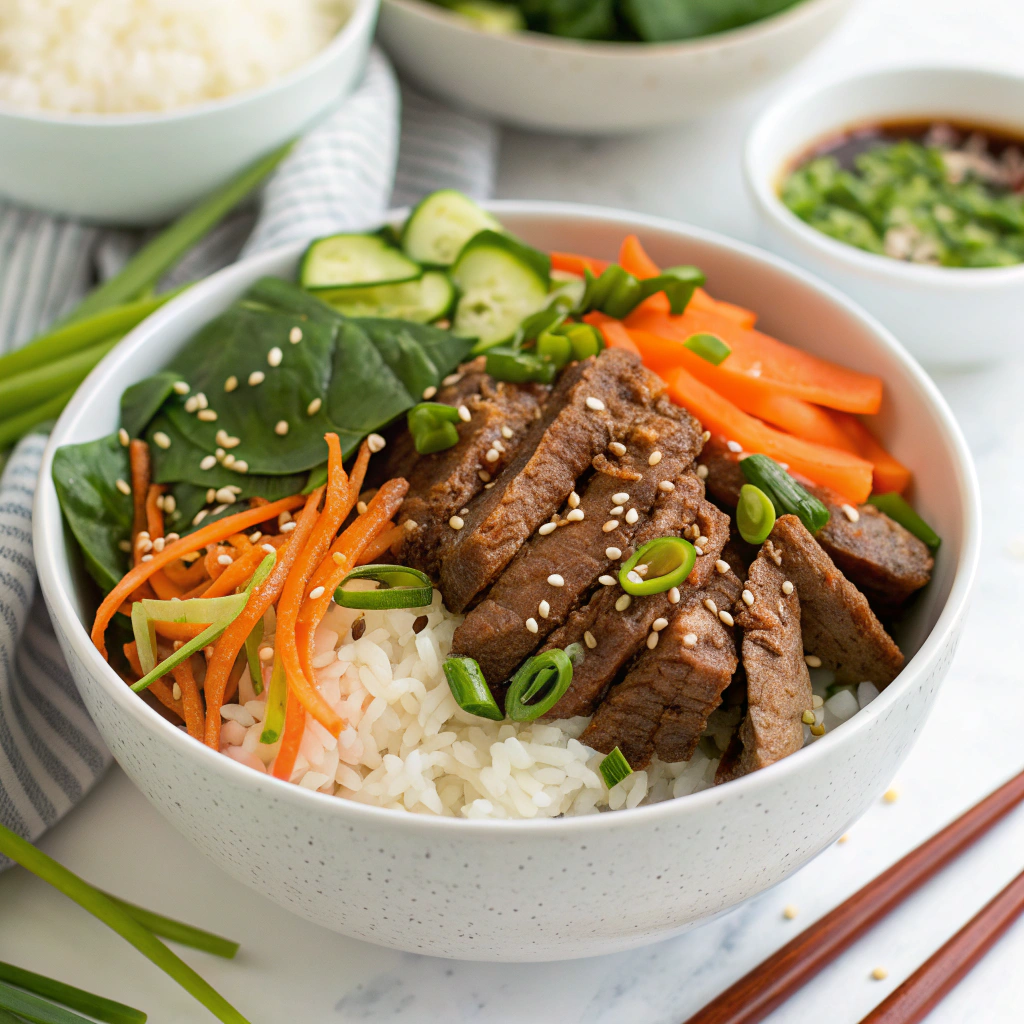
- The Classic Deconstructed: Serve the Korean beef over a bed of warm, fluffy rice. Arrange neatly separated piles of colorful toppings around the beef – think vibrant shredded carrots, crisp cucumber slices, refreshing kimchi, and perhaps some perfectly seasoned edamame. Garnish liberally with thinly sliced green onions and a sprinkle of toasted sesame seeds. This presentation is not only visually appealing but allows each diner to customize their perfect bite.
- Lettuce Wrap Extravaganza: For a lighter, low-carb option, serve the Korean beef in crisp lettuce cups (like butter lettuce or romaine). Offer a side of rice for those who want it. This creates a delightful textural contrast and an interactive dining experience.
- Noodle Nirvana: Instead of rice, dish the Korean beef over a bed of stir-fried noodles – ramen, udon, or even soba noodles work beautifully. Toss the noodles with a touch of sesame oil and soy sauce before adding the beef and toppings. It transforms the bowl into a heartier, more slurpable meal.
- Breakfast Reboot: Believe it or not, leftover Korean beef makes an incredible base for a savory breakfast bowl! Top it with a fried egg whose runny yolk can become an additional sauce, alongside some fresh avocado slices and a dash of hot sauce.
- The “Build Your Own” Bar: Host a casual dinner party and set up a “Build Your Own Korean Beef Bowl” bar. Offer various toppings in small bowls: different pickled vegetables, extra sriracha, a drizzle of Kewpie mayo, a sprinkle of furikake, and even a selection of different hot sauces. This approach caters to every guest’s preference and makes for a fun, interactive meal.
Common Mistakes to Avoid
Even the simplest recipes can have pitfalls. Sidestepping these common blunders will ensure your Korean Beef Bowl is nothing short of culinary perfection:
- Overcooking the Beef: Ground beef, especially lean varieties, cooks quickly. Overcooking results in dry, tough, and less flavorful meat. Cook until just browned, then add the sauce and simmer briefly. Insight: Ground beef loses approximately 25% of its moisture when overcooked, leading to a significant loss in juiciness and flavor.
- Not Draining Excess Fat: While some fat adds flavor, too much will make your dish greasy. After browning the beef, take an extra minute to drain any significant pooling of fat before adding other ingredients. This keeps your Korean Beef Bowl lighter and cleaner.
- Skimping on Aromatics: Garlic and ginger are non-negotiables in Korean cooking. Using pre-minced jarred versions can save time, but fresh offers a far superior, more vibrant aroma and taste. Experiential Advice: Your senses will tell you when the aromatics are perfectly fragrant – it’s a sweet, pungent smell that quickly fills the kitchen.
- Ignoring the Balance of Flavors: Korean cuisine is all about balance: sweet, savory, spicy, tangy. Taste your sauce before adding it to the beef and adjust. Too sweet? Add more soy or vinegar. Not enough kick? A dash more sriracha. Data Insights: Studies on flavor perception show that a balanced profile (umami, sweet, sour, salty, bitter) is consistently rated higher in satisfaction.
- Serving with Stale Rice: The rice is the foundation! Freshly cooked, warm, fluffy rice soaks up the sauce beautifully. Day-old rice can be dry and alter the overall texture of your Korean Beef Bowl.
- Not Using High-Quality Ingredients: The simplicity of this dish means each ingredient shines. Opt for quality soy sauce, fresh produce, and good ground beef. The difference is palpable. Related Reading: For another incredible beef recipe that benefits from quality ingredients and slow-cooking techniques, check out our guide to Slow Cooker Honey Garlic Short Ribs!
Storing Tips for the Recipe
Prepping ahead and cleverly storing leftovers can revolutionize your meal planning. Here’s how to keep your Korean Beef Bowl delicious for days:
- Refrigeration: Once cooled completely, transfer the Korean beef mixture to an airtight container. It will keep well in the refrigerator for up to 3-4 days. Store cooked rice separately to prevent it from becoming soggy or drying out. Individual toppings like kimchi, shredded carrots, and cucumber should also be stored in their own airtight containers. This compartmentalized approach maintains texture and freshness.
- Freezing (Beef only): The cooked Korean beef mixture freezes exceptionally well. Allow it to cool completely, then transfer it to a freezer-safe bag or container. It can be frozen for up to 2-3 months. When ready to use, thaw overnight in the refrigerator and reheat gently on the stovetop or in the microwave. Best Practice: Thawing slowly helps the meat retain its moisture and flavor.
- Reheating: For the best results, reheat the beef gently on the stovetop over medium-low heat, stirring occasionally, until heated through. If it seems a little dry, add a splash of water or broth. Reheat rice separately in the microwave with a sprinkle of water, covered, to restore its moisture.
- Meal Prep Power: This Korean Beef Bowl is an ideal candidate for meal prepping! Cook a double batch of the beef on Sunday, portion it out into individual meal prep containers with cooked rice on one side and fresh, prepped toppings (carrots, cucumber, edamame) on the other. Add kimchi just before serving. This ensures quick, healthy lunches or dinners throughout the week.
Conclusion
From breaking down common misconceptions about speed and nutrition to guiding you through every flavorful step, our journey with the Korean Beef Bowl proves that culinary excellence is achievable on any weeknight. This balanced protein dinner isn’t just about feeding your body; it’s about delighting your palate, simplifying your routine, and bringing vibrant, globally-inspired flavors into your home. We’ve optimized this recipe for taste, health, and efficiency, ensuring every bite is a testament to mindful eating without compromise.
Now it’s your turn! Try this incredible Korean Beef Bowl recipe and experience the perfect harmony of sweet, savory, and spicy for yourself. Don’t forget to share your creations and thoughts in the comments below – what’s your favorite topping combination? Looking for more innovative twists on classic dishes or smart meal prep ideas? Explore the rest of Feast of Savory for an abundance of culinary inspiration ready to transform your kitchen adventures!
FAQs
Q1: Can I make this Korean Beef Bowl vegetarian?
A1: Absolutely! For a delicious vegetarian version, substitute the ground beef with crumbled extra-firm tofu or tempeh. Press out excess water from the tofu, then crumble and sauté until golden before adding the sauce. The flavor profile will still be incredibly rich and satisfying.
Q2: How spicy is this Korean Beef Bowl? Can I adjust the heat?
A2: The base recipe has a mild to medium heat level, largely dependent on the gochujang and sriracha. You can easily adjust it! For less heat, reduce or omit the sriracha and gochujang. For a spicier kick, add more sriracha, a pinch of red pepper flakes, or even a dash of chili oil when serving.
Q3: What kind of rice is best for a Korean Beef Bowl?
A3: Traditionally, short-grain white rice is preferred for its sticky texture that pairs well with the sauce. However, jasmine rice, brown rice, or even cauliflower rice makes an excellent base, depending on your dietary preferences. Ensure your rice is freshly cooked and warm for the best experience.
Q4: Can I prepare any parts of this recipe ahead of time?
A4: Yes! This recipe is fantastic for meal prep. You can whisk together the sauce ingredients and store them in an airtight container in the fridge for up to 3-4 days. You can also chop all your fresh vegetable toppings (carrots, cucumber, green onions) and store them separately. Even the cooked beef mixture can be made a day or two in advance and gently reheated.
Q5: What are some other vegetable toppings I could use?
A5: The beauty of a bowl is customization! Beyond the main suggestions, consider adding sautéed mushrooms, blanched broccoli florets, quick-pickled daikon radish, a handful of fresh spinach (which will wilt slightly from the warm beef), or even a sprinkle of vibrant bell pepper strips for extra crunch and nutrients.