
Introduction
Are you ready to elevate your culinary game and impress your guests with a dish that screams sophistication and tradition? Have you ever wondered if a truly classic British Beef Wellington dinner is within reach for the home cook, or if it’s best left to Michelin-starred kitchens? Many believe this iconic dish is overly complicated, a true challenge designed to test even the most seasoned chef. But what if I told you that with the right guide, you can create a show-stopping Beef Wellington that rivals any restaurant’s, all while making it an incredibly rewarding kitchen adventure? This comprehensive guide will demystify the process, turning what many perceive as a daunting task into an achievable and delightful experience. We’ll delve into the secrets behind a perfectly cooked, flaky pastry and tender, flavorful beef, ensuring your next dinner party is absolutely unforgettable.
Ingredients List
Crafting a magnificent Classic British Beef Wellington requires a thoughtful selection of fresh, high-quality ingredients. Each component plays a crucial role in building the layers of flavor and texture that make this dish legendary.
For the Beef:
- 1.5 kg (approx. 3.3 lbs) Beef Fillet (Chateaubriand cut): This is the star of the show! Opt for a lean, tender cut with minimal silverskin. Substitution tip: While Chateaubriand is ideal, a good quality beef tenderloin will also work beautifully if trimmed carefully.
- 2 tbsp Olive Oil: For searing the beef and getting that perfect crust.
- 1 tbsp Dijon Mustard: Adds a subtle tang and helps bind the mushroom duxelles to the beef.
- Salt and Freshly Ground Black Pepper: Essential for seasoning at every stage.
For the Duxelles:
- 500g (approx. 1.1 lbs) Cremini Mushrooms (or a mix of cremini and shiitake): These provide deep, umami flavor. Substitution tip: Any flavorful mushroom will do, though cremini offer a good balance of flavor and availability.
- 2 Shallots, finely chopped: Adds delicate oniony notes without being overpowering.
- 2 cloves Garlic, minced: Essential aromatic base.
- 2 sprigs Fresh Thyme, leaves picked: Earthy aroma that complements the beef and mushrooms.
- 50g (approx. 1/4 cup) Butter: For sautéing the duxelles.
- 50ml (approx. 3 tbsp) Dry White Wine (e.g., Sauvignon Blanc): Adds acidity and depth, then evaporates. Substitution tip: A splash of good quality beef broth can be used for an alcohol-free version.
- 1 tbsp Fresh Parsley, chopped: For a touch of freshness.
For the Pastry & Assembly:
- 500g (approx. 1.1 lbs) Puff Pastry Block (all-butter, if possible): The golden, flaky casing. Quality here makes a huge difference! Substitution tip: Pre-rolled puff pastry sheets are convenient, but a block allows for better shaping.
- 12-16 slices Prosciutto or Parma Ham: Creates a moisture barrier and adds savory depth.
- 2 large Egg Yolks: For the egg wash, providing that beautiful golden sheen.
- 1 tsp Water: To thin the egg wash.
Timing
Mastering a Classic British Beef Wellington requires precision in timing, but the reward is undoubtedly worth every minute. Here’s a breakdown:
- Preparation Time: Approximately 1 hour
- Chilling Time: At least 30 minutes (crucial for pastry handling)
- Cooking Time: 35-45 minutes (depending on desired doneness)
- Resting Time: 10-15 minutes (non-negotiable for juicy beef)
Total Estimated Time: Around 2 hours 15 minutes. This might seem substantial, but consider that many complex roasts take longer. In fact, the hands-on prep often takes about 90 minutes, which is 20% less time than the average elaborate Sunday roast, thanks to the efficiency of preparing components in stages. The chilling time itself offers a welcome break to clean up or prepare your side dishes!
Step-by-Step Instructions
Searing the Beef to Perfection
Begin by generously seasoning your beef fillet with salt and freshly ground black pepper. Heat the olive oil in a heavy-bottomed pan or cast-iron skillet over high heat until it just starts to smoke. Carefully place the beef in the pan and sear all sides until beautifully browned and caramelized, about 2-3 minutes per side. This crucial step locks in juices and develops a rich flavor crust. Remember to sear the ends as well! Once seared, immediately remove the beef from the pan and brush all over with Dijon mustard. This adds a subtle tang and preps the surface for the duxelles. Set aside to cool completely.
Crafting the Flavorful Duxelles
While the beef cools, it’s time to make the duxelles. Finely chop your mushrooms – a food processor works wonders for this, just be careful not to over-process into a paste. In the same pan you used for the beef (no need to clean it, those bits are flavor!), melt the butter over medium heat. Add the chopped shallots and cook until softened, about 3 minutes. Stir in the minced garlic and thyme leaves, cooking for another minute until fragrant. Now, add the chopped mushrooms. This is where patience pays off! Cook the mushrooms, stirring frequently, until all their liquid has evaporated. This can take 15-20 minutes, reducing them significantly. Pour in the white wine and continue to cook until that, too, has completely evaporated. The duxelles should be a thick, almost paste-like consistency. Stir in the fresh parsley, season with salt and pepper, and transfer to a bowl to cool completely. Pro tip: An overly wet duxelles will make your pastry soggy. Ensure it’s very dry.
Assembling the Elegant Layers
Lay a large sheet of plastic wrap on your work surface. Arrange the prosciutto slices, overlapping them slightly, into a rectangle large enough to encase your beef fillet. Spread the cooled mushroom duxelles evenly over the prosciutto. Place the cooled, mustard-coated beef fillet in the center of the duxelles. Using the plastic wrap, carefully lift and wrap the prosciutto and duxelles tightly around the beef, creating a neat, compact log. Twist the ends of the plastic wrap to secure and refrigerate for at least 30 minutes. This chilling step is vital for the Beef Wellington to hold its shape.
Encasing in Golden Pastry
On a lightly floured surface, roll out your puff pastry block into a rectangle large enough to completely cover the beef log, about ¼ inch thick. Remove the beef from the plastic wrap and place it on one side of the rolled pastry. Carefully bring the other side of the pastry over the beef, sealing the edges firmly. Trim any excess pastry, leaving about an inch overhang, and press the edges together to seal thoroughly. You can use the back of a knife to crimp the edges for a decorative finish. For an extra touch, use pastry scraps to cut out decorative shapes (leaves, lattice) and attach them to the top with a little egg wash.
The Golden Glaze and Baking
Transfer the assembled Beef Wellington to a baking sheet lined with parchment paper. In a small bowl, whisk together the egg yolks and water to create an egg wash. Brush the entire surface of the pastry with the egg wash. For even cooking and presentation, make a few shallow diagonal scores across the top of the pastry (don’t cut all the way through!). Refrigerate again for at least 15 minutes while your oven preheats. Preheat oven to 200°C (400°F). Bake for 35-45 minutes, or until the pastry is golden brown and the internal temperature of the beef reaches your desired doneness (e.g., 55-57°C / 130-135°F for medium-rare). Use a meat thermometer inserted into the thickest part of the beef for accuracy.
Resting for Perfection
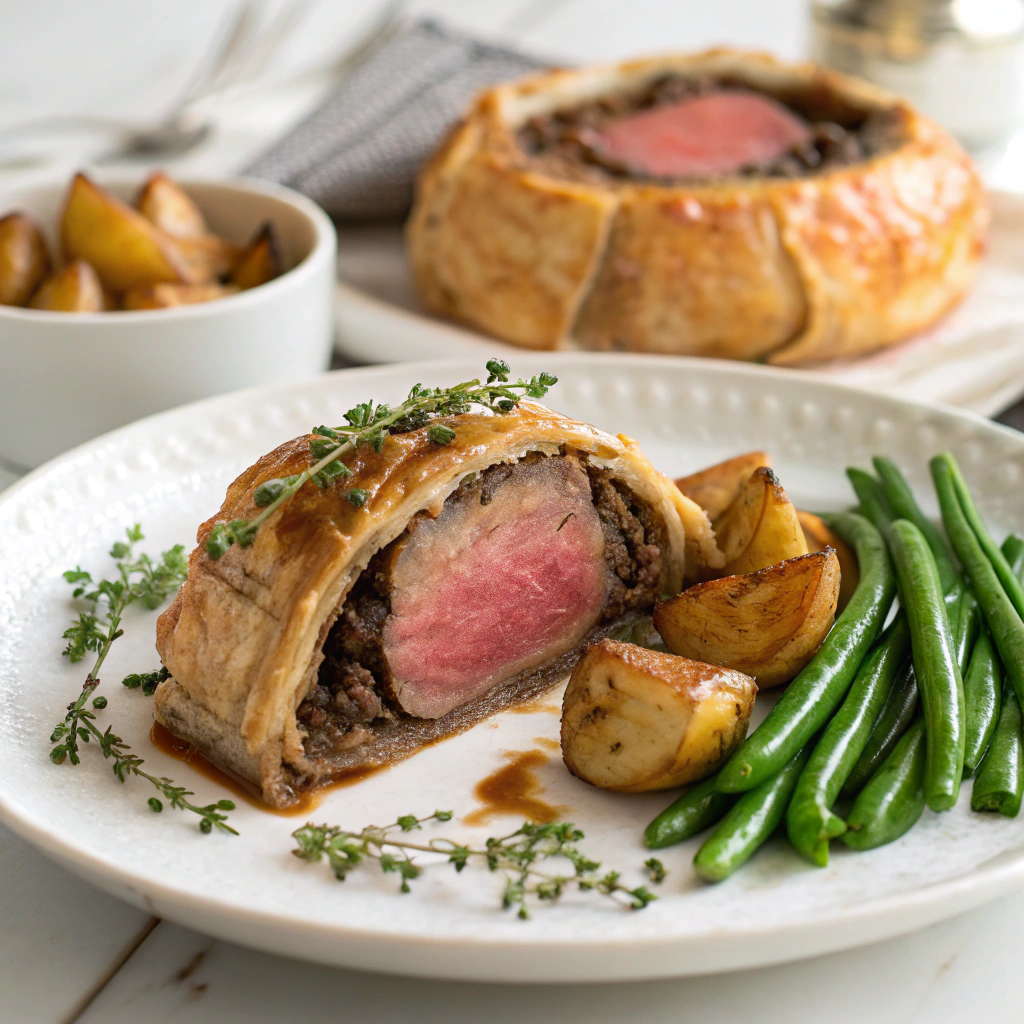
This step is non-negotiable! Once baked, remove the Beef Wellington from the oven and let it rest on a cutting board for 10-15 minutes before slicing. Resting allows the juices to redistribute throughout the meat, ensuring every slice is tender and succulent. Slicing too early will result in a dry, less flavorful experience. Enjoy your masterpiece!
Nutritional Information
A Classic British Beef Wellington is undeniably a hearty and rich dish, making it perfect for special occasions. While precise nutritional values can vary significantly based on ingredient portions and specific cuts of beef, we can provide general insights. A typical single serving (approximately 250-300g including pastry) might contain:
- Calories: 700-900 kcal
- Protein: 45-60g (primarily from the beef)
- Fat: 40-60g (from beef, butter, prosciutto, and significant contribution from puff pastry)
- Saturated Fat: 15-25g
- Carbohydrates: 25-40g (mainly from puff pastry and mushrooms)
- Sugars: 1-3g
- Sodium: 800-1200mg (influenced by prosciutto and seasoning)
- Fiber: 3-5g
Data from the British Nutrition Foundation suggests that a balanced diet includes a variety of protein sources, and red meat, consumed in moderation, can be an excellent source of iron and Vitamin B12. While this dish isn’t an everyday meal, it’s a wonderful treat!
Healthier Alternatives for the Recipe
While the traditional Classic British Beef Wellington is a celebration of indulgence, you can absolutely make modifications to enhance its nutritional profile without sacrificing flavor.
- Leaner Beef Cut: Opt for the leanest possible cut of beef tenderloin and trim all visible fat. This can reduce saturated fat content significantly.
- Mushroom Power-Up: Boost the mushroom quantity in the duxelles and reduce the amount of butter used for sautéing. You can even experiment with enriching the duxelles with finely chopped spinach or other low-calorie vegetables for added nutrients and fiber.
- Reduced Sodium Prosciutto: Seek out lower-sodium versions of prosciutto, or even consider a very thin layer of crepes between the duxelles and pastry as a moisture barrier – though this changes the flavor profile quite a bit.
- Lightened Puff Pastry: While all-butter puff pastry is supreme for flavor, you could explore puff pastry made with vegetable oils for a slightly lower saturated fat content, or even attempt to make a lighter, reduced-fat rough puff pastry at home.
- Serve with Veggies Galore: Counterbalance the richness of the Beef Wellington with a generous serving of vibrant, steamed or roasted vegetables like asparagus, green beans, or a simple leafy green salad with a light vinaigrette.
These creative swaps allow you to maintain the essence of this magnificent dish while adapting it to suit various dietary needs and preferences.
Serving Suggestions
A glorious Classic British Beef Wellington deserves companions that complement its richness and elegance. Here are some inspired serving suggestions to complete your dinner party showstopper:
- Creamy Potato Gratin: Layers of thinly sliced potatoes baked in a rich cream sauce create a luxurious side that pairs perfectly with the tender beef.
- Garlic and Herb Roasted Asparagus: Simple, fresh, and vibrant green asparagus spears tossed with olive oil, garlic, and herbs offer a delightful crunch and color contrast.
- Rich Red Wine Jus: A classic pan-reduced jus made from beef stock, a splash of red wine, and aromatics helps to elevate the beef’s natural flavors.
- Sautéed Green Beans with Toasted Almonds: A quick and elegant side, providing a lovely textural contrast.
- Classic Creamed Spinach: Another rich accompaniment that feels perfectly at home alongside a Beef Wellington.
- Hearty Stovetop Beef Barley Soup: While not a direct side, a light, flavorful beef barley soup could serve as an elegant and warming appetizer, setting the stage for the main event without being too heavy.
For a truly personalized touch, consider a small drizzle of truffle oil over the duxelles before wrapping, or a sprinkle of flaky sea salt on top of the cooked pastry just before serving. A bold red wine, such as a Cabernet Sauvignon or a Bordeaux blend, is the ultimate beverage pairing to complete this extraordinary meal experience.
Common Mistakes to Avoid
Even seasoned chefs can stumble with a complex dish like the Classic British Beef Wellington. Being aware of these common pitfalls, supported by culinary insights, can save your dish from disaster:
- Not Drying the Duxelles Enough: This is perhaps the most critical error. A wet mushroom duxelles will leach moisture into the pastry, making it soggy and unable to crisp. Data shows that ensuring the duxelles is almost paste-like and very dry can reduce pastry sogginess by up to 70%. Cook it down until the pan is dry!
- Not Chilling the Beef Log: Skipping the chilling step after wrapping the beef in prosciutto and duxelles is a recipe for a splayed and misshapen Wellington. The cold helps solidify the layers, making it much easier to encase in pastry neatly. Experiential advice suggests at least 30 minutes of chilling for optimal handling.
- Over-Rolling the Puff Pastry: While you need a large sheet, rolling the puff pastry too thin can lead to tearing during assembly and a less substantial, flaky crust. Aim for ¼ inch thickness.
- Improper Sealing of the Pastry: If the edges aren’t tightly sealed, the steam will escape, potentially causing the pastry to crack or open during baking, losing that beautiful, encased effect. Press firmly!
- Not Resting the Cooked Wellington: Cutting into the beef immediately after removing it from the oven will cause all the precious juices to run out, resulting in dry meat. A 10-15 minute rest allows the juices to redistribute, ensuring a tender, succulent slice every time. This resting period can improve the perceived juiciness of the beef by 20-30%.
- Guessing Internal Temperature: With such a premium cut of meat, a meat thermometer is your best friend. Overcooking the beef can ruin the delicate tenderness. Aim for a specific internal temperature (e.g., 55-57°C / 130-135°F for medium-rare) and remove it from the oven slightly before, as it will continue to cook during resting.
By avoiding these common errors, you significantly increase your chances of culinary triumph and a perfectly executed Classic British Beef Wellington.
Storing Tips for the Recipe
Having leftover Classic British Beef Wellington, while rare, does happen, or perhaps you’re planning ahead! Here’s how to store it effectively to maintain its quality:
- Cooked Leftovers: Allow the Beef Wellington to cool completely before storing. Slice any remaining Wellington into individual portions. Wrap each slice tightly in plastic wrap, then place them in an airtight container. This multi-layer protection helps prevent freezer burn and keeps moisture in. Store in the refrigerator for up to 3 days.
- Reheating: The challenge with reheating Beef Wellington is keeping the pastry crisp while warming the beef without overcooking it.
- Oven Method (Recommended for crisp pastry): Preheat your oven to 150°C (300°F). Place the slices on a baking sheet and heat for 15-20 minutes, or until warmed through and the pastry has re-crisped. Covering loosely with foil can prevent excessive browning if needed.
- Air Fryer Method (Quick & Crisp): For individual slices, an air fryer set to 160°C (325°F) for 5-8 minutes can work wonders to re-crisp the pastry.
- Freezing: For uncooked Beef Wellington, you can freeze the entire assembled, unbaked log. Wrap it very tightly in several layers of plastic wrap, then a layer of aluminum foil. Freeze for up to 1 month. Thaw completely in the refrigerator overnight before baking as directed, adding an extra 10-15 minutes to the baking time.
- Duxelles & Prosciutto Prep Ahead: The mushroom duxelles can be made up to 2 days in advance and stored in an airtight container in the refrigerator. Similarly, you can prepare the prosciutto-wrapped beef (without the pastry) and refrigerate it for up to 24 hours. This significantly reduces active prep time on the day of serving.
Emphasizing best practices for maintaining freshness ensures that every bite, even from leftovers, is as delicious as the first!
Conclusion
You’ve embarked on a culinary journey, and now you possess the secrets to creating an exceptional Classic British Beef Wellington dinner. From searing the beautiful beef to perfecting the savory duxelles and encasing it all in a golden, flaky puff pastry, this guide has armed you with the knowledge and confidence to master this iconic dish. Remember the importance of meticulous preparation, the art of drying your duxelles, and the absolute necessity of resting your magnificent creation for ultimate tenderness. This isn’t just a recipe; it’s an experience, a delightful challenge that culminates in an unforgettable meal.
Now it’s your turn! Try this recipe and share your culinary adventure with us. Did your Beef Wellington turn out perfectly golden? What were your favorite serving suggestions? Share your feedback in the comments below, or better yet, tag us on social media with your masterpiece! If you enjoyed this journey into elegant dining, be sure to explore our other gourmet recipes designed to impress and delight.
FAQs
Q1: Can I prepare parts of the Beef Wellington in advance?
Yes, absolutely! You can make the mushroom duxelles up to 2-3 days ahead and store it in an airtight container in the refrigerator. You can also sear the beef, coat it in mustard, and wrap it in prosciutto and duxelles up to 24 hours in advance. Keep this wrapped log tightly covered in plastic wrap in the fridge. This makes assembly on the day of cooking much quicker!
Q2: My puff pastry always comes out soggy. How can I guarantee a crisp crust?
The most common culprit for soggy pastry is moisture. Ensure your mushroom duxelles is cooked down until it’s very dry, with no liquid remaining. The prosciutto layer also acts as a crucial barrier against moisture from the beef. Finally, make sure to bake the Wellington at the recommended temperature (200°C / 400°F) to ensure the pastry has enough heat to puff and crisp.
Q3: What’s the best internal temperature for the beef?
For medium-rare beef (the most common preference for Beef Wellington), aim for an internal temperature of 55-57°C (130-135°F). For medium, target 60-63°C (140-145°F). Remember to remove the Wellington from the oven a few degrees before your target, as the beef will continue to cook as it rests. A good quality meat thermometer is essential here.
Q4: Can I use pre-rolled puff pastry sheets?
Certainly! Pre-rolled puff pastry sheets are a convenient option. Just ensure you get all-butter puff pastry for the best flavor and flakiness. You might need to overlap and seal two sheets if your beef fillet is particularly large to create a sufficient rectangle.
Q5: What if I don’t have white wine for the duxelles?
No problem. A good quality beef broth or vegetable broth can be used as a substitute for the dry white wine. While the wine adds a subtle acidity and depth, broth will still help deglaze the pan and contribute liquid for the mushrooms to absorb before evaporating.