
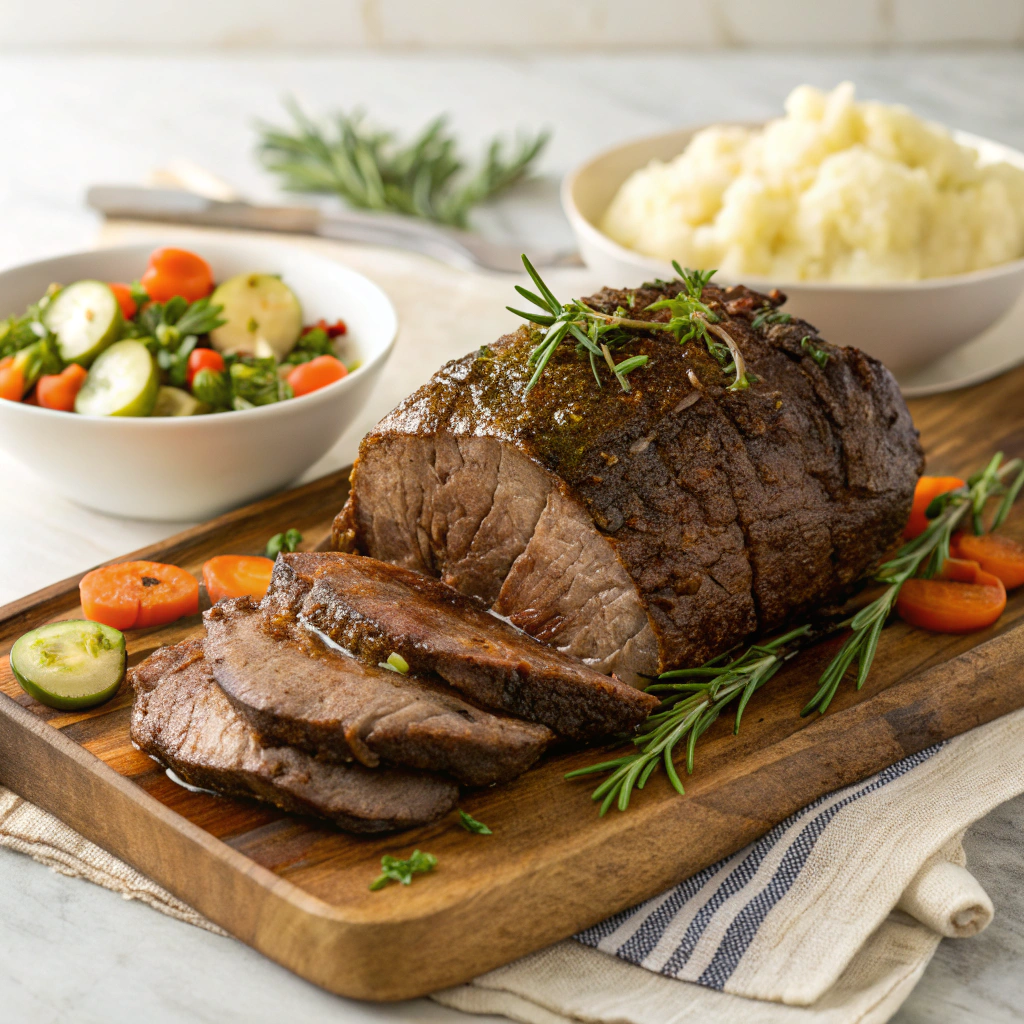
Introduction
What if the most tender, richly flavored beef you’ve had this year came from one of the leanest, most affordable cuts—and required almost no effort? That’s the promise of a Juicy Slow Cooker Round Roast. While some cooks dismiss round roast as “too lean to be succulent,” low-and-slow heat proves the skeptics wrong. In this recipe, smart seasoning, a quick sear, and a silky braising base transform an everyday cut into a fork-tender centerpiece with deep, savory gravy. Whether you’re feeding a weeknight crowd or prepping hands-off for Sunday supper, this slow-cooker method delivers consistent, juicy results with minimal hands-on time.
Ingredients List
For 8 servings (3.5–4 lb roast)
- Round roast (top round, bottom round, or eye of round), 3.5–4 lb: These lean cuts shine in a slow cooker, delivering clean beef flavor without excess fat.
- Kosher salt, 2–2.5 tsp: Even seasoning helps the roast retain moisture.
- Black pepper, 1.5 tsp, freshly cracked: Lifts the savory notes.
- Garlic powder, 1 tsp: Adds warmth without overpowering.
- Onion powder, 1 tsp: Boosts umami and balances the garlic.
- Smoked paprika, 1 tsp: Optional, but adds a subtle, smoky backbone.
- Neutral high-heat oil (avocado or canola), 1.5 tbsp: For searing.
- Yellow onions, 2 medium, sliced: Provide sweetness and body to the gravy.
- Carrots, 4 large, cut into 2-inch pieces: Classic pot roast aroma and color.
- Celery, 3 ribs, sliced: Softens and seasons the braise.
- Garlic, 5 cloves, smashed: Depth and aromatic lift.
- Tomato paste, 2 tbsp: Concentrated umami and color.
- Worcestershire sauce, 1.5 tbsp: Enhances meaty savoriness.
- Beef broth or stock (low sodium), 2 cups: The braising base. Use high quality for best flavor.
- Dry red wine, 1/2 cup (optional): Adds acidity and complexity; sub 1 tbsp balsamic + 1/2 cup broth if avoiding alcohol.
- Fresh thyme, 4 sprigs, and bay leaves, 2: Herbaceous notes that complement beef.
- Baby potatoes, 1.5 lb (Yukon Gold or red), halved: Butteriness and texture.
- Cornstarch, 2–3 tbsp, or all-purpose flour, 3–4 tbsp: For a silky gravy.
- Unsalted butter, 1 tbsp (optional): To finish the gravy with gloss.
- Fresh parsley, 2 tbsp, chopped: Bright finish.
Smart substitutions and boosts:
- Chuck roast works if you prefer more marbling and a slightly richer result.
- Mushrooms (8 oz, sliced) add a steakhouse-style umami boost.
- For a bolder profile, add 1 tsp dried rosemary or 1 tsp mustard powder to the rub.
- Low-FODMAP: Use garlic-infused oil and green tops of scallions; skip onion and use extra celery and carrots.
Timing
– Prep: 15 minutes
– Sear: 8–10 minutes
– Slow Cook: 8–9 hours on Low, or 4.5–5.5 hours on High
– Rest and Slice: 15 minutes
– Total: About 9 hours, most of it hands-off
Why this timing works:
- Round roast is lean and collagen-dense. Collagen begins to melt into gelatin between roughly 160–180°F and reaches peak tenderness around 195–205°F internal when braised. The low-and-slow approach gives connective tissue time to convert without drying out the lean meat.
- Compared with a stovetop braise that typically needs 2.5–3.5 hours of active monitoring, this set-it-and-forget-it method slashes hands-on time by over 60%, while maximizing tenderness and consistency.
Step-by-Step Instructions
1) Season the roast for deep flavor and moisture retention
– Pat the round roast dry. In a small bowl, mix salt, pepper, garlic powder, onion powder, and smoked paprika. Rub the spice blend all over the roast, pressing so it adheres.
– Tip: Season at least 15 minutes before searing to help the salt start dissolving and penetrating the surface. If you can, season up to 24 hours ahead and refrigerate uncovered for a dry-brine effect and better crust.
2) Sear to build a crave-worthy crust
– Heat oil in a heavy skillet over medium-high until shimmering. Sear the roast on all sides, 2–3 minutes per side, until mahogany brown. Don’t rush; color equals flavor.
– Tip: If the pan looks dry, add another teaspoon of oil. Avoid moving the meat until a brown crust forms, or you’ll tear the surface and lose juices.
3) Layer aromatics and create the braising base
– Add onions, carrots, and celery to the slow cooker insert. Nestle in the garlic, thyme, and bay leaves.
– In the hot searing pan, stir in tomato paste for 30–60 seconds to caramelize slightly, then pour in the red wine (or balsamic + broth). Scrape up the browned bits. Stir in Worcestershire and the remaining beef broth. Pour this mixture over the vegetables.
– Tip: Deglazing the pan captures fond—the concentrated flavor bits—turning your gravy from good to restaurant-level great.
4) Slow cook low and steady for juicy results
– Place the seared roast on the vegetables. Scatter potatoes around the sides, submerging as much as possible.
– Cook on Low for 8–9 hours or on High for 4.5–5.5 hours. Resist lifting the lid frequently—every peek can drop the temperature and extend cook time.
– Doneness guide: You’re aiming for “fork-tender,” where a fork slides in with little resistance, often around 200°F internal for this cut.
5) Make a silky gravy without the fuss
– Transfer the roast and vegetables to a platter; tent loosely with foil to rest.
– Skim excess fat from the slow-cooker juices. Whisk 2 tbsp cornstarch with 2 tbsp cold water (or 3–4 tbsp flour with 3–4 tbsp water) to make a slurry. Set the slow cooker to High. Slowly whisk the slurry into the hot juices; simmer until thickened, 5–8 minutes. Stir in butter for a glossy finish if desired.
– Tip: If you prefer ultra-smooth gravy, strain the juices first, then thicken.
6) Slice against the grain and serve
– Identify the grain direction of the roast and slice thinly across it to shorten fibers and maximize tenderness. Spoon over gravy, garnish with chopped parsley, and serve with the vegetables.
– Tip: For sandwiches, chill the roast first—cold slices cut thinner and hold together beautifully.
Nutritional Information
Approximate per serving (1/8 of recipe: about 6 oz cooked beef with gravy and vegetables):
– Calories: 420
– Protein: 44 g
– Fat: 14–16 g
– Carbohydrates: 26–28 g
– Fiber: 3–4 g
– Sodium: 640–720 mg (varies with broth and salt)
– Sugars: 5–6 g
– Iron: ~20% DV
– Potassium: ~22% DV
Notes on data:
- Round roast is comparatively lean: a 3 oz cooked serving often provides ~170–190 calories and 26–28 g protein. Our serving is larger and includes gravy and vegetables, which raises calories primarily from potatoes and thickener.
- Using low-sodium broth and adjusting salt to taste can cut sodium by 20–35% without sacrificing flavor.
Healthier Alternatives for the Recipe
– Trimmed eye of round: The leanest round cut; expect slightly firmer texture with excellent slicing quality.
– Low-sodium, no-sugar-added broth: Reduces overall sodium and hidden sugars.
– Add mushrooms and umami boosters: 8 oz cremini plus 1 tsp soy sauce or coconut aminos can let you use less salt.
– Swap potatoes for cauliflower florets or rutabaga: Cuts carbs by 30–50% while keeping hearty appeal.
– Arrowroot instead of cornstarch: Glossy gravy with fewer carbs per tablespoon, and it’s grain-free.
– Whole30/paleo adaptation: Skip wine and Worcestershire; use beef broth, coconut aminos (1 tbsp), and thicken with arrowroot.
– Gluten-free: Use cornstarch or arrowroot instead of flour; ensure Worcestershire is gluten-free or substitute coconut aminos.
– Heart-healthy tweak: Chill the cooking liquid and remove the solidified fat before reheating into gravy; you’ll reduce saturated fat without losing flavor.
Serving Suggestions
– Classic plate: Slices of juicy slow-cooker round roast with gravy over buttery mashed potatoes, roasted green beans, and a simple side salad.
– Cozy polenta: Ladle beef and gravy onto creamy Parmesan polenta; the soft texture plays beautifully with the tender slices.
– Noodles or spaetzle: Wide egg noodles or spaetzle soak up gravy for a comforting, family-friendly meal.
– Horseradish kick: Serve with a light horseradish yogurt sauce (Greek yogurt + prepared horseradish + lemon + pepper) for a bright, tangy counterpoint.
– Leftover strategy:
– French dip–style sandwiches: Warm thin slices in broth and pile into toasted rolls with provolone.
– Beef and barley soup: Dice leftover roast and vegetables; simmer with more broth and barley for a next-day dinner.
– Tacos with a twist: Toss shredded roast with a splash of lime and chili powder; serve in warm tortillas with pickled onions.
– Craving something fast and bold on a weeknight? Try this 30-minute stovetop favorite for contrast: crispy, sticky Mongolian beef stir fry—it’s the speedy cousin to your slow-cooked classic.
Common Mistakes to Avoid
– Choosing high heat for speed: Round roast needs time. Cooking on High for too long can squeeze out moisture before collagen melts. If you’re not in a rush, Low heat yields the juiciest texture.
– Skipping the sear: Browning adds a layer of roasted flavor and helps create a robust gravy. It’s a quick step with big payoff.
– Under-seasoning the base: The gravy flavors the entire dish. Season the broth thoughtfully, but keep it slightly under-salted before reducing or thickening to avoid a salty finish.
– Too little liquid: You need enough braising liquid to come at least 1/3–1/2 up the roast in the slow cooker. Otherwise, the top can dry out.
– Lifting the lid often: Every peek can add 20–30 minutes to the cook time. Trust the process.
– Carving with the grain: Slicing parallel to the muscle fibers makes beef taste chewy. Always slice thinly across the grain.
– Skipping rest time: Letting the roast rest briefly prevents juices from running out and keeps slices moist.
Storing Tips for the Recipe
– Refrigeration: Store sliced beef fully submerged in gravy in an airtight container for up to 4 days. Keeping the meat nestled in liquid preserves tenderness.
– Freezing: Freeze sliced portions with gravy for up to 3 months. Cool completely, then package flat in labeled freezer bags or containers. Thaw overnight in the fridge.
– Reheating: Warm gently in gravy on the stovetop over low heat or in a 300°F oven, covered. Avoid high heat microwaving, which can toughen lean cuts.
– Make-ahead prep: Chop vegetables and mix the dry rub up to 48 hours ahead. You can also sear the roast a day in advance; refrigerate, then place into the slow cooker with braising liquid the next morning.
– Gravy refresh: If gravy thickens too much when chilled, whisk in a splash of broth as you reheat.
Conclusion
This Juicy Slow Cooker Round Roast proves that lean beef can be luscious, sliceable, and deeply satisfying with the right technique. A quick sear, a flavor-rich braise, and patient, gentle heat transform an everyday cut into a dinner worth sharing. Set it in the morning, come home to the aroma, and carve into tender slices that pair with almost anything. If you make this, share your tweaks and time settings—I love seeing how readers customize the base recipe with their own pantry staples and family preferences. Ready to set-and-forget your next comfort classic? Queue up your slow cooker and let it work its magic.
For another slow cooker roast approach and inspiration, check out this helpful guide to pot roast: slow cooker pot roast.
FAQs
– How do I keep a round roast from drying out in the slow cooker?
– Use Low heat when time allows, don’t underfill the pot with liquid, and slice against the grain. Keeping the meat bathed in gravy for storage and reheating also helps retain moisture.
-
Can I cook this without searing?
- Yes, but searing builds deeper flavor and better color in the gravy. If you skip it, add 1 tsp soy sauce or coconut aminos and an extra tablespoon of tomato paste to boost savoriness.
-
What internal temperature should I aim for?
- Unlike steaks, braised roasts get tender above typical “doneness” temps. Round roast becomes fork-tender around 195–205°F after hours of gentle heat. While USDA minimum for whole cuts is 145°F, continuing to cook to the higher range allows collagen to convert to gelatin, creating that tender bite.
-
Can I use chuck roast instead of round?
- Absolutely. Chuck is more marbled and forgiving; it will taste richer and may become tender slightly faster. Keep the rest of the method the same.
-
How do I thicken gravy without flour?
- Use cornstarch or arrowroot slurry. For glossy, clear gravy, arrowroot is a great option; add it at the end and avoid boiling hard once thickened.
-
My slow cooker runs hot. What should I do?
- Start on Low and check at the earliest time cue (around 7.5–8 hours). If you see rapid bubbling on Low, prop the lid slightly ajar for the last hour or switch to a Keep Warm setting once the roast is tender.
-
Do I need wine?
- No. Substitute with 1 tbsp balsamic vinegar plus extra broth. The slight acidity helps round out the richness without alcohol.
-
Can I make this the day before?
- Yes—and it can taste even better. Cook fully, chill the roast in its juices, remove solidified fat, and reheat gently. Slices will be neater, and the gravy will be more refined.
-
How do I scale the recipe for a smaller roast?
- For a 2–2.5 lb roast, reduce vegetables and liquid by about 25–30%. Cook on Low for 6.5–7.5 hours, checking for tenderness from hour 6 onward.
-
What sides work best?
- Mashed potatoes, buttered noodles, Parmesan polenta, roasted root veggies, or a crisp salad. For brightness, finish with lemon-zested green beans or a simple cucumber salad.
Make this once, and you’ll have a dependable, Juicy Slow Cooker Round Roast blueprint you can riff on all season—hearty, tender, and effortlessly flavorful.