
Introduction
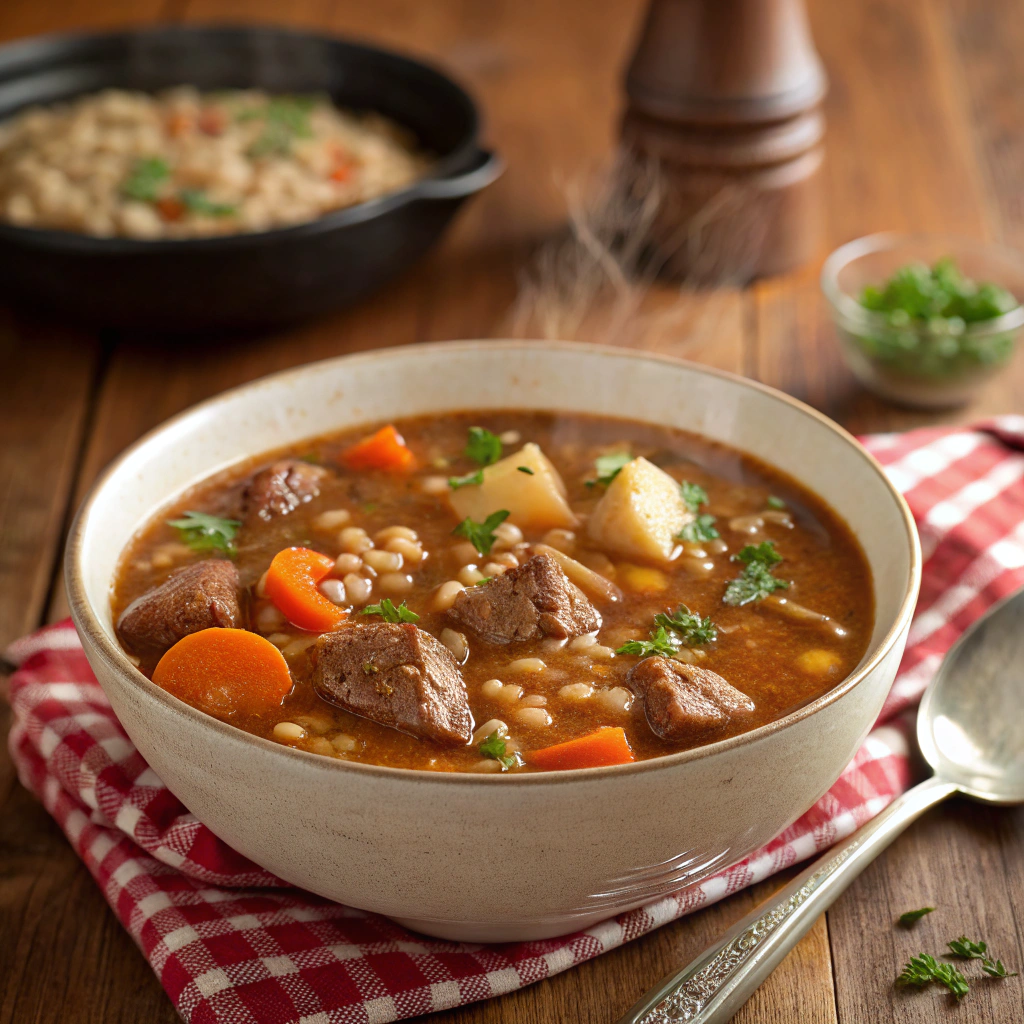
What if you could enjoy the deep, slow-simmered flavor of a classic old-fashioned soup without babysitting a pot all day? That’s the promise of this Hearty Stovetop Beef Barley Soup: big beef flavor, silky broth, and tender barley in about an hour and a half. I’ve dialed in the method so you get rich browning, concentrated savoriness, and spoon-tender beef—all the nostalgia, none of the fuss. Whether you’re feeding a crowd or stocking your freezer for cozy weeknights, this warming, from-scratch recipe is everything you want in a cold-weather bowl.
As a cook who tests recipes obsessively and prioritizes approachable technique and everyday ingredients, my goal here is simple: one pot, pantry-friendly upgrades, and dependable results. You’ll find helpful swaps, time-saving tips, and data-backed notes on nutrition, so this weeknight-friendly classic fits your tastes and your schedule.
Ingredients for Hearty Stovetop Beef Barley Soup
– 2 pounds beef chuck, cut into 3/4-inch cubes (trimmed of hard fat)
– 1 tablespoon kosher salt, divided (start with 2 teaspoons for beef; adjust to taste later)
– 1 teaspoon freshly ground black pepper
– 2 tablespoons olive oil (or neutral oil)
– 1 large yellow onion, finely chopped
– 3 carrots, chopped into 1/2-inch pieces
– 2 celery stalks, chopped
– 3 cloves garlic, minced
– 2 tablespoons tomato paste
– 1 cup pearl barley, rinsed (or 3/4 cup hulled barley; see note)
– 8 cups low-sodium beef broth (or 6 cups broth + 2 cups water)
– 1 bay leaf
– 1 teaspoon dried thyme (or 1 tablespoon fresh, chopped)
– 1/2 teaspoon dried rosemary, crushed (or 1 teaspoon fresh, chopped)
– 1 tablespoon Worcestershire sauce
– 1 tablespoon soy sauce (adds umami; use tamari if gluten-sensitive)
– 1 cup sliced cremini mushrooms (optional but great for richness)
– 1 tablespoon sherry vinegar or lemon juice, to finish
– 2 tablespoons chopped fresh parsley, for serving
Ingredient notes and simple substitutions:
- Beef: Chuck roast is ideal for tenderness and flavor. Stew meat works, but quality can vary; choose well-marbled pieces. For a leaner option, use top round and extend the simmer by 10 minutes. In a pinch, ground beef can work (brown fully and reduce simmer by 10–15 minutes).
- Barley: Pearl barley cooks faster and yields a creamy, plump texture; hulled barley is less processed with more fiber and a pleasantly chewy bite. If gluten-free is needed, swap barley for 3/4 cup rinsed short-grain brown rice and reduce simmer time slightly.
- Broth: A mix of broth and water prevents overly salty results, since barley absorbs seasoning. If using regular (not low-sodium) broth, omit the soy until the end and season to taste.
- Tomato paste: Adds depth and color. If you’re tomato-averse, skip it and add an extra teaspoon of Worcestershire.
- Mushrooms: They amplify umami and allow you to stretch the beef. If you love a meatier soup but want to keep the budget reasonable, increase mushrooms to 2 cups and reduce beef by 1/2 pound.
- Herbs: Thyme and rosemary are classic, but dried oregano (1/2 teaspoon) is a worthy stand-in. Fresh herbs brighten the finish.
Timing for Hearty Stovetop Beef Barley Soup
– Prep time: 15 minutes (trim, chop, and rinse barley)
– Sear and sauté: 15 minutes
– Simmer time: 60 minutes
– Rest and finish: 5 minutes
– Total time: About 90 minutes
Why this matters: Many old-fashioned beef barley soups call for a 2-hour simmer. This version clocks in at roughly 90 minutes—about 20–30% faster—by leveraging efficient browning, a smart deglaze, and the right cut of beef. You’ll still get deep flavor and tender results with weeknight-friendly timing.
Step 1: Season and prep the beef
– Pat the beef dry with paper towels so it browns instead of steams.
– Season all over with 2 teaspoons kosher salt and 1 teaspoon black pepper.
– Tip: Smaller, uniform cubes (about 3/4-inch) cook more evenly and turn tender in closer to an hour.
Step 2: Brown in batches for big flavor
– Heat a heavy Dutch oven over medium-high and add 1 tablespoon oil.
– Add half the beef in a single layer; don’t crowd the pot. Sear 2–3 minutes per side until browned. Transfer to a bowl and repeat with remaining oil and beef.
– Tip: If fond (the browned bits) darkens too quickly, lower heat slightly. That fond is flavor gold for your broth.
Step 3: Build the aromatic base
– Reduce heat to medium. Add onion, carrots, and celery to the pot with a pinch of salt.
– Cook, stirring, for 5–7 minutes until softened and lightly golden at the edges.
– Add garlic and cook 30–45 seconds until fragrant.
– Tip: If using mushrooms, add them here and sauté until they release their liquid and lightly brown.
Step 4: Tomato paste and deglaze
– Stir in tomato paste and cook 1–2 minutes to caramelize—this deepens color and sweetness.
– Splash in 1/2 cup broth (or dry red wine if you have it) and scrape up fond with a wooden spoon.
Step 5: Add barley, liquids, and herbs
– Return browned beef (and any juices) to the pot.
– Add rinsed pearl barley, remaining broth, bay leaf, thyme, and rosemary.
– Stir in Worcestershire and soy; bring to a simmer over medium-high.
Step 6: Simmer gently—low and slow wins
– Reduce heat to maintain a gentle, active simmer. Partially cover.
– Cook about 60 minutes, stirring every 10–15 minutes to keep barley from settling and sticking.
– Tip: Target tenderness checkpoints—beef should be easily pierced with a fork around 50–60 minutes; barley should be plump and tender but not blown out.
Step 7: Adjust thickness
– Barley swells as it rests. If soup looks thicker than you like, stir in 1/2–1 cup hot water or broth to loosen.
– If too thin, simmer uncovered for 5–10 minutes to reduce slightly.
Step 8: Brighten and finish
– Fish out the bay leaf.
– Stir in sherry vinegar or a squeeze of lemon to wake up the flavors.
– Taste and adjust salt and pepper. Finish with chopped parsley.
Step 9: Serve with crunch and contrast
– Ladle into warm bowls. Add a grind of pepper and extra parsley. A drizzle of good olive oil or a dollop of plain yogurt is a lovely contrast.
Nutritional Information
Estimated per serving (8 servings):
– Calories: ~380
– Protein: ~28 g
– Carbohydrates: ~38 g
– Fat: ~12 g
– Fiber: ~6 g
– Sodium: ~680 mg (varies by broth)
– Iron: ~3 mg
– Potassium: ~700 mg
Notes and insights:
- Barley is naturally high in beta-glucan, a soluble fiber linked to heart health and improved satiety. Hulled barley contains more fiber than pearl barley; if you swap to hulled, expect roughly 1–2 additional grams of fiber per serving and a slightly longer cook.
- Using low-sodium broth and salting gradually helps keep overall sodium in check without sacrificing depth.
These estimates were calculated with 85% lean beef, pearl barley, and low-sodium broth. Actual values vary by brand and substitutions.
Healthier Alternatives for the Recipe
– Choose leaner beef: Swap chuck for top round or sirloin tip; compensate with an extra cup of mushrooms and a teaspoon more tomato paste to maintain richness.
– Half-beef, half-mushroom: Mince 8 ounces mushrooms finely and brown with the beef. You’ll reduce saturated fat while keeping umami strong.
– Upgrade the grain: Use hulled barley instead of pearl for more fiber and nutrients. Simmer time may increase by 10–15 minutes; check for tenderness.
– Gluten-free: Replace barley with short-grain brown rice (3/4 cup). Simmer 45–55 minutes until rice is tender. The soup won’t be “beef barley” anymore, but it retains the spirit and comfort.
– Low-sodium strategy: Use 100% water for half the liquid and skip soy sauce initially; season at the end with a splash of tamari or a pinch of mushroom powder.
– Veg-forward boost: Add 2 cups of chopped greens (kale or Swiss chard) in the last 10 minutes, or stir in 1 cup frozen peas right before serving.
– Lower fat: After cooking, chill the soup briefly; lift off any solidified fat and reheat. Or use a fat separator before serving.
Serving Suggestions
– Classic comfort: Serve with warmed sourdough, rye toast, or buttered crusty rolls for dunking.
– Fresh lift: Top bowls with chopped parsley, a sprinkle of dill, or a lemon zest micro-grate for brightness.
– Creamy swirl: A spoonful of plain yogurt or a touch of horseradish cream adds tangy contrast to the savory broth.
– Vegetable sides: Pair with a simple green salad (arugula, shaved Parmesan, lemon vinaigrette) or roasted Brussels sprouts for a bistro-style meal.
– Make it a meal prep star: Portion into insulated containers with extra steamed vegetables on the side. If you like beef-forward meals that come together fast, you might also enjoy these easy weeknight Greek Ground Beef Bowls with Tzatziki.
– Cozy beverage pairings: Try a malty amber ale, a lighter-bodied red (like Pinot Noir), or sparkling water with a lemon wedge.
Common Mistakes to Avoid
– Skipping the sear: Browning isn’t optional. It layers in flavor you can’t fake later. If the pot gets crowded, the beef steams, not sears. Work in batches.
– Boiling too hard: A rolling boil toughens beef. Keep it at a gentle simmer for tender bites.
– Under-salting early: Barley absorbs salt as it swells. Season in stages and taste at the end.
– Not stirring: Barley likes to settle on the bottom and can scorch if ignored. Stir every 10–15 minutes.
– Adding acid too early: Vinegar or lemon should go in at the end. Acid early can prevent beef from tenderizing and mute aromatics.
– Using the wrong cut: Lean stew cubes can stay chewy. Choose chuck or be prepared to simmer longer.
– Overcooking barley: Pearl barley should be plump but intact. If grains are splitting and edges fraying, it’s overdone. Pull it off the heat and serve.
Storing Tips for Hearty Stovetop Beef Barley Soup
– Refrigeration: Cool completely, then store in airtight containers for up to 4 days. Barley will continue to absorb broth; add a splash of water or stock when reheating.
– Freezing: Freeze up to 3 months. For best texture, undercook the barley by 5 minutes before freezing, or cook barley separately and combine when reheating.
– Reheating: Reheat gently on the stovetop over medium-low, stirring occasionally and thinning with broth as needed. Microwave in 60–90 second bursts, stirring between intervals.
– Make-ahead strategy: Dice and portion all veg; cube and season beef; rinse barley. Store separately up to 24 hours ahead. This shortens active cooking to mostly browning and simmering.
– Batch cooking: Double the recipe in a larger Dutch oven; sear beef in 3–4 batches. Season in stages to stay in control of salt.
Conclusion
This Hearty Stovetop Beef Barley Soup captures everything we love about the old-fashioned original—deeply browned beef, savory broth, and velvety barley—streamlined for modern kitchens. With smart browning, a balanced pot of aromatics, and a bright finish, you’ll get comfort in a bowl in about 90 minutes.
Now it’s your turn: make it tonight, tweak it to your taste, and tell me how you served it—crusty bread, a lemony salad, or something new. If you’re hungry for more cozy, beefy dinners you can rely on, explore the site for additional weeknight-friendly recipes and seasonal favorites.
FAQs
– Can I use hulled barley instead of pearl?
Yes—hulled barley is less processed and higher in fiber, with a chewier bite. Increase the simmer by 10–15 minutes and start checking at the 60-minute mark.
-
What cut of beef is best?
Chuck roast delivers the most dependable tenderness and beefy flavor in this time frame. If using top round or sirloin tip (leaner), plan to simmer slightly longer. -
Can I make this without alcohol?
Absolutely. The deglaze can be done with broth. For a little brightness without wine, finish with sherry vinegar or lemon juice at the end. -
How do I keep the beef tender?
Brown quickly in batches to avoid overcooking early, then maintain a gentle simmer. A violent boil will toughen the meat. If your beef is particularly lean, add 10–15 minutes to the simmer. -
Can I use ground beef?
Yes. Brown 1 1/2 pounds ground beef thoroughly in Step 2, remove excess fat, then proceed. Reduce simmer time by about 10–15 minutes since ground beef doesn’t need as long to tenderize. -
What if the soup gets too thick?
Barley swells as it rests. Stir in hot water or broth 1/2 cup at a time until it reaches your preferred spoonable consistency. Always re-taste for seasoning afterward. -
Is barley gluten-free?
No—barley contains gluten. For a gluten-free variant, substitute short-grain brown rice or diced potatoes. Keep in mind the flavor and texture will shift, but it’s still a wonderful beef-and-grain soup. -
Can I add more vegetables?
Definitely. Mushrooms, parsnips, peas, or kale are all excellent. Add tender vegetables (like peas or chopped spinach) in the last few minutes of simmering to preserve color and texture. -
How long does it keep?
Up to 4 days refrigerated, or 3 months frozen. Barley softens over time, so for perfect texture after freezing, undercook it slightly or cook it separately. -
Can I use water instead of broth?
Yes—use at least half broth for best flavor, but water works. If using more water, lean on umami boosters: an extra teaspoon of tomato paste, soy/tamari to taste, or a pinch of dried mushrooms. -
Do I need to rinse barley?
Rinsing pearl barley removes dust and some starch, which helps keep the broth clearer and reduces sticking. It’s a quick, worthwhile step. -
Where can I see another reliable version of beef and barley soup?
For a solid reference and classic technique overview, check out this trusted guide to beef and barley soup on Simply Recipes. -
Can I adapt this to a slow cooker or pressure cooker?
Stovetop gives the best texture control, but yes:
• Slow cooker: Brown beef and aromatics as directed, transfer to slow cooker with barley and liquids, and cook on Low 6–7 hours.
• Pressure cooker: Reduce broth by 1 cup, cook on High for 20 minutes, natural release 10 minutes, then quick release and finish with vinegar and parsley. -
What’s the ideal serving size?
Plan on 1 1/2 to 2 cups per person. This recipe yields about 10–12 cups total—great for a family dinner with leftovers for lunch.
Enjoy this bowl of comfort, and make it your own. When you share your results, include your favorite add-ins or finishing touches—fresh dill, a pinch of smoked paprika, or that lemon zest that makes the flavors sing.