
Introduction
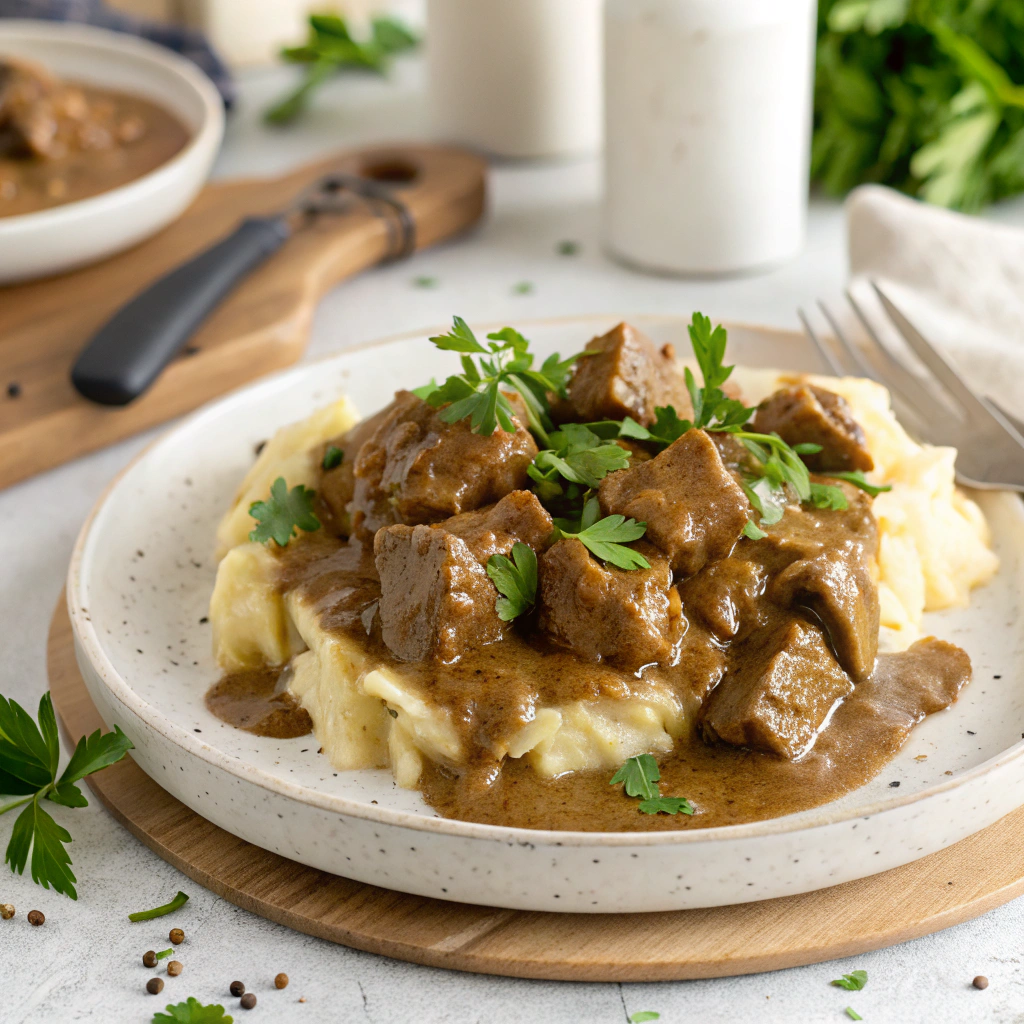
What if the richest, most tender gravy-draped beef you remember from your childhood could be on your table tonight—without a slow cooker? That’s the promise of Classic Stovetop Beef Tips and Gravy. For years, home cooks have believed you need hours in the oven or a pressure cooker to get fork-tender beef. Not so. With a few smart techniques—hard searing, building a pan gravy, and a gentle stovetop simmer—you’ll get old-fashioned comfort and weeknight practicality in one pot. This recipe delivers deep, beefy flavor, velvety gravy, and that nostalgic aroma that gathers people in the kitchen, fast.
As the cook behind Feast of Savory, I build recipes that feel like a hug and perform like they’ve been lab-tested. You’ll get clear steps, optional upgrades, and flexible swaps so your meal fits your pantry, your timeframe, and your table.
Ingredients List
– Beef: 2 pounds beef chuck roast or sirloin tip, cut into 1- to 1.5-inch cubes
– Substitutions: Round roast (leaner), venison (adjust simmer time), or pre-cut “stew beef” (trim excess fat for cleaner gravy).
– Kosher salt and black pepper: 1.25 to 1.5 teaspoons salt, 1 teaspoon pepper
– Tip: Aim for about 1% salt by weight on the beef for consistent seasoning.
– Neutral oil with a high smoke point: 1 to 2 tablespoons (canola, avocado, or grapeseed)
– Swap: Ghee for extra browning and buttery notes.
– Unsalted butter: 2 to 3 tablespoons
– Swap: Olive oil for dairy-free or a 50/50 butter–oil blend for flavor plus scorch protection.
– Yellow onion: 1 medium, finely diced
– Optional boost: 1 shallot for sweetness, or a pinch of onion powder for intensity.
– Cremini or button mushrooms: 8 ounces, sliced (optional but highly recommended)
– Note: Mushrooms deepen umami and stretch servings without adding heaviness.
– Garlic: 3 cloves, minced
– Swap: 1 teaspoon garlic powder in a pinch.
– All-purpose flour: 3 tablespoons (for roux)
– Gluten-free: Use 2 tablespoons cornstarch as a slurry later instead of making a flour roux.
– Beef stock or broth: 3 cups, low-sodium preferred
– Upgrade: 2.5 cups stock + 1/2 cup dry red wine for depth (Cabernet, Merlot, or a sturdy blend).
– Worcestershire sauce: 1 tablespoon
– Alternative: 2 teaspoons soy sauce or tamari for a savory backbone.
– Dijon mustard: 1 teaspoon (optional)
– Adds a bright counterpoint to richness without making the gravy “mustardy.”
– Fresh thyme: 1 teaspoon chopped (or 1/2 teaspoon dried)
– Or use rosemary, marjoram, or an herbes de Provence blend.
– Bay leaf: 1
– Paprika: 1/2 teaspoon (optional, sweet or smoked)
– Parsley: 2 tablespoons chopped, for garnish
– Swap: Chives for a mild onion finish.
– Optional finishers: 1 to 2 teaspoons red wine vinegar or lemon juice (to brighten); 2 tablespoons heavy cream for extra silk.
Sensory note: You’re aiming for beef that’s deeply browned and a gravy that smells like a cozy Sunday dinner—nutty from the roux, savory with onion, with thyme and bay leaf underpinning every bite.
Timing
– Prep time: 15 minutes (trim, cube, and season beef; chop onion and mushrooms)
– Hands-on sear and sauté: 15 minutes
– Simmer: 45 to 60 minutes, depending on cut and cube size
– Rest: 5 minutes
– Total time: About 80 to 95 minutes
Data context: Most stovetop braises average 100–120 minutes. This streamlined Classic Stovetop Beef Tips and Gravy clocks in roughly 15–25% faster by optimizing the sear and building the gravy directly in the same pot.
Step 1: Prep and season the beef
– Pat the beef dry thoroughly. Moisture is the enemy of browning; dry surfaces build better fond (the browned bits that equal flavor).
– Cube beef into even 1- to 1.5-inch pieces for uniform cooking.
– Season all sides with kosher salt and black pepper. Optional: Add a pinch of paprika for color and a subtle smoky undertone.
Tip: If time allows, season 30 minutes ahead and keep refrigerated. Surface salt helps draw out and then reabsorb juices for deeper seasoning.
Step 2: Hard sear in batches
– Heat a large, heavy-bottomed skillet or Dutch oven over medium-high until hot, then add oil.
– Sear beef in a single layer without crowding, 2–3 minutes per side, until a deep brown crust forms. Work in 2–3 batches.
– Transfer browned beef to a plate; leave rendered fat and fond in the pot.
Pro move: Aim for pan surface temperatures around 375–400°F. If the oil smokes aggressively, drop the heat slightly.
Step 3: Build the aromatic base
– Lower heat to medium. Add 1 tablespoon butter.
– Stir in onion and mushrooms with a pinch of salt. Cook 5–7 minutes until onions turn translucent and mushrooms release moisture and begin to brown.
– Add garlic and cook 30 seconds until fragrant.
Tip: Scrape the fond lightly as the vegetables release liquid—it dissolves into pure flavor for your gravy.
Step 4: Deglaze and concentrate
– If using wine, pour in 1/2 cup now and simmer 1–2 minutes, scraping up browned bits. Reduce by about half.
– Add Worcestershire (and Dijon if using). Stir to combine.
No wine? Deglaze with a splash of stock and proceed.
Step 5: Make the roux right in the pot
– Push vegetables to the edges. Add remaining butter to the center, then sprinkle in flour.
– Stir to form a paste, cooking 60–90 seconds to remove raw flour taste. The roux should be a glossy, light brown.
– Gradually pour in the beef stock while whisking or stirring to avoid lumps. Bring to a gentle simmer.
Gluten-free method: Skip the flour. Stir in all stock now, and later thicken with a 2-tablespoon cornstarch + 2-tablespoon cold water slurry during the simmer.
Step 6: Season and simmer to tender
– Return beef and any accumulated juices to the pot.
– Add thyme and bay leaf. Adjust heat to maintain a lazy bubble—more burble than boil.
– Cover partially and simmer 45–60 minutes, stirring occasionally, until beef is fork-tender and gravy coats a spoon.
Temperature cue: Aim for a gentle 190–205°F simmer. A rough boil can toughen proteins; gentle heat coaxes collagen into silky gelatin.
Step 7: Adjust texture and brightness
– If gravy is too thin: Simmer uncovered 5–10 minutes to reduce, or whisk in a little cornstarch slurry while simmering.
– If too thick: Add warm stock in small splashes until it loosens to your liking.
– Finish with a teaspoon or two of red wine vinegar or lemon juice for balance. Optional: Stir in heavy cream for an ultra-smooth finish.
Taste and adjust salt and pepper.
Step 8: Serve and garnish
– Remove bay leaf. Spoon beef tips and glossy gravy over your favorite base (see Serving Suggestions).
– Sprinkle with parsley or chives for color and freshness.
Chef’s note: If your family loves extra gravy, add an extra 1/2 to 1 cup stock during the simmer. It’s easier to reduce than to conjure more later.
Nutritional Information
Approximate per serving (6 servings, excluding sides):
– Calories: 390–430
– Protein: 34–40 g
– Carbohydrates: 6–9 g
– Fat: 20–25 g
– Fiber: 1–2 g
– Sodium: 550–750 mg (varies with broth and seasoning)
– Sugar: 2–4 g
Data insights: Using sirloin tip (leaner) can drop total fat by ~15–20%. Low-sodium broth can reduce sodium by 30–40% without sacrificing depth, especially if you retain Worcestershire or soy sauce for umami.
Healthier Alternatives for the Recipe
– Leaner protein: Use sirloin tip or top round; cut away visible fat. Add extra mushrooms to keep portions hearty without boosting calories.
– Better-for-you fat: Replace half or all the butter with olive oil; finish with just a teaspoon of butter for flavor.
– Lower sodium: Choose low-sodium stock and balance with acidity (a squeeze of lemon) to lift flavors without more salt.
– Gluten-free: Skip the flour and thicken with cornstarch slurry or arrowroot at the end. Use tamari in place of soy if needed.
– Dairy-free: Use oil or ghee (if tolerated) instead of butter; swap Worcestershire with coconut aminos and a splash of balsamic.
– Extra veggies: Add carrots or parsnips (cut into small pieces) in Step 6; or fold in thawed peas at the end for color and sweetness.
– Lightened gravy: Finish with 2–3 tablespoons plain Greek yogurt off heat for tang and body (stir slowly to avoid curdling).
Serving Suggestions for Classic Stovetop Beef Tips and Gravy
– Classics: Creamy mashed potatoes, buttered egg noodles, or steamed white rice let the gravy shine.
– Southern comfort: Buttermilk biscuits or grits soak up every drop.
– Weeknight swaps: Cauliflower mash or brown rice for a lighter plate.
– Special touch: Cheesy polenta or Yorkshire pudding for a retro Sunday supper vibe.
– Green sides: Roasted green beans, sautéed spinach with garlic, or a crisp wedge salad.
– Brunch-y leftover idea: Spoon heated beef tips over toasted sourdough and top with a fried egg.
– If you love classic gravies, you might also enjoy our old-school favorite for breakfast or brunch: creamed dried beef gravy.
Wine pairing: A medium-bodied red (Merlot, Côtes du Rhône) or a malty brown ale complements the savory depth. Non-alcoholic: Iced tea with lemon or a tart cherry spritzer balances the richness.
Common Mistakes to Avoid
– Skipping the pat-dry step: Wet beef steams and won’t brown. Dry equals crust, and crust equals flavor.
– Overcrowding the pan: Crowding drops your pan’s temperature; sear in batches for better fond.
– Boiling instead of simmering: A rolling boil tightens proteins and yields tough bites. Keep it to a relaxed simmer.
– Neglecting the fond: Those browned bits are liquid gold. Scrape them up while deglazing for umami-packed gravy.
– Adding flour without fat: Flour needs fat for a smooth roux; otherwise you’ll get gluey lumps.
– Under-salting the base: Taste at multiple phases—after searing, after deglazing, and at the end—to layer seasoning.
– Using thin stock: Weak stock equals flat gravy. If your stock is mild, reduce 1/2 cup separately to concentrate, then add.
– Wrong pot choice: Thin pans scorch roux and gravy. Use a heavy skillet or Dutch oven for even heat.
– Skipping rest: A 5-minute rest calms bubbling and helps gravy settle to the perfect texture.
Storing Tips for Classic Stovetop Beef Tips and Gravy
– Make-ahead: The flavors deepen after a night in the fridge. Cook fully, cool quickly, and refrigerate in shallow containers.
– Refrigerate: Up to 4 days in an airtight container.
– Freeze: Up to 3 months. Cool completely, portion, and freeze. Thaw overnight in the fridge for best texture.
– Reheat: Gently on the stovetop over low heat, adding splashes of stock or water to loosen. Microwave in 60-second bursts, stirring between.
– Food safety: Refrigerate within 2 hours; reheat leftovers to 165°F.
– Gravy rescue: If gravy thickens in the fridge, thin with warm stock as it reheats. If it separates, whisk briskly and add a small pat of butter to emulsify.
Conclusion
Classic Stovetop Beef Tips and Gravy proves you don’t need fancy appliances to achieve slow-cooked comfort. With a confident sear, a simple roux-based gravy, and a calm simmer, you’ll serve a dish that’s as nostalgic as it is weeknight-friendly. Whether you ladle it over potatoes, noodles, or biscuits, it’s the definition of old-fashioned comfort food done right.
Try it tonight, then share your tweaks—did you add mushrooms, a splash of wine, or a touch of cream? Drop a comment, rate the recipe, and explore more cozy gravies on the site. If you’re curious about another take on beef tips, check out this helpful walkthrough from a fellow comfort-food lover: Beef Tips with Gravy.
FAQs
– What’s the best cut for beef tips on the stovetop?
Chuck roast is king for tenderness and rich flavor after simmering. Sirloin tip works well when you want leaner slices and a slightly quicker cook. Pre-cut “stew meat” is convenient but can be a mix of cuts—plan for the longer end of the simmer window.
-
Can I make this without wine?
Yes. Use all beef stock and keep Worcestershire or soy for umami. For brightness, add a teaspoon of lemon juice or red wine vinegar at the end. -
How do I thicken the gravy if it’s too thin?
Simmer uncovered to reduce, or whisk in a cornstarch slurry (2 teaspoons cornstarch + 2 teaspoons cold water) and simmer 1–2 minutes until glossy. Add in small increments to avoid over-thickening. -
My beef is still tough after 45 minutes. What should I do?
Keep simmering gently. Toughness often means not enough time for collagen to melt. Add 1/2 cup stock if needed and check every 10 minutes until fork-tender. -
Can I use an Instant Pot or slow cooker?
Absolutely. Sear on sauté mode, then pressure cook 25–30 minutes with natural release, or slow-cook on low 6–8 hours. Finish on sauté to thicken with a slurry if needed. The stovetop version gives you the most control over gravy texture. -
How can I make the recipe gluten-free?
Skip the flour roux. Thicken with 1.5–2 tablespoons cornstarch mixed with cold water at the end. Use tamari instead of soy and verify your Worcestershire is gluten-free. -
What vegetables go best in the pot?
Mushrooms and onions are classic. Add carrots or parsnips in Step 6 for rustic sweetness. Fold in peas or green beans during the last 5 minutes. -
How do I avoid greasy gravy?
Trim large fat pockets from chuck. After searing, spoon off excess rendered fat before making the roux. If needed, refrigerate the gravy and lift off solidified fat later. -
Is dairy required?
No. Use oil or ghee and omit any cream. You’ll still get a rich, glossy gravy thanks to the roux and collagen. -
Can I scale this up?
Yes. For double batches, sear in more batches and use a wider pot so the simmer stays even. Increase stock, seasonings, and aromatics proportionally. Expect an extra 10–15 minutes of simmering. -
Does the mustard make it taste like mustard?
Not at all at 1 teaspoon. It’s a background booster—more body, a faint tang, and a balanced finish. Leave it out if you prefer. -
Can I use venison or game?
Yes. Venison tips work beautifully—add a bit more fat (butter or oil) and monitor simmer time, which can run 60–75 minutes depending on age of meat and cube size. -
What’s the ideal base to serve with Classic Stovetop Beef Tips and Gravy?
Mashed potatoes or buttered egg noodles are the coziest pairings. For lighter fare, use cauliflower mash or polenta for a naturally gluten-free base.
Now it’s your turn: grab a sturdy pot, build that fond, and let your kitchen smell like home. Classic Stovetop Beef Tips and Gravy is comfort you can count on—any night of the week.