
Introduction
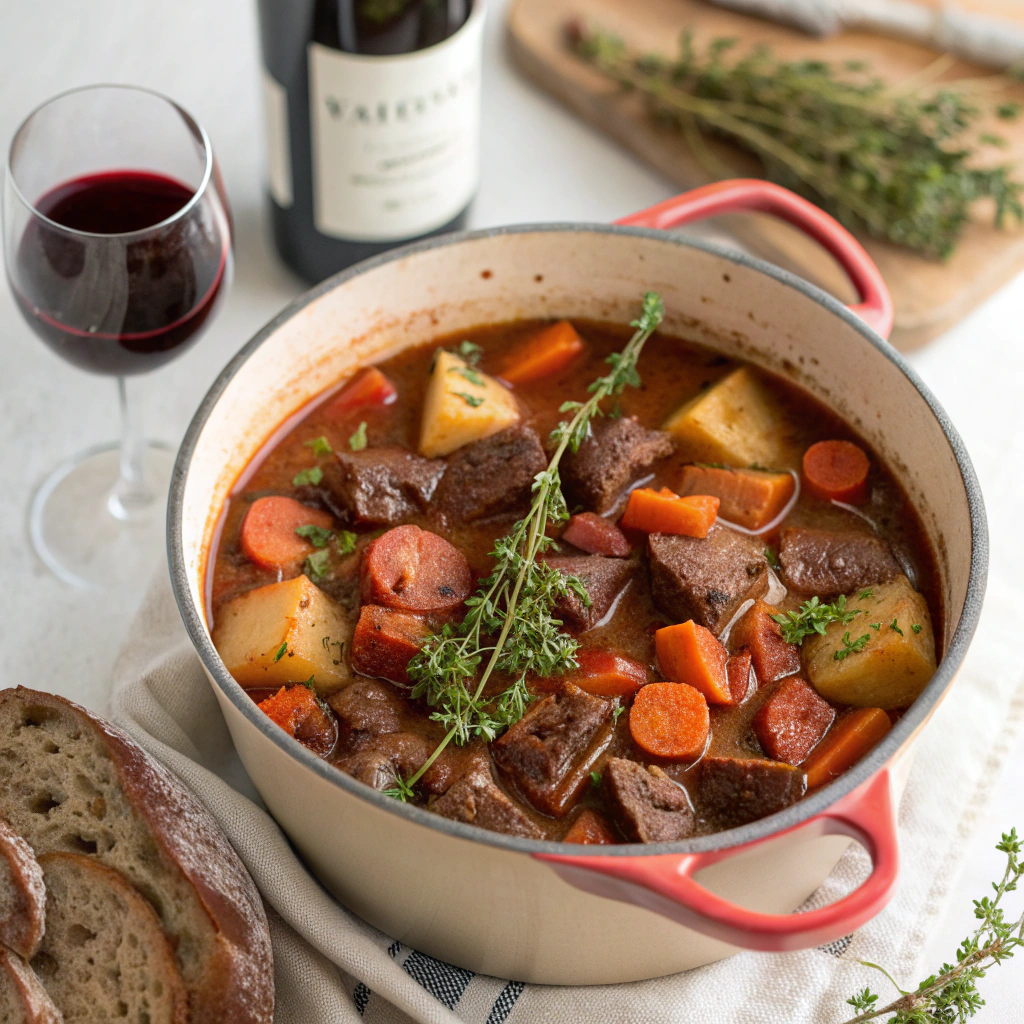
Can a Dutch Oven Beef Stew with Red Wine and Herbs deliver the kind of deep, slow-cooked flavor we crave—without parking you in the kitchen all afternoon? This rustic one-pot dinner proves it. By leaning on smart prep, high-heat searing, and an efficient braise, you get fork-tender beef, silky vegetables, and a fragrant, wine-infused gravy in around two hours. The result: a weeknight-feasible version of a beloved classic. In my Feast of Savory test kitchen, this Dutch Oven Beef Stew with Red Wine and Herbs has become a cold-weather essential—deeply savory, full of thyme and rosemary, and finished with a glossy sauce that clings to every bite.
Ingredients List
Core ingredients
– 2 to 2.5 pounds beef chuck, cut into 1- to 1.5-inch cubes (marbled chuck = tender, gelatin-rich results)
– 2 tablespoons olive oil (or avocado oil for higher smoke point)
– 1 large yellow onion, diced
– 3 medium carrots, peeled and cut into 1-inch chunks
– 2 ribs celery, chopped
– 1 pound Yukon Gold potatoes, cut into 1.5-inch chunks (waxy potatoes hold their shape)
– 4 cloves garlic, minced
– 2 tablespoons tomato paste (for umami depth and color)
– 1 cup dry red wine (Cabernet Sauvignon, Merlot, or Côtes du Rhône)
– 2.5 cups low-sodium beef stock (start with 2 cups; add as needed)
– 1 tablespoon Worcestershire sauce
– 1 teaspoon soy sauce or tamari (optional but adds savory backbone)
– 2 bay leaves
– 3 sprigs fresh thyme (or 1 teaspoon dried)
– 1 sprig fresh rosemary (or 1/2 teaspoon dried)
– 1 teaspoon kosher salt to start, plus more to taste
– 3/4 teaspoon freshly ground black pepper
– 2 tablespoons all-purpose flour (for dredging) plus 1 tablespoon for finishing slurry, if needed
– 1 tablespoon butter (optional, for a glossy finish)
– Fresh parsley, chopped (for garnish)
Optional additions for nuance
- 4 ounces cremini mushrooms, halved (earthy depth)
- 1 tablespoon balsamic vinegar (balances richness)
- 1 teaspoon smoked paprika (subtle smokiness)
- 1 small piece of Parmesan rind (umami booster during the braise, discard before serving)
Smart substitutions
- Gluten-free: Use rice flour or cornstarch instead of all-purpose flour.
- Low-sodium: Skip soy sauce and use no-salt-added stock; salt at the end.
- No wine: Substitute with 1 cup beef stock plus 1 tablespoon balsamic vinegar and 1 teaspoon red wine vinegar.
- Different veg: Swap potatoes for parsnips or sweet potatoes; add frozen peas in the last 5 minutes for color.
Ingredient notes
- Beef cut: Chuck is king for stew. Short rib works beautifully too, but is richer. Round can work if you keep cubes a bit smaller and watch for dryness.
- Wine: Choose a dry, medium-bodied red you’d drink. Fruit-forward wines bring roundness; something too oaky can turn bitter after reduction.
Timing
– Prep time: 20 minutes (cube and dry beef, chop aromatics)
– Searing and deglazing: 20 minutes
– Braise time: 75 to 90 minutes (oven at 325°F/163°C)
– Total time: About 2 hours to 2 hours 10 minutes
Context: Many traditional beef stews take 2.5 to 3 hours. This method trims roughly 15–25% off without sacrificing tenderness by using smaller, evenly cut cubes, a hotter initial sear, and layering vegetables strategically so they don’t overcook.
Step-by-Step Instructions
Step 1: Preheat and prep with intention
– Set your oven to 325°F (163°C). Place your empty Dutch oven inside to preheat for 10 minutes; a hot pot reduces sticking and improves browning.
– Pat the beef very dry with paper towels. Moisture is the enemy of a good sear.
Pro tip: Trim only large, hard seams of fat; leave the fine marbling. That intramuscular fat is flavor insurance.
Step 2: Season and lightly dredge
– Toss beef cubes with 1 teaspoon kosher salt and 1/2 teaspoon black pepper.
– Lightly dredge in 2 tablespoons flour, shaking off excess. This gives the sauce a head start on body without turning gummy.
Variation: For gluten-free, skip flour now and thicken later with a cornstarch slurry.
Step 3: Sear in batches—don’t crowd
– Remove the hot Dutch oven, place over medium-high heat, and add 1 tablespoon olive oil.
– Sear beef in 2–3 batches, 2–3 minutes per side, until deep brown. Add more oil between batches if needed.
– Transfer browned beef to a plate.
Science bite: Browning triggers the Maillard reaction, building complex roasted flavors that carry through the entire stew.
Step 4: Build your flavor base
– Lower heat to medium. Add remaining 1 tablespoon oil if the pot is dry.
– Add onions, carrots, and celery with a pinch of salt; cook 5–6 minutes, stirring to lift fond (the browned bits).
– Stir in garlic and tomato paste; cook 1–2 minutes until the paste turns brick-red and caramelizes.
Optional: Add mushrooms now for a deeper, woodsy backbone.
Step 5: Deglaze with red wine
– Pour in 1 cup dry red wine. Scrape the pot bottom with a wooden spoon to dissolve fond.
– Simmer 3–4 minutes to reduce by about half. This cooks off alcohol and concentrates fruity, savory notes.
Note: After 15 minutes of simmering or braising, most alcohol evaporates. Extended braise further reduces it.
Step 6: Assemble the braise
– Return beef (and its juices) to the pot.
– Add 2 cups beef stock, Worcestershire, soy/tamari (if using), bay leaves, thyme, rosemary, and black pepper.
– Bring to a simmer, then cover and transfer to the oven.
Flavor option: Tuck in a Parmesan rind or add 1 teaspoon smoked paprika for added depth.
Step 7: Braise, then stagger the vegetables
– Braise covered for 45 minutes.
– Carefully remove pot, stir, and add the potatoes (and any delicate veg like parsnips). This timing prevents mushy potatoes.
– If liquid looks low, add up to 1/2 cup more stock. Return to oven and braise another 30–45 minutes, until beef is fork-tender but not shredding.
Target doneness: Beef should yield easily to a fork with a little resistance—the collagen has melted but the cubes still hold shape.
Step 8: Adjust body and balance
– Taste and skim excess fat if needed.
– If you want a thicker sauce: whisk 1 tablespoon flour or cornstarch with 2 tablespoons cold water into a slurry. Stir into the simmering stew on the stovetop for 2–3 minutes until glossy.
– For brightness, add 1 tablespoon balsamic vinegar. For extra sheen, swirl in 1 tablespoon butter off heat.
Season to taste: Add salt gradually; a little goes a long way once flavors concentrate.
Step 9: Rest and garnish
– Let the stew rest 10 minutes, covered, to settle and thicken naturally.
– Remove herb stems, bay leaves, and Parmesan rind if used.
– Garnish with chopped parsley.
Chef’s note: Day 2 flavor is even better. If you can, chill overnight and gently reheat; the sauce becomes luxuriously silky.
Nutritional Information
Estimated per serving (6 servings total; values will vary by brands and exact amounts):
– Calories: ~520
– Protein: ~34 g
– Total fat: ~24 g
– Saturated fat: ~8 g
– Carbohydrates: ~34 g
– Fiber: ~5 g
– Sugars: ~6 g
– Sodium: ~780 mg
– Potassium: ~1,150 mg
– Iron: ~5 mg
Data insights:
- Chuck provides around 20–22 g protein per 3-ounce cooked portion; with generous stew portions, protein lands in the mid-30s per serving.
- Swapping some potatoes for carrots and mushrooms can reduce total carbs while maintaining volume and fiber.
- Using low-sodium stock can drop sodium by 150–250 mg per serving.
This data is an estimate generated from standard nutrition databases and typical ingredient weights.
Healthier Alternatives for the Recipe
Dial down saturated fat
– Use leaner beef cuts like bottom round, then add 1 tablespoon olive oil to compensate for lower marbling.
– Trim visible fat aggressively from chuck and skim surface fat before final seasoning.
Boost fiber and micronutrients
- Replace half the potatoes with parsnips, rutabaga, or mushrooms for more fiber and lower glycemic impact.
- Add 2 cups chopped leafy greens (kale or Swiss chard) in the last 10 minutes for folate and iron.
Lower sodium without losing flavor
- Use no-salt-added stock and skip soy sauce; increase umami with tomato paste, mushrooms, and Worcestershire (which still contains sodium, so taste before adding more salt).
- Finish with fresh herbs and a squeeze of lemon or splash of vinegar to lift flavors naturally.
Gluten-free and dairy-free
- Thicken with cornstarch, arrowroot, or a puree of a few potato cubes and broth instead of flour and butter.
- Use tamari instead of soy sauce.
Lighter wine approach
- Halve the wine and replace the other half with beef stock plus 1 teaspoon red wine vinegar; you’ll keep complexity with less alcohol-derived richness.
Make it meal-prep friendly
- Cook, chill, and portion into 4–6 containers with a side of steamed greens. The stew holds beautifully for several days and improves with time.
Serving Suggestions
– Spoon over creamy mashed potatoes or Parmesan polenta to catch every drop of gravy.
– For a lighter plate, serve with garlicky green beans, a lemony arugula salad, or roasted Brussels sprouts.
– Warm, crusty bread is perfect for dunking; try a sourdough boule or a rosemary focaccia to echo the herbs in the stew.
– For added texture, top bowls with a spoonful of horseradish crème (Greek yogurt + prepared horseradish + salt).
– Wine pairing: Pour the same varietal you cooked with—Cabernet, Merlot, or a rustic Rhône blend—to mirror flavor compounds developed during the braise.
Weeknight alternative: Short on time or ingredients? Try our lighter, fast-cooking companion dish, the One-Pot Ground Beef Veggie Brown Rice Skillet.
Common Mistakes to Avoid
– Crowding the pot during sear: Overcrowding steams the meat. Brown in batches so surfaces caramelize properly.
– Skipping the fond: Those browned bits are your flavor bank. Always deglaze thoroughly after searing and sautéing.
– Adding all vegetables at once: Potatoes added too early turn mealy. Stagger their addition mid-braise.
– Boiling instead of simmering: A rolling boil toughens beef. Keep a gentle simmer; oven braising provides even, controlled heat.
– Overseasoning early: Salt concentrates as liquid reduces. Season lightly up front; adjust at the end.
– Using too much wine or very oaky wine: Overly assertive wine can turn bitter. Reduce wine first, then add stock and aromatics for balance.
– Rushing the rest: A 10-minute rest lets collagen-rich sauce set and flavors marry.
– Not tasting in layers: Taste after deglazing, mid-braise, and at the finish. Adjust acidity and salt incrementally.
Storing Tips for the Recipe
Short-term storage
– Refrigerate in an airtight container up to 4 days. The stew thickens as gelatin sets; thin with a splash of stock or water when reheating.
– Reheat on stovetop over medium-low, stirring occasionally until hot. Avoid microwaving on high; gentle heat maintains texture.
Freezing
- Cool completely and freeze up to 3 months in freezer-safe containers, leaving headspace for expansion.
- Thaw overnight in the fridge. Reheat gently; add stock as needed to reach your ideal consistency.
Make-ahead components
- Prep beef cubes and chop vegetables a day ahead. Store beef uncovered on a rack in the fridge to dry the surface for superior browning.
- Mix herbs and aromatics into a small container so flavor-building moves quickly.
Food safety
- Cool rapidly: Spread the stew in shallow containers before refrigerating.
- Reheat leftovers to at least 165°F (74°C).
Conclusion
This Dutch Oven Beef Stew with Red Wine and Herbs delivers everything you want from a slow braise—succulent beef, velvety sauce, and garden-herb aroma—on a timeline that works for real life. Thoughtful steps like patting the beef dry, deglazing well, and staggering vegetables create a polished, restaurant-quality stew at home. If you cook it, tell me how you customized it: which wine you chose, which veggies you swapped, and whether Day 2 lived up to the hype. Share your photos, leave a rating, and explore more one-pot comfort dishes across the site.
FAQs
Q: What’s the best cut of beef for this stew?
A: Beef chuck is ideal—well-marbled, with enough connective tissue to melt into tender bites. Short rib is a luxe upgrade. Round can work if cut smaller and cooked gently.
Q: Which red wine should I use?
A: A dry, medium-bodied red like Cabernet, Merlot, Syrah, or Côtes du Rhône. Avoid heavily oaked wines; after reduction they can taste bitter. If you don’t cook with wine, replace with stock plus a touch of balsamic and red wine vinegar.
Q: Can I make this without alcohol?
A: Yes. Use 1 cup beef stock + 1 tablespoon balsamic + 1 teaspoon red wine vinegar for depth and brightness. You’ll still get a complex stew.
Q: What size Dutch oven do I need?
A: A 5.5- to 6.5-quart Dutch oven offers enough surface area for proper searing and space for liquids and vegetables. Smaller pots risk crowding.
Q: Oven vs. stovetop—does it matter?
A: The oven provides consistent heat from all sides, promoting even braising and fewer hot spots. You can simmer on the stovetop on low, covered, but stir occasionally to prevent scorching.
Q: How do I thicken if gluten-free?
A: Skip the initial flour and finish with a cornstarch slurry (1 tablespoon cornstarch + 2 tablespoons cold water). Stir into a gentle simmer for 2–3 minutes until glossy.
Q: Can I add mushrooms or peas?
A: Absolutely. Add mushrooms during sautéing (Step 4) for a roasted flavor. Add peas in the last 5 minutes for color and sweetness.
Q: How do I avoid mushy vegetables?
A: Stagger the potatoes midway through the braise and keep chunks large (1.5-inch). Maintain a gentle simmer rather than a boil.
Q: Is browning really necessary?
A: Yes. Searing develops the foundational roasted notes that make the sauce craveable. If you must skip, expect a lighter flavor profile.
Q: Can I adapt this to a slow cooker or pressure cooker?
A: For slow cooker: Sear beef and aromatics first, then cook on low 7–8 hours or high 4–5 hours, adding potatoes halfway through. For pressure cooker: Sear, deglaze, add liquids, pressure cook 30–35 minutes with quick release; add potatoes and simmer 10–15 minutes.
Q: Any trusted reference for a classic approach?
A: For another perspective and technique notes, see this beef stew overview at Cafe Delites.
Q: What can I serve this with if I’m avoiding potatoes?
A: Try cauliflower mash, buttered egg noodles, or a bed of creamy polenta. You can also bulk up the stew with extra mushrooms and carrots instead of potatoes.
By keeping technique front-and-center—proper browning, smart deglazing, and a calm, controlled braise—you’ll produce a Dutch Oven Beef Stew with Red Wine and Herbs that feels both homestyle and elevated, perfect for Sunday suppers or cozy weeknights. Enjoy every spoonful.