
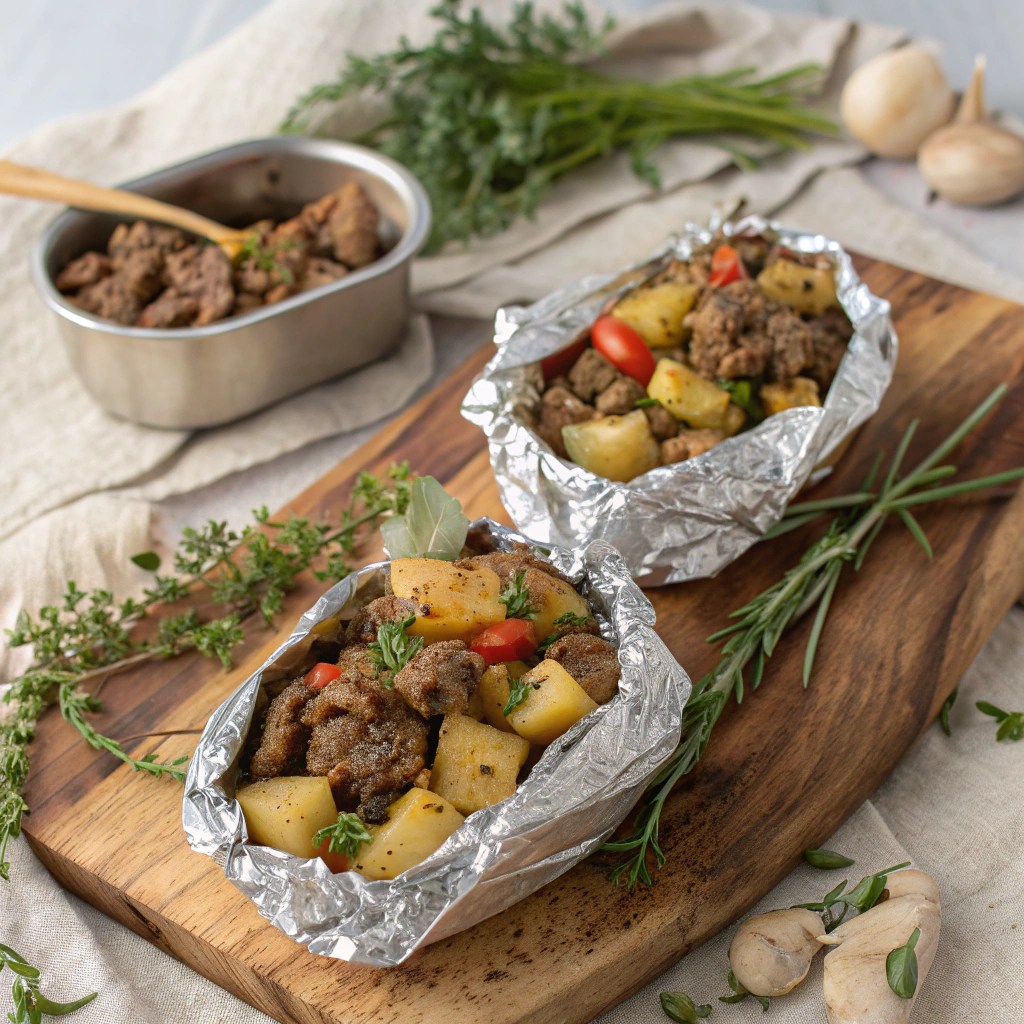
Introduction
Is it really possible for Hobo Ground Beef & Potato Foil Packets to be juicy, well-seasoned, and evenly cooked—without the dreaded soggy potatoes? Absolutely. This campfire classic evolves beautifully when you layer strategically, slice smart, and seal the foil the right way. Whether you’re cooking over glowing coals, tossing the packets on a gas grill, or sliding them into a hot oven on a weeknight, these foil dinners deliver caramelized beef, tender potatoes, and big flavor with minimal cleanup. Perfect for camping, tailgates, or a cozy family meal at home, this recipe distills practical test-kitchen tips into a no-fuss method anyone can master.
Ingredients List
For 4 generous foil packets:
- Ground beef: 1.5 pounds, preferably 85/15 for flavor and moisture. Substitutions: 93% lean for lighter results; ground turkey or chicken for poultry lovers; plant-based ground for a vegetarian option.
- Russet potatoes: 4 medium, thinly sliced into 1/8-inch rounds. Substitutions: Yukon Gold for buttery texture; sweet potatoes for subtle sweetness and extra fiber; cauliflower florets for a lower-carb twist.
- Yellow onion: 1 large, thinly sliced. Substitutions: red onion for a sweeter edge; shallots for a mild, aromatic note.
- Bell pepper: 1 large, sliced (any color). Substitutions: poblano for mild heat; zucchini for a softer, juicier veg.
- Carrots: 2 medium, sliced thin on the bias. Optional but great for color and natural sweetness.
- Garlic: 3 cloves, minced (or 1 teaspoon garlic powder).
- Worcestershire sauce: 1 tablespoon for umami depth. Substitutions: tamari or coconut aminos for gluten-free.
- Ketchup or BBQ sauce: 2 tablespoons total, for light glazing and caramelization. Substitutions: tomato paste plus a pinch of brown sugar and smoked paprika.
- Seasoning blend: 1.5 teaspoons kosher salt, 1 teaspoon black pepper, 1 teaspoon smoked paprika, 1 teaspoon onion powder, 1/2 teaspoon dried thyme, 1/4 teaspoon red pepper flakes (optional).
- Olive oil: 2 tablespoons, divided. Substitutions: avocado oil for high-heat grilling; melted butter for richness.
- Butter: 2 tablespoons, cut into 8 small pieces (optional, for finishing).
- Fresh parsley or chives: 2 tablespoons, chopped, for serving.
- Optional toppings: shredded cheddar, hot sauce, ranch drizzle, or a dollop of Greek yogurt for tang.
Tools and extras:
- Heavy-duty aluminum foil (very important to prevent tearing).
- Optional parchment squares (to line the foil and reduce sticking).
- Meat thermometer for accuracy (aim for 160°F internal temp for ground beef).
Flavor notes and sensory hints:
- Beef + Worcestershire + smoked paprika delivers a backyard-burger aroma with campfire vibes.
- Thinly sliced potatoes absorb drippings and finish buttery-soft with crisped edges if you vent briefly at the end.
- A bit of BBQ sauce or ketchup creates a glossy glaze that caramelizes beautifully around the edges.
Timing
- Prep time: 15–20 minutes (faster with a mandoline for uniform potato slices).
- Cook time:
- Oven: 35–45 minutes at 425°F (220°C).
- Grill (medium-high heat): 25–30 minutes, turning once.
- Campfire (on medium coals): 12–15 minutes per side, depending on heat intensity.
- Total time: About 50–60 minutes, which is roughly 15–20% faster than many foil packet recipes that run 60–75 minutes—thanks to thinner potato slices and a flatter beef patty profile for even heat transfer.
Step-by-Step Instructions
Step 1: Preheat and prep your station
- Oven: Preheat to 425°F and line a sheet pan with foil for easy transfer.
- Grill: Heat to medium-high. Scrape and oil grates.
- Campfire: Let logs burn down until you have a solid bed of medium-hot coals.
- Tear 4 sheets of heavy-duty foil, each 16–18 inches long. Optional: place a sheet of parchment on top of each foil piece to reduce sticking.
Pro tip: Heavy-duty foil plus parchment keeps potatoes from welding to the metal and helps distribute heat more evenly.
Step 2: Season the beef boldly
- In a bowl, combine ground beef, Worcestershire sauce, minced garlic (or garlic powder), and half of the seasoning blend.
- Mix gently with your hands or a fork. Overmixing toughens the meat.
- Divide into 4 equal portions and flatten each into a wide, thin patty—about 1/2 inch thick and slightly larger than the potato base. Thin patties cook evenly and baste the potatoes as they sizzle.
Step 3: Slice vegetables the smart way
- Slice potatoes into very thin rounds, about 1/8 inch. Uniform thickness is crucial to avoid undercooked edges or mushy centers.
- Slice onion, bell pepper, and carrots thinly so they soften at the same rate as the potatoes.
Pro tip: If prepping ahead, store sliced potatoes in cold water up to 12 hours to prevent browning. Drain and pat dry before building packets.
Step 4: Build the flavor layers
For each foil packet:
- Drizzle 1–2 teaspoons olive oil in the center.
- Layer 1/4 of the potato slices in an overlapping shingle pattern. Season with a pinch of salt and pepper.
- Scatter 1/4 of the onions, peppers, and carrots over the potatoes.
- Place a flattened beef patty on top. Sprinkle the remaining seasoning blend evenly across all packets.
- Add a tiny drizzle of ketchup or BBQ sauce if using, and dot with a couple of butter pieces for richness.
Pro tip: Keep the stack low and wide, not tall, to encourage even cooking and some crisping. Dense mounds trap steam and lead to soggy textures.
Step 5: Seal for steam—then plan to vent
- Bring the long sides of the foil together and fold tightly to seal, leaving a small air space above the food so heat circulates. Then crimp the ends.
- Make sure seams are tight so juices don’t escape onto the coals or pan.
Pro tip: Double-wrap if cooking directly on coals or if your foil is thin. The inner packet can be parchment-lined to protect against sticking and burning.
Step 6: Cook to tender, then finish hot
- Oven: Place packets seam-side up on a sheet pan. Bake 35–45 minutes. At minute 30, rotate the pan for even heat.
- Grill: Cook over direct heat 12–15 minutes per side. If flare-ups occur, move to indirect heat and add 5 minutes.
- Campfire: Set on medium coals (not open flames). Cook 12–15 minutes per side, rotating for hot spots.
Pro tip: For crispy edges, carefully open each packet during the last 5 minutes and broil (oven) or leave open on the grill/fire to evaporate steam and caramelize the top.
Step 7: Check doneness and rest
- Use a thermometer to ensure the beef hits 160°F.
- Pierce a potato slice; it should be tender with minimal resistance.
- Rest packets 5 minutes before opening fully—this redistributes juices and enhances flavor.
Step 8: Finish and serve
- Open carefully away from your face to avoid steam burns.
- Sprinkle with parsley or chives. Add shredded cheddar or a dollop of Greek yogurt if you like.
- Serve straight from the foil for rustic charm, or slide onto plates with extra sauce on the side.
Nutritional Information
Approximate per serving (1 packet, without cheese; with 85/15 beef and optional light butter):
- Calories: 590–640
- Protein: 30–34g
- Total fat: 32–36g
- Saturated fat: 11–13g
- Carbohydrates: 45–50g
- Fiber: 4–6g
- Sugars: 7–9g
- Sodium: 700–900mg (varies with sauces and salt)
- Potassium: ~1,200mg
- Iron: ~3.5mg
Notes:
- Using 93% lean beef drops fat by roughly 25–30% and reduces calories by about 60–80 per serving.
- Swapping in sweet potatoes adds beta-carotene and similar fiber, with a touch of natural sweetness.
- Skipping butter and using a lighter hand with sauces can reduce saturated fat and sodium.
Healthier Alternatives for the Recipe
- Leaner protein: Use 93% lean ground beef or ground turkey. Add 1 teaspoon olive oil if the mixture feels dry.
- More veggies, fewer starches: Replace half the potatoes with zucchini, mushrooms, or cauliflower florets to cut carbs without sacrificing volume.
- Low-sodium approach: Skip Worcestershire and use coconut aminos or a homemade salt-free seasoning blend. Finish with a squeeze of lemon for brightness.
- Dairy-free: Omit butter and cheese. A drizzle of olive oil and fresh herbs at the end delivers richness and aroma.
- Gluten-free: This recipe is naturally gluten-free; just confirm condiments like Worcestershire are certified GF or use tamari.
- Paleo/Whole30: Avoid ketchup/BBQ sauce with added sugar. Use compliant seasonings and finish with chimichurri or herb vinaigrette.
- Plant-based: Use a high-quality plant-based ground and olive oil; consider adding chopped mushrooms for umami and moisture.
Serving Suggestions
- Fresh crunch: Serve with a lemony arugula salad or a cabbage slaw with apple cider vinaigrette to cut through the richness.
- Sauces that sing: Offer chimichurri, smoky yogurt sauce (Greek yogurt + smoked paprika + lemon), or hot honey ketchup for a sweet-heat finish.
- Extra veg: Grilled corn on the cob or blistered green beans pair perfectly with the campfire vibe.
- Brunch twist: Smash leftovers in a skillet and top with a fried egg and hot sauce for a next-day hash. For another skillet idea, check out this hearty ground beef sweet potato hash.
- Kid-friendly bar: Put out bowls of shredded cheese, scallions, and pickles. Let everyone customize their opened packet with toppings.
Common Mistakes to Avoid
- Thick potato slices: Anything thicker than 1/8 inch risks undercooked centers when the beef is done. Use a mandoline or steady hand.
- Overcrowded packets: Tall stacks trap steam, leading to mushy veggies. Keep layers wide and no more than about 1.5 inches high.
- Too-lean beef without moisture: Very lean ground beef can dry out. Compensate with olive oil, onions, or a spoonful of sauce.
- Weak seasoning: Potatoes need salt. Season each layer lightly for balanced flavor.
- Sealing without space: Pressing foil flat against the food creates hot spots and steaming issues. Make a small air pocket for circulation.
- Skipping the vent: For crisp edges, open packets for the last few minutes to concentrate flavor and drive off excess moisture.
- Fire management: Flames scorch, coals cook. On a campfire, wait for steady coals, rotate occasionally, and avoid direct flames for even heat.
Storing Tips for the Recipe
- Refrigeration: Store cooked packets (or the contents transferred to airtight containers) up to 3–4 days. Keep toppings separate.
- Freezing: Cool completely, then wrap tightly in foil and a freezer bag for up to 2 months. Reheat in a 375°F oven for 20–25 minutes, open to finish for 5–8 minutes.
- Meal-prep strategy: Slice potatoes and store in cold water up to 12 hours; drain and pat dry before building. Mix the beef and spices ahead and refrigerate for up to 24 hours. Assemble packets just before cooking.
- Camp cooler best practices: Keep raw beef below 40°F in a well-iced cooler, pack on the bottom, and cook within 24 hours. Never reuse foil that touched raw meat without washing hands and tools thoroughly.
Conclusion
Hobo Ground Beef & Potato Foil Packets deliver big campfire flavor with weeknight practicality: thin-sliced potatoes that turn tender, seasoned beef that bastes everything underneath, and a build-and-seal method that keeps things juicy without the sog. Whether you’re cooking in the oven, over hot coals, or on the grill, these packets are a flexible, low-mess staple.
Ready to make them your own? Try the base recipe tonight, then riff with sweet potatoes, poblano peppers, or a chimichurri finish. Share your favorite combinations and any creative add-ins in the comments—your ideas help other cooks succeed, too.
FAQs
What oven temperature works best, and how long should I bake?
- Bake at 425°F for 35–45 minutes. Open and broil briefly at the end if you want crispy edges.
How do I cook these on a campfire without burning?
- Place packets on medium coals, not flames. Cook 12–15 minutes per side, rotating for hot spots. Double-wrap if the coals are very hot.
Can I use frozen ground beef?
- It’s best thawed for even mixing and shaping. If using frozen, thaw overnight in the fridge or use a cold-water bath. Never partially cook and refreeze raw beef.
Do I need to par-cook the potatoes?
- Not if you slice them thinly (1/8 inch). If your slices are thicker, par-cook in the microwave for 3–4 minutes or simmer briefly until just tender.
Is foil safe to cook with?
- Heavy-duty foil is standard for campfire cooking. To minimize direct contact, line the foil with parchment. Avoid acidic sauces if cooking for very long periods as they can react with aluminum.
How can I keep the vegetables from turning mushy?
- Slice uniformly, don’t overcrowd, and vent the packets for the last 5 minutes to drive off steam.
What’s the safest internal temperature for ground beef?
- 160°F, per food safety guidance. Use a thermometer for accuracy.
Can I add cheese?
- Yes. Open packets in the last 5 minutes of cooking, sprinkle cheese, and finish until melted. For extra browning, broil briefly in the oven.
What if I want to scale up for a crowd?
- Build multiple single-serve packets rather than giant ones. Smaller packets cook more evenly and let guests personalize toppings.
Where can I see another take on “hobo dinners”?
- For inspiration and a traditional approach, many cooks reference recipes like this one on Allrecipes. Our version fine-tunes the method for faster, more consistent results.
Keyword and semantic notes
To help you find this again or share it with friends, remember it under any of these names: Hobo Ground Beef & Potato Foil Packets, foil packet dinners, campfire foil meals, tin-foil packets, ground beef and potato packets, and “hobo dinner” with beef and potatoes. Whatever you call it, the technique and layering are what make it reliably delicious every time.